
Epoxy for warehouse and plant floors where work never stops
Carts, pallet jacks and forklifts run the same lanes all day in a warehouse or plant, and bare concrete there starts dusting and soaking up oil. Danny’s first conversation is with whoever runs operations, because on a working floor the coating gets planned around production, one section at a time.
What goes into industrial epoxy flooring
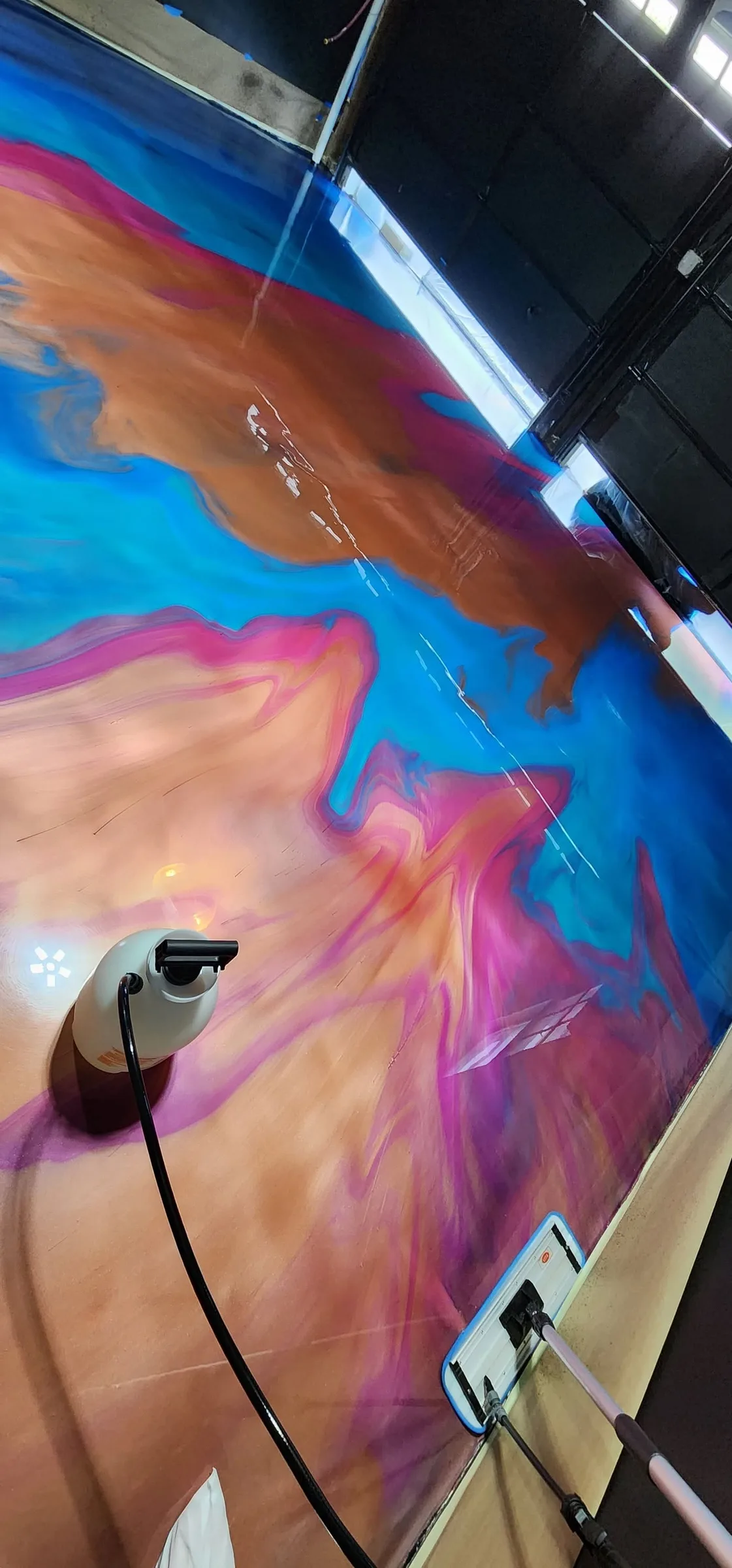
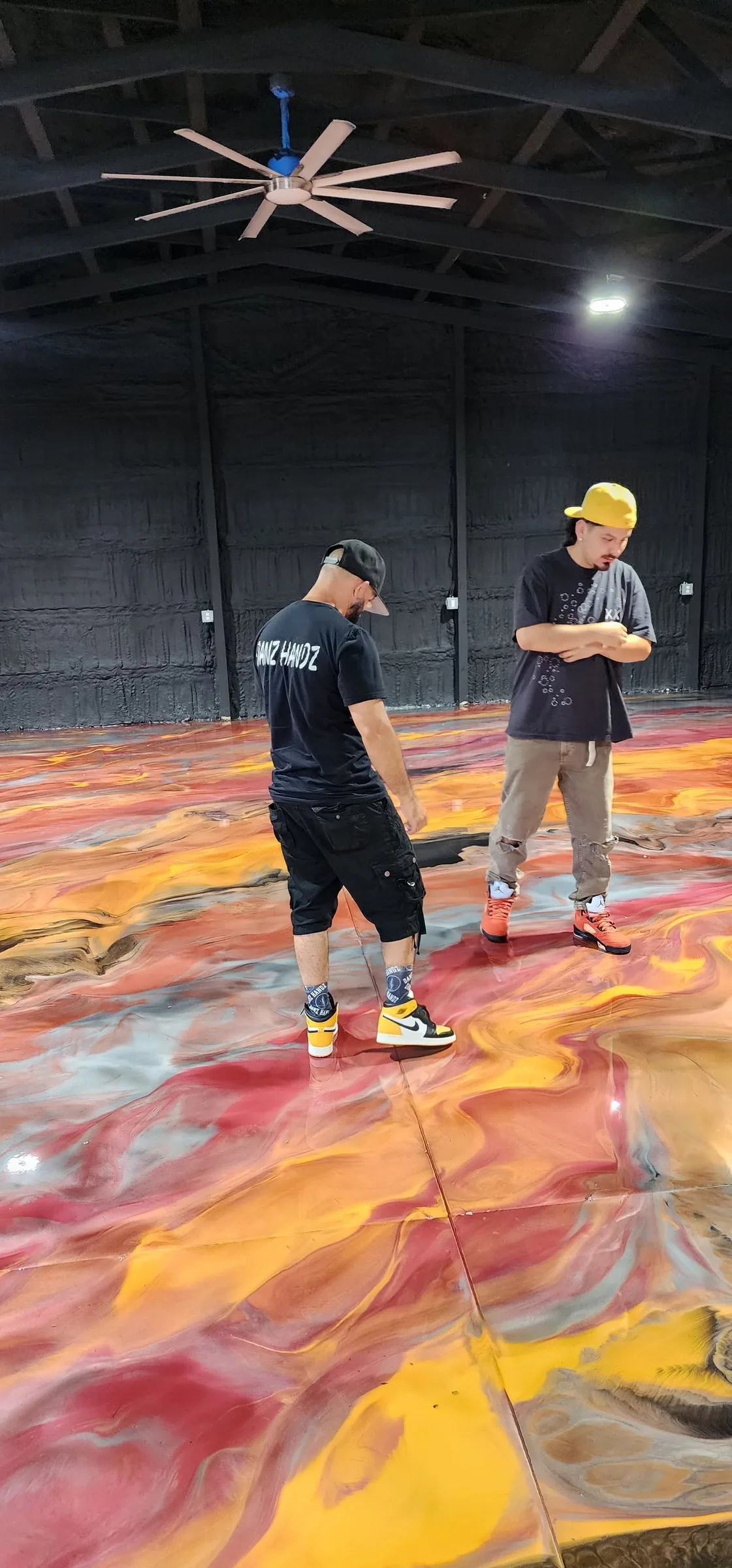
Bare concrete in a working building sheds dust, soaks up oil and wears down in the lanes where wheels run. An industrial epoxy system seals that surface with a primer and a thicker body coat, often followed by a topcoat picked for the traffic and the spills on that floor. Many plants add line striping for aisles, walkways and storage zones, coated right into the system. Danny looks at the space, the traffic and what gets spilled on it before he recommends what goes down.
Many plants add line striping for aisles, walkways and storage zones, coated right into the system.
It fits dry interior slabs in warehouses, assembly areas, maintenance shops and storage buildings. Some environments need something past a standard epoxy: areas with strong chemicals, constant hot water or a regulated process. In those spaces the system has to be chosen to the job’s requirements and the product data, and Danny will say plainly when a floor needs a specialty system or a different contractor. Slabs that move, heave or stay wet from below need those problems handled before any coating goes on.
Industrial jobs start with downtime. Danny walks the floor with whoever runs operations, maps what can move and what cannot, and asks about forklifts, carts, chemicals and cleaning. Then the job gets split into sections that match your shifts or a shutdown. Each section is diamond ground, joints and spalls are repaired, and the coating goes down in layers. Striping comes last if you want it. He keeps the active area marked off so your people know where they can walk, and he walks each finished section before it goes back into service.
On a working floor, the schedule matters as much as the coating.
Five stages, every time
A working plant floor gets coated around production, one zone at a time. These are the stages from the first meeting with operations to handing a coated section back to the shift.


Map traffic with operations
Danny walks the building with the operations lead and marks where forklifts turn, where pallets get dropped and which machines are anchored. Worn lanes and broken joints show where the floor takes the most abuse, and those areas shape the build.

Zone the floor by shift
The building is divided into work zones sized to what production can give up at once, whether that is a shutdown or a slow shift. Each zone has a start, a return date and a detour plan for traffic, written down so supervisors can brief their crews.

Rebuild joints and spalls
In a plant, the joints break first under hard wheels. Damaged joint edges are cut back and rebuilt, spalled areas are patched, and the zone is ground to sound concrete. Oil-soaked spots near machines get cleaned until the primer can bond.
Coat and stripe the zone
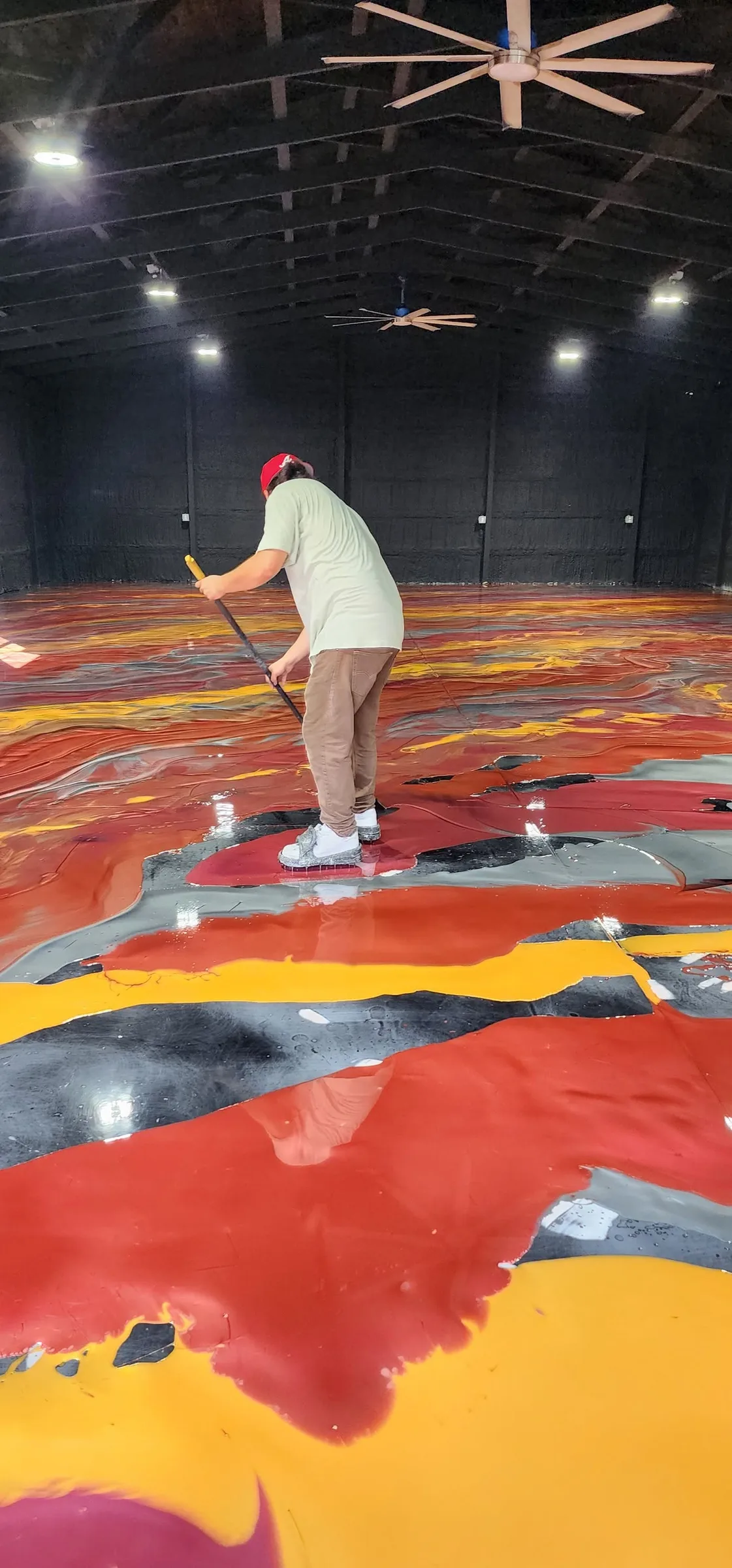
The primer and body coats go down, built to the traffic in that zone, and aisle and walkway lines are laid out and coated in before the topcoat. Bulletproof Resins products are matched to the spills and cleaners that zone sees.

Return the zone to service
Barriers stay up until the coating can take wheels. Danny walks each finished zone with the operations lead, confirms the lines match the layout, and only then does traffic return. The next zone starts on the agreed date.
More of Danny’s floors
Other jobs from the file, not all of them this service. See the gallery






Questions about industrial epoxy flooring
Can the work happen during a shutdown?
Yes, and that is often the best way. Danny plans the floor in sections sized to your shutdown or your slowest shifts, so the coated areas can go back into use in order. Bring your production calendar to the walk-through and he will build the schedule around it instead of the other way around.
Is epoxy right for an area with chemicals?
It depends on the chemical and how long it sits on the floor. Some epoxies handle certain spills well and others do not, so Danny looks at what gets spilled, how often and how it gets cleaned before recommending a system. Where a spec matters, he goes by the product data and your requirements.
Can line striping be built into the floor?
Striping for aisles, walkways and storage zones can be built into the coating system, which keeps the lines from scuffing off the way painted lines do. Danny lays the layout out with you before install. Any required colors or widths come from your own safety plan, so bring it to the walk.
Do anchored machines have to be pulled for the coating?
Not always. Many plants keep heavy machines in place and have the coating cut neatly around each base and sealed at the edge. If a machine is coming out anyway for service or relocation, that is the best time to coat under it. Danny marks each one on the walk and agrees the plan with maintenance.
Will the grinding dust get into our equipment?
Grinders run with dust collection, and the active zone is closed off with plastic where sensitive equipment sits nearby. Some plants cover control panels and open machinery in the surrounding area as an extra step. Danny asks about anything dust-sensitive on the walk so it is protected before the first pass.
Can the coating hide years of tire marks and stains?
A new body coat covers old stains once the slab is ground and primed. Dark tire marks and oil that has soaked deep get extra grinding first so they do not bleed through. After the coating, new tire marks sit on the surface, where a scrubber can lift most of them.
Related floors
The core systems: residential, commercial and industrial epoxy, on new slabs and old ones, inside and out.
- Epoxy Flooring for New ConstructionEpoxy planned into a new build, from slab details before the pour to a coating timed with the finish schedule and closeout.
- Interior Concrete Floor CoatingCoatings for indoor concrete in lofts, studios, offices and living spaces, from a clear seal to color or metallic in the sheen you choose.
- Exterior Concrete Coating SystemsExterior coating systems for patios, walkways and porches, using resins made for sunlight and texture chosen for rain and winter.
- Seamless Resin FlooringSeamless resin floors poured as one continuous surface, with no grout lines or tile joints, and an optional cove base up the wall.
- Resinous Floor InstallationResinous floors built from epoxy, polyaspartic and urethane, with each layer picked for the room’s traffic, cleaning and sunlight.
Cranford is home base. Danny covers 33 counties in New Jersey, New York, Pennsylvania and Connecticut. See every areaSee the gallery
Danz Handz
Danny Carrero, epoxy specialist
dhepoxy@gmail.com
Cranford, NJ. Mon to Sat, 8 to 6. Hablamos español.
Book a walkthrough
Tell Danny what you are working with. He will call, then come look before anyone talks numbers.