
Coated floors for plants, shops and industrial spaces
Carts, pallet jacks and forklifts wear paths into an industrial slab, and whatever leaks from the machines soaks in beside them. A new coated floor goes in to stop the dusting and staining. Danny walks the travel paths with the facility manager to see what moves where before choosing the system.
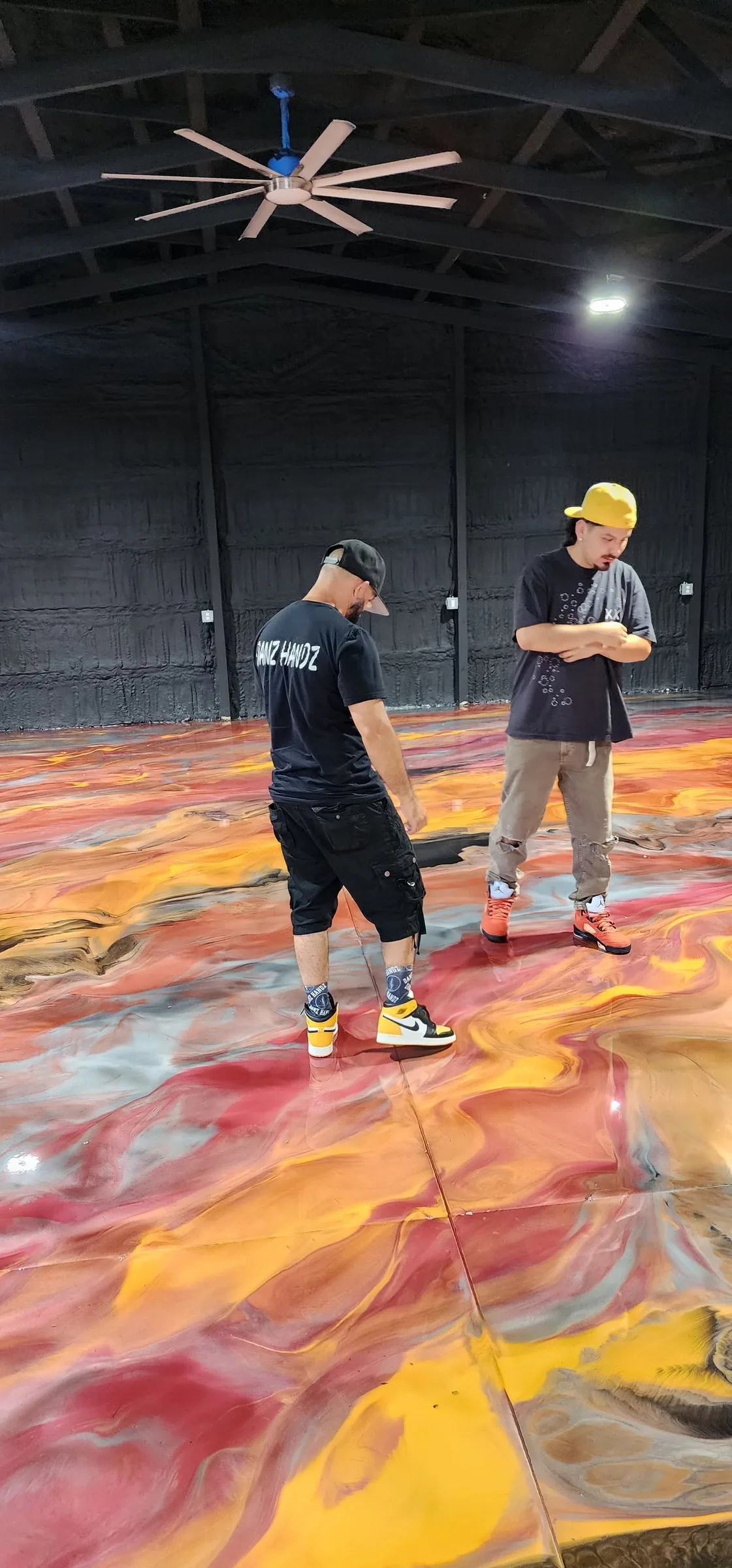

Industrial Facility Flooring Installation, from Danny’s side of the job
An industrial floor installation is a resin system bonded to ground concrete across a working facility: production areas, shipping docks, maintenance shops and storage rooms. It closes the slab so dust stops coming up and spills sit on the surface instead of soaking in. Most of these floors are solid color epoxy built up in coats, with a topcoat picked for the traffic. Danny looks at the space, the traffic and what gets spilled on it before recommending a system, and he picks products from the manufacturer’s data for that use.
Equipment anchored to the floor is moved by the facility’s own people or its contractors.
It fits facilities that can give up a section of floor for the length of the job. It fits less well where the slab is badly broken, heaving or soaked with years of oil, which need repair or more prep first. Some spaces have requirements set by insurers, inspectors or the company’s own standards. Those requirements belong to the facility, and the facility passes them along so the system is chosen to match. Equipment anchored to the floor is moved by the facility’s own people or its contractors.
Danny walks the facility with the manager and follows how material moves: where forklifts turn, where carts park, where fluids drip off machines. That walk sets the order of the areas. He diamond grinds the slab, digs out and repairs spalled joints and broken patches, and levels low spots that hold liquid. The coating goes down in coats, area by area, with each section closed off through its cure. At the final walk he goes over the floor with the facility contact and covers cleaning methods that will not wear the topcoat down early.
An industrial floor gets judged by the aisle that takes the most traffic.
What happens on the job
Installing a floor inside a working facility means fitting into rules, schedules and processes that already exist. The stages here cover that fit as much as the coating itself.
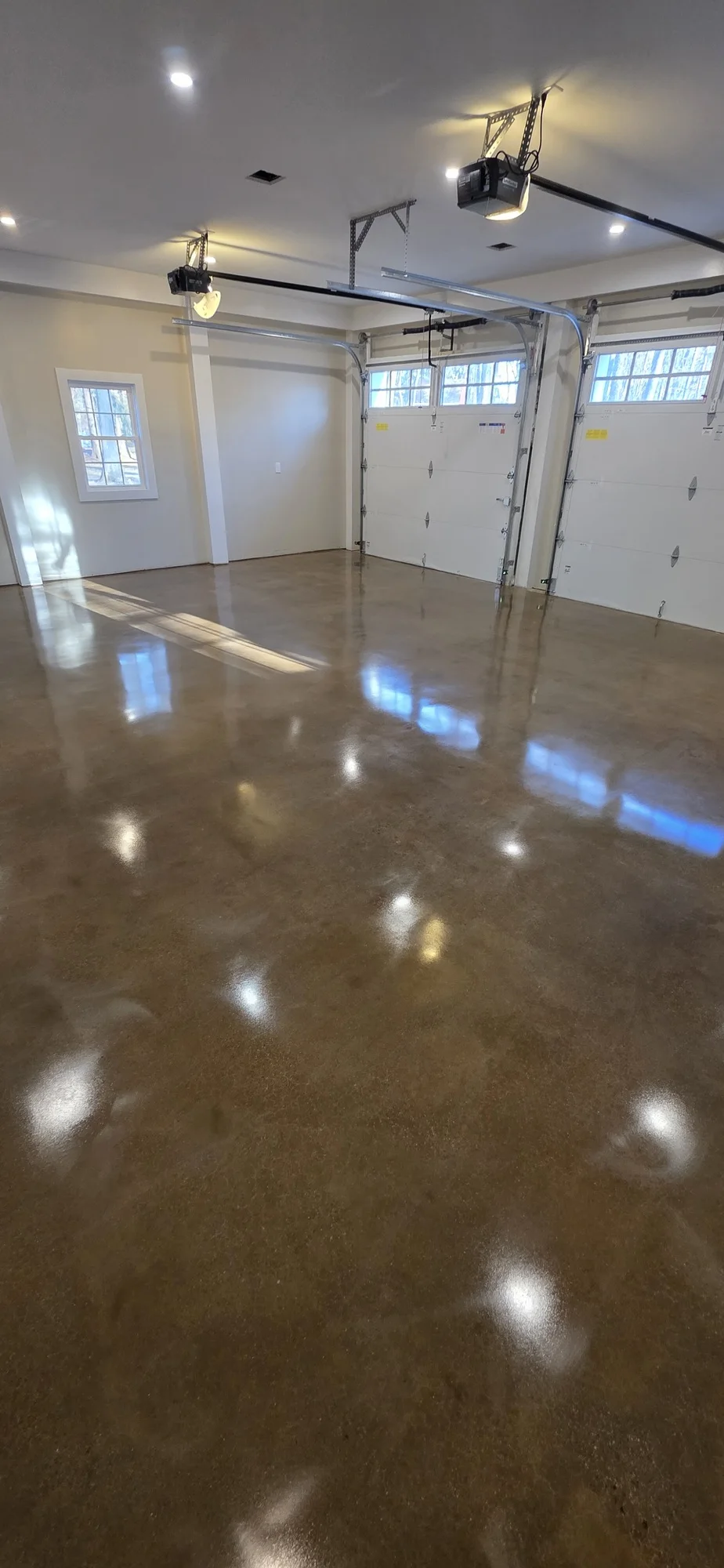

Learning the site’s own rules
Every facility has its own access, safety and housekeeping rules, and those come first. Danny goes over working hours, entry, where equipment and materials can be staged and who signs off each area, so the floor work fits the way the building already runs.

Matching each room to its spills
In the maintenance shop it might be hydraulic drips and parts cleaner, at the dock slush and road salt, in production whatever the machines shed. Each room’s mix is checked against the product data before a system is assigned to it.

Sloping wet areas to their drains
Rooms that get hosed down or catch wash water are checked for how they drain. Low spots that hold liquid are built up, and the coating is carried a short way up the wall base where floors get cleaned wet, so water cannot work in at the edge.

Installing section by section
Each section is ground, its broken joints and patches rebuilt, and the coats laid down at the build chosen for that area. Barriers and signs stay up through the cure, and the next section starts only after the previous one is back in use.

Leaving a record of each room
At the final walk, the facility’s maintenance lead gets a record of which system went into each room and where the repaired joints are. That record makes later touch-ups and future sections match, and it tells the cleaning crew which areas carry which topcoat.
More of Danny’s floors
Other jobs from the file, not all of them this service. See the gallery







Questions about industrial facility flooring installation
Can you coat our facility without shutting it down?
Usually the job is split into sections so most of the building keeps working. Each section is ground, repaired, coated and closed through its cure before the next one starts. Weekend and shutdown windows help a lot. Danny works out the order with the facility manager during the first walk, based on how material moves through the building.
What system do you use for an industrial floor?
It depends on the traffic, the spills and the cleaning routine in each area. Danny looks at the space and the work done there before recommending anything, then chooses from the manufacturer’s data for that use. A shipping dock and a parts room in the same building may end up with different systems.
Can a coating go over a floor that is soaked with oil?
Oil that has soaked deep into concrete is one of the hardest things to coat over. Some of it comes out in the grind, and some areas need extra passes. Spots that keep bleeding oil may need to be cut out and patched before a coating will hold. Danny shows the manager those areas on the walk.
Can the coating go up the wall in wash-down areas?
Yes. In rooms that get hosed or mopped hard, the coating can be carried a short way up the wall base to form a curved edge. That keeps water and grime from sitting in the corner where floor meets wall. Danny looks at how each room is cleaned before deciding where that edge is worth adding.
Can you work inside our safety and access rules?
Yes. The facility’s rules on entry, hours, staging and protective gear come first, and Danny plans the job inside them. Anything the facility requires from outside trades, such as a site orientation or paperwork, gets handled before work starts. He asks for those rules at the first walk so they shape the schedule.
Can areas added later match the first ones?
They can. Danny keeps a record of the system, color and topcoat used in each area, so a room added in a later phase can be built the same way. Material from different batches can vary slightly in shade, so he places the seam between old and new sections on a joint wherever possible.
Also in construction
New builds, renovations and tenant fit-outs, scheduled once the slab has cured and the other trades are out.
- Basement Renovation Epoxy FlooringEpoxy floors poured on a dry basement slab as the finished surface, from metallic rec rooms to bright solid color laundry and storage areas.
- Commercial Remodeling Floor CoatingsNew coated floors for businesses being remodeled, phased around customers and staff so the doors stay closed as briefly as possible.
- Warehouse Floor RenovationWorn warehouse slabs ground down, joints and spalls repaired, and recoated in sections while stock and trucks keep moving.
- Manufacturing Facility Floor UpgradesResin floor upgrades for production areas, timed to a shutdown or retooling so the coating goes down while the machines are out.
- Retail Fit-Out FlooringMetallic, solid color or flake floors for stores and showrooms, chosen to suit the brand and the lighting before the fixtures go in.
From Union County out to the Lehigh Valley, Long Island and Fairfield County, the work is all within about 60 miles of Cranford. See every areaSee the gallery
Danz Handz
Danny Carrero, epoxy specialist
dhepoxy@gmail.com
Cranford, NJ. Mon to Sat, 8 to 6. Hablamos español.
Start with a visit
Start with the room and the idea. Danny follows up by phone and comes to see the slab.