
Epoxy floors for the rooms you actually live in
Inside a house, the floor has to suit the people on it: the basement you finally want to finish, the garage you cut through every morning, a kitchen sitting on a slab. Danny starts by asking how the family uses the room, then picks a finish that looks done and still cleans up with a mop.
The short version of residential epoxy flooring
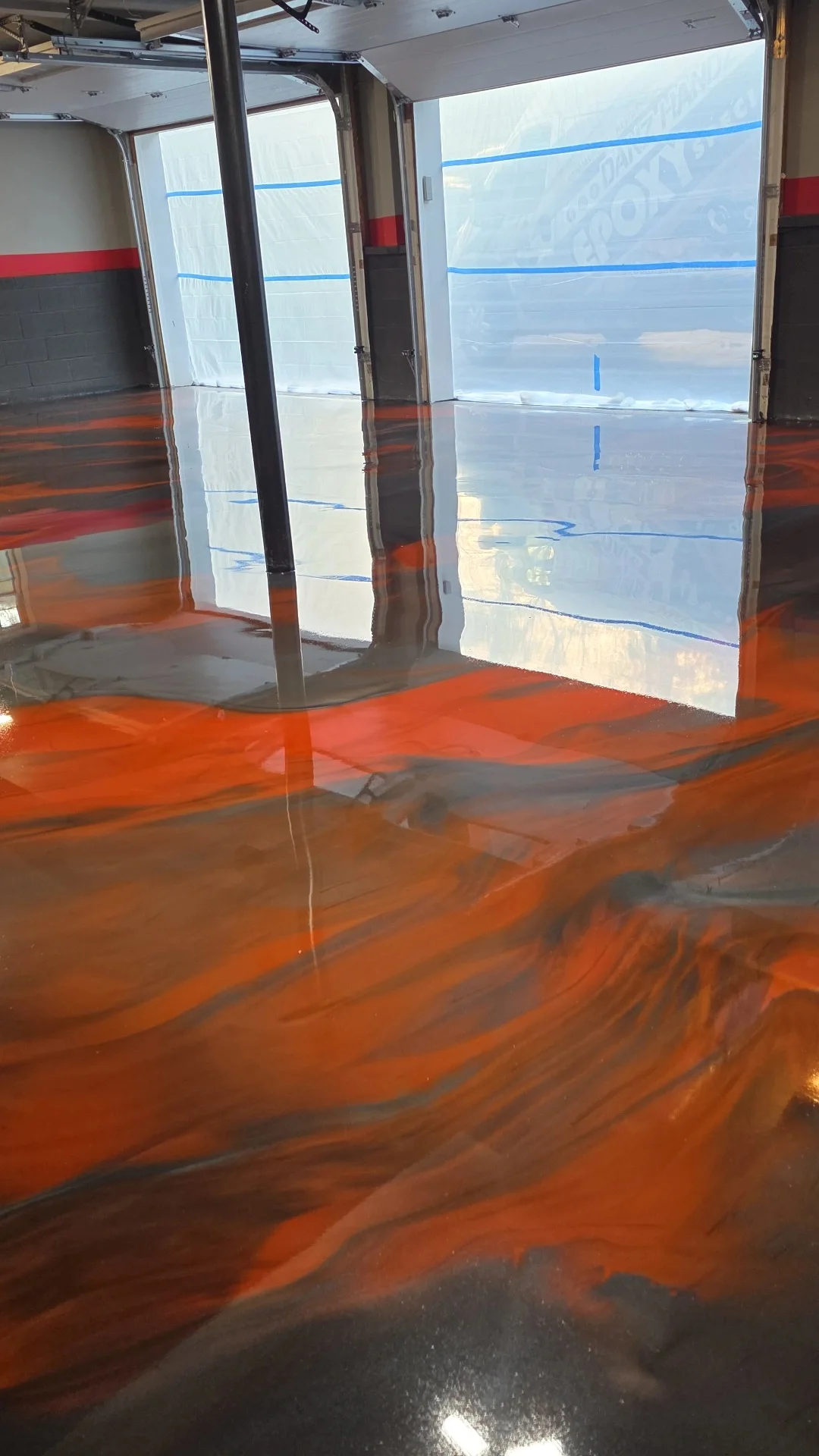
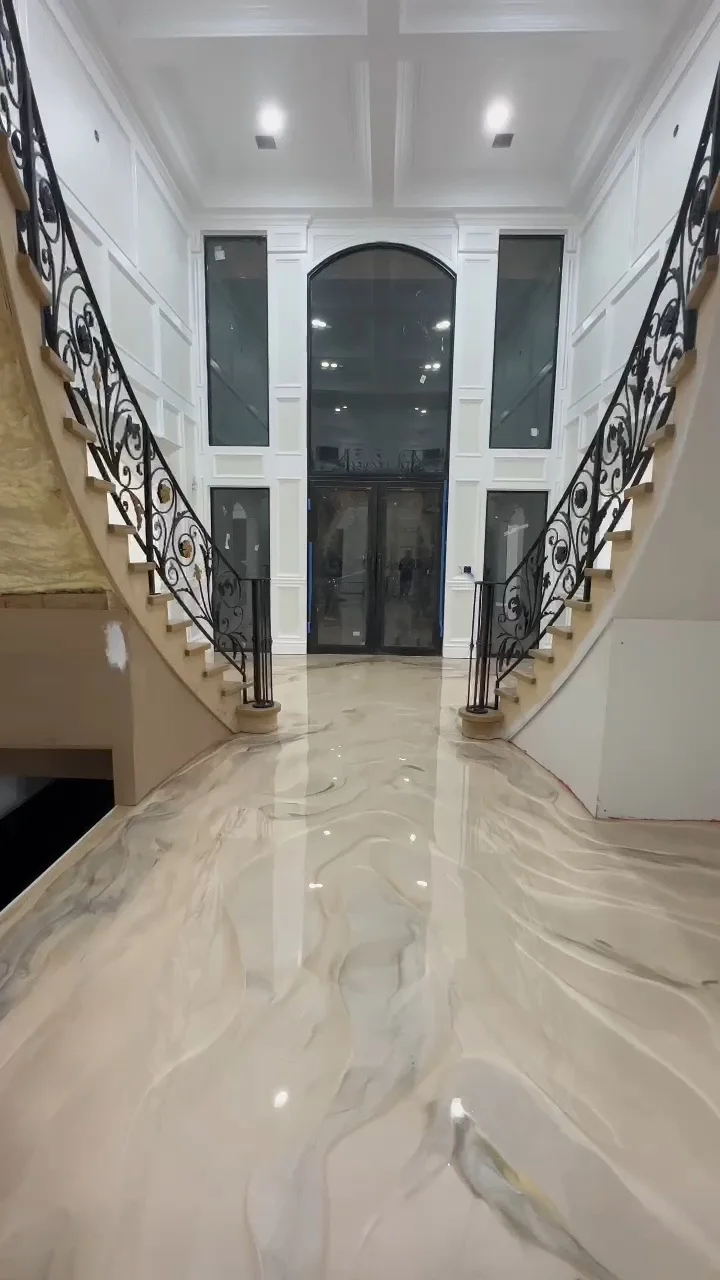
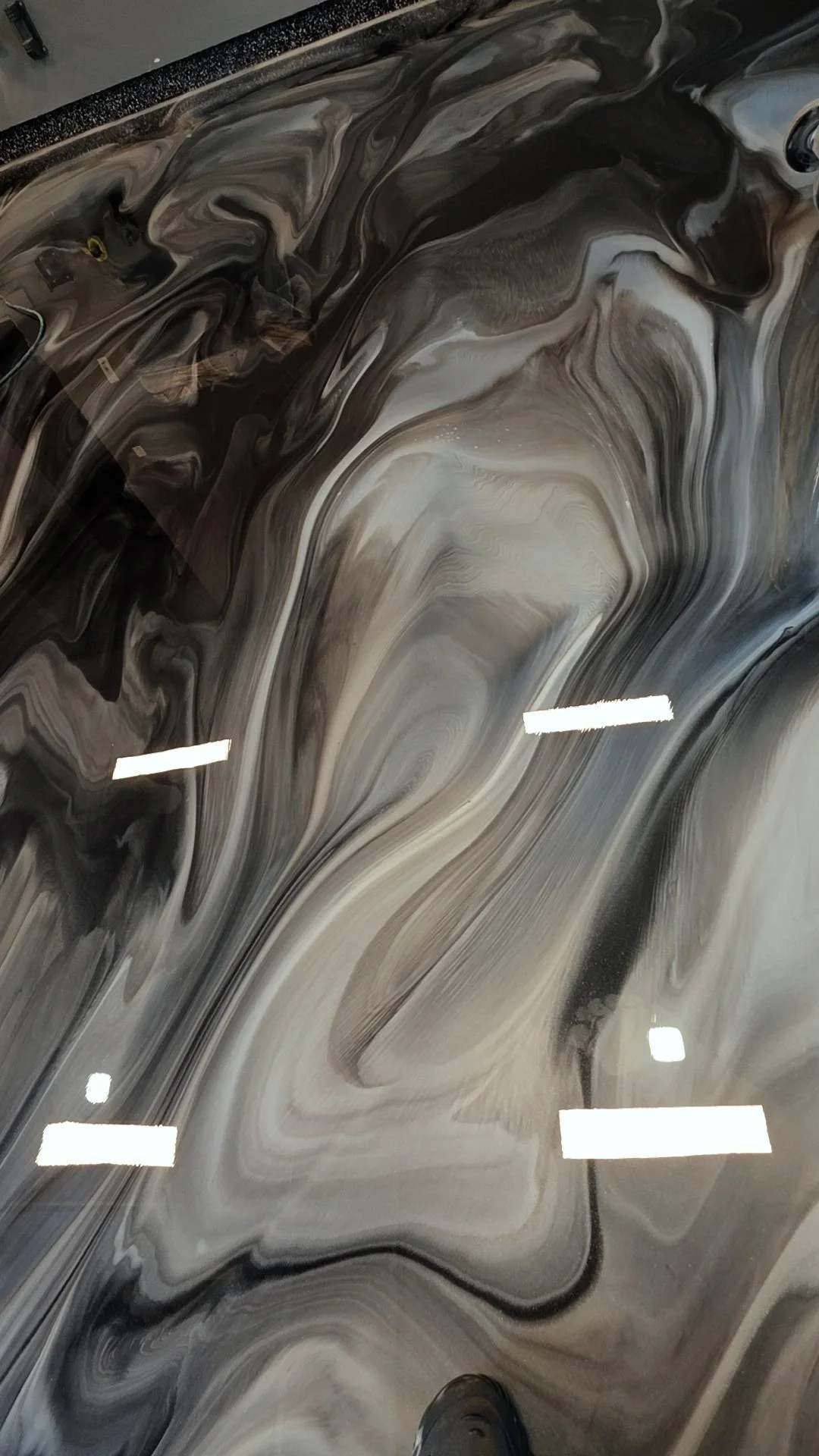
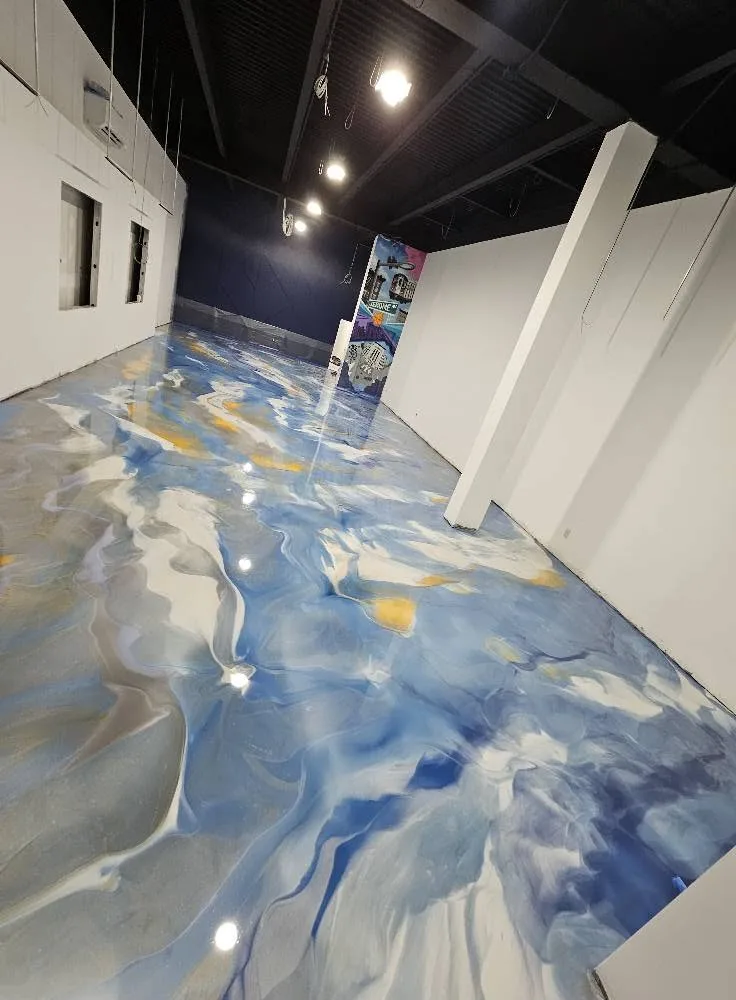
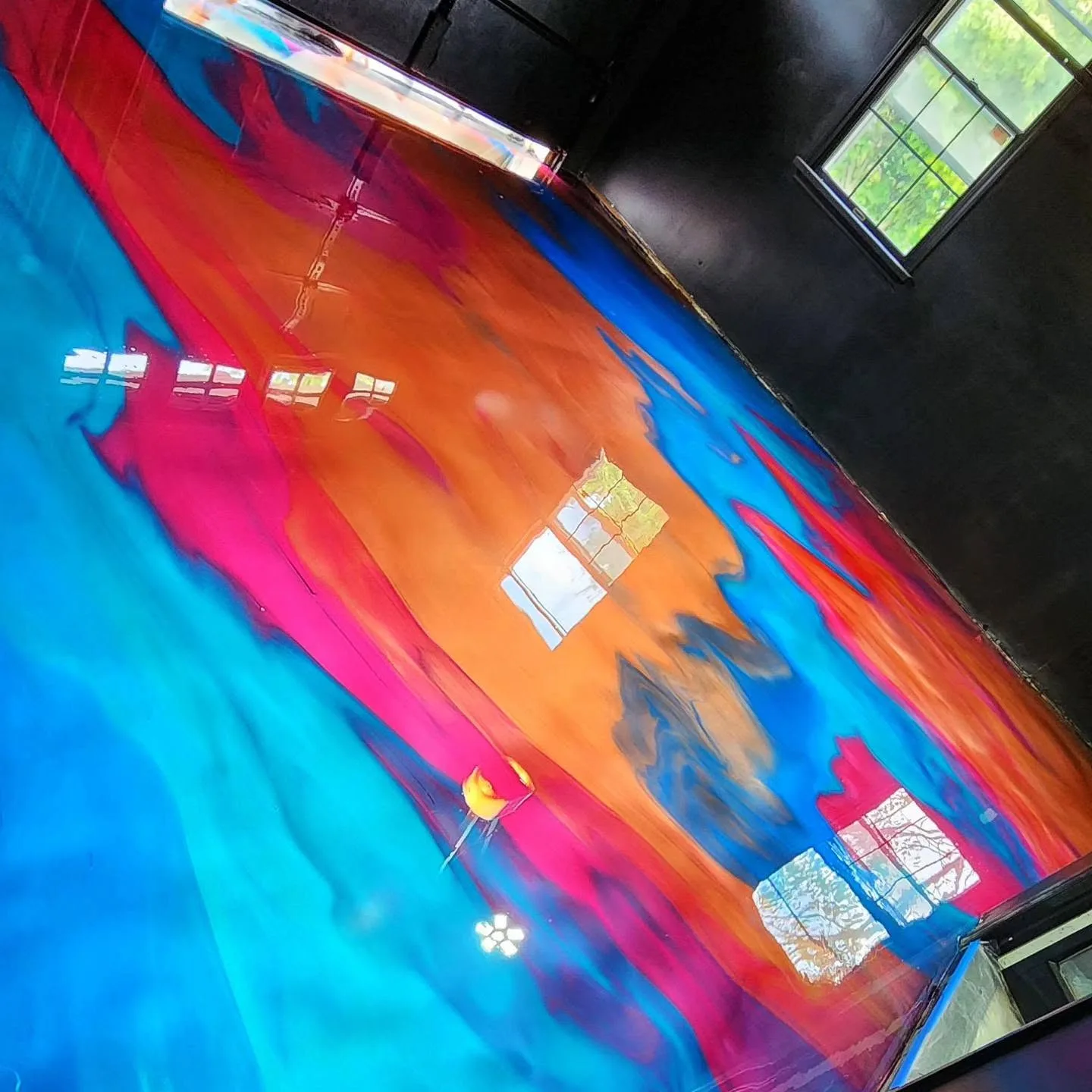
In a house, epoxy goes over the concrete as a poured layer that hardens into one continuous surface. Danny can make it look plain and quiet, like a solid gray, or loud, like a swirled metallic that catches the light from a window. Flake blends sit in between. The look gets picked to match the house and the people in it, which is where most of the conversation goes. The material comes from Bulletproof Resins, and the system is built up in coats over a ground and repaired slab.
In a house, epoxy goes over the concrete as a poured layer that hardens into one continuous surface.
It fits rooms on a concrete slab that stays dry. Basements, garages, sunrooms, laundry rooms and slab-on-grade living spaces are the usual ones. It does not go over wood subfloors or plywood, which flex and crack a hard coating. Rooms with a moisture problem need that solved or tested first. Epoxy also feels hard and a little cool underfoot, so some people put rugs down in sitting areas. Danny would rather you know that before the pour than after. He will not coat over a problem to get the job.
Inside a lived-in house, the work starts with logistics as much as concrete. Danny walks the room, checks the slab for moisture and old sealers, and talks through how the family uses the space. He plans the grinding so dust stays contained and the rest of the house stays usable. Repairs and leveling come next, then the pour, with the color or metallic finish built in the coats. He tells you how long to keep people and pets off, and he walks the finished floor with you before packing up.
A floor inside your house has to look good at seven in the morning, in plain light.
From bare slab to finished floor
Coating a floor inside a lived-in home means planning around the people in it. These stages cover how Danny keeps a household running while one of its rooms gets a new floor.

Plan around the household
Planning starts with the people, then the room. Danny asks who is home during the day, where the pets will stay, and which doors and hallways have to remain open. Those answers set the work hours and which entrance he uses.

Choose the look together
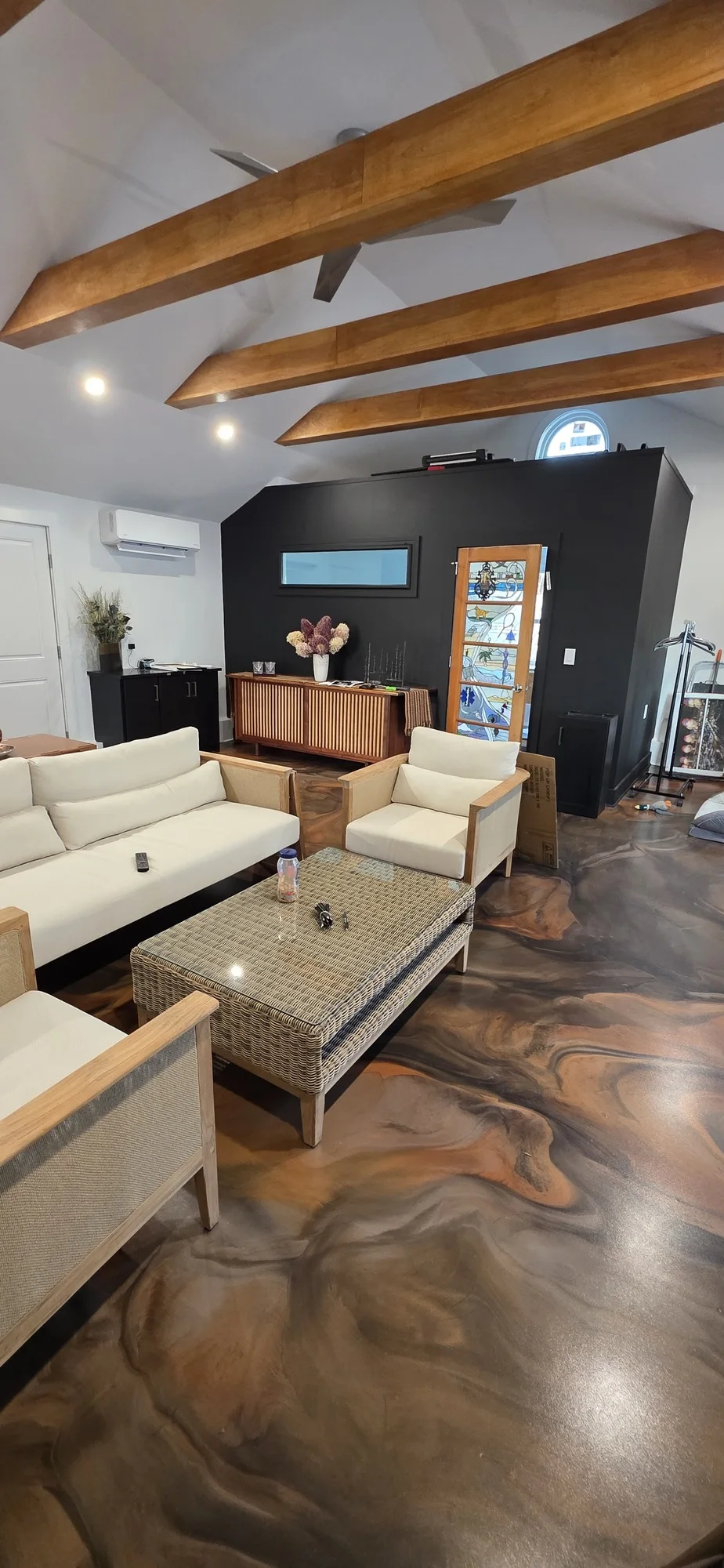
Samples come out next, in the room’s own light. A solid color, a flake blend and a metallic each read differently next to the cabinets, trim and furniture that will live with the floor. The decision usually involves everyone who uses the room, so there is time for it.

Seal off the work zone
Before grinding starts, doorways into the rest of the house get sealed with plastic and the dust is pulled into vacuums at the grinder. Floors outside the room get covered along the path in. The aim is a kitchen and living room that stay usable all day.

Grind, patch and pour
The slab is ground, old patches and cracks are repaired, and the coats go down in order. In a home the edges get extra hand work along baseboards and door thresholds, since those are the lines people notice when they walk into the room.

Reopen the room in stages
Socks and bare feet come back first, then furniture on felt pads, then rugs once the floor has fully hardened. Before leaving, Danny goes over the room with you and gives a short list of household cleaners that are safe for the topcoat.
More of Danny’s floors
Other jobs from the file, not all of them this service. See the gallery





Questions about residential epoxy flooring
Is epoxy a good choice for a basement living area?
It can be, if the slab is dry. Danny tests for moisture before anything else, because water pushing up from below is the main reason basement coatings let go. If the slab passes, a metallic or solid color floor makes a basement feel finished, and a spill or a backed-up drain wipes off the surface.
Will the house smell during the install?
Some systems have more odor than others while they cure. Danny talks through the product he plans to use, how much ventilation the room has and whether anyone in the house is sensitive to smells. Opening windows and running fans helps, and he plans the work so the odor stays in the room being coated as much as possible.
Can you match the floor to my cabinets or walls?
Usually, yes. Bring a cabinet door, a paint chip or a photo to the walk-through. Solid colors are the easiest to match. Metallic and flake floors move as the light changes, so Danny shows you how a color reads in your actual room before he commits it to the whole floor.
Can I stay in the house while the floor goes in?
Most families do. The room being coated is closed off, the grinding dust is contained, and the rest of the house stays in use. People with small children or sensitivities sometimes plan an outing for the grinding day, since it is the loudest part. Danny talks through the day-by-day plan so nobody is surprised.
Can a coated floor run from one room into the next?
Yes, when both rooms sit on the same slab. The coating can carry through a doorway with no threshold strip, which makes connected spaces feel larger. Where the floor changes to wood or tile, Danny plans a clean edge or a transition piece so the two materials meet neatly at the door.
How do I keep a home epoxy floor looking good with kids around?
Mats at the doors catch grit, felt pads go under chairs, and toy cars with hard wheels are fine. Sharp metal toys dragged across the floor can scratch the clear coat, as they would on any finished floor. Spills like juice and crayon wipe off with warm water. Danny can add a satin topcoat that hides fine scratches better than high gloss.
More from the epoxy section
The core systems: residential, commercial and industrial epoxy, on new slabs and old ones, inside and out.
- Heavy-Duty Epoxy Floor CoatingsThick-build epoxy for floors that get hit, dragged and rolled over, with more material between the traffic and the concrete.
- Professional Concrete Floor CoatingConcrete floor coating from a pro who also teaches epoxy classes: diamond ground prep, professional resin and coats timed to bond.
- Epoxy Floor ResurfacingResurfacing for pitted, spalled and patched floors: ground to sound concrete, repaired, leveled and coated so it looks new on the same slab.
- Existing Epoxy Floor RecoatingA fresh topcoat over an epoxy floor that is still bonded but dull and scratched, done before wear turns into peeling.
- Epoxy Floor ReplacementFailed epoxy taken off down to bare concrete, the cause found and fixed, and a new coating system built on sound slab.
Jobs run about 60 miles out from the Cranford shop, from the Jersey shore and the Poconos to Long Island and Fairfield County. See every areaSee the gallery
Danz Handz
Danny Carrero, epoxy specialist
dhepoxy@gmail.com
Cranford, NJ. Mon to Sat, 8 to 6. Hablamos español.
Schedule a look at your floor
Send a few lines about the room and the look you want. Danny will call and set up a time to see it.