
Epoxy floors with grip built into the finish
What makes a floor slick decides how much grip it needs. Water by a sink and grease behind a fryer call for different texture levels, so Danny walks the space, watches the traffic and asks what lands on the floor before he recommends a system.


Anti-Slip Epoxy Floor Systems, start to finish
Anti-slip epoxy is a coated floor with texture added on purpose. The most common way is to broadcast an aggregate into a coat or the topcoat, so the surface has a grain feet and shoes can catch on. The amount and size of the aggregate change how much grip the floor has and how it feels to walk on. The look can be a solid color, a flake blend or, in lighter-duty areas, a decorative finish with a fine texture over it.
Danny starts by asking what makes the floor slippery now: water, grease, dust or something the work leaves behind.
Texture is a balance. More grip means a rougher surface that holds dirt and takes more scrubbing to clean. Less grip is easier to mop and gives less footing. Where a site has a written slip requirement, the system is chosen to that requirement and the product data, and the facility confirms it is met with its own testing. Before recommending a system, Danny walks the space and asks about the traffic and what ends up on the floor. A texture that suits a loading ramp would be miserable in a bathroom.
Danny starts by asking what makes the floor slippery now: water, grease, dust or something the work leaves behind. He walks the space and notes the worst spots, such as doorways, sinks and ramps. The slab is diamond ground and repaired so the coating bonds well. Texture levels can change across one room, heavier where the floor gets wet and lighter where people need to roll carts. The pour is built in coats with the aggregate broadcast where it belongs. After the cure, the final walk covers cleaning tools that work with texture.
The right texture depends on what lands on the floor and who walks on it.
The order the work goes in
Grip gets planned from where people have actually slipped. Danny looks at the space, who walks it and what ends up on it before the texture level is set for each area.

Asking about past slips
Danny asks the owner or safety lead where people have slipped or nearly slipped, and what was on the floor when it happened. Those reports point straight to the spots that need the most grip, often near sinks, doors and ramps.

Lifting runners and old mats
Rubber runners and mats laid over slick spots come up, along with any tape or adhesive holding them down. Glue left behind is scraped and ground off, since it would keep the new coating from bonding in exactly the places that need grip most.

Truing ramps and thresholds
Lips at door thresholds and uneven ramp transitions are ground or built up so feet do not catch. A trip and a slip often start at the same edge. Cracks and spalls are filled, and low spots where water collects are leveled where the slab allows.
Grit set into the topcoat
Aggregate is broadcast into a coat at the level chosen for each area, then locked under a topcoat picked from the product data. Where a written slip requirement exists, the system is chosen to it and the facility handles any testing.
Walking the old slip spots again
With the cure done, Danny walks the floor with the owner and goes straight to the places from the first conversation. Cleaning tools that suit the texture are discussed, and any area that feels too rough or too smooth gets noted.
More of Danny’s floors
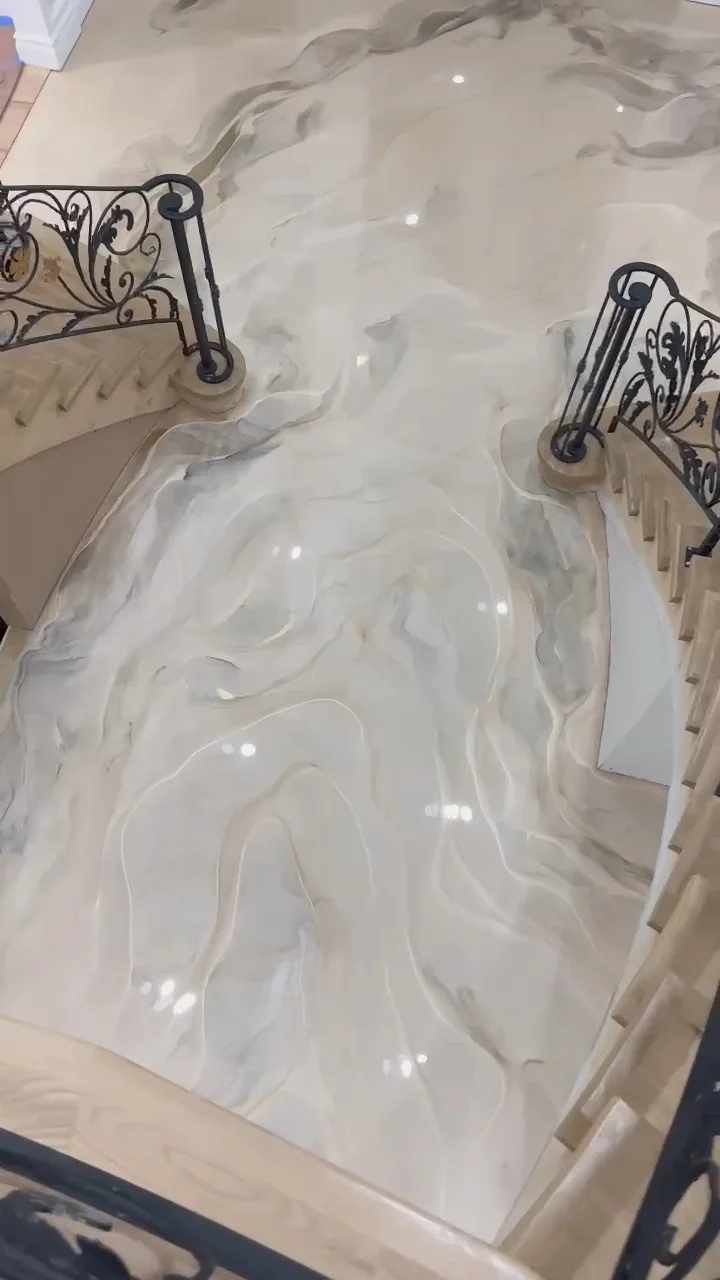
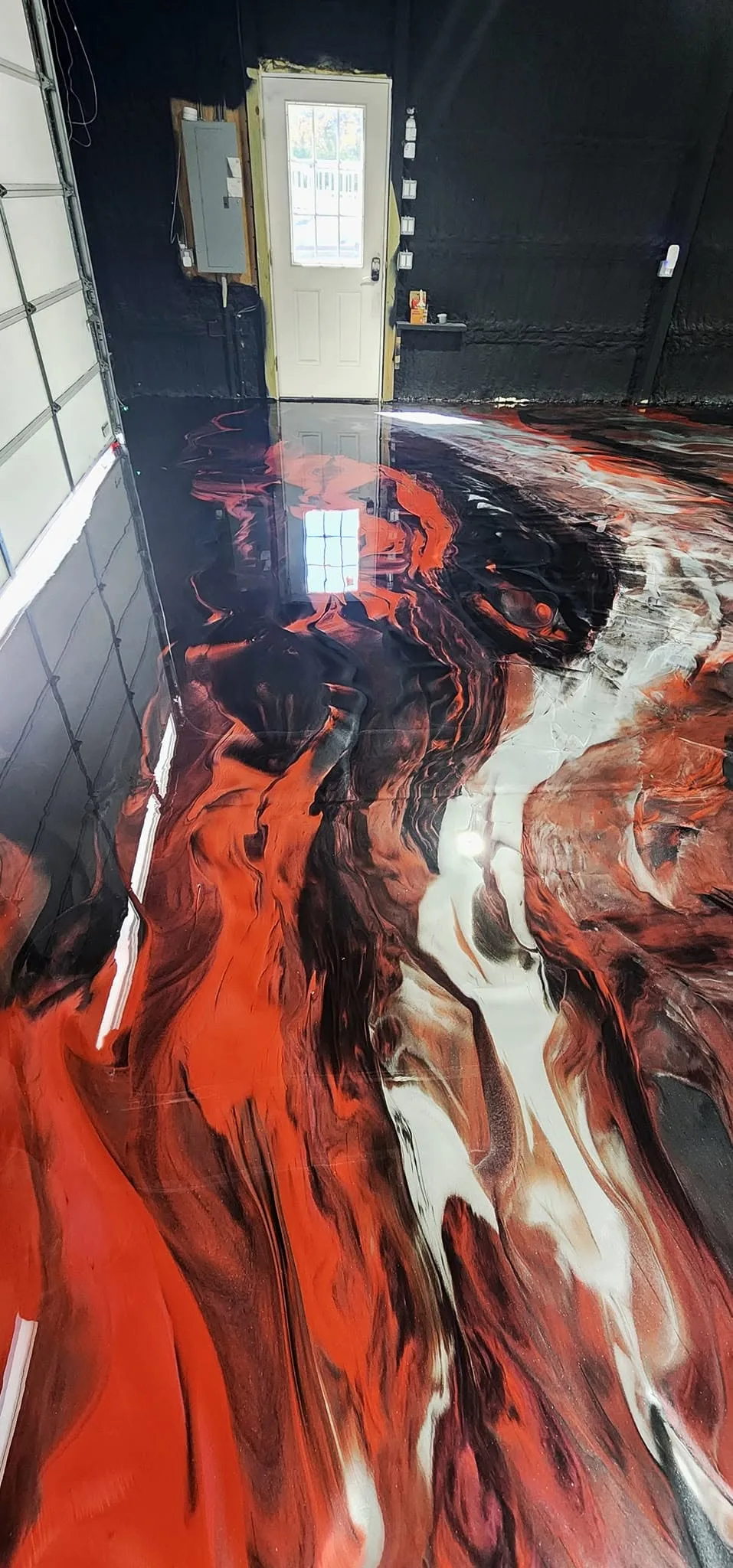
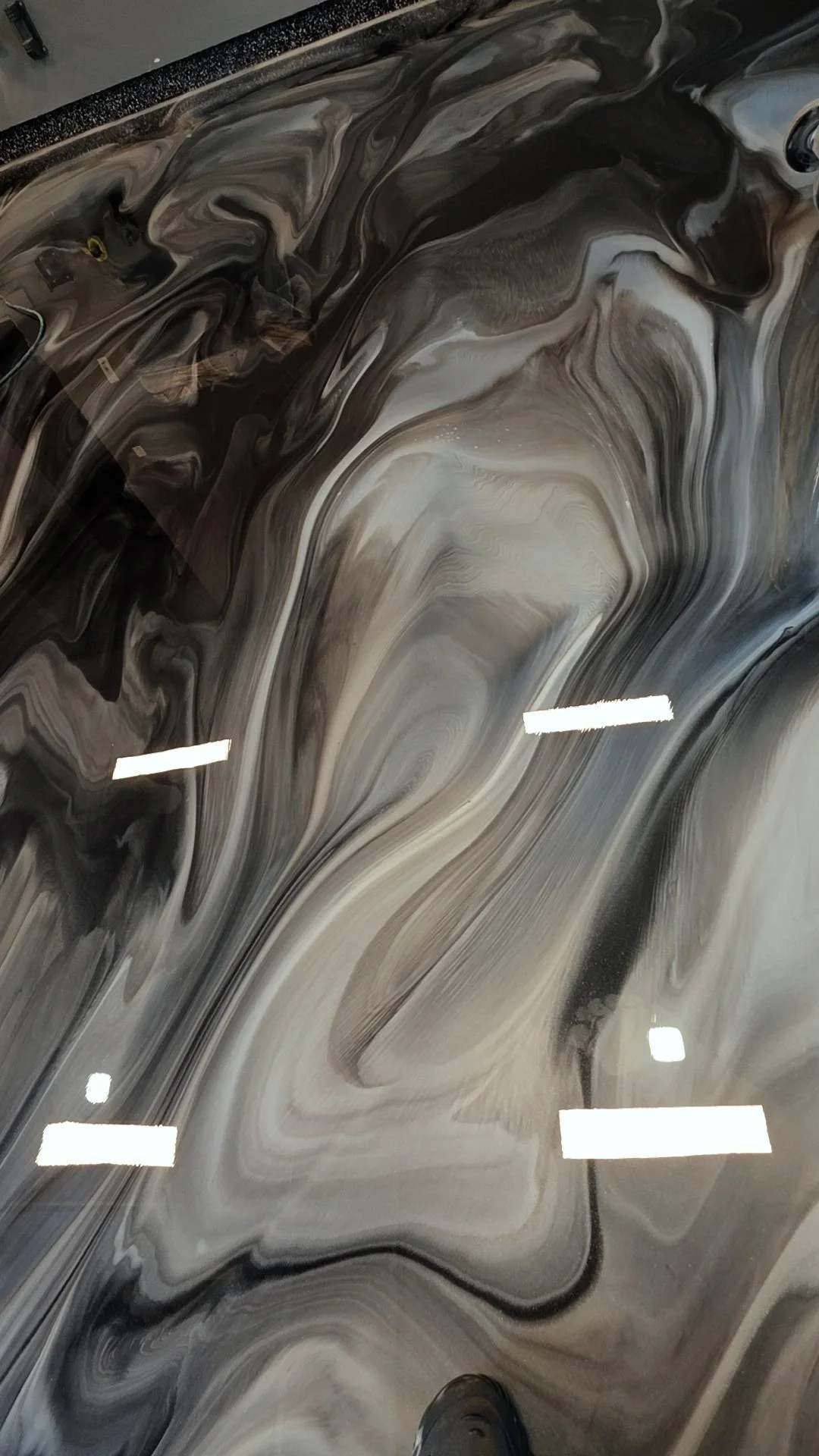
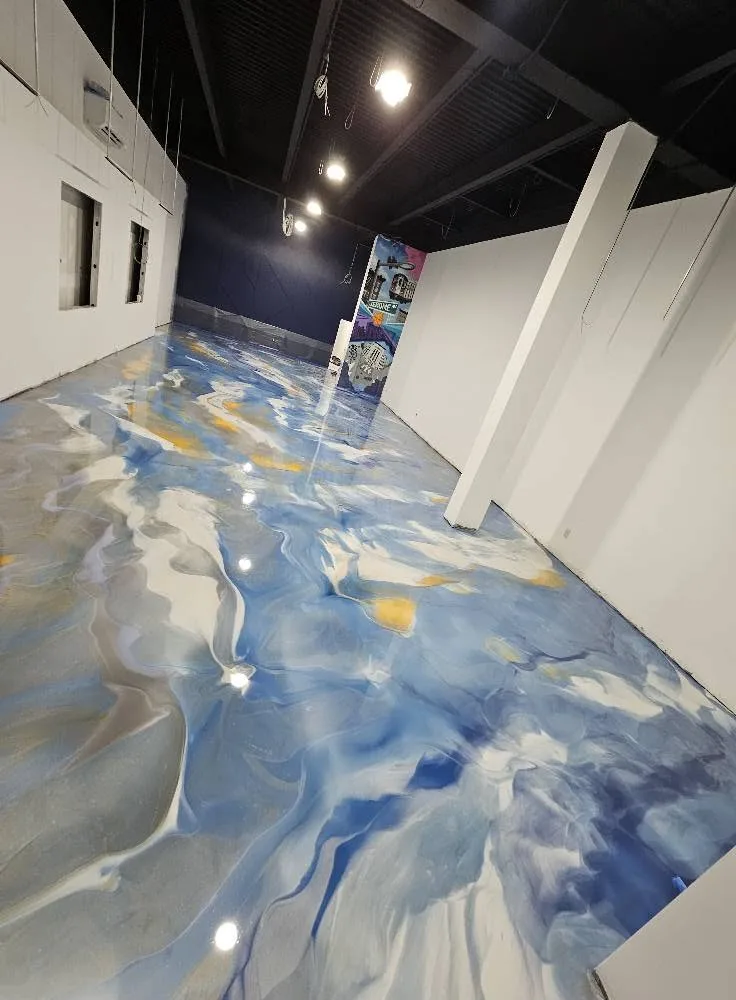
Other jobs from the file, not all of them this service. See the gallery



Questions about anti-slip epoxy floor systems
How slip-resistant will the floor be?
That depends on the texture, the topcoat and what ends up on the floor. Danny does not put a number on it. When a site has its own slip requirement, the system gets chosen to that requirement and the product data, and the facility handles any testing. On the walk he talks through how much grip each texture gives.
Does an anti-slip floor still look good?
It can. Flake blends hide texture well, and solid colors with a fine aggregate look clean from standing height. The rougher the texture, the more it changes the look and the shine. In a showroom or a home, a light texture over a decorative floor is one way to keep the look and add some grip.
Can texture be added to an existing epoxy floor?
Often, if the existing coating is well bonded. The surface gets prepped and a new textured topcoat goes over it. If the old coating is peeling, bubbling or lifting, adding texture on top only hides the problem for a while. Danny looks at the old floor first and says which way makes sense.
Will the grip wear down in the busiest paths?
Over time, traffic rounds off the aggregate and wears the topcoat in the busiest lanes, and the floor can feel smoother there. A fresh textured topcoat restores the grip before wear reaches the base coats. Danny points out the paths most likely to change, so the owner knows where to check.
Should we keep using floor mats after the coating goes down?
Mats at entrances still help, because they catch water and grit before it spreads across the floor. Mats laid over a slick spot are a different story, since the textured coating is meant to replace them. Danny suggests which mats are worth keeping and which ones the new floor makes unnecessary.
Why does a coated floor feel slick even when it is dry?
Fine dust, flour or a film left by the wrong cleaner can make a dry floor feel slippery. Smooth gloss without texture adds to it. Sometimes the cleaning routine is the fix, and sometimes the floor needs grip added. Danny asks how the floor is cleaned before he decides which one applies.
Close to this one
Slip, chemical, impact, heat and static control. Danny looks at the space first and says what fits before anyone orders material.
- UV-Resistant Floor TopcoatsClear UV-resistant topcoats for floors near garage doors, windows and skylights, chosen to slow the yellowing that sunlight causes in epoxy.
- Corrosion-Resistant Floor SystemsResin floor systems that keep salt, brine and corrosive washdowns out of the concrete, chosen for the exposure and applied over sound slabs.
- Waterproof Concrete Coating SystemsResin coatings that seal the top of a concrete floor so spills, mop water and wet tires stay on the surface and clean up.
- Slip-Resistant Pool Deck CoatingsOutdoor pool deck coatings with texture for wet bare feet, a topcoat for sun and weather, and light colors that stay comfortable.
- Chemical-Resistant Epoxy FlooringEpoxy floors matched to a facility’s own chemical list, with the resin and topcoat chosen from the product data for those spills.
Based in Cranford, NJ. Danny takes work across New Jersey, the five boroughs, Long Island, Westchester and Rockland, Fairfield County and Bucks County. See every areaSee the gallery
Danz Handz
Danny Carrero, epoxy specialist
dhepoxy@gmail.com
Cranford, NJ. Mon to Sat, 8 to 6. Hablamos español.
Book a walkthrough
Describe the floor and what you have in mind. Danny calls back and comes out to look at it.