
Restoring the coated floor your customers walk on
Customers see a salon, restaurant or retail floor before they see much else, and a scuffed, dull coating with patches in it makes the whole room look older than it is. Restoring it usually means repairing the bad spots and renewing the topcoat, a much shorter shutdown than tearing the floor out and starting over.
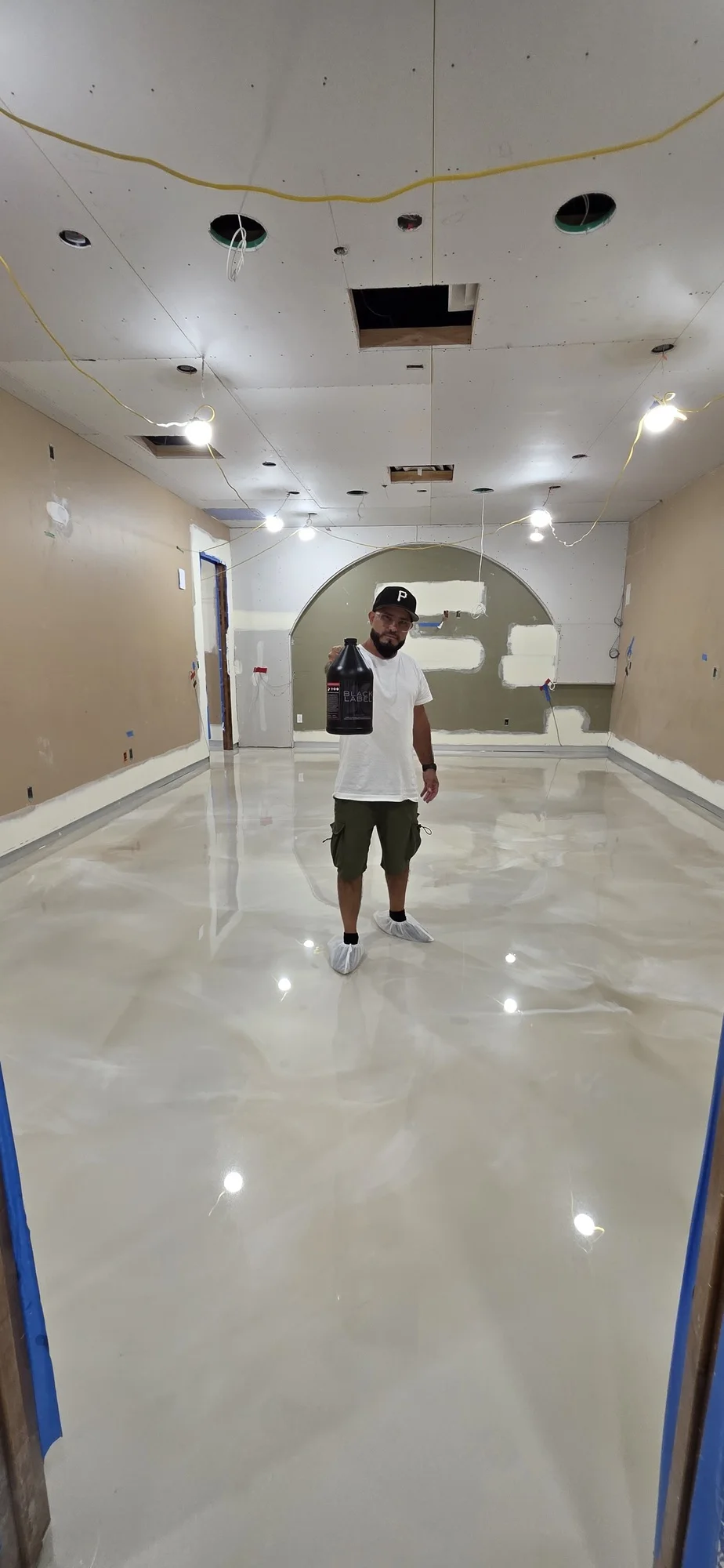

How Danny approaches commercial floor coating restoration
Commercial restoration brings an existing coated floor back to a clean, even look across the whole space. The work combines whatever the floor needs: repairs to chips, cracks and worn lanes, removal of any failed patches, and a full sanding and recoat so the floor finishes as one surface. The aim is a floor that looks deliberate again, with the color and sheen matched throughout so nobody can tell where the old damage was.
He checks the coating for any areas that are no longer bonded.
It fits businesses whose floors are still bonded and mostly sound, but have lost their finish to years of traffic, rolling racks, chairs and cleaning. A floor that is peeling across large areas is a replacement job, and Danny will say so. It also requires a window when the space can be emptied or worked in sections, since the coating needs the room closed through the cure. Spaces that can never close for even a short stretch are hard to restore well.
Danny walks the space with the owner or manager during a quiet hour, looking at how customers and staff actually move through it, where carts and chairs drag, and where the worst wear sits. He checks the coating for any areas that are no longer bonded. Then he plans the work around the business, usually in sections or during a closure. Repairs go in first, then the whole floor is sanded and recoated so the finish is even. After the cure, he walks the floor with the owner before fixtures, racks and furniture go back into place.
Customers notice a tired floor long before they notice the work that fixed it.
How Danny does the job
When customers walk on the floor, timing and appearance drive the restoration, so these stages plan around business hours as much as around the coating itself.


Walking it like a customer
Danny comes in through the front door the way a customer does and notes what catches the eye first: a worn path to the register, scuffed patches under display racks, chair marks around tables and a dull stretch near the restrooms. That view sets which areas matter most.

Booking the closure window
With the manager, he matches the work to the calendar, whether a closed day, a long weekend or a run of overnight sessions with sections worked in turn. Fixtures that have to move are listed so staff can plan around them, and the sequence is set before any material is ordered.

Fixing the damage under fixtures
Once racks and furniture are out, the floor beneath them gets inspected, since old anchor holes, gouges and stains hide there. Chips, cracks and failed patches across the room are ground out and repaired so nothing old shows through the new finish.

Sanding and an even recoat
The whole sales floor is sanded to a uniform dull and recoated in its existing color or a new one, in a sheen picked for how much daily scuffing it will see. Sections meet at joints or doorways so the finished floor reads as one surface.

Walkthrough before fixtures return
After the cure, Danny walks the space with the owner along the routes customers take. Furniture goes back with pads on the legs, and the cleaning staff get a short rundown on what to use so the restored finish keeps its look.
More of Danny’s floors
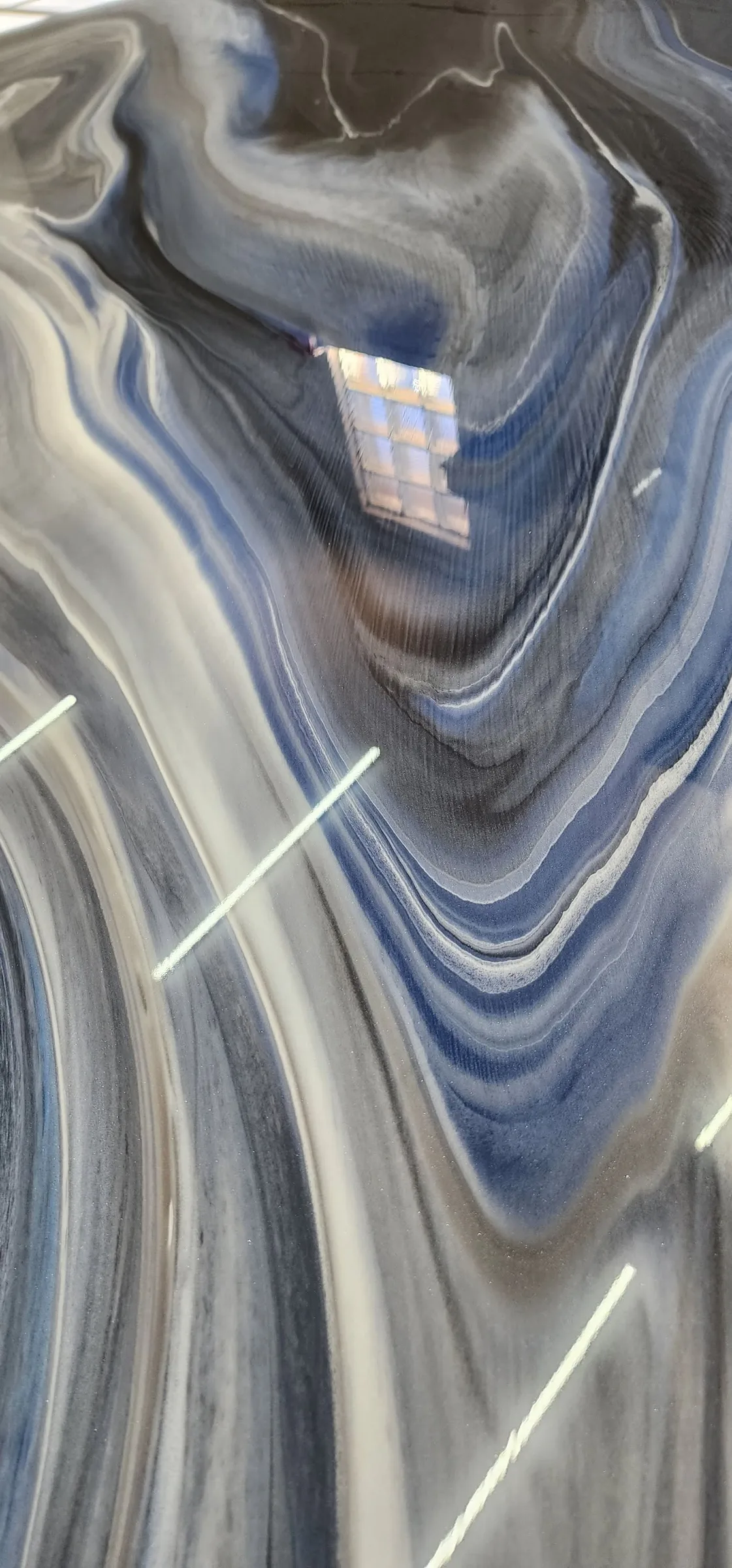
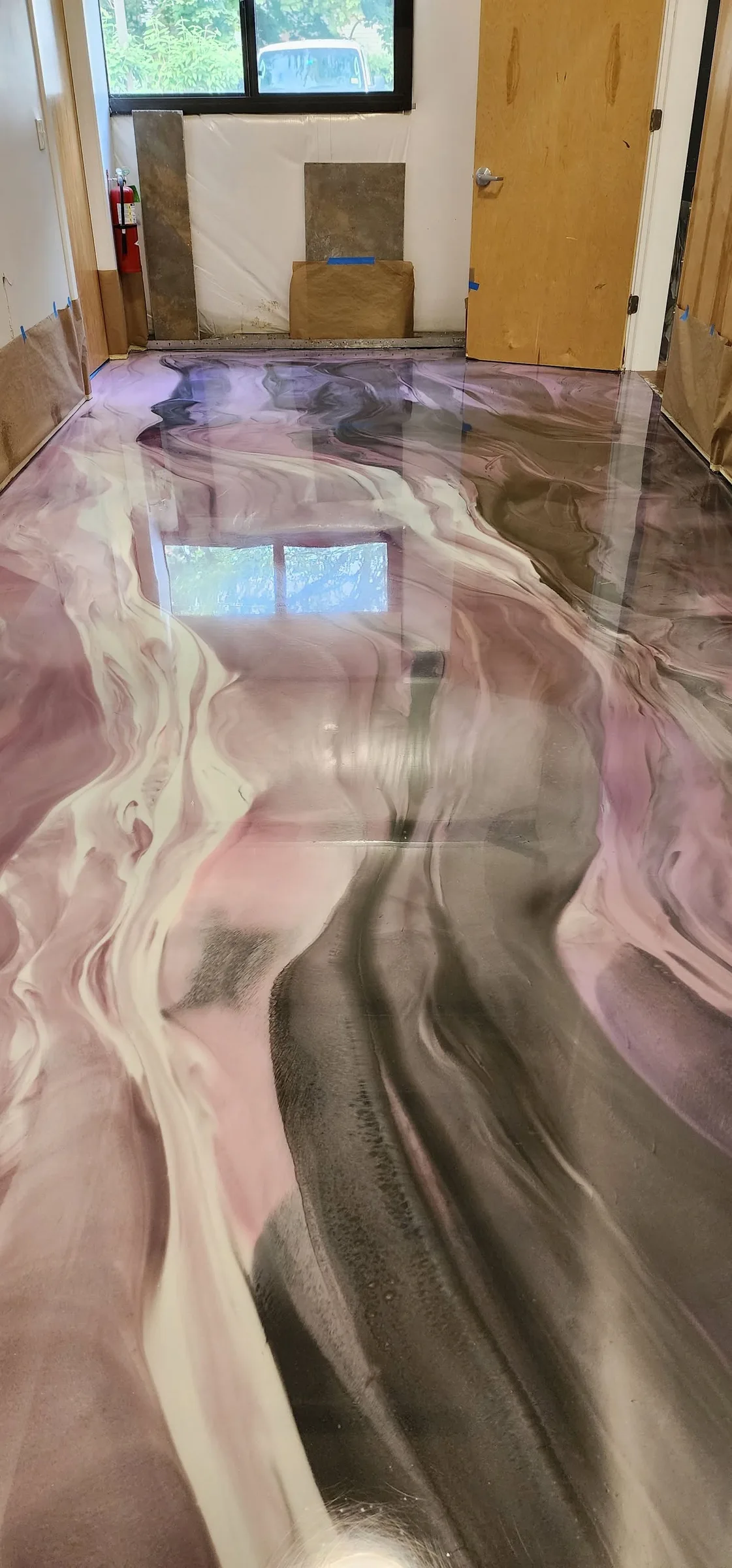
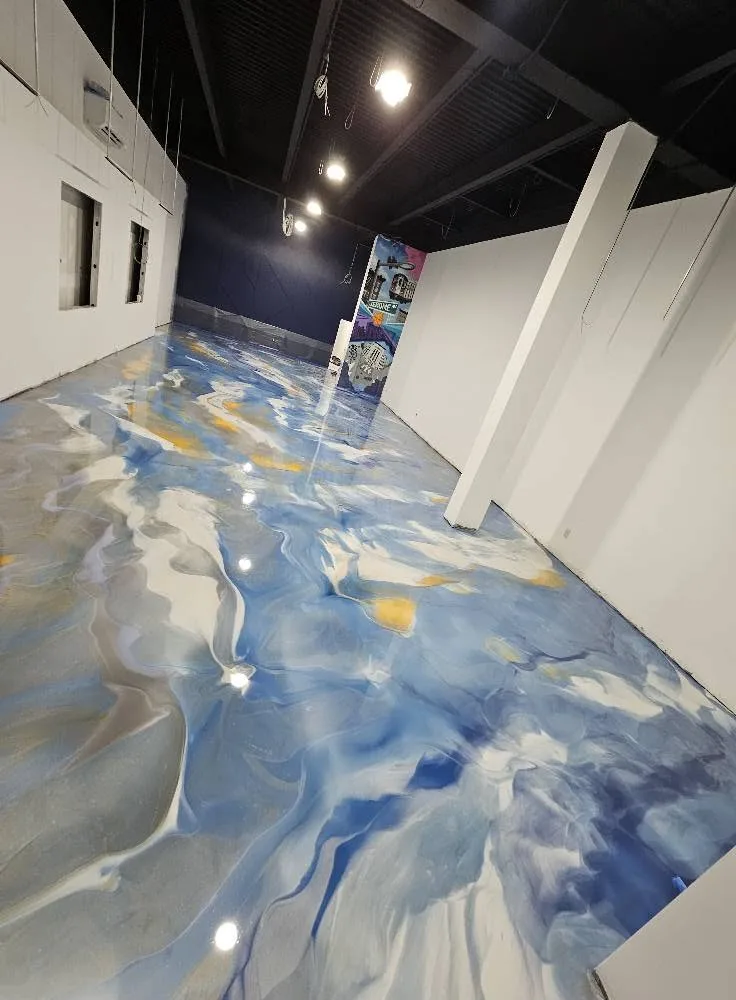
Other jobs from the file, not all of them this service. See the gallery





Questions about commercial floor coating restoration
Can you restore the floor without closing the business?
Sometimes, if the space can be worked in sections with each one closed through its cure. Many owners prefer to schedule the work over a weekend or a planned closure so the whole floor can be done at once and finishes evenly. Danny looks at the layout and the business hours during the walk and lays out the options.
Is restoration different from a full replacement?
Restoration keeps the existing coating in place and repairs, sands and recoats it, so the slab is not ground down to bare concrete. Replacement removes the old coating entirely. Restoration only works when the old coating is still bonded, and Danny checks that across the floor before recommending it.
Can the color be changed during restoration?
Yes, within reason. Because the floor is sanded and recoated, a new color coat can go down before the topcoat. Going from a dark solid to a light one may need more coats to cover evenly. Danny talks through color choices with you, along with how each one handles your foot traffic.
Can the restored floor carry our logo or brand colors?
Often, yes. Because the floor is being recoated anyway, a logo near the entrance or bands in brand colors can be laid into the color coat before the clear goes over. That adds design time and usually a little more closure time. Danny talks through how the design will wear in a high-traffic spot before committing to it.
Will restoration hide the outlines of old fixtures we removed?
Mostly. Old anchor holes are filled and the floor is recoated, so the ghost of a removed counter or display fades into the new color. A sharp line where a fixture blocked years of sun or traffic can still show faintly under a clear coat, while a new color coat covers it. Danny points out those spots at the walk.
How do we keep a restored floor looking good between visits?
Daily dust mopping at the entrances picks up grit before it scratches the finish, and a neutral cleaner avoids the film many commercial products leave behind. Felt pads on chairs and walk-off mats at the door do the rest. Danny can set up return visits so worn spots are handled before they spread.
Other repair work
Peeling, bubbling, chipped or faded coatings, patched or recoated, plus upkeep plans for floors that work hard.
- Epoxy Floor RepairRepair for chipped, peeling, cracked and worn epoxy floors, starting with why the floor failed before deciding to patch, recoat or redo.
- Bubbling Epoxy Floor RepairRepair for epoxy floors that cured full of bubbles, pinholes and craters, ground open, filled and recoated so the cause gets fixed too.
- Blistered Epoxy Coating RepairRepair for blisters that rise under older epoxy floors, starting with what is lifting the coating before choosing a patch or a redo.
- Cracked Epoxy Flooring RepairCracks ground open, filled and recoated to match, with active cracks turned into proper joints so the line does not keep coming back.
- Scratched Epoxy Floor RestorationScratched, hazy topcoats sanded evenly and recoated wall to wall, so a glossy or metallic floor gets its clarity back without a full redo.
Danny works out of Cranford, NJ and covers about 60 miles: North and Central Jersey, the city and Long Island, the Hudson Valley counties, Fairfield County and eastern Pennsylvania. See every areaSee the gallery
Danz Handz
Danny Carrero, epoxy specialist
dhepoxy@gmail.com
Cranford, NJ. Mon to Sat, 8 to 6. Hablamos español.
Book a walkthrough
Tell Danny about the space. He calls you back, comes out, looks at the concrete and talks it through before anything gets decided.