
Setting the right texture on a slab before coating
A concrete profile is the texture left on a slab after grinding or blasting, and different coatings need different amounts of it. A thin sealer wants a light scratch while a thick build wants more tooth, so Danny matches the profile to the system going on and its product data.

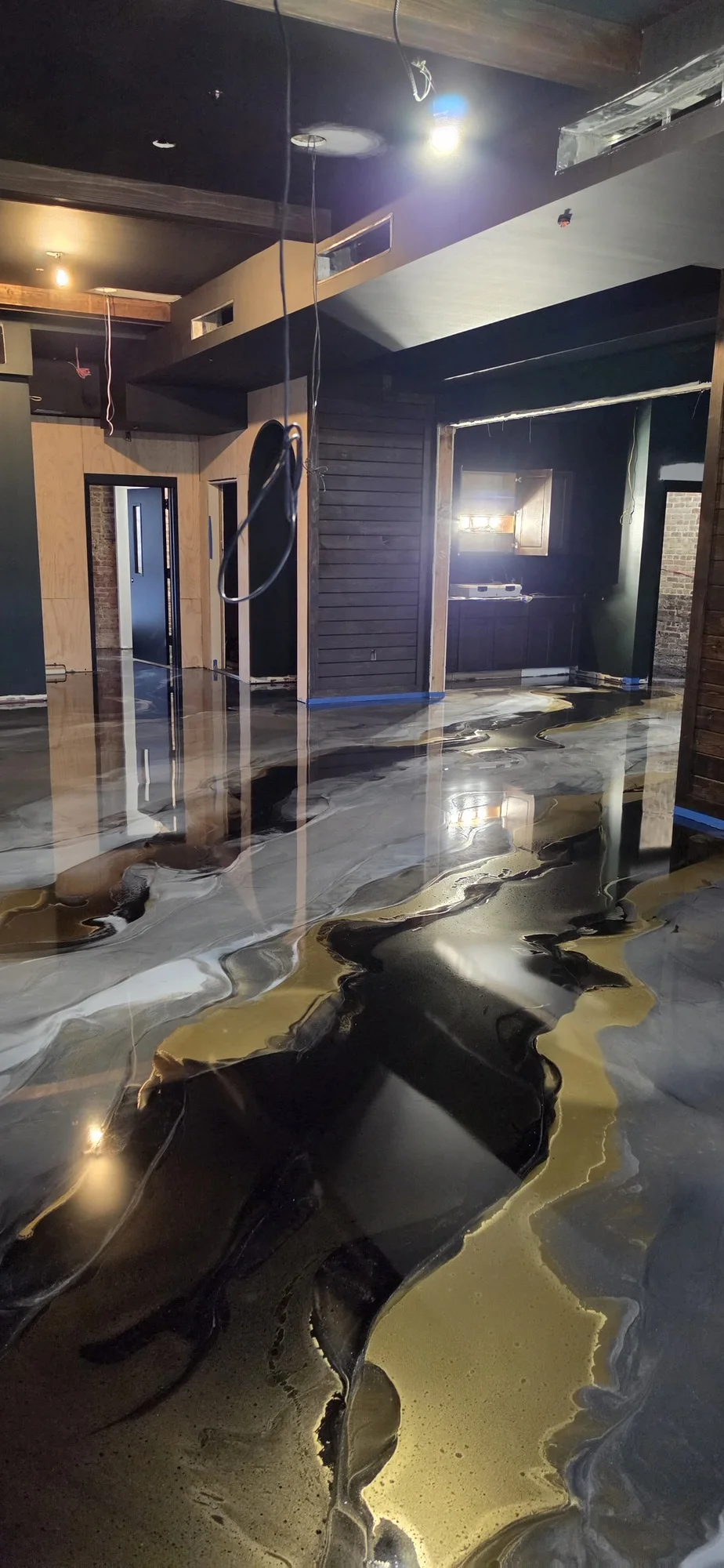
What goes into concrete profile preparation
Profile is how rough the surface is, from a light scratch that feels like fine sandpaper to a coarse texture you can see from standing height. Thin coatings want a lighter profile, because a deep texture can show through them. Thick systems, like troweled mortars and heavy industrial floors, want a deeper one so they can lock in. Coating makers describe the profile their product needs, often by comparing the slab to a set of reference chips that show each level of texture. Profile prep means hitting that target across the whole floor.
He walks the slab looking at how hard it is and how it has worn, since a slick traffic path and a soft corner grind differently.
It matters on every coated floor and most on jobs where a spec names the profile, like commercial and industrial work. Where it goes wrong is in both directions. Too smooth, and the coating has little to grip, often in polished-looking spots the grinder skipped. Too rough under a thin metallic, and every scratch reads through the finish. Profile also cannot be judged in one spot. A slab that wears differently from room to room, or near a garage door, can need more passes in some areas than others.
Danny starts from the system going on top and the product data for it, which tells him the texture to aim for. He walks the slab looking at how hard it is and how it has worn, since a slick traffic path and a soft corner grind differently. During grinding he chooses the tooling and the number of passes to reach that texture, and he checks the surface by eye and by hand as he goes, paying attention to edges and corners where profile tends to come up short. Repairs get ground to match before the slab is vacuumed for the pour.
The coating decides how rough the slab should be, so the coating gets picked first.
From bare slab to finished floor
Profile work aims at a target texture, so the job starts with the coating’s product data and ends with Danny checking the slab against it by hand.
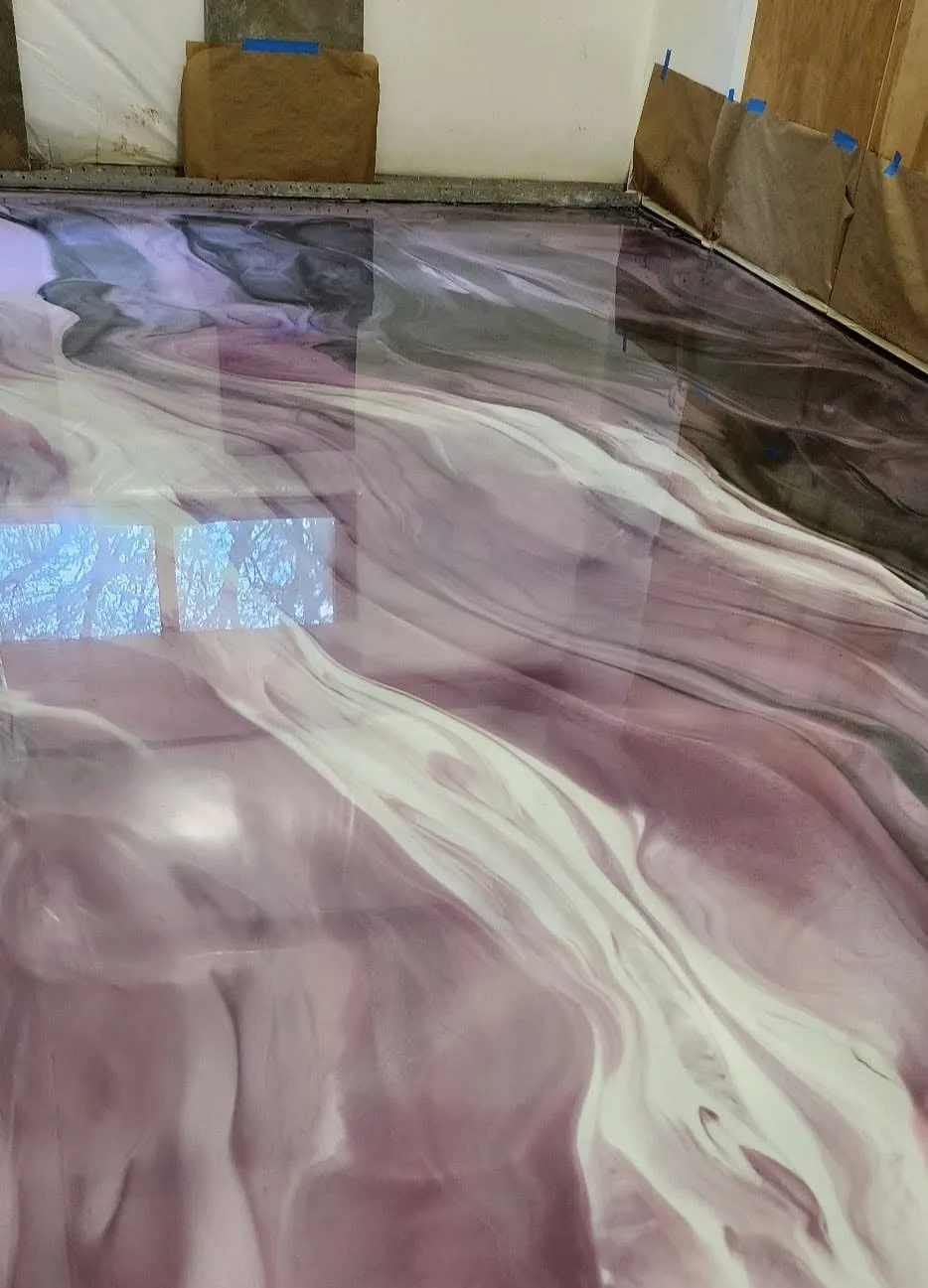

Reading the coating’s target
Danny pulls the product data for the system going on, or the project spec where there is one, and notes the texture it asks for. That target decides the tooling and the number of passes before the grinder leaves the truck.

Test grinds across the room
Hard, troweled concrete near the center and softer, worn concrete at doorways cut very differently. Danny grinds small test areas in several parts of the room to see how each responds to the tooling he plans to use.

Varying passes by zone
Slick traffic paths may need extra passes to reach the target texture, while soft, porous areas get fewer so they are not opened too deep. Danny adjusts passes and tooling across the room so the texture comes out even.

Holding reference chips to the slab
Where a spec names a profile, Danny holds reference chips against the ground surface in several spots, edges and corners included. Where it does not, he judges by the feel the product data describes and by how the surface takes light.

Matching repairs to the field
Filled cracks and patches are smoother than ground concrete once they harden, so they get their own pass to match the surrounding texture. The slab is then vacuumed, and the primer goes onto the same profile everywhere.
More of Danny’s floors
Other jobs from the file, not all of them this service. See the gallery








Questions about concrete profile preparation
What does profile mean on a coating spec?
It is the texture the coating maker wants on the concrete before their product goes down. Specs usually describe it against a standard set of reference chips, from nearly smooth to very coarse. Danny reads the spec, grinds to that texture and checks the finished surface before the pour, so the floor matches what the product was designed to bond to.
Can a slab be too rough?
Yes, for thin coatings. A deep texture under a thin coat or a smooth metallic shows as ridges and scratch marks in the finish, and it uses more material to cover. Heavy systems handle a rough surface well. That is why the coating is chosen before the floor is ground, so the texture fits it.
How do you get the same texture near walls?
Edges are where profile usually falls short, because the big grinder cannot reach the last inches by the wall. Danny goes back with a hand grinder and tooling that leaves a similar texture, and he checks the perimeter as closely as the middle. A coating that peels along the walls often traces back to an edge that never got profiled.
Does a flake floor need a different profile than a metallic one?
Usually. A flake system goes on thicker and carries chips and a topcoat, so it handles a coarser texture well. A metallic pour is smooth and reflective, so deep scratches can show as lines in the finish. Danny grinds a metallic floor to a finer, more even scratch, and he settles the finish before prep so the texture suits it.
Can I check the profile myself after grinding?
You can get a rough sense. Run a hand across the floor: it should feel uniformly gritty, with no slick patches. Look across it with a light held low, and shiny spots will stand out. Danny is glad to walk the slab with you before primer, since that is the last chance to see the texture the coating will grip.
Will profiling change the floor’s height?
Not in any way you would notice. Grinding to a profile takes off the smooth top skin and a small amount of concrete, enough to open the surface. Thresholds, doors and drains stay where they were. Floors that need real height changes go through leveling or slope work, which adds material and is planned as a separate step.
More from the prep section
Grinding, shot blasting, crack and joint filling, leveling and moisture testing, done before any coating goes down.
- Concrete Coating RemovalStripping failed paint, sealers and old coatings back to sound concrete, with the method picked after testing how the old finish comes off.
- Old Epoxy RemovalTaking up peeling, bubbling or yellowed epoxy and finding out why it failed, or sanding and recoating it when the old floor is still bonded.
- Concrete Floor SandingLight sanding to scuff a sound epoxy floor before a recoat, smooth between coats and feather patches into the floor around them.
- Concrete Crack FillingChasing, filling and grinding slab cracks flush before a coating, with honest calls on which cracks are still moving.
- Concrete Joint FillingDeciding whether each saw cut and control joint gets filled and coated over or kept open, and doing either one cleanly.
From Union County out to the Lehigh Valley, Long Island and Fairfield County, the work is all within about 60 miles of Cranford. See every areaSee the galleryRead: Why Every Good Epoxy Floor Starts With a Diamond Grinder
Danz Handz
Danny Carrero, epoxy specialist
dhepoxy@gmail.com
Cranford, NJ. Mon to Sat, 8 to 6. Hablamos español.
Schedule a look at your floor
Send a few lines about the room and the look you want. Danny will call and set up a time to see it.