
Epoxy floors poured for depth and movement
Some metallic floors are poured to look deep, as if the surface drops away under your feet or ripples like water. That illusion comes from how the pigment is layered and moved, and it works best in rooms people linger in, like game rooms, bars, lobbies and salons, where someone will stop and look down.

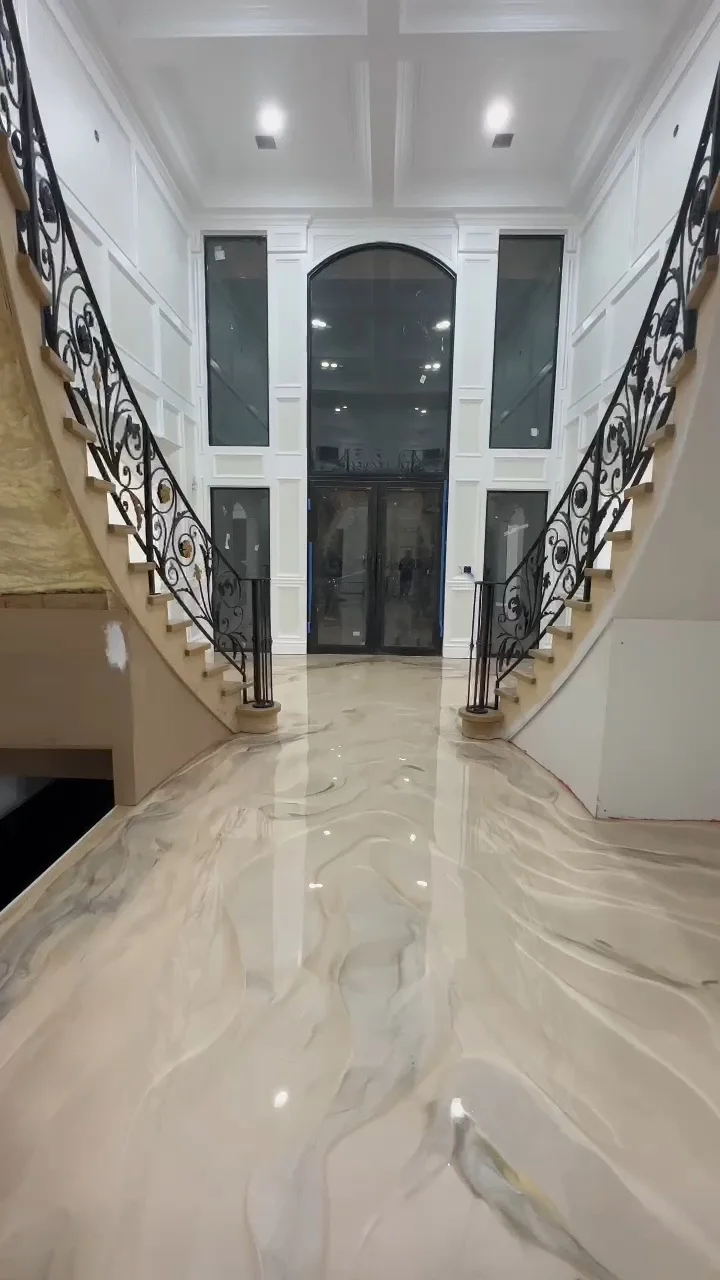
3D Epoxy Flooring, from Danny’s side of the job
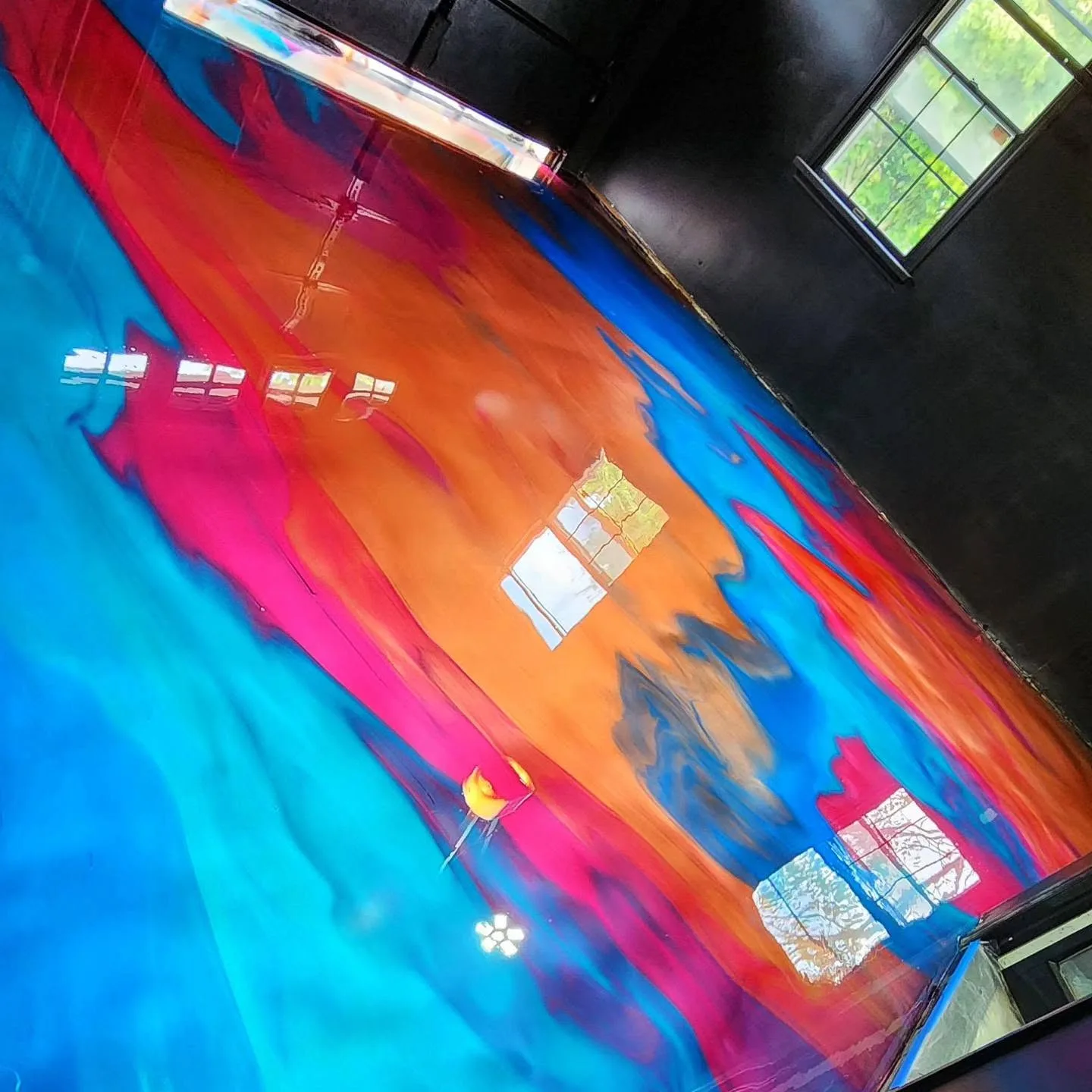
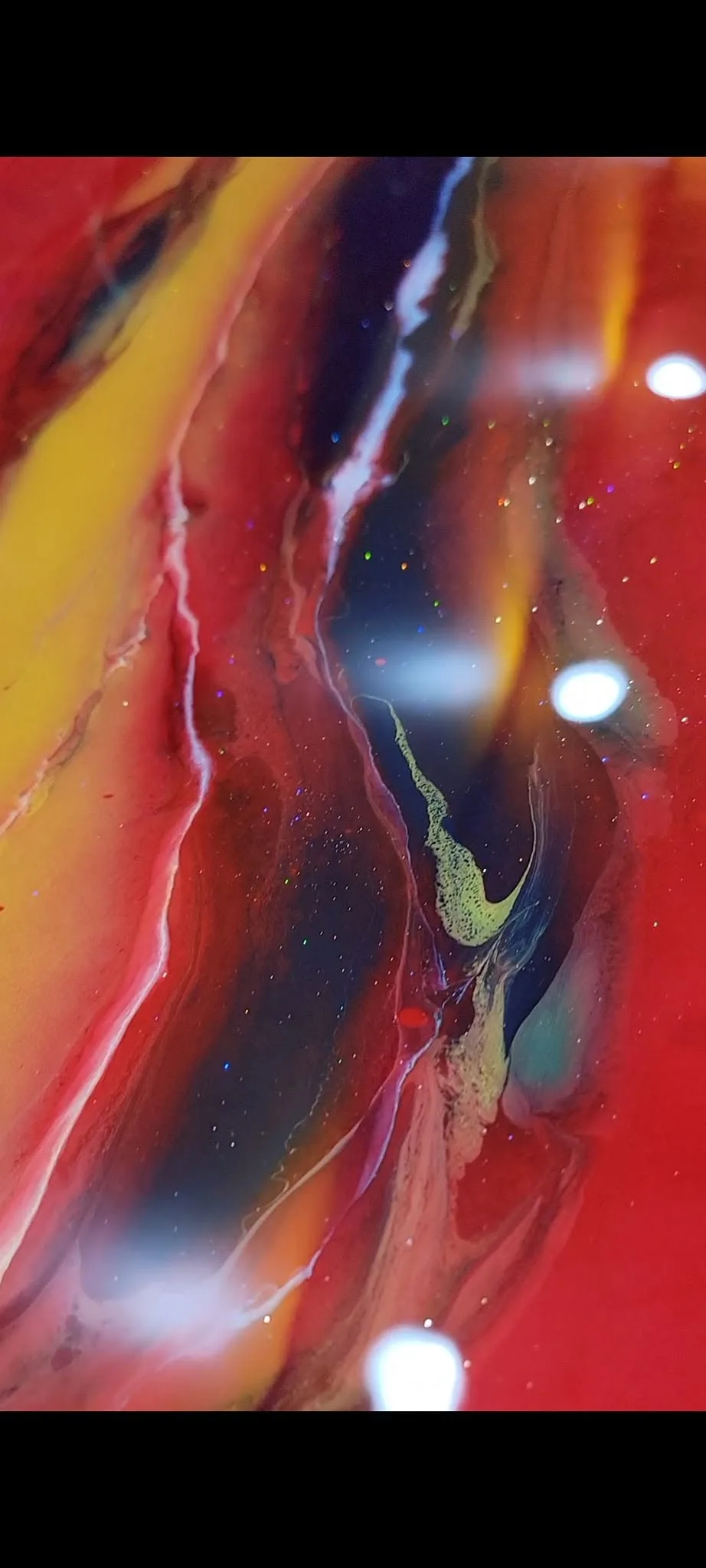
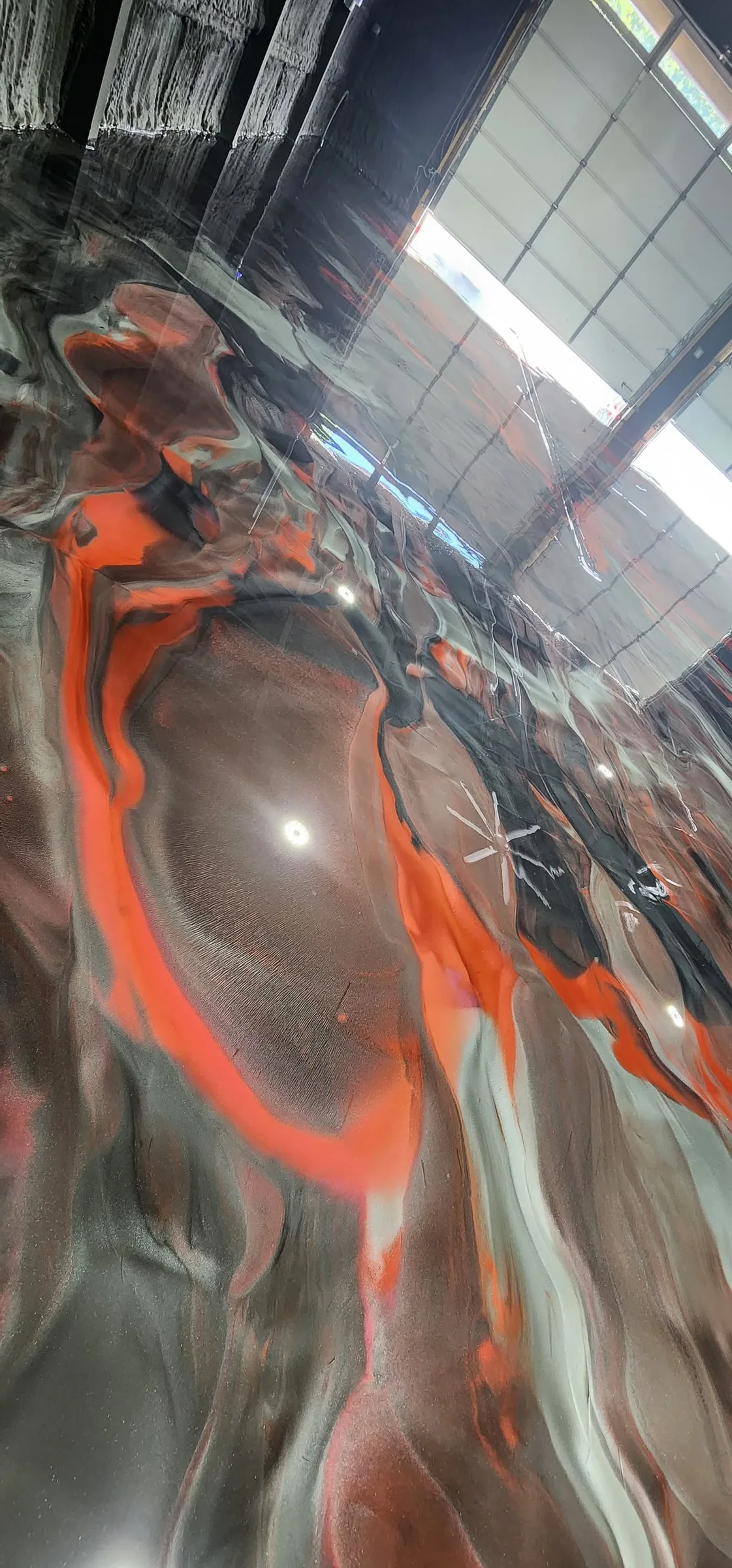
The depth comes from how light hits layered metallic pigment. Danny pours a base color, then works lighter and darker metallics into it so some areas catch light and others fall into shadow. Moving the wet material with tools or air opens up cells, lacing and soft craters that read as height and depth. A clear coat over the top adds a layer you look through, which deepens the effect. You will also see printed-image floors sold as 3D. Those use a graphic under clear epoxy, and they are a different product.
Moving the wet material with tools or air opens up cells, lacing and soft craters that read as height and depth.
Because the effect depends on light, it is strongest in rooms with windows, recessed lights or a long view across the floor. A small closet or a dim corner shows less of it. The finish is smooth and glossy, so it suits finished rooms with shoes and socks on it more than a shop floor with rolling jacks and grinding sparks. Busy depth can also fight a room that already has a loud rug, patterned tile or bold walls, and Danny will say so when he sees it.
Danny walks the room with the lights the client actually uses, because a 3D floor that looks deep at noon can look flat under one ceiling fixture at night. He notes where people enter and sit, since that is where the floor gets seen most. The slab is diamond ground, repaired and vacuumed. During the pour he builds the light and dark areas around those viewing spots, keeping the strongest movement in open floor and calmer color near walls and cabinets. After the cure and topcoat, he walks it with the client under the same lights they will live with.
A 3D floor is only as deep as the light in the room lets it look.
From bare slab to finished floor
On a 3D pour, Danny plans from the light fixtures and the spots where people stand, because depth only shows from certain angles and under certain light.
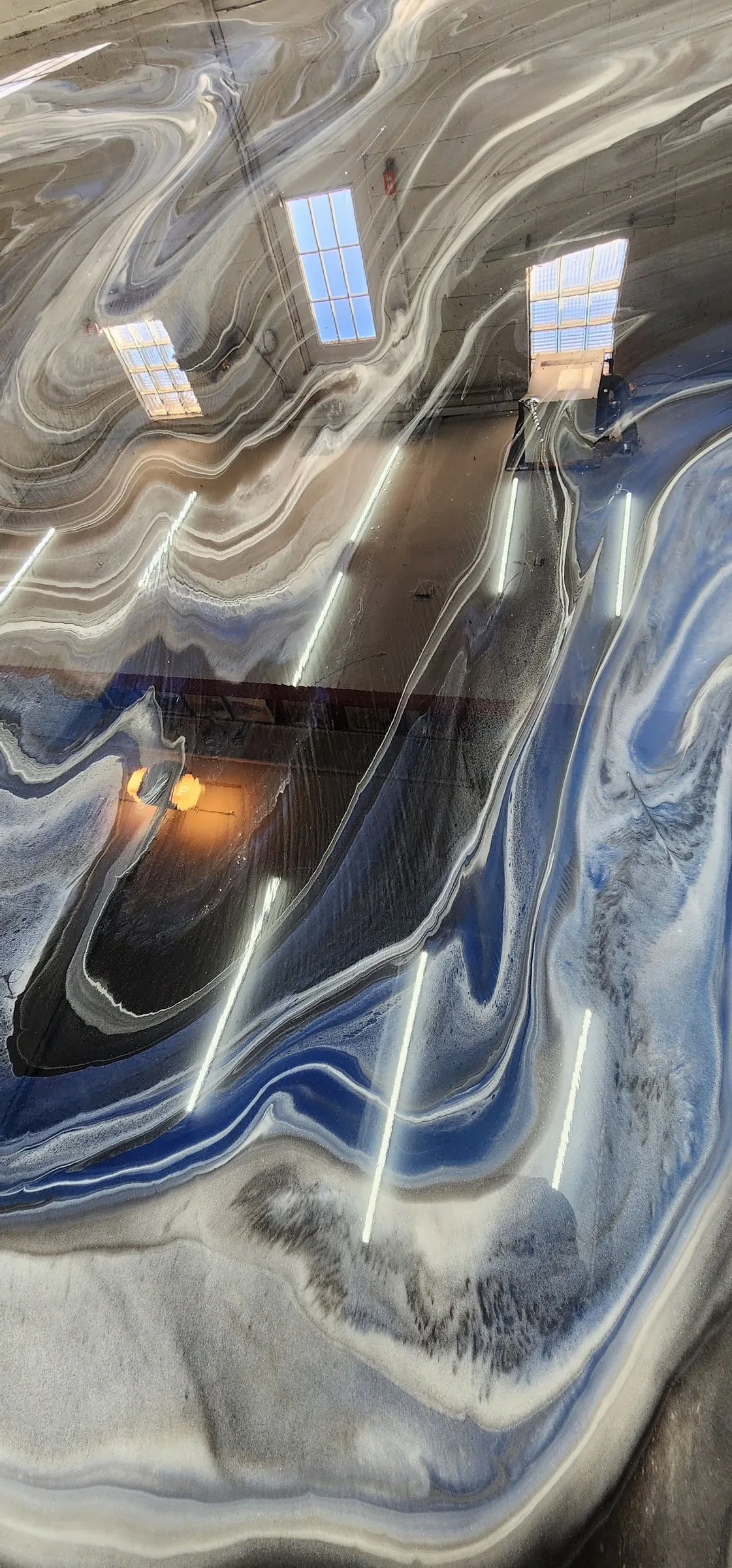

Mapping where people look down
Danny notes where people come in, where they sit, and where they stand at a bar or a pool table, and he looks at the room with its own lamps switched on. Those spots decide where the deepest movement belongs and where the floor should stay calm and quiet.

Taking the floor back to slab
Most 3D jobs start with something already on the concrete, such as tile, old paint or a store-bought kit. All of it comes off and the slab is ground, so the layered pour bonds to bare concrete and nothing underneath shows through the depth everyone will be looking into.

Flattening ridges the gloss would bend
A deep metallic floor is glossy, and gloss shows every wave in the slab. Low spots are leveled, cracks filled and each repair ground smooth, since a ridge under the pour would warp the reflections right where the illusion is meant to look its deepest.

Building light and shadow by hand
Danny pours the base, then works lighter and darker metallics into it with tools and air, opening cells, lacing and soft craters. The strongest movement goes into open floor near the viewing spots, and calmer color runs along the walls and under where furniture will sit.
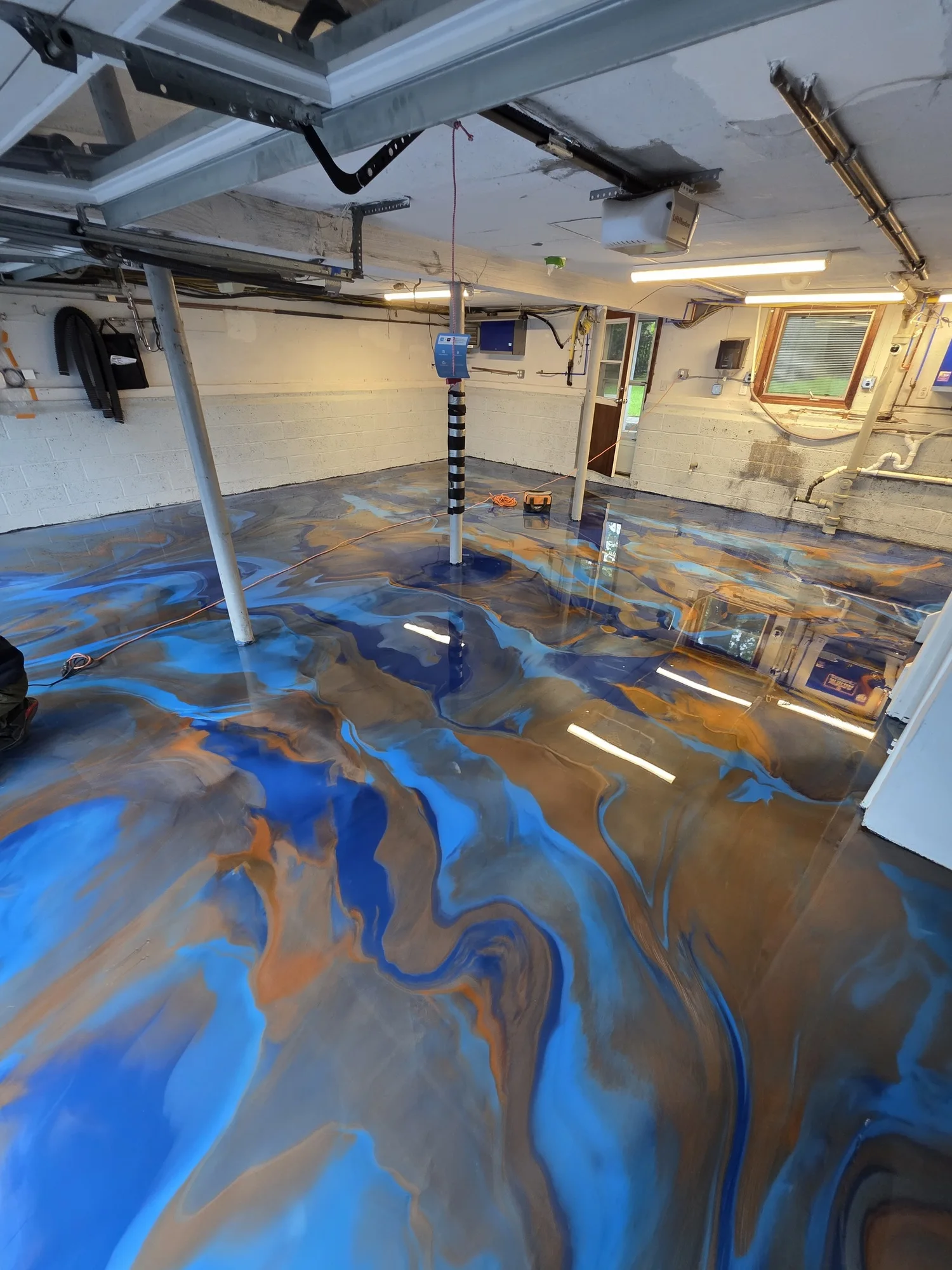
Checking depth after dark
After the layered pour hardens, a clear coat adds the layer you look through. The client and Danny check the floor at night with the usual fixtures on and again in daylight, since depth that shows at noon can flatten out under a single ceiling light.
More of Danny’s floors
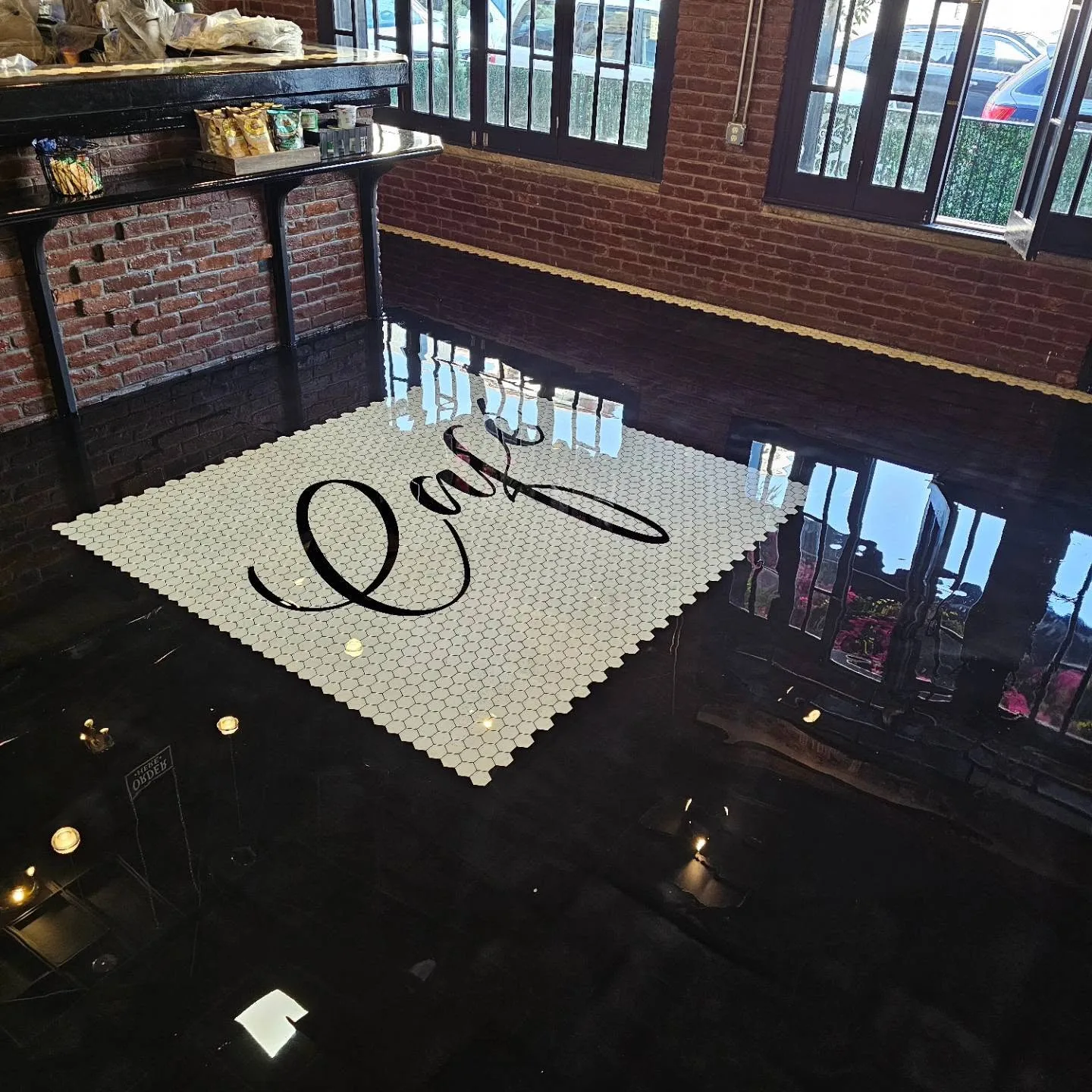
Other jobs from the file, not all of them this service. See the gallery
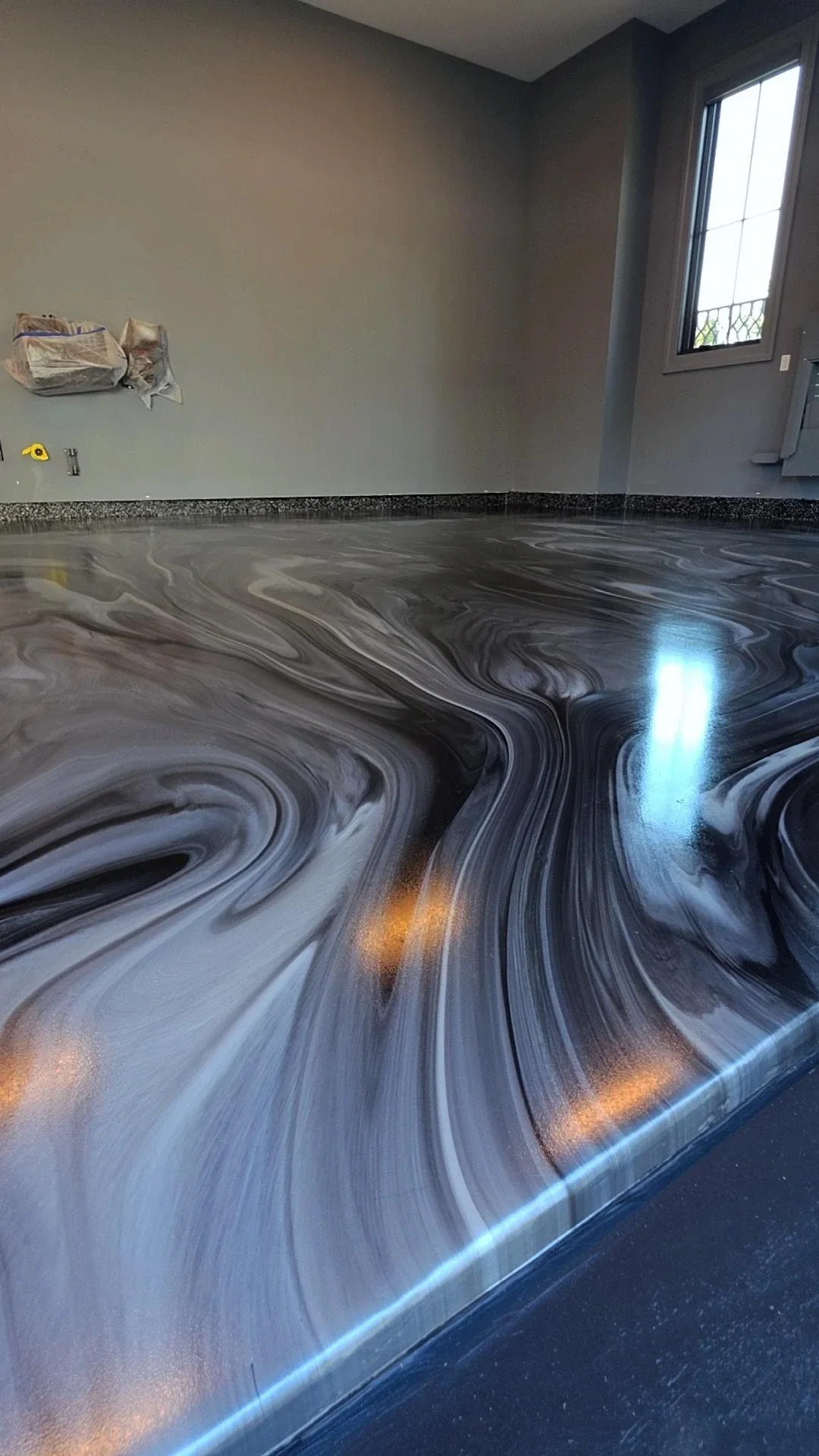



Questions about 3d epoxy flooring
Is this the same as the floors with dolphins or rocks printed on them?
No. Printed floors use a vinyl or banner image sealed under clear resin. A 3D metallic floor gets its depth from pigment and light, worked by hand during the pour. Some people want the printed look, and that is a fair choice, but if you came to Danny for depth that shifts as you walk, this is the poured kind.
Will the depth show up in photos?
Somewhat. Cameras flatten metallic floors, which is why pictures online rarely match what you see in person. The effect is strongest while walking across the room, when the light shifts across the pigment. If you are judging metallic floors from pictures, look at short videos of them as well, since movement shows depth better than a still frame.
Can a 3D floor go over my existing tile?
Usually Danny wants to get down to the concrete. Tile has grout lines, hollow spots and its own glazed finish, and any of those can telegraph through or let go under a pour. He looks at what is there, and in most cases the tile comes up and the slab gets ground and repaired before the new floor goes down.
Will a 3D floor make my room feel bigger or smaller?
It depends on the colors. Deep, dark metallics can make the floor seem to drop away, which some people love in a bar or a theater and find unsettling in a small room. Paler metallics with soft movement tend to open a space up. Danny looks at the size of the room and the wall colors before suggesting a direction.
Is a 3D floor harder to repair if it gets damaged?
A scratch in the topcoat can usually be sanded and recoated without touching the pattern. A gouge that cuts into the metallic layer is harder, because hand-worked movement cannot be copied exactly in one spot. That is why felt pads, mats and care with dropped tools matter more on this floor than on flake.
Can the depth effect go in just part of the room?
Yes. Some clients want a deep field in front of the bar or in the middle of a game room, framed by a calmer solid color along the walls where furniture sits. Danny plans where the field starts and stops so the edge looks like a choice, then pours both areas so they sit under one topcoat.
More from the decorative section
Metallic marble, 3D, pearl and two-tone pours, custom blends and logo inlays. This is the work Danny is known for.
- Decorative Flake Epoxy FlooringEpoxy with vinyl chips broadcast into the base coat for a speckled finish that hides dirt in basements, mudrooms and work rooms.
- Color-Flake Floor CoatingsFlake floors where the chip blend and base color are chosen to sit right with your walls, cabinets, siding or brand colors.
- Quartz Aggregate FlooringColored quartz granules sealed in epoxy for a dense, sandy-textured floor suited to kitchens, locker rooms and other rooms that get washed.
- Solid-Color Epoxy FlooringA single pigmented color wall to wall for workshops, gyms and back rooms that need a bright floor where spills and parts show up fast.
- Custom Blend Epoxy FlooringEpoxy colors mixed from a sample you bring in, a swatch, a tile or a car, with optional metallics and Glitter ELEMENTZ sparkle.
Jobs run about 60 miles out from the Cranford shop, from the Jersey shore and the Poconos to Long Island and Fairfield County. See every areaSee the galleryRead: Caring for a Metallic Epoxy Floor So It Keeps Its Shine
Danz Handz
Danny Carrero, epoxy specialist
dhepoxy@gmail.com
Cranford, NJ. Mon to Sat, 8 to 6. Hablamos español.
Schedule a look at your floor
Send a few lines about the room and the look you want. Danny will call and set up a time to see it.