
Concrete coatings sized to how hard a floor gets used
When a coating wears through in the busy lanes and holds up everywhere else, it was sized for less traffic than the building really gets. Danny looks at what actually crosses the floor before choosing: boots, carts, pallet jacks, sometimes vehicles. The build goes heavier where that traffic concentrates.

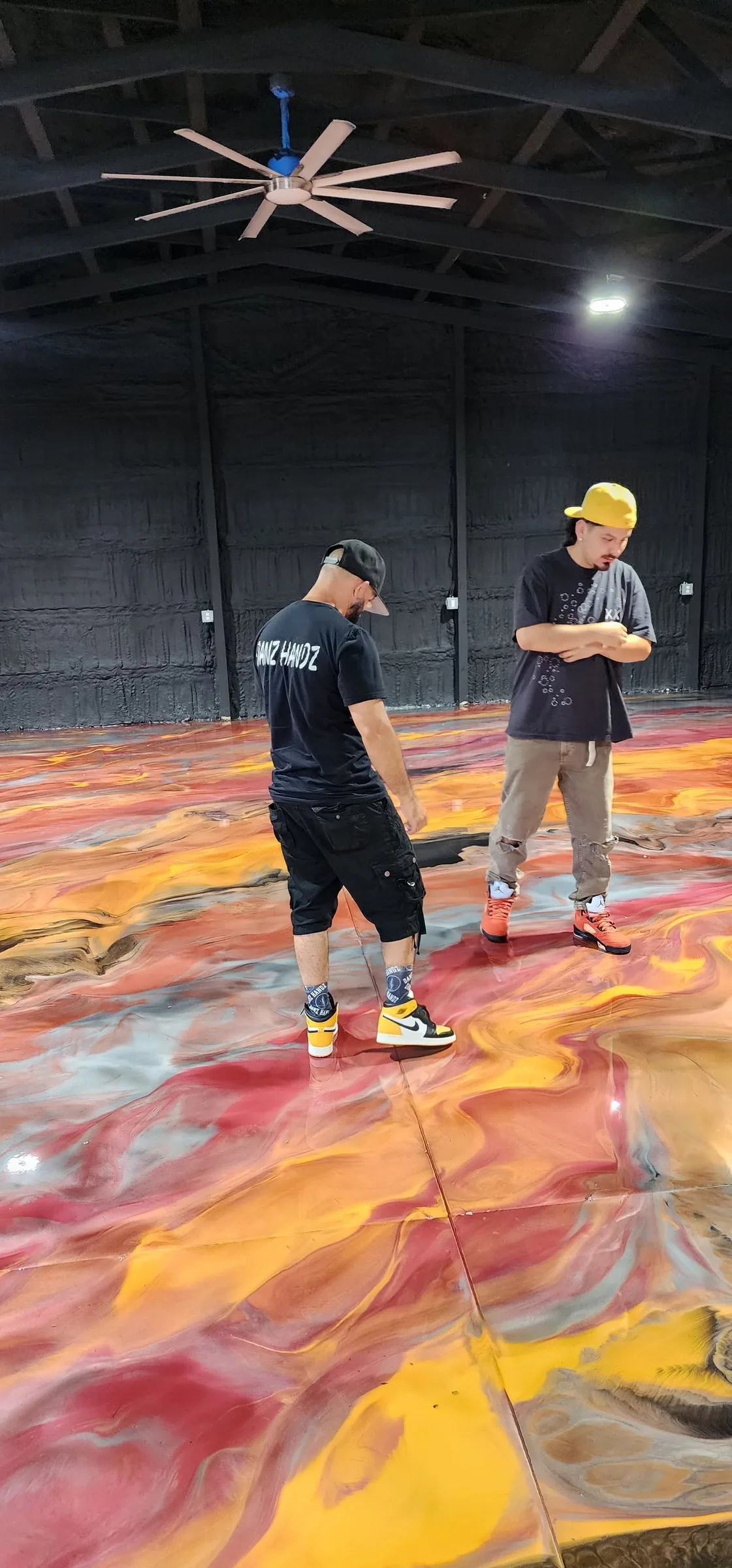
Heavy-Traffic Concrete Coatings, from Danny’s side of the job
A heavy-traffic coating is a resin system with more build and a tougher topcoat in the places where traffic is concentrated. The idea is simple. The build matches the abuse, heavier in main lanes and doorways and lighter where traffic is thin, so material goes where it does work. Danny walks the floor during working hours, sees the traffic in person and asks what gets spilled before he recommends anything, then matches the system to those requirements and the product data. Aggregate can be added where grip matters.
The build matches the abuse, heavier in main lanes and doorways and lighter where traffic is thin, so material goes where it does work.
The honest limit is that every coating wears, and heavy traffic wears it faster. A floor that fails early usually had a system too light for its traffic or a moisture problem underneath, and those are the things Danny looks at first. Heavy-traffic coatings still need regular sweeping, because grit tracked in on wheels and boots acts like sandpaper, and the busiest lanes will eventually need a fresh topcoat on a schedule the owner can plan for.
Danny starts by watching the floor work. He notes where traffic concentrates, what moves across it and where the old floor has failed, then asks what is spilled and what is used to clean. The floor is diamond ground to clean, open concrete, and cracks, joints and broken spots are repaired so the coating has a solid base everywhere. The coating is poured with extra build where traffic is heaviest and allowed to cure before anything rolls on it. The final walk covers the busiest lanes first, since that is where the floor will be tested. The resin is from Bulletproof Resins, a partner of Danz Handz. Glitter, when a client wants it, is his own Glitter ELEMENTZ.
A coating that fails early was usually built for lighter traffic than it got.
How Danny does the job
Every floor goes through the same five stages. What changes is how much each one takes, and that gets settled at the walkthrough.
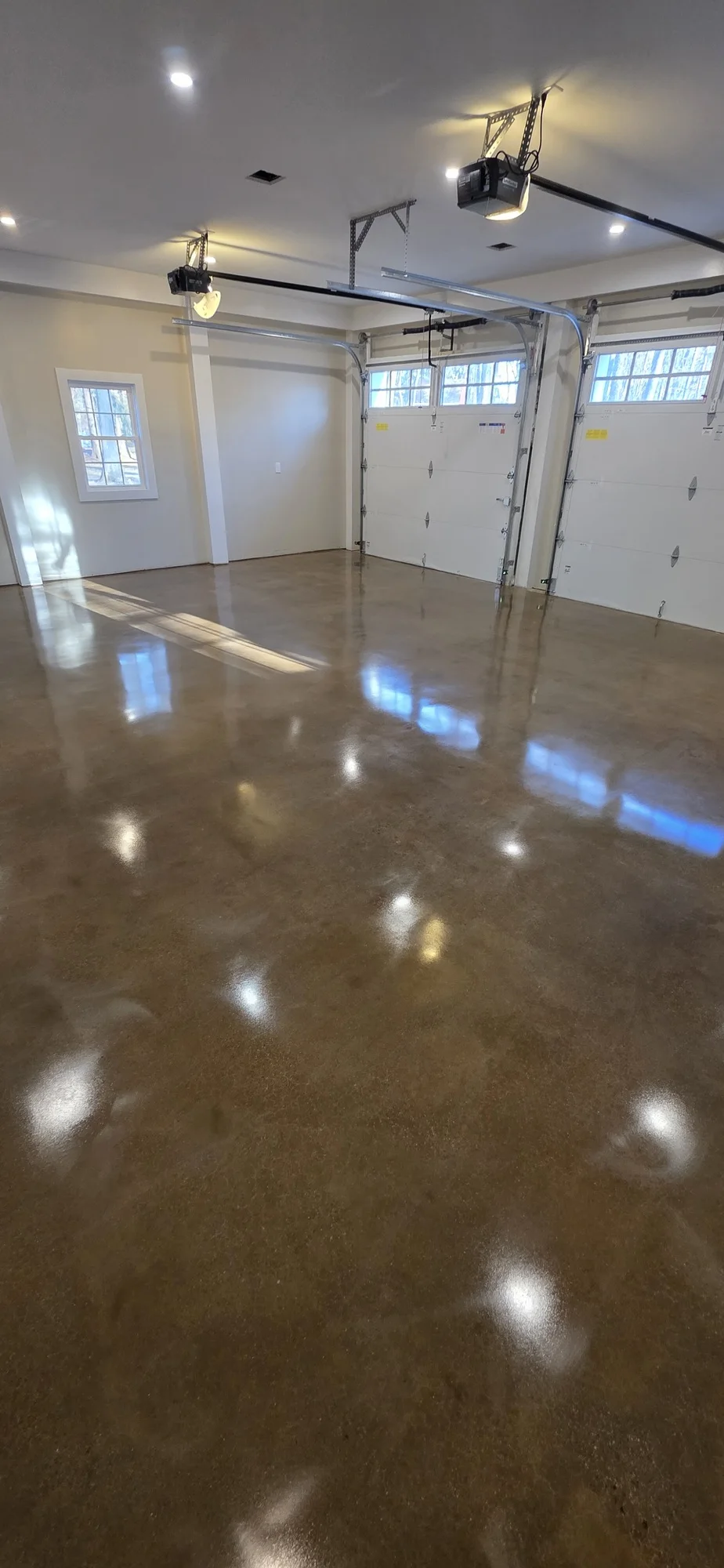

Walk the space
Danny checks the concrete in person before anything gets decided, because the slab decides a lot.

Prep the concrete
Prep is grinding and cleaning, done until the concrete is ready to take a coating, not before.

Fix what is underneath
Damage in the slab gets repaired now, so it does not show through the finished floor later.

Lay it down
Coats go on one at a time, each one mixed and spread by hand, with the finish chosen at the walkthrough.

Cure and the final walk
Once the floor has cured, Danny walks it with you and goes over care and cleaning.
More of Danny’s floors
Other jobs from the file, not all of them this service. See the gallery







Questions about heavy-traffic concrete coatings
Why did our last coating wear through so fast?
The usual reasons are a system too light for the traffic, a surface that was not ground and prepared well, or moisture coming up through the slab. Danny looks at the failed areas during his walk-through to see which it was, because the fix for each is different. Pouring the same system again would likely give the same result.
Does the whole floor need the heavy system?
Usually not. Traffic tends to concentrate in lanes, doorways and turning spots, and those areas get the heavier build. Lighter areas can carry a standard system. Matching the build to the traffic puts material where it does the most work. Danny marks those areas on the walk-through so you can see the plan.
Can heavy-traffic coatings have color or flake?
Yes. Solid colors, flake and aggregate can all be part of a heavy-traffic system, and flake helps hide wear and scuffs between cleanings. The topcoat over it is what takes the traffic. Danny will help you pick a look that fits the building and holds up to how it is used.
Do you speak Spanish?
Sí. Hablamos español. Call or write in whichever language is easier for you.
Why does the concrete get ground first?
A coating holds onto concrete by getting into the top of it. A smooth or sealed slab gives it nothing to grab, so grinding comes first and the dust gets vacuumed off.
What happens if the slab has cracks?
Cracks and chips get filled and ground flush before the coating goes down. Danny will tell you at the walkthrough if a crack is likely to move and what that means for the floor.
Other industrial work
Warehouses, plants, loading docks and machine shops, with safety striping and aisle marking when the space needs it.
- Forklift Traffic Floor CoatingsForklift traffic coatings built heavier at turning spots and joints, chosen for the trucks, routes and fluids in your building.
- Industrial Floor ResurfacingIndustrial floor resurfacing that rebuilds scaled, pitted and worn concrete into a smooth, usable surface, ready to coat or put back to work.
- Industrial Floor RepairIndustrial concrete repair for spalled joints, potholes, failed patches and cracks, done on its own or ahead of a new coating.
- Chemical-Resistant Industrial FlooringIndustrial flooring systems selected against your actual chemical list and the product data, with honest answers about what each system handles.
- Abrasion-Resistant Warehouse CoatingsAbrasion-resistant warehouse coatings with aggregate and tougher topcoats where pallets slide, skids drag and grit grinds the floor.
Cranford is home base. Danny covers 33 counties in New Jersey, New York, Pennsylvania and Connecticut. See every areaSee the gallery
Danz Handz
Danny Carrero, epoxy specialist
dhepoxy@gmail.com
Cranford, NJ. Mon to Sat, 8 to 6. Hablamos español.
Schedule a look at your floor
Tell Danny about the space. He calls you back, comes out, looks at the concrete and talks it through before anything gets decided.