
Epoxy floors for rooms being gutted and redone
Pull up the old flooring in a room being redone and the slab underneath shows everything the last owner left: carpet glue, tile mortar, paint, patches and a few mystery stains. All of it has to come off before epoxy can be the new floor, so the grind does a lot of the work on these jobs.
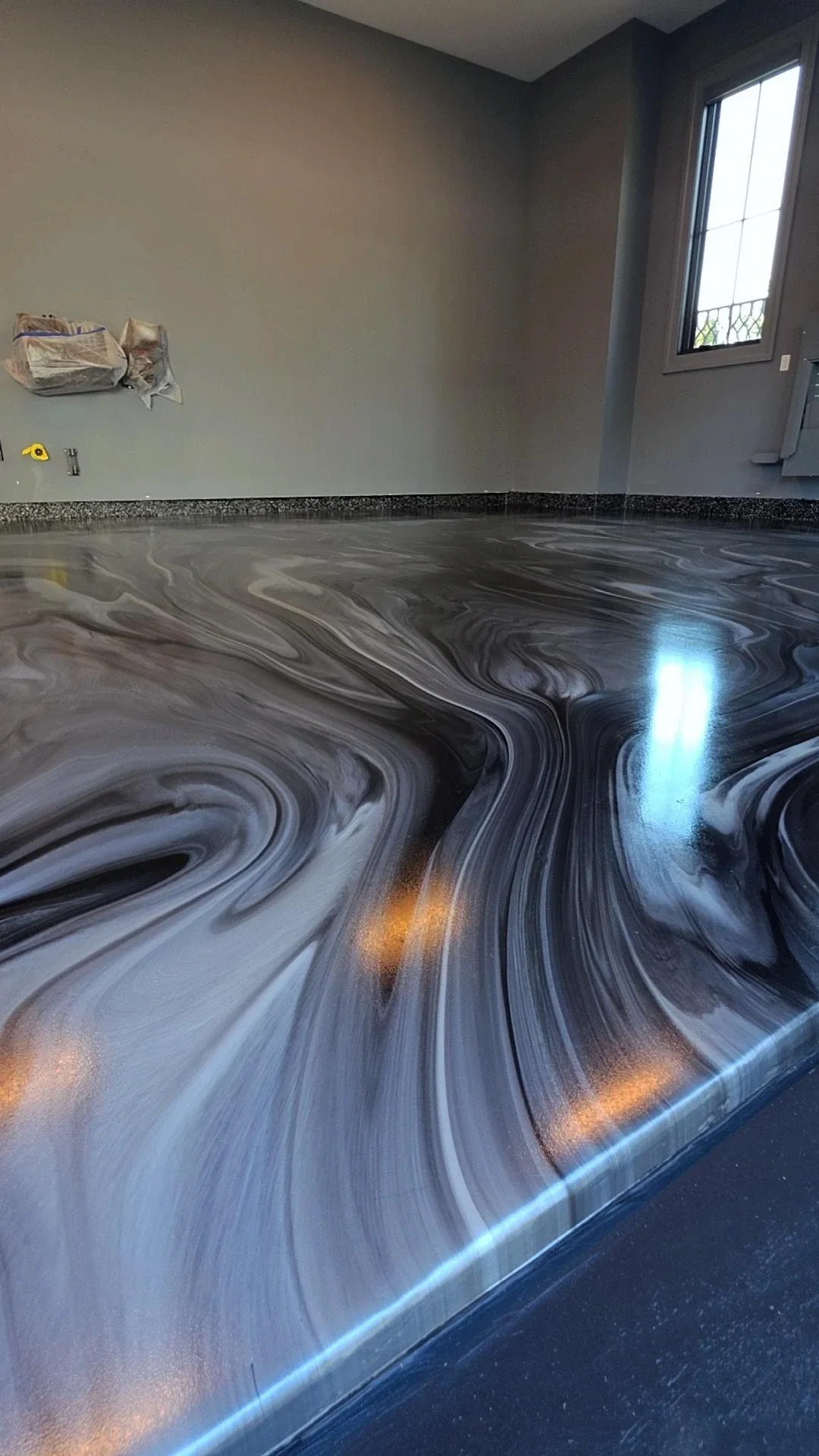

The short version of renovation epoxy flooring
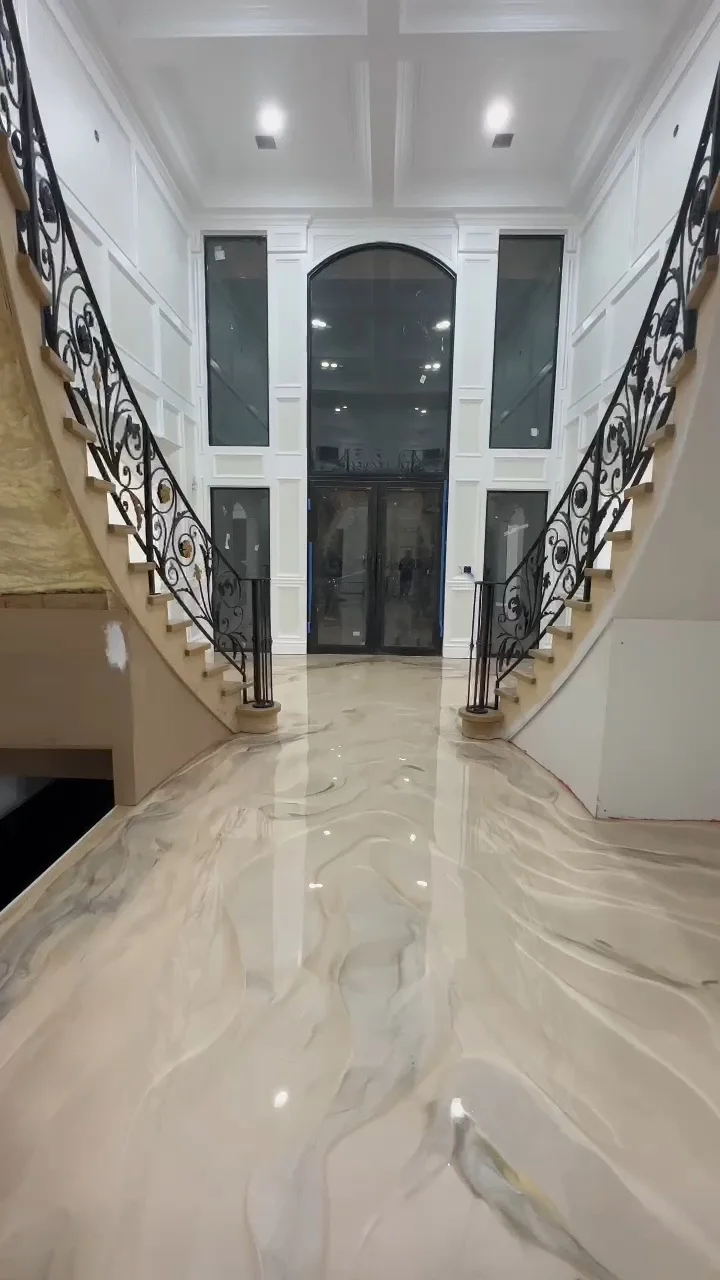
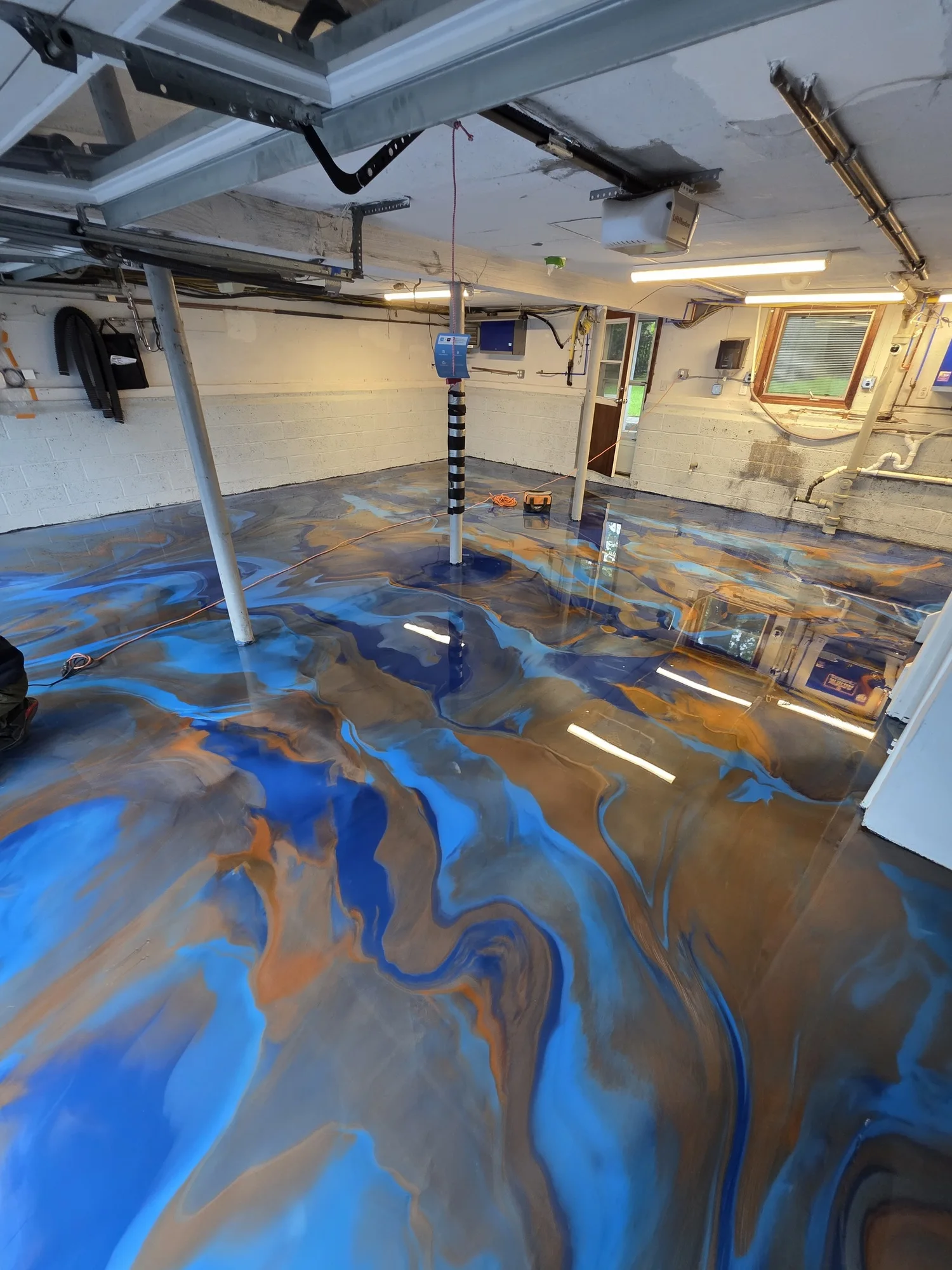
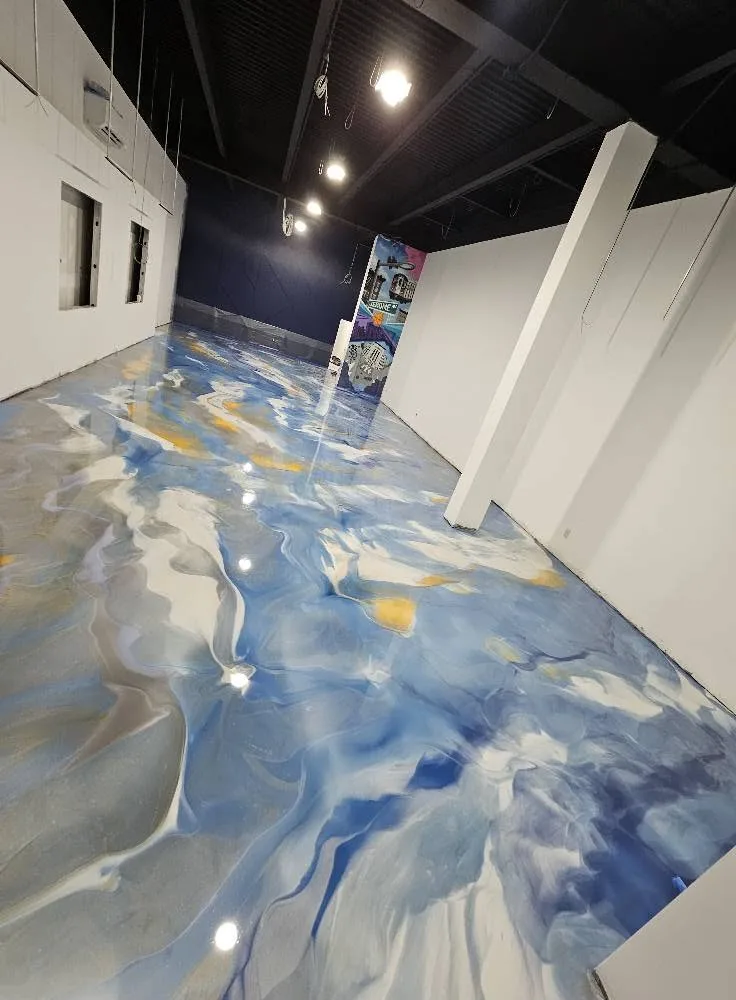
Renovation epoxy flooring is a new coating system poured on an existing slab after the old floor comes out. Most of the work is in the prep. Danny grinds off adhesive, thinset and old coatings, then repairs the holes, cracks and uneven patches a remodel leaves behind. Once the concrete is clean and level, the floor can go any direction: metallic for a lower-level family room, flake for a laundry room, solid color for a home office or a studio. The renovation decides the look. The slab decides the prep.
Floors in older houses can also carry materials that need special handling.
It fits rooms where the slab is reachable and the old flooring is fully removed. Danny can take up glue and thin layers, but tearing out tile, wood or carpet is usually done by the renovation crew before he arrives. It fits poorly over a slab with active water problems, which the owner sorts out first with testing or a waterproofing contractor. Floors in older houses can also carry materials that need special handling. If there is any question about what an old floor contains, the owner arranges testing before anything is ground.
Danny walks the room once the old flooring is out, or before demolition if the owner wants advice on what to pull. He looks at what is stuck to the slab and how level it is. He diamond grinds off the adhesive and old layers, then patches holes from tack strips, pulled walls and old fixtures, and levels the low spots. The pour goes in after the messy renovation work is finished, and the room stays closed through the cure. The final walk happens before baseboards and furniture go back in, if the schedule allows.
In a remodel, the slab tells its history once the old floor comes up.
What happens on the job
A gutted room hands Danny a slab with someone else’s history on it. These stages sort out who removes what and then build the new floor at the right height.

Agreeing who removes what
Danny and the remodeling crew settle the line between demolition and prep: the crew pulls tile, wood or carpet, and he takes off the glue, mortar and thin leftovers. Writing that down keeps a room from sitting half-cleared while each side waits on the other.

Matching heights with the next room
A coated slab may end up lower or higher than a new wood or tile floor next door. Danny checks the finished height at each doorway and plans any build-up or transition strip so nobody catches a toe on the change.

Grinding off the remodel’s leftovers
Glue ridges, mortar lumps, paint overspray and tack strip holes come off or get filled in this pass. The diamond grind goes wall to wall, and the patches where old fixtures or a pulled wall once stood get leveled into the surrounding concrete.

Pouring for the room’s new purpose
The finish follows the plan for the remodeled room, whether that calls for color movement, flake that hides grit or a quiet solid. Danny settles it with the owner once the bare slab shows what it can carry, then pours with the room closed to other crews.

Resetting trim on a cured floor
After the cure, baseboards, door casings and any appliances go back over the finished edge. Danny walks the room with the owner first and checks the transitions at each doorway, so anything that needs a touch is done before trim covers it.
More of Danny’s floors
Other jobs from the file, not all of them this service. See the gallery






Questions about renovation epoxy flooring
Can you pour epoxy over old tile?
Danny prefers to take the floor down to concrete. Tile has grout lines, hollow spots and its own bond to the slab, and any of those can show through or let go under a coating. The renovation crew pulls the tile, Danny grinds off the remaining mortar and adhesive, and the coating goes onto bare concrete.
What about carpet glue and old paint on the slab?
Both come off in the grind. Heavy glue can take extra passes, and Danny plans for that after seeing how much is there. Leaving any of it behind risks the coating failing in those spots, so the goal is clean concrete everywhere the new floor goes, including the edges along the walls.
Should epoxy go in before or after the cabinets?
Usually before. A floor poured wall to wall looks finished under the toe kicks and gives cabinets a clean surface to sit on. If cabinets are already in, Danny coats up to them and finishes the edge neatly. The renovation contractor and Danny settle the order so neither job gets in the other’s way.
Can a remodeled room stay livable during the floor work?
The room itself cannot be used from the grind through the cure, and nearby rooms get some noise and a little dust. Doors are closed and covered, and the grinders run with vacuums. In most homes the rest of the house stays usable. Danny tells the owner which days are loud so they can plan around them.
What if the old floor hid water damage?
Pulled flooring sometimes shows dark stains, mineral deposits or soft spots where water sat for years. Danny checks whether the source is old and gone or still active. A dry slab with old stains can be ground and coated, while an active leak or moisture coming up goes to a plumber or testing first.
Should I wait to choose the finish until demolition is done?
It helps. The bare slab shows patches, cracks and color variation that decide which finishes will look right on it. A floor with many repairs may suit flake better than a glossy solid. Danny can talk through options early and confirm the choice once he has seen the concrete uncovered.
Also in construction
New builds, renovations and tenant fit-outs, scheduled once the slab has cured and the other trades are out.
- Basement Renovation Epoxy FlooringEpoxy floors poured on a dry basement slab as the finished surface, from metallic rec rooms to bright solid color laundry and storage areas.
- Commercial Remodeling Floor CoatingsNew coated floors for businesses being remodeled, phased around customers and staff so the doors stay closed as briefly as possible.
- Warehouse Floor RenovationWorn warehouse slabs ground down, joints and spalls repaired, and recoated in sections while stock and trucks keep moving.
- Manufacturing Facility Floor UpgradesResin floor upgrades for production areas, timed to a shutdown or retooling so the coating goes down while the machines are out.
- Retail Fit-Out FlooringMetallic, solid color or flake floors for stores and showrooms, chosen to suit the brand and the lighting before the fixtures go in.
From Union County out to the Lehigh Valley, Long Island and Fairfield County, the work is all within about 60 miles of Cranford. See every areaSee the gallery
Danz Handz
Danny Carrero, epoxy specialist
dhepoxy@gmail.com
Cranford, NJ. Mon to Sat, 8 to 6. Hablamos español.
Book a walkthrough
Start with the room and the idea. Danny follows up by phone and comes to see the slab.