
Bakery floors that clean up after flour and sugar
On a bakery floor, flour and mop water turn to paste that dries into every pit and grout line. A smooth poured floor gives it nothing to hold on to, and the racks roll easier across it all morning. Danny looks hardest at the tile near the ovens, since that is usually what comes loose first.
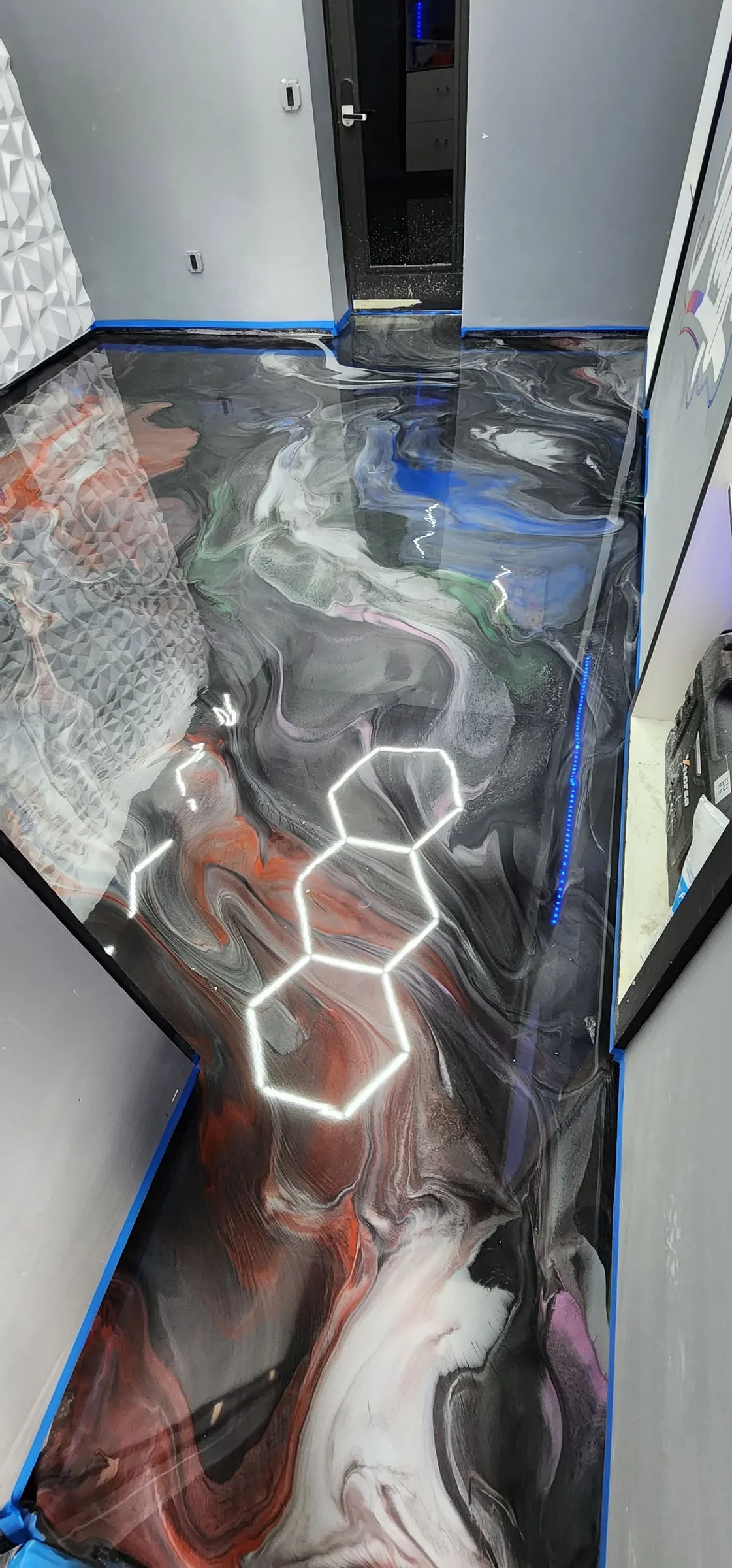
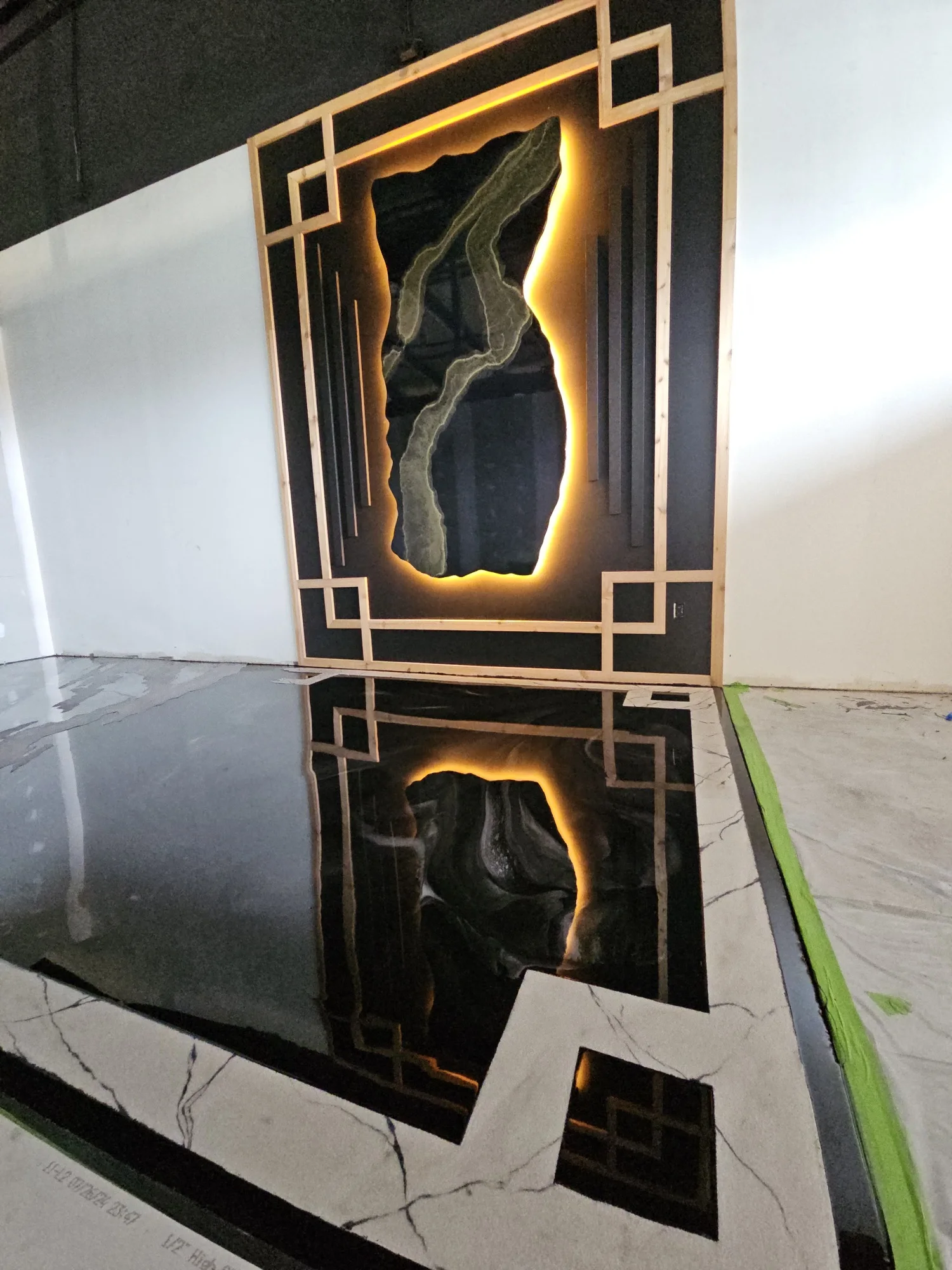
Commercial Bakery Floor Coatings, start to finish
A bakery floor coating is a resin system poured over ground concrete, with a surface smooth enough to sweep flour off easily and enough texture to keep bakers steady when the floor gets wet. A cove base where the floor meets the wall keeps paste and crumbs out of the corners. Areas near the deck ovens and proofers can need a system chosen for heat and steam. Danny looks at the bakery, the rack traffic and what gets spilled or dropped before he recommends a system.
He checks the slab around the oven bases and floor drains and notes which equipment can roll out and which is fixed.
It fits retail and wholesale bakeries on a slab, plus the commissary kitchens that supply cafes. A bakery that starts work in the middle of the night has a narrow window, so the work is often set for a planned closure. Floors under ovens that cannot move are usually finished up to the oven base. The finish choice is a balance: too much texture holds flour, and too little gets slick when water hits the dust. Wood-framed upper floors are a poor fit for a hard coating.
Danny visits during production when possible, to see how the bakers move between the bench, the mixer and the ovens and where flour settles. He checks the slab around the oven bases and floor drains and notes which equipment can roll out and which is fixed. The work is booked into a closure. The floor gets diamond ground, low spots that hold paste are filled and leveled, and the system goes down with its cove base. The racks roll back in after the cure and a final walk with the owner.
Every low spot in a bakery floor ends up holding flour paste.
The order the work goes in
A bakery floor has to handle flour and water with racks rolling over both. The work runs from watching a rack’s route through production to rolling one across the finished floor.
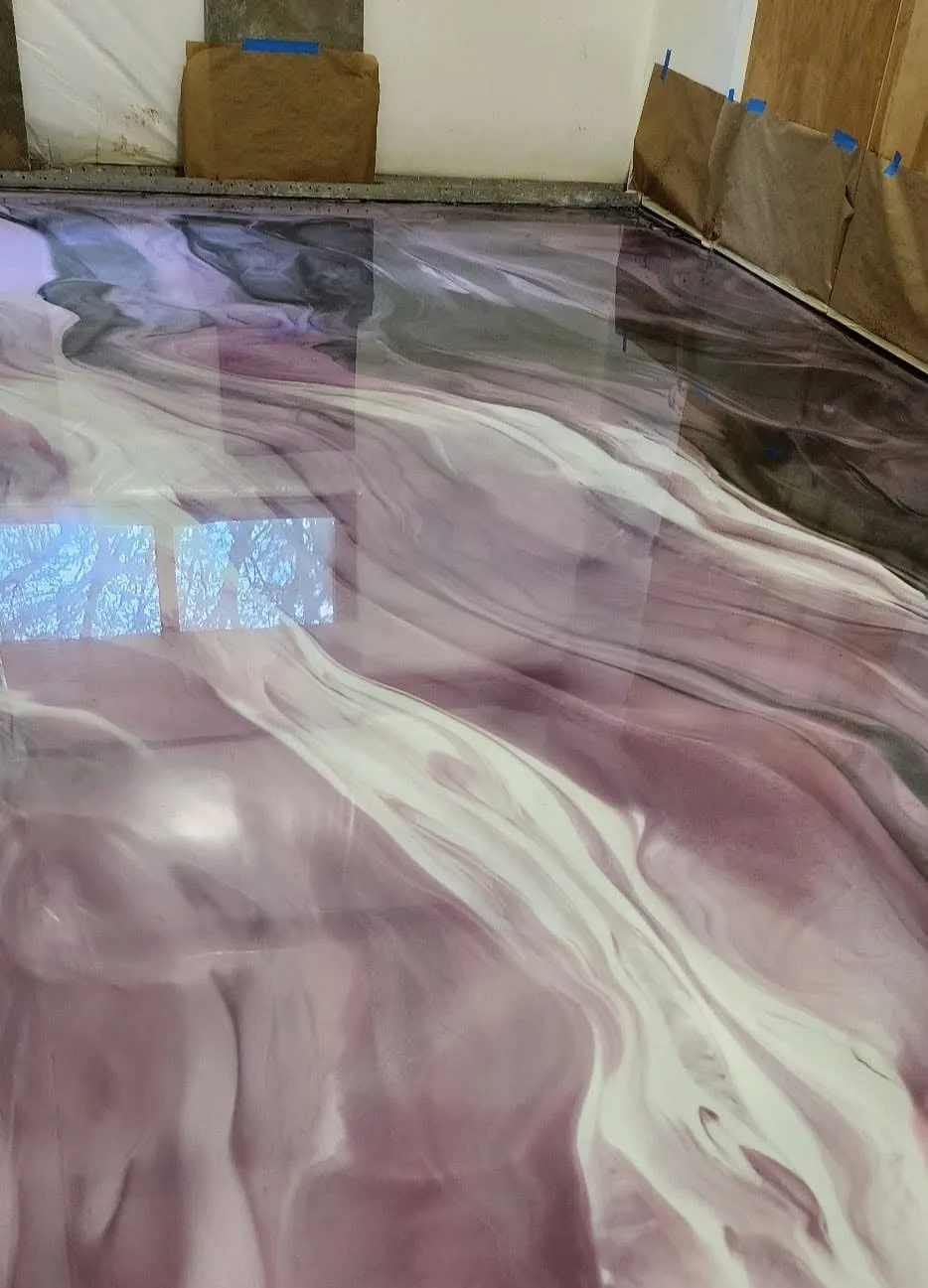

Following a rack through production
Danny follows a loaded rack from the bench to the proofer to the oven and out to cooling. Its route shows where the floor dips, where casters stick on tile edges and where flour and water meet and turn to paste on the floor.

Scraping out packed paste
Old grout lines and pits in a bakery are often packed hard with dried dough. Tile comes up, and the concrete is ground until the paste is gone and the surface is clean, since anything left in the pores can stop the new floor from bonding.

Leveling the rack paths
Racks wobble and stick where a floor dips or steps. Low spots along the rack paths are filled and ground flush, and the floor around the oven and proofer doors is made level with the rest, so racks roll in and out without a bump.

Grit set for flour and water
The system goes down with a fine grit in the topcoat, enough to give bakers footing when water hits the floor and fine enough to sweep flour from. Near the oven, the system is picked against the product data for heat, and the cove runs up every wall.
Rolling a loaded rack across
After the cure, Danny walks the bakery with the owner and rolls a loaded rack over the paths and through the oven door. If it moves cleanly and the cove looks right, the equipment comes back and production starts again.
More of Danny’s floors
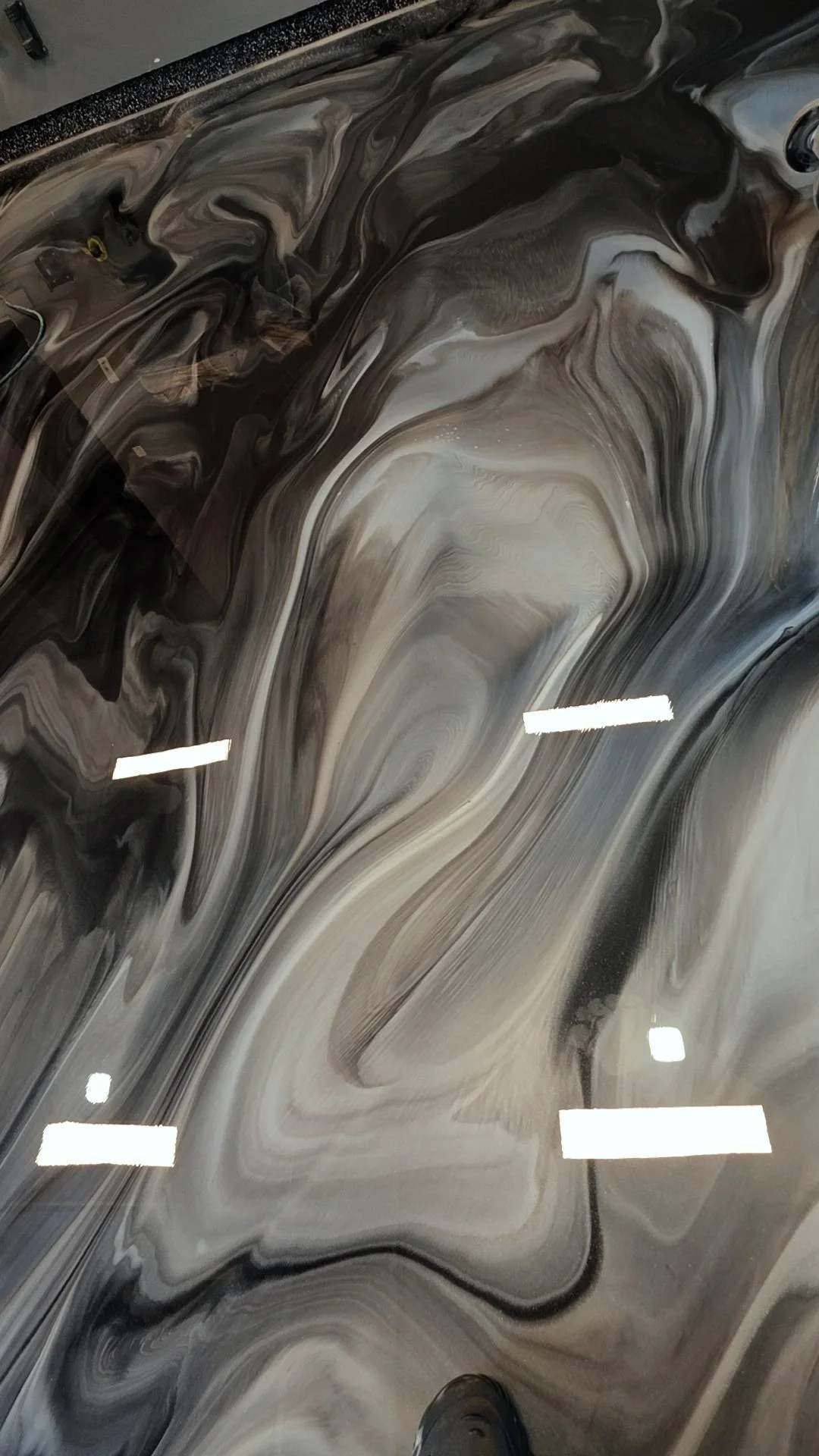
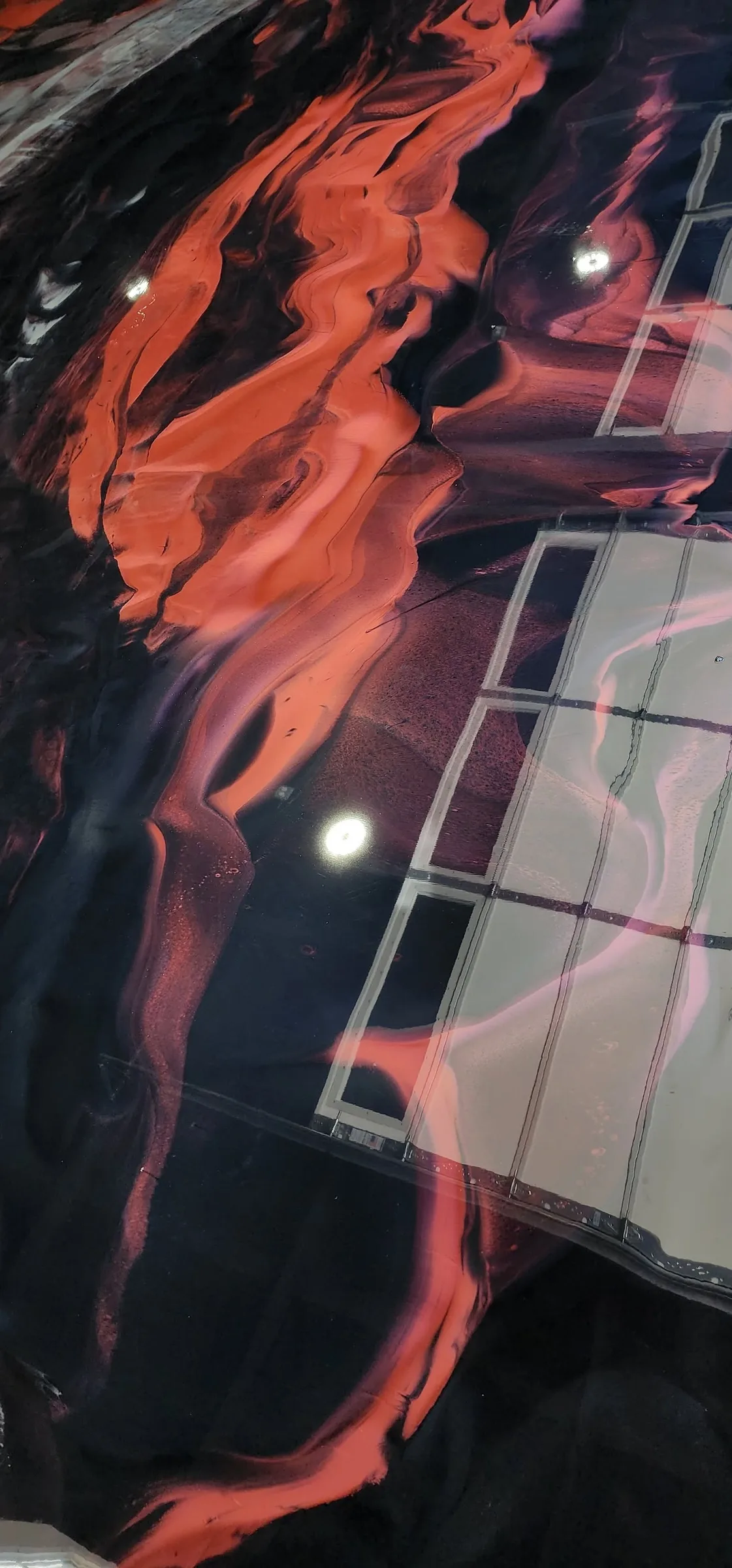
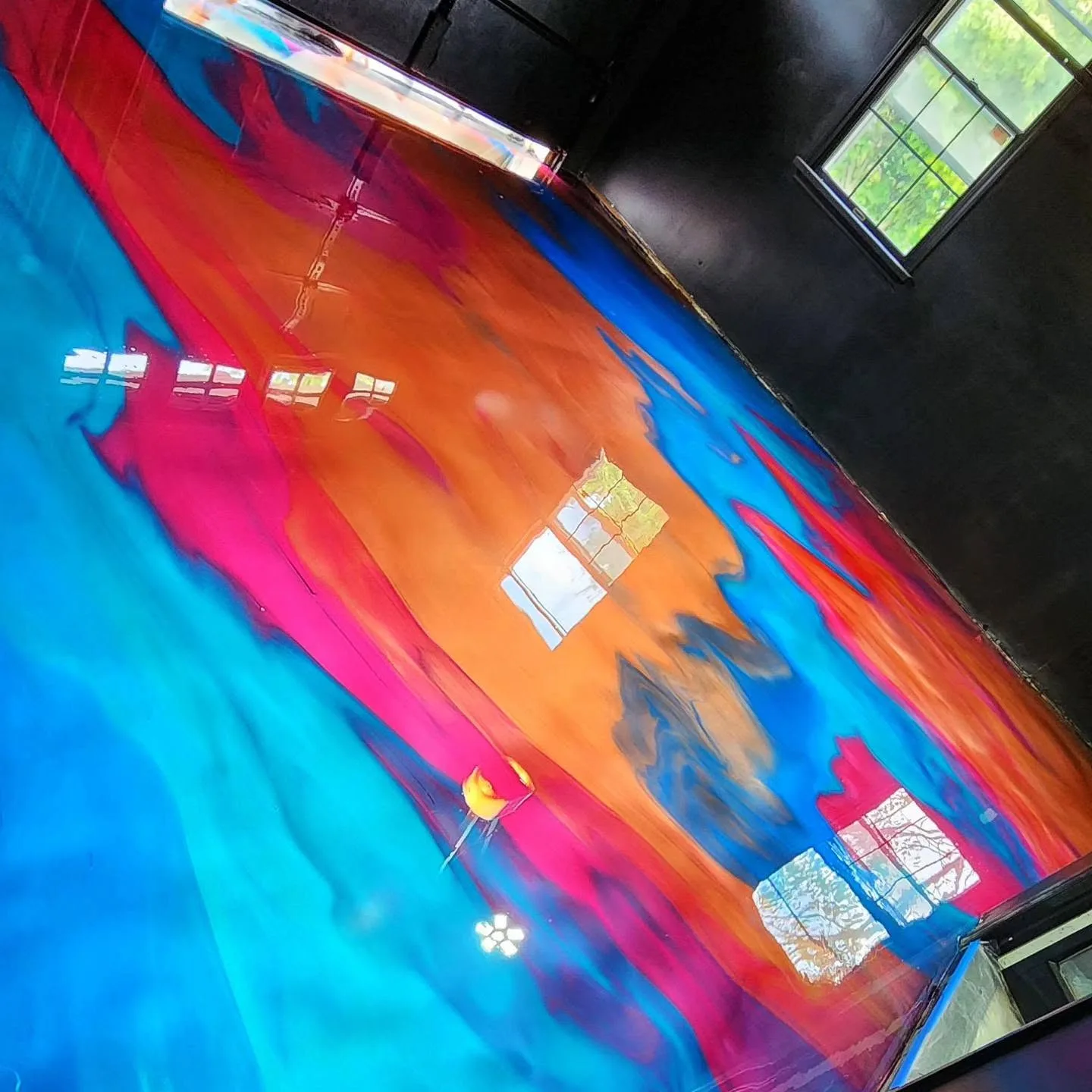
Other jobs from the file, not all of them this service. See the gallery




Questions about commercial bakery floor coatings
Will flour stick to a textured floor?
Heavier textures hold more flour, which is why bakeries need a balance. A lighter texture gives bakers grip when water hits the floor and still sweeps clean. Danny can show samples with different textures so you can feel the difference and run a broom over them. The right level depends on how wet your floor gets during production.
Can you coat around our deck oven?
Usually the oven stays, and the floor is finished up to its base. If the oven sits on a pad or legs, the coating can run under it where there is room to work. Heat near the oven is a factor in which system goes in that area, and Danny checks it against the product data before he recommends one.
Our bakery runs overnight. When can the work happen?
The floor needs to be empty from grinding through the cure, so the work needs a planned closure. The gap between overnight shifts is too short. Owners often pick a few days after a busy season. Danny sets the schedule after his walk and explains how long the bakery will be down so you can plan orders around it.
What about the floor inside a roll-in rack oven?
The floor inside a roll-in oven is part of the oven, usually supplied and serviced by the oven maker, and it sees heat that most coatings are not made for. The coating normally stops at the oven’s threshold, finished tight to it. Danny checks how the oven’s ramp meets the floor so racks roll in without a bump.
Will sugar syrup and glaze drips harm the floor?
Sugar and glaze are sticky more than they are harsh, and they wipe off a sealed floor with warm water. Left to dry, they collect flour and turn into a crust that is harder to scrub. Danny checks the product data against anything acidic used in the bakery, such as fruit fillings, before recommending a system.
Can the retail counter area match the production floor?
Yes. The shop side where customers buy bread and pastries can carry a decorative floor in the same color family, often with less texture, since it sees street shoes instead of flour and water. The change between the two floors is placed at the doorway or the counter, so each area gets the finish it needs.
Close to this one
Commercial kitchens, bakeries, breweries and cold rooms, with coved bases and slip-resistant finishes.
- Food Processing Plant FlooringHeavy resin floors for food plants, coved and sloped to drains, chosen to the cleaning program and phased across shutdowns.
- Commercial Brewery FlooringBrewhouse floors chosen for hot spills and cleaners, plus decorative taproom floors, planned around the brew schedule and tanks in place.
- Commercial Winery FlooringFloors for winery cellars, barrel rooms and tasting rooms, planned for the off-season so the work stays clear of harvest.
- Butcher Shop FlooringTextured, coved floors for butcher shop cutting rooms and a cleaner finish for the retail floor, done in one planned closure.
- Commercial Meat Processing Floor CoatingsHeavy, textured resin floors for meat processing rooms and coolers, matched to the sanitation program and done room by room in shutdowns.
Based in Cranford, NJ. Danny takes work across New Jersey, the five boroughs, Long Island, Westchester and Rockland, Fairfield County and Bucks County. See every areaSee the gallery
Danz Handz
Danny Carrero, epoxy specialist
dhepoxy@gmail.com
Cranford, NJ. Mon to Sat, 8 to 6. Hablamos español.
Start with a visit
Describe the floor and what you have in mind. Danny calls back and comes out to look at it.