
Motorcycle shop floors that hold up to kickstands
Bike shops beat up a floor in small places. Kickstands press into the coating and a row of parked bikes leaves a row of oil drips under it. Danny picks the system for those point loads first, then talks through the look, from a working flake to a metallic for the display corner.
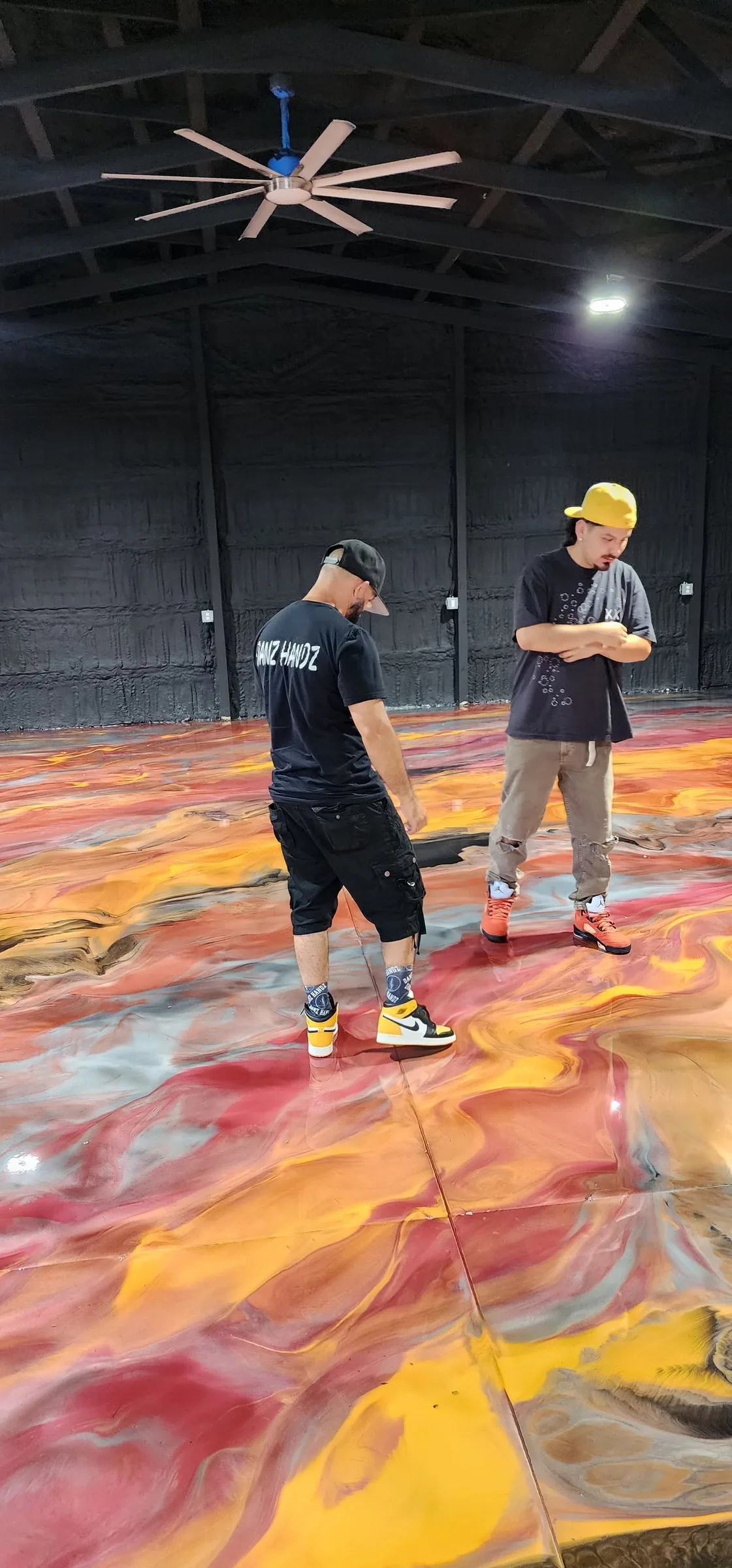

How Danny approaches motorcycle workshop flooring
A motorcycle workshop floor is a coated concrete floor built for small, concentrated loads. A kickstand puts the whole bike’s weight on a point the size of a coin, which can dent soft coatings. Danny chooses a system that suits that kind of load from the product data, then finishes it with a topcoat that lets oil wipe up. Flake suits a working shop. A metallic or solid color floor suits a showroom corner or a home build garage where the bikes are the art.
The shop stays closed through the cure, and the final walk covers cleaning and pucks.
It fits home garages used as bike shops, small custom builders, service shops and dealer service areas. Kickstand pucks are still a good habit on any coated floor, especially on a fresh one. Lifts and tire changers bolted down have to be pulled or worked around. If the slab is cracked or sinking, the coating will show it, so those repairs come first. Danny is also honest about the look. A glossy metallic floor shows scuffs from boots and dollies faster than a busy flake, and that matters in a shop that moves bikes around all day.
Danny walks the space with the owner and asks how bikes move through it: where they park, where they get worked on, and where they sit on display. He diamond grinds the slab and repairs cracks, oil-soaked spots and old anchor holes. Oil that has soaked deep into concrete can fight a coating, so those areas get extra attention during prep. The pour follows, with the system chosen for kickstand loads and the look the owner wants. The shop stays closed through the cure, and the final walk covers cleaning and pucks.
A kickstand puts a whole bike on a spot smaller than a coin.
How the work runs
Bike shops have parking rows, a lift table, a parts bench and often a display corner, and each one gets its own treatment in this job.
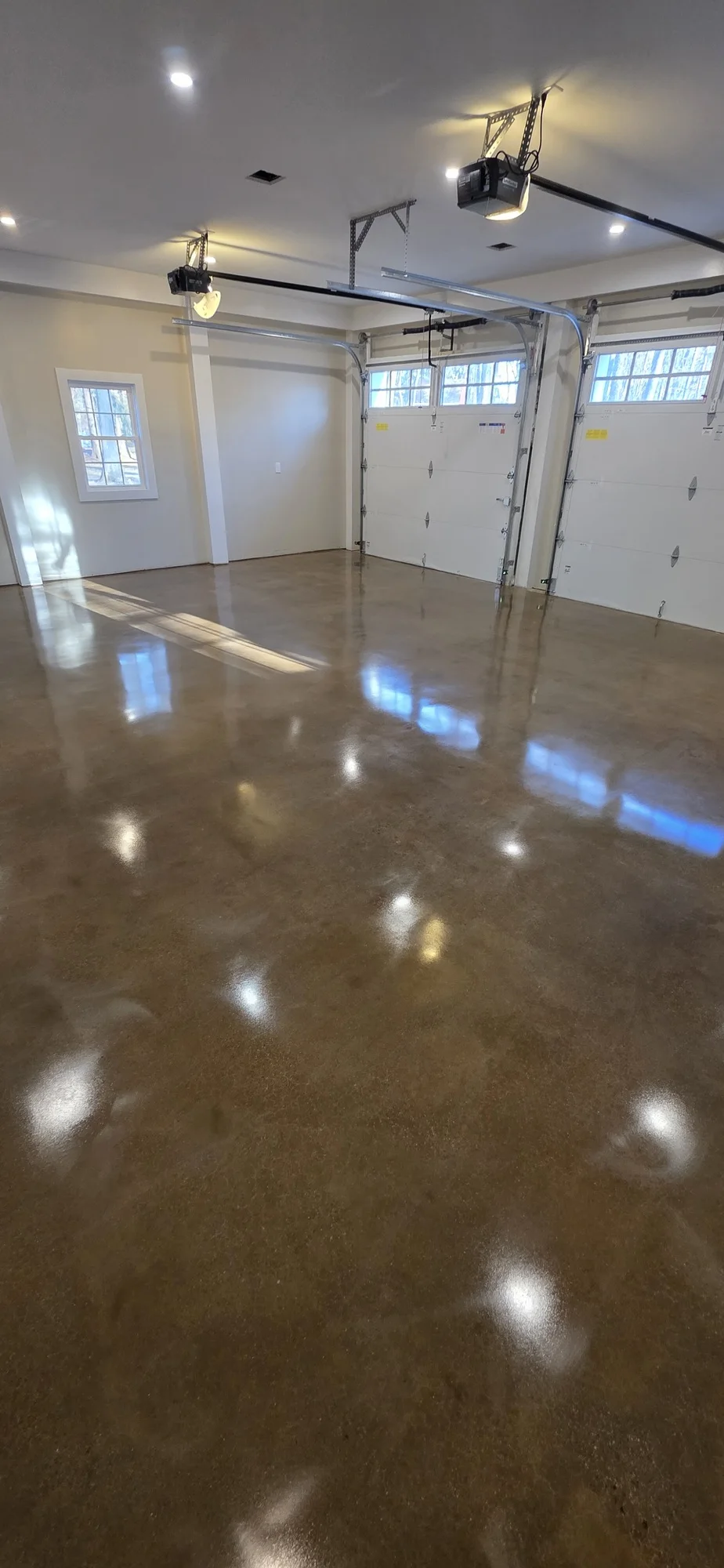

Pacing the parking row
Danny looks at where bikes stand on their kickstands, where they get rolled up to the lift table and where finished builds sit for customers to see. Small dents and worn spots in the old floor show exactly where stands have been resting.

Clearing bikes and the lift table
Bikes roll out to another room or a trailer, and the shop unbolts the lift table and any tire changer. Parts bins, the bench and the parts washer come away from the walls so the coating can run all the way to the edges.

Lifting old drip stains
Oil, chain lube and coolant drips under old parking spots get degreased and ground out. Where a stain reaches deep into the slab, that patch of concrete is cut out and replaced so it cannot push the new coating off later.

Firmer build under the stands
The system goes down with extra build along the parking row, where stands press into the floor. The rest of the shop takes a flake, a solid or a metallic, depending on the look the owner wants for the workspace and the display corner.

Rolling the first bike home
Once the cure is complete, the lift table is set back and bikes return with a puck under each stand. Danny walks the floor with the owner and points out where a gas spill or a dropped part should be wiped up quickly.
More of Danny’s floors
Other jobs from the file, not all of them this service. See the gallery







Questions about motorcycle workshop flooring
Will a kickstand dent an epoxy floor?
It can on a soft or thin coating, especially soon after the pour. The system Danny chooses for a bike shop is picked with point loads in mind, and the cure has to finish before bikes go back in. A puck or plate under the stand spreads the weight out and is worth using anyway.
Can you do a metallic floor in a home bike garage?
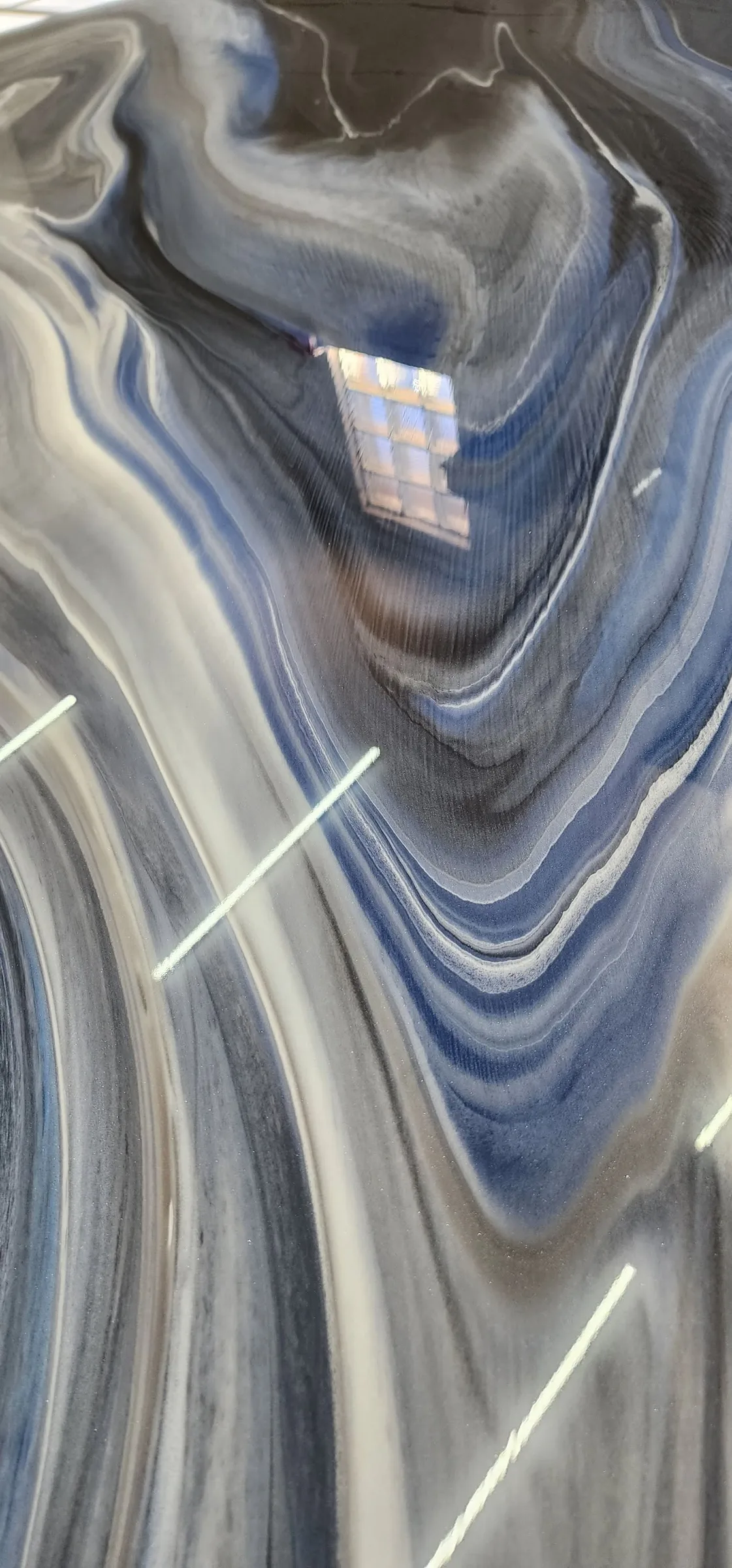
Yes. High-end metallic epoxy is what Danny is known for, and a home garage full of bikes is a good place for it. The look comes from how the pigment moves during the pour, so every floor is different. He talks through the colors and the movement before he starts.
Do oil stains come off?
On a coated floor, oil stays on the surface, where a wipe and a scrub take care of most of it. Leaving a puddle for weeks can still mark some finishes. The bigger issue is old oil already in the concrete, which gets dealt with during prep before anything is poured.
What happens if a bike tips over on the coating?
A falling bike drives handlebar ends, foot pegs and levers into the floor hard, and that can chip or scratch any coating. Small chips can be filled and touched up. Flake floors hide those repairs better than metallic or solid colors. Rubber mats beside the lift table help, since that is where bikes get handled the most.
Is spilled gasoline a problem on a coated floor?
A fuel spill wiped up promptly usually leaves no mark. Gas left to sit can soften or stain some topcoats, so the product data is checked for fuel when the system is picked for a bike shop. Carb and fuel system work is best done over a drip pan. Danny goes over cleanup on the final walk.
Can the lift table be anchored again after the coating?
Yes. The anchor holes are drilled through the cured coating and the edges sealed so oil and water stay out. Marking the table’s position before the work starts lets the anchors go back in line. If the owner wants the lift moved to a better spot, that is the time to decide.
Next to this on the list
Repair shops, detailing studios, dealership bays and showrooms, where oil, tires and lifts meet the floor every day.
- Vehicle Showroom Decorative FlooringDecorative metallic epoxy showroom floors, each one a one of one, with optional Glitter ELEMENTZ sparkle for dealers and private car rooms.
- Auto Repair Shop Epoxy FlooringEpoxy floors for independent repair shop bays, ground through old oil and poured a few bays at a time so lifts keep running.
- Mechanic Workshop Floor CoatingsBright, coated workshop floors for mechanics, restorers and hobbyists, so dropped parts show up and oil wipes off the surface.
- Automotive Service Center FlooringCoated floors for full service centers, from the drive-in lane and bays to the customer lounge, phased so bays keep working.
- Oil Change Shop Floor CoatingsCoatings for quick lube lanes and lower bays, textured for oily floors and done one lane at a time so cars keep coming.
From Union County out to the Lehigh Valley, Long Island and Fairfield County, the work is all within about 60 miles of Cranford. See every areaSee the gallery
Danz Handz
Danny Carrero, epoxy specialist
dhepoxy@gmail.com
Cranford, NJ. Mon to Sat, 8 to 6. Hablamos español.
Schedule a look at your floor
A short note about the space is enough. Danny calls back and books a walkthrough.