
Polyurethane topcoats for floors that get scuffed
Scuffs, chair scratches and daily wear all land on the top layer of a floor, and polyurethane is often what that layer is made of. It goes over epoxy as a thin, tough coat in gloss, satin or matte, so a decorative floor in a home or office gets a wearing surface while the look underneath stays the same.
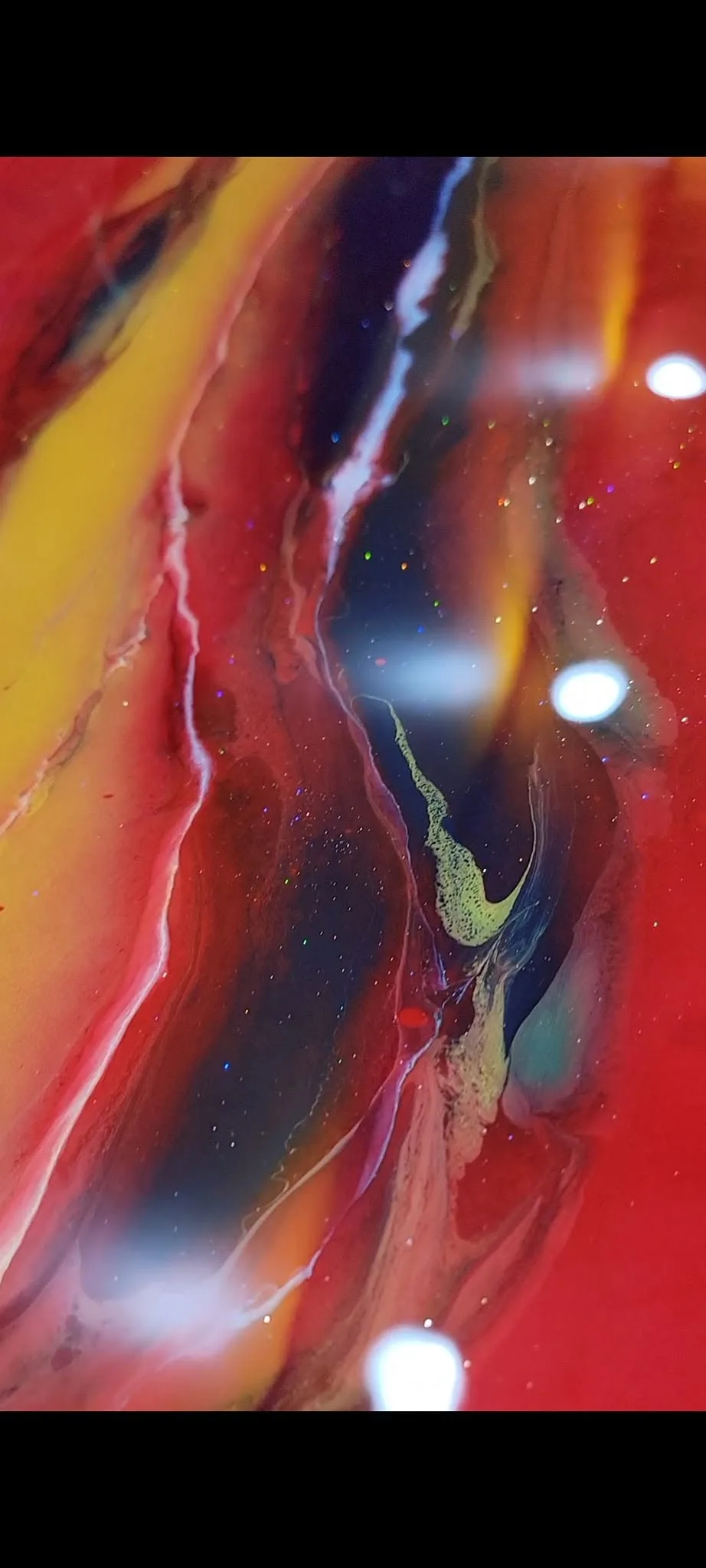
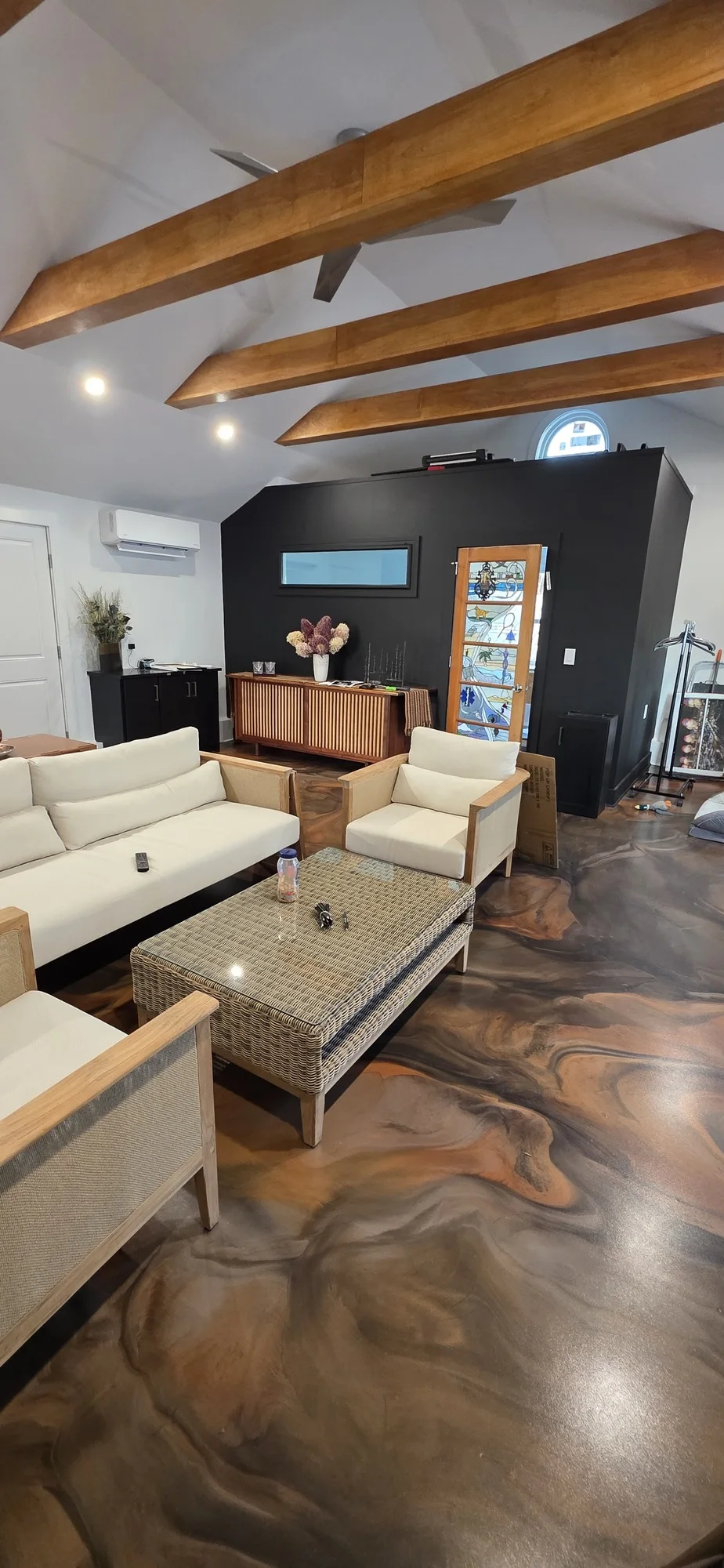
How Danny approaches polyurethane concrete coatings
Epoxy is strong and bonds well, but its surface scratches and can dull or amber over time. A polyurethane topcoat goes over the cured epoxy as a thin, hard layer that handles foot traffic, chair legs and grit better, and color-stable versions hold up to sunlight. It is the part of the floor that wears, and when it eventually looks tired it can be sanded and recoated without touching the decorative layer below. Water-based and solvent-based versions exist, and each product’s data sets how it goes down.
It is the part of the floor that wears, and when it eventually looks tired it can be sanded and recoated without touching the decorative layer below.
Metallic and solid color floors in living spaces, offices, salons and showrooms are where it earns its keep, since scratches would show on bare epoxy there. Matte and satin versions let a floor look less glossy without losing protection. It is a thin film, so it does not fill pits, build thickness or hide a rough slab, and it needs a sound coating under it to bond to. It is also a weaker choice for wet process rooms. Danny looks at how the room is used, what gets dragged across it and what spills there before choosing the topcoat.
Danny decides on the topcoat at the start, during the walk, because the sheen and the room’s use shape the whole system. After the slab is ground, repaired and the epoxy layers are poured and cured, he checks the surface for dust nibs and lightly sands where the product data calls for it. The urethane goes on thin and even with a roller, cut in at the edges first, in one or more coats depending on the system. The room stays closed while it cures, and the final walk looks at the sheen from the doorway and across the light.
The topcoat is the part of the floor you walk on, so it is the part that wears.
What happens on the job
A urethane topcoat is the last coat on the floor, so its steps run from choosing the sheen to protecting a fresh surface from dust, drafts and furniture.


Choosing sheen in the room’s light
Danny shows the owner how gloss, satin and matte read under the room’s own windows and fixtures. That choice sets which urethane product goes on, so it is made early, while the rest of the system is still being planned.

Waiting on the epoxy below
The urethane only goes over epoxy that has reached the point the product data names for topcoating. Too soon, and the layers can wrinkle or cloud. Too late, and the surface needs scuffing first. Danny times the topcoat to that window.

Denibbing the base coat
Before the topcoat, Danny runs a hand and a light across the epoxy to find dust nibs, hairs or insects that landed in it. Those spots are sanded flat and the dust removed, since urethane shows every bump beneath it.

Thin, even passes
The urethane is cut in along the walls, then rolled across the room in overlapping passes that keep a wet edge. Thin coats cure clearer than heavy ones, so Danny builds protection with additional coats instead of one thick layer.
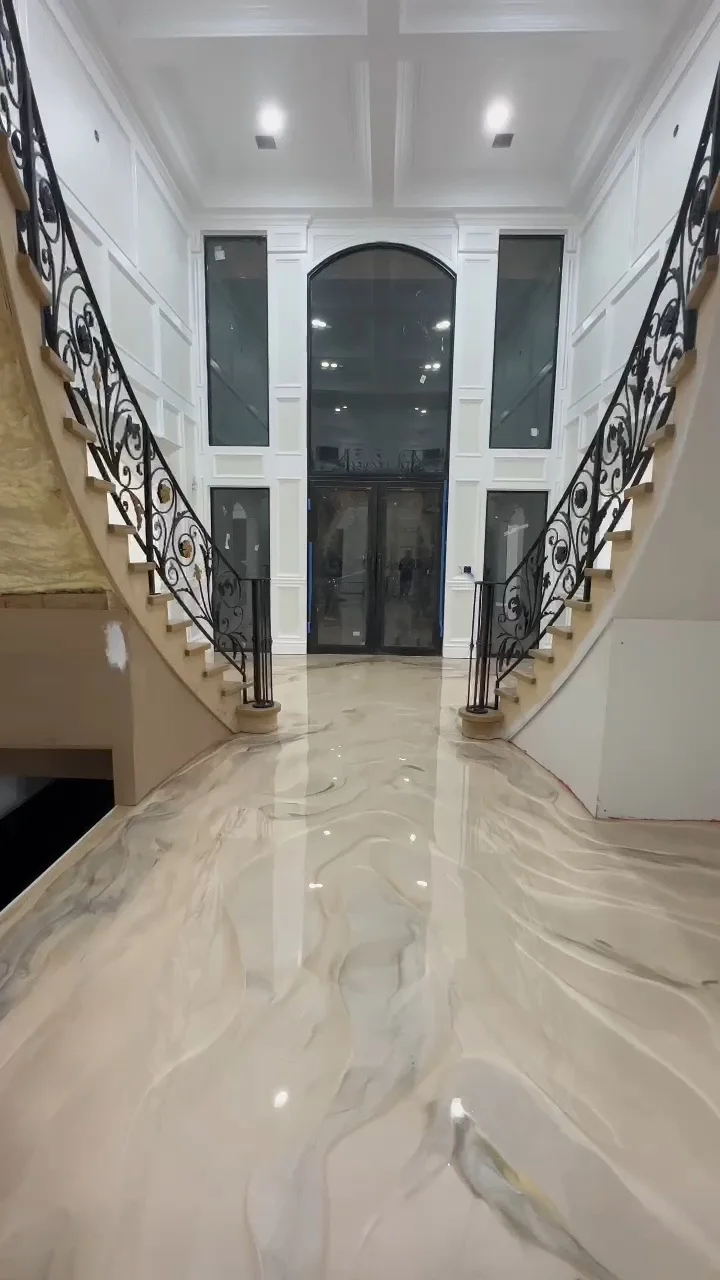
Guarding a fresh topcoat
The room stays closed with fans off while the top cures. Before furniture returns, Danny goes over pads for chair and table legs with the owner and checks the finish across the light from several angles.
More of Danny’s floors
Other jobs from the file, not all of them this service. See the gallery



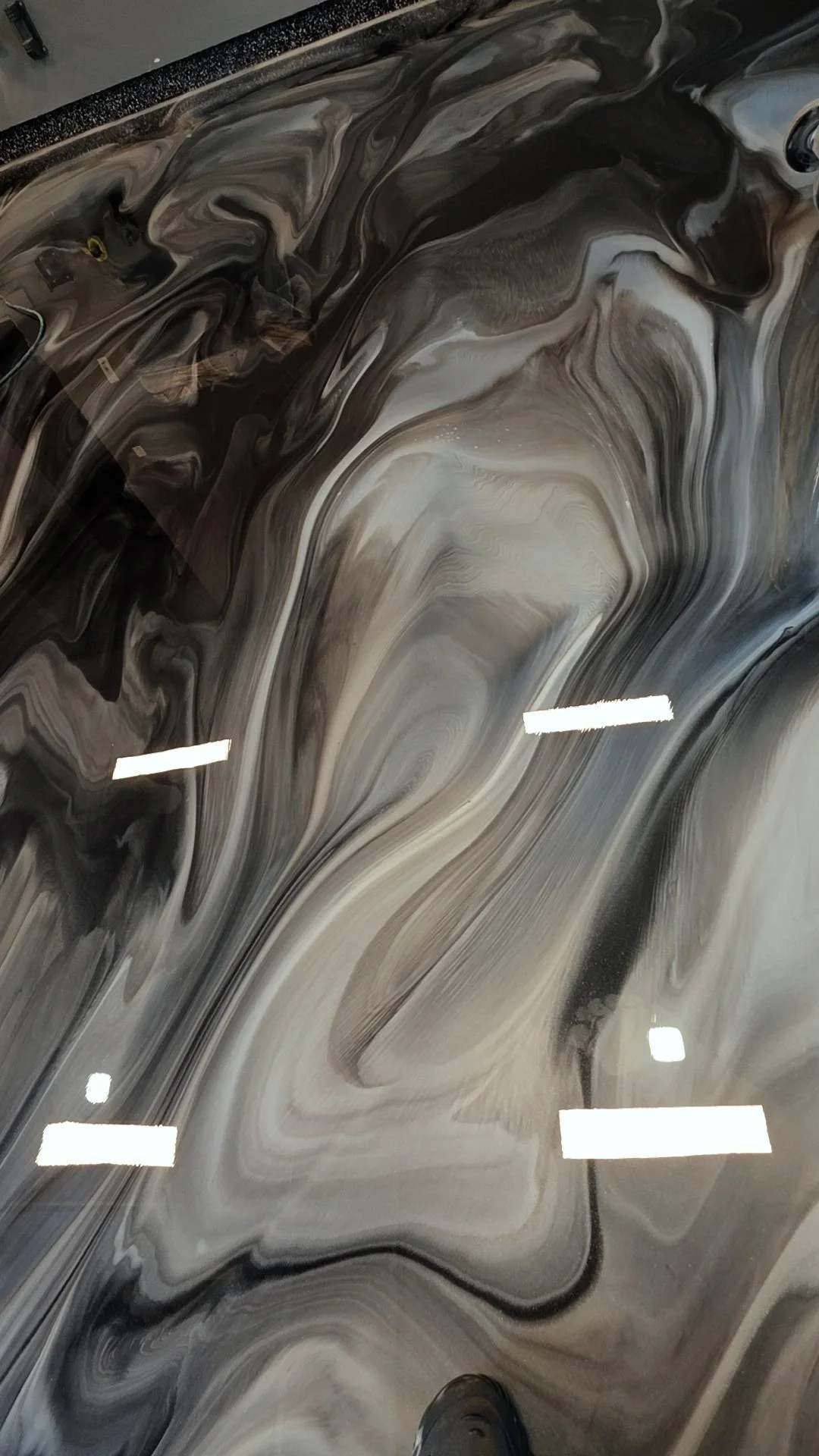




Questions about polyurethane concrete coatings
Why put polyurethane over epoxy?
Epoxy bonds well and builds a thick, hard layer, but its surface scratches and can amber with time and sun. Polyurethane on top takes the daily wear and comes in more sheens. When it wears down after years of use, the topcoat can be renewed without disturbing the epoxy and the design underneath it.
Will a matte topcoat change how my metallic floor looks?
It softens it. Gloss makes metallic pigment look deep and wet, and matte gives a quieter, stone-like finish with less reflection and less glare. Some people prefer matte in living rooms for that reason. Danny can talk through how each sheen reads in your light before the topcoat is chosen.
Can polyurethane go directly on concrete?
Some products are made for that, usually as a clear sealer on bare or stained concrete. On a decorative floor, it almost always goes over epoxy, because epoxy bonds and builds better on the slab and the urethane protects it. The product data says what each one can go over, and Danny follows it.
Is a water-based urethane as tough as a solvent-based one?
Products vary by maker more than by type, and some water-based urethanes are very durable. Solvent-based versions often build a bit more per coat, while water-based ones have less odor and suit occupied homes. Danny picks from the product data based on the room’s traffic and who will be in the house while it cures.
Will a urethane top stop wine or coffee stains?
It resists most household spills when they are wiped up within a reasonable time. Some strongly colored liquids can leave a faint mark if they sit, especially on light colors, and harsh chemicals can dull the surface. For kitchens and bars, Danny talks through color and sheen choices that hide the occasional mark better.
Can polyurethane go over a flake garage floor?
It can, and some flake systems use it. In garages, polyaspartic tops are more common because they cure faster and handle hot tires and sun well. A urethane top suits flake in rooms with lighter traffic, such as a mudroom or a basement. Danny picks the top by how the room is used and what rolls across it.
Also in resin
Polyaspartic, polyurea, urethane cement, self-leveling and fast-cure systems, picked to fit the room and the schedule.
- Static-Dissipative FlooringFloor systems that drain static from people and carts at a controlled rate, protecting electronics, labs and equipment rooms, built to spec.
- ESD Flooring SystemsConductive or static-dissipative floors chosen from the facility’s ESD standard, grounded with the electrician and installed to the product data.
- Decorative Quartz FlooringColored quartz blends, borders and bands for lobbies, restrooms and halls that want some design in a floor built for heavy cleaning.
- Urethane Cement FlooringUrethane cement floors that replace cracked quarry tile and failed epoxy in kitchens and plants, with no grout lines and an integral cove.
- Resin Floor Waterproofing SystemsA continuous resin membrane and coating turned up the walls, keeping water from washdowns, equipment and spills on the surface and headed to the drain.
Jobs run about 60 miles out from the Cranford shop, from the Jersey shore and the Poconos to Long Island and Fairfield County. See every areaSee the gallery
Danz Handz
Danny Carrero, epoxy specialist
dhepoxy@gmail.com
Cranford, NJ. Mon to Sat, 8 to 6. Hablamos español.
Schedule a look at your floor
Start with the room and the idea. Danny follows up by phone and comes to see the slab.