
Coating a slab after concrete work has been done
Patched floors rarely match. A replaced section, a filled trench or a new patch around a drain leaves a slab that looks like a quilt. Once the concrete repairs are finished, one coating over the whole floor ties old and new together, and Danny checks that the patches sit level with the old slab before grinding.


The short version of floor coating installation after concrete repairs
This service is a coating installed over a slab that has had concrete repair work, whether done by a concrete contractor or by Danny himself during prep. Larger repairs, like cut-out and repoured sections, trenches for plumbing or replaced slabs, are done by concrete crews. Smaller cracks, chips and pits Danny repairs and levels as part of his own process. Once everything is sound, he grinds the whole floor so old and new concrete share the same surface, then pours a system that covers both.
He looks at the edges of each patch, where old and new concrete meet, since those seams are where a coating most often shows a line later.
It fits floors where the repairs are complete and the new concrete has had time to cure. It fits poorly when a repair is still fresh, since new patches hold water like any new slab and may need testing first, arranged by the owner. Repair materials also vary. Some patching products take a coating well and others do not, so Danny wants to know what was used. And if the original problem was movement under the slab, the coating will show it again once that movement continues.
Danny walks the floor and asks what was repaired, when and with what. He looks at the edges of each patch, where old and new concrete meet, since those seams are where a coating most often shows a line later. Large new sections get treated like a new slab and may need a moisture test first. He diamond grinds everything to one texture, repairs any remaining cracks and levels the transitions so the patches stop telegraphing. Then he pours, often with flake to hide the seams. The final walk covers what to watch for along those seams.
A coating can make patched concrete read as one floor.
Five stages, every time
Coating a repaired slab means checking the repairs as carefully as the old concrete. These stages test every patch, then get old and new surfaces working as one floor.

Sounding each repaired area
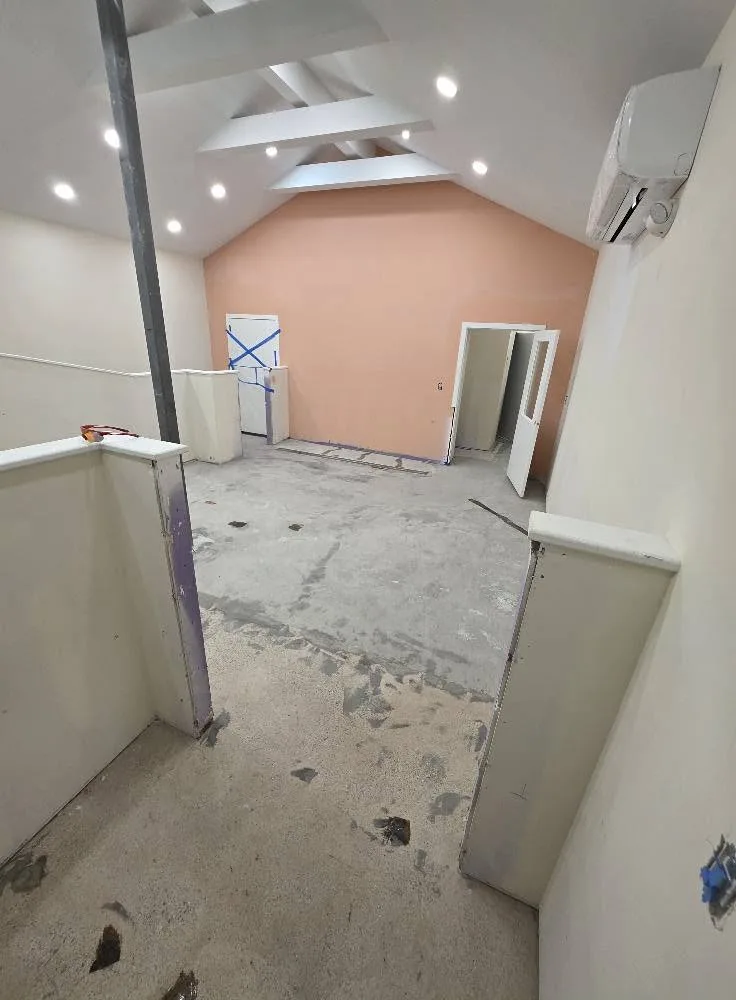
Danny taps across every patch and replaced section, listening for hollow spots where the repair has not bonded to the old slab. A patch that rings hollow has to come out, since a coating laid over it will crack along its edge.

Asking how the repairs were made
The concrete crew’s notes, or a quick call to them, tell him what was used, when it was placed and whether a bonding agent or sealer went on top. Some patching products resist a coating and get ground back or replaced.

Feathering the seams flat
Where new concrete meets old, there is often a small lip or a dip. Those transitions are ground and filled until a straightedge sits flat across them, which keeps the seam from casting a line under a glossy finish.

Grinding old and new to match
Old concrete and fresh repair material take the diamonds differently, so the grind is adjusted until both show the same open texture. That match is what lets the coating bond evenly across the whole floor, patch and slab alike.

Broadcasting to blend the patchwork
A flake broadcast hides the shade difference between old and new concrete better than a solid color, and the topcoat locks it in. The owner then walks the floor with Danny before anything heavy goes back onto it.
More of Danny’s floors
Other jobs from the file, not all of them this service. See the gallery






Questions about floor coating installation after concrete repairs
Will the patches show through the new coating?
On a well-prepped floor, most patches disappear under the coating. The seams where old and new concrete meet can still show as faint lines, especially under a solid color with gloss. A flake broadcast hides them best. Danny levels the transitions during prep to keep them as quiet as possible.
Do you do the concrete repairs yourself?
Danny repairs cracks, chips, pits and small damaged areas as part of his prep. Larger work like cutting out and repouring sections, filling plumbing trenches or replacing a slab belongs to a concrete contractor. Once that work is done and cured, Danny grinds the whole floor and coats it as one surface.
How long after a concrete repair can you coat the floor?
It depends on the size of the repair and the material used. Small patches made with fast-setting repair products are often ready quickly. Large repoured sections behave like new concrete and need to cure and dry like any new slab. A moisture test, arranged by the owner, settles the question for the bigger areas.
What if a repaired crack opens again?
A crack that reopens after repair usually means the slab is still moving, from settling, a leak or frost underneath. The coating will crack along the same line. Danny can repair and touch it up, though the lasting fix is finding the cause, which may need a concrete contractor or a plumber first.
Can you coordinate with my concrete contractor?
Yes. Danny can talk with the concrete crew before they start about which repair products take a coating well, how the patches should be finished and when the repaired areas will be ready. A short conversation up front saves grinding out a patch that will not hold a coating later.
Is it worth coating a floor with many patches?
Often it is the best use of a coating. A slab covered in mismatched repairs looks rough even when it is sound, and one coating ties it together visually. The patches need to be well bonded and the cause of the damage fixed first. Danny checks both before recommending it.
Related floors
New builds, renovations and tenant fit-outs, scheduled once the slab has cured and the other trades are out.
- Renovation Epoxy FlooringNew epoxy floors poured on a slab after the old flooring is pulled, with glue, mortar and patches ground and leveled first.
- Floor Coating for Tenant ImprovementsCoated floors installed during a commercial build-out, ground clean of the last tenant’s leftovers and ready for the new business to open.
- Concrete Floor Upgrades for Property RenovationsEvery concrete floor in a renovated property walked, planned and coated in one sequence, with finishes that match from room to room.
- Garage Renovation Floor CoatingsCoatings for older garages being redone, with old paint, oil and salt damage ground out before a new floor is poured.
- Basement Renovation Epoxy FlooringEpoxy floors poured on a dry basement slab as the finished surface, from metallic rec rooms to bright solid color laundry and storage areas.
Cranford is home base. Danny covers 33 counties in New Jersey, New York, Pennsylvania and Connecticut. See every areaSee the gallery
Danz Handz
Danny Carrero, epoxy specialist
dhepoxy@gmail.com
Cranford, NJ. Mon to Sat, 8 to 6. Hablamos español.
Schedule a look at your floor
Tell Danny what you are working with. He will call, then come look before anyone talks numbers.