
Light sanding for recoats and smooth finishes
Sanding is the lighter cousin of grinding. It scuffs an existing coating before a recoat and softens the edge of a patch, so it comes into play when an old epoxy floor is still sound and only needs a fresh topcoat or a color refresh.

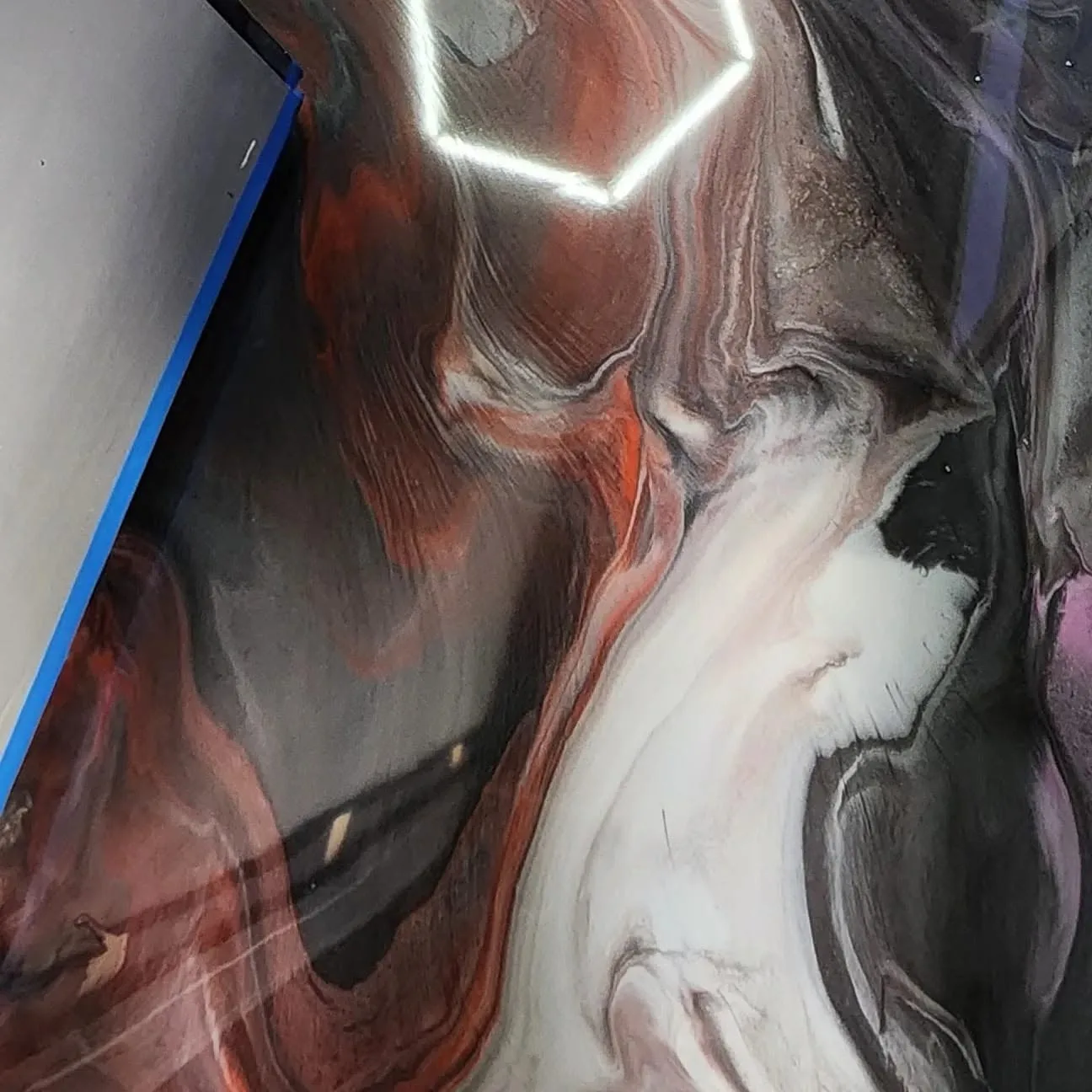
What concrete floor sanding really involves
Sanding uses finer abrasives than prep grinding, run on a floor machine, a smaller sander or by hand. On a bonded coating, it dulls the glossy surface and leaves fine scratches so a new topcoat can grip. Between coats, it knocks down dust nibs, flake points and small bumps. On repairs, it feathers patch edges so they blend into the floor around them. It removes very little material, and that is the point, because it changes the surface without taking the floor apart.
Danny checks that the existing coating is bonded before anything else.
Sanding fits recoats of epoxy that is still well bonded, finished floors with a dull topcoat and decorative work where a smooth base matters. It does not remove coatings, paint or sealers that are failing, and it will not open bare concrete enough for a new coating to bond. If an old floor is peeling, sanding over it only hides the problem for a short while. On textured flake floors, sanding knocks off the chip tips so a topcoat can wrap them smoothly.
Danny checks that the existing coating is bonded before anything else. He looks for peeling edges, soft spots and areas that sound hollow, since sanding a failing floor wastes a topcoat. If the floor is sound, he cleans off grease and residue, then sands the whole surface evenly so the new coat bonds everywhere, with extra attention near the walls. Patches get feathered. The floor is vacuumed and wiped clean, because sanding dust left on the surface is a common cause of a rough topcoat. Then the recoat goes on, and the client sees the refreshed floor once it is ready to walk on.
Sanding refreshes a floor that is still holding on. It cannot rescue one that is not.
What happens on the job
Sanding a sound coated floor before a recoat follows a short, careful sequence, and the very first step decides whether it should happen at all.
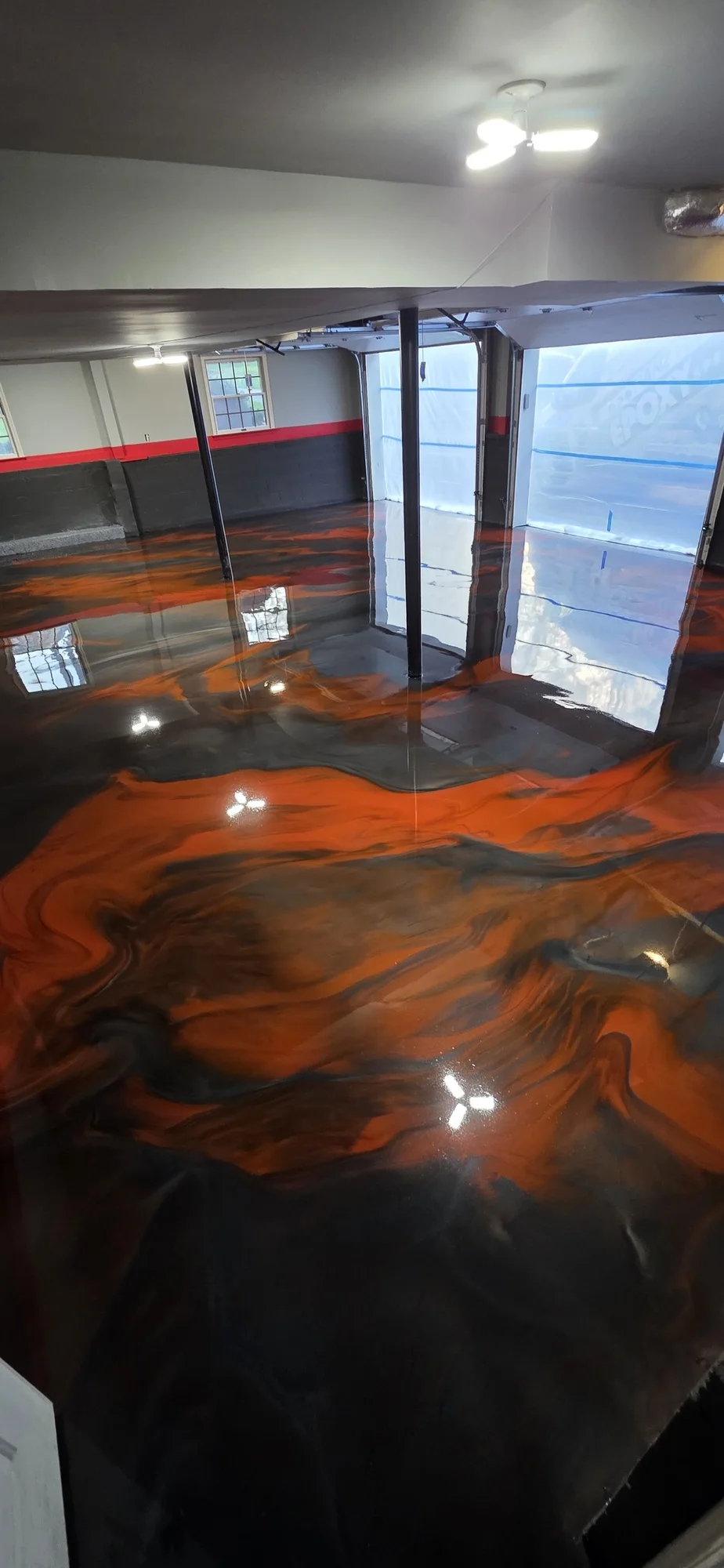

Bond check before any abrasive
Danny taps for hollow spots, pries at chipped edges and looks for lifting along walls and seams. A floor that fails this check is a removal job, and sanding it would only put a fresh coat on top of a failing one.

Degreasing the old surface
Grease, wax and cleaner residue come off with a degreaser before sanding, so the abrasive scuffs the coating itself and the new coat is not left sitting on a film. Kitchens and garages usually need the most attention at this step.

Scuffing evenly edge to edge
The floor is sanded from wall to wall with fine abrasives until the old gloss is uniformly dull. A shiny patch left behind is a spot the new coat will not grip as well, so Danny checks the surface under raking light.

Feathering chips and dents
Chipped spots and small dents are filled and sanded smooth into the coating around them, so each repair blends under the new topcoat and does not show up later as a bump or a dull ring in the finish.
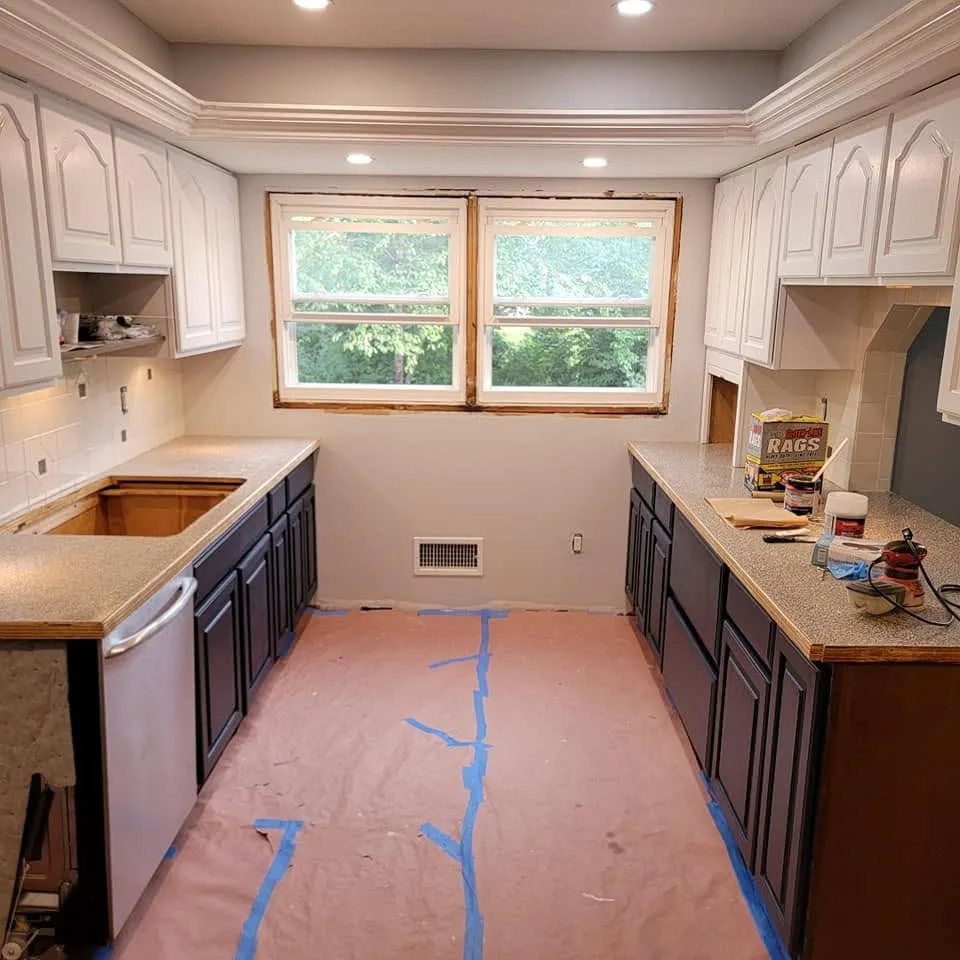
Clean to the touch, then recoat
Sanding dust is vacuumed and the floor wiped down until a hand comes away clean. Dust left behind is one of the most common causes of a gritty recoat, so this step is not rushed. Then the new color coat or topcoat goes on.
More of Danny’s floors
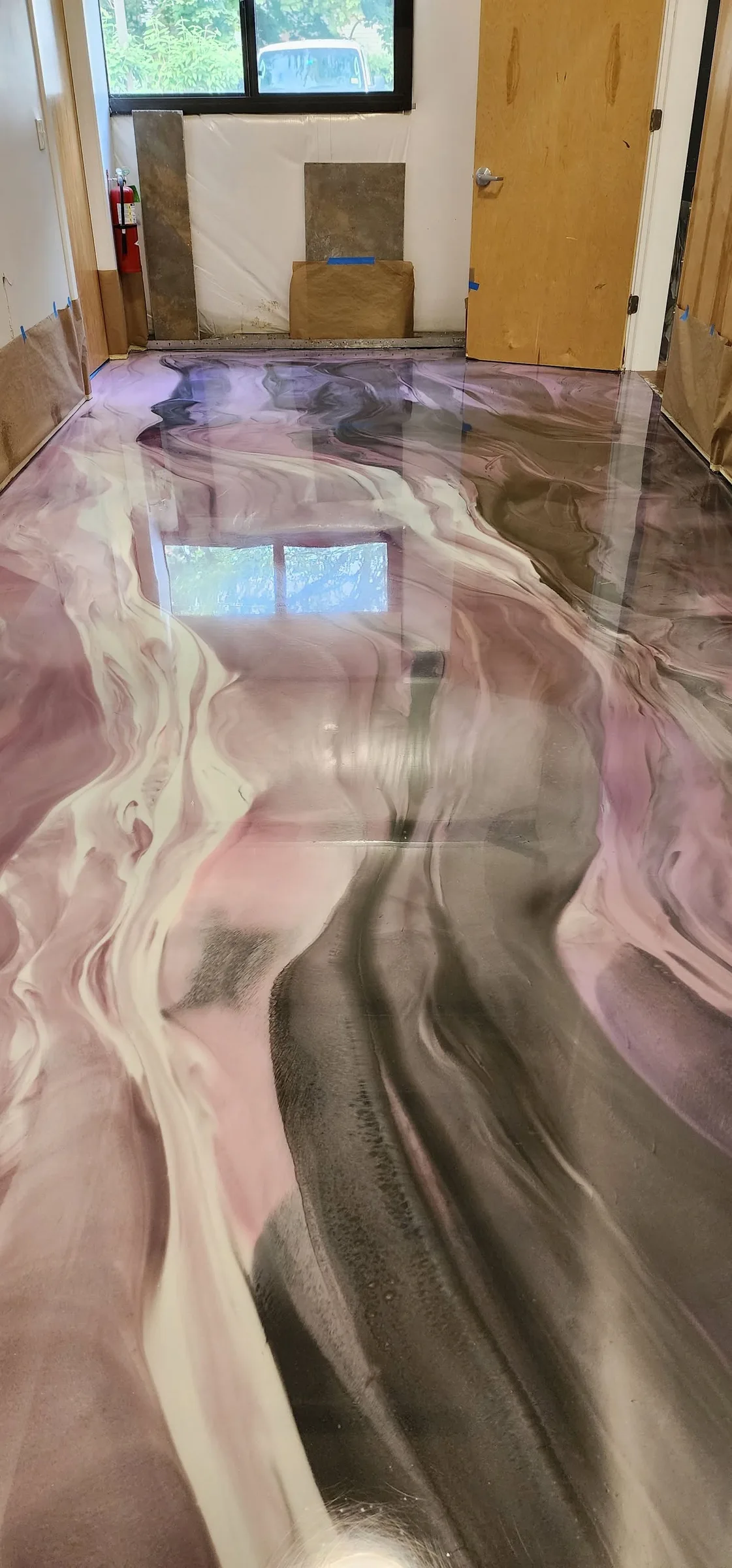
Other jobs from the file, not all of them this service. See the gallery






Questions about concrete floor sanding
Can I just sand my epoxy floor and add a new topcoat?
If the existing epoxy is well bonded and only worn, dull or scratched, yes, and it is one of the simpler jobs Danny does. If it is peeling, bubbling or lifting anywhere, a new topcoat bonds to a coating that is already failing, and the problem comes back. He checks the bond before recommending a recoat.
Is sanding the same as grinding?
They are related but used for different jobs. Grinding uses coarse diamond tooling to cut into bare concrete or strip coatings. Sanding uses finer abrasives to scuff and smooth a surface without removing much. A new floor on bare concrete starts with grinding. A recoat over a sound coating starts with sanding.
Will sanding change the color of my floor?
It dulls the surface for a while, so the floor looks hazy until the new topcoat goes on. Once the clear or tinted topcoat is down, the color looks like itself again. If you want a new color, the sanded floor can take a new color coat before the topcoat, as long as the existing coating is sound.
Can a flake floor be sanded and recoated?
Yes, as long as it is still bonded. Sanding knocks down the tips of the chips and dulls the old topcoat, and the new clear coat wraps the chips smoothly. A recoat can also make an older flake floor feel less rough underfoot, depending on how much topcoat goes on over it.
Can sanding take out scratches?
Light scratches in the topcoat soften or disappear once the floor is sanded and recoated. Deeper scratches that cut into the color layer may need filling first, and a gouge through to concrete is a spot repair. Danny looks at the worst marks during the walk to see which kind you have.
How often does a coated floor need a sand and recoat?
There is no set schedule. It depends on traffic, grit, sun and how the floor is cleaned. The time to do it is when the topcoat looks dull or worn in the walking paths, before that wear reaches the color layer underneath. Waiting too long turns a recoat into a bigger repair.
Also in prep
Grinding, shot blasting, crack and joint filling, leveling and moisture testing, done before any coating goes down.
- Concrete Coating RemovalStripping failed paint, sealers and old coatings back to sound concrete, with the method picked after testing how the old finish comes off.
- Old Epoxy RemovalTaking up peeling, bubbling or yellowed epoxy and finding out why it failed, or sanding and recoating it when the old floor is still bonded.
- Concrete Crack FillingChasing, filling and grinding slab cracks flush before a coating, with honest calls on which cracks are still moving.
- Concrete Joint FillingDeciding whether each saw cut and control joint gets filled and coated over or kept open, and doing either one cleanly.
- Concrete Spall RepairCutting back flaked and popped-out concrete to solid ground and rebuilding it flush, common near garage doors that see winter salt.
Jobs run about 60 miles out from the Cranford shop, from the Jersey shore and the Poconos to Long Island and Fairfield County. See every areaSee the galleryRead: Why Every Good Epoxy Floor Starts With a Diamond Grinder
Danz Handz
Danny Carrero, epoxy specialist
dhepoxy@gmail.com
Cranford, NJ. Mon to Sat, 8 to 6. Hablamos español.
Tell Danny about the floor
Start with the room and the idea. Danny follows up by phone and comes to see the slab.