
Dealership floors built for cars parked under the lights
Hot tires are the thing to plan for. A car pulled straight in off the road can mark some topcoats, and a wheel turned while it is parked grinds into one spot for weeks. Danny picks the topcoat with that traffic in mind, then goes after the dark, mirror-gloss look most dealers want under the lights.


What auto dealership showroom flooring really involves
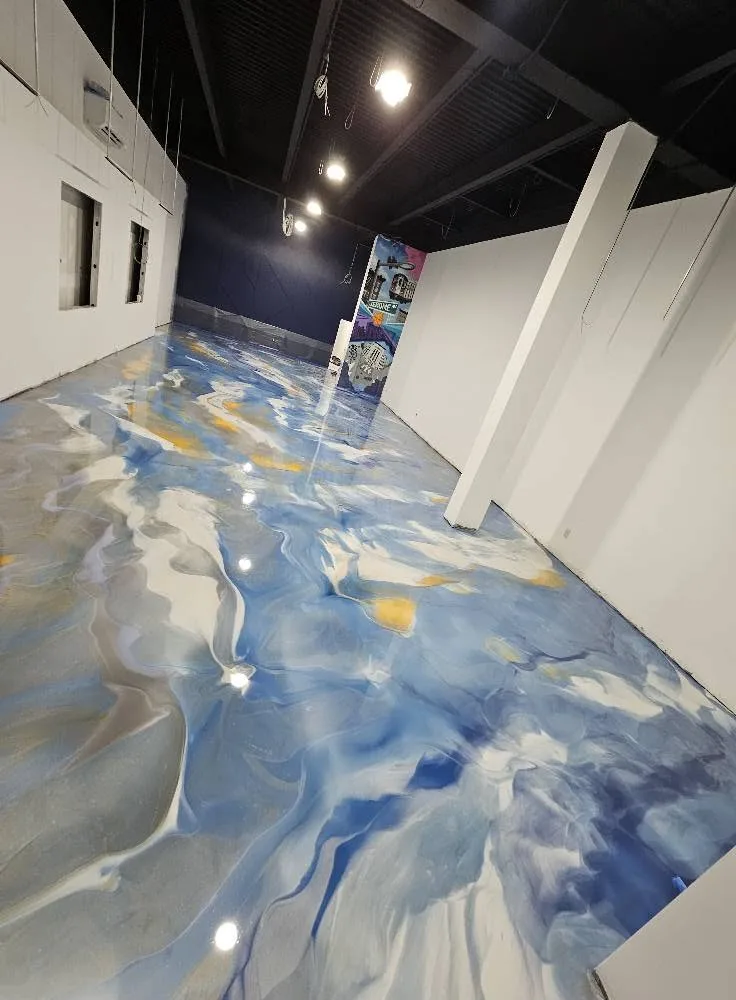
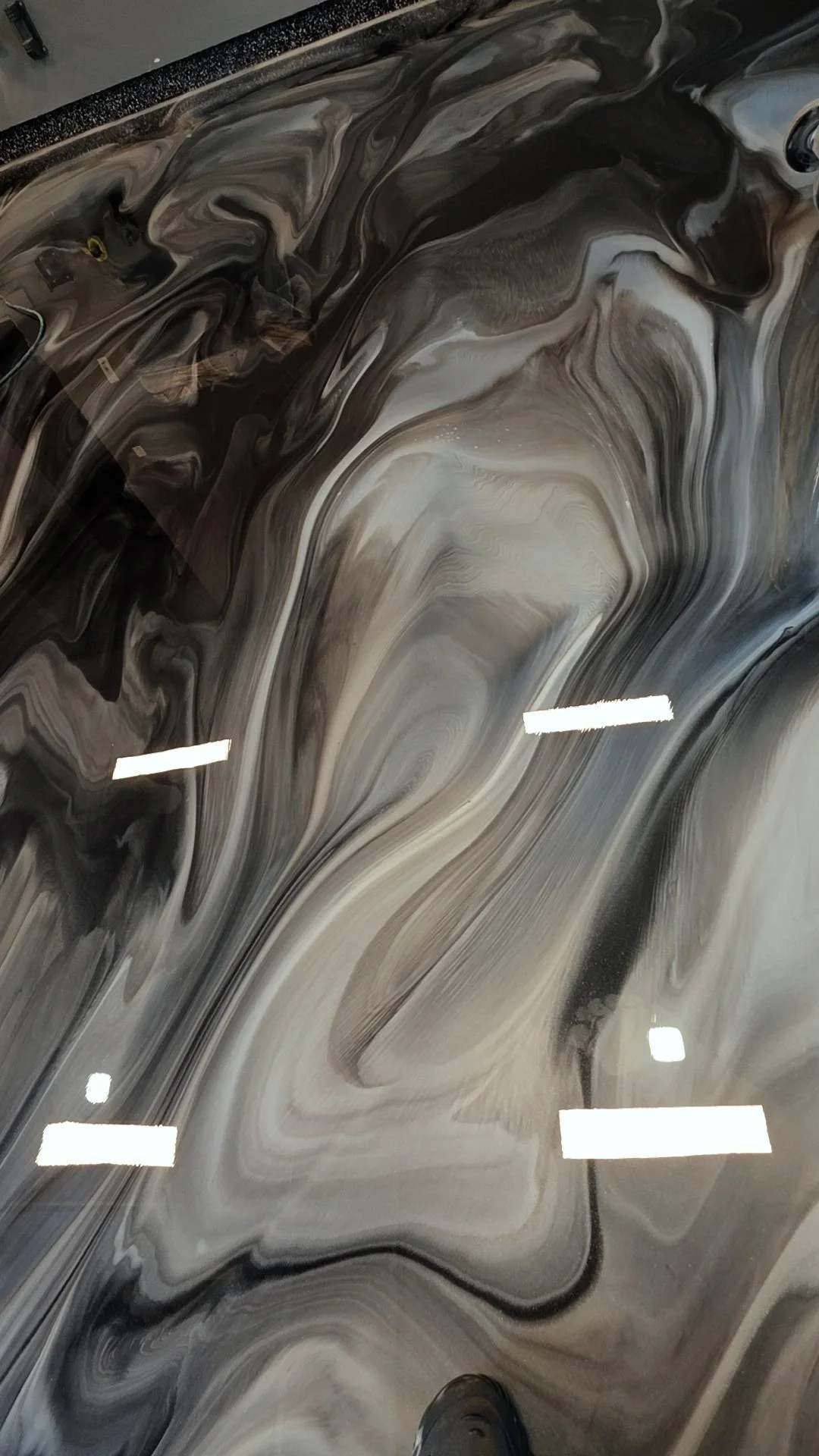
A dealership showroom coating is a resin floor poured over the slab with a topcoat chosen for vehicle traffic. It forms one continuous surface, so there are no tile edges for tires to crack or grout lines to stain. Many dealers want a glossy dark or gray floor that reflects the cars like a mirror, and a metallic pour can carry brand colors through the room. Solid and flake systems also work where the showroom wants a simpler look or a little more grip near the doors.
Danny picks the topcoat with that in mind and from the product data.
Tires are the honest limit. Hot tires driven in off the road can leave marks or soften some topcoats, a problem called hot tire pickup, and turning the wheel while the car is parked scuffs the surface. Danny picks the topcoat with that in mind and from the product data. A mirror-gloss floor also shows tire marks and dust quickly, so it needs daily care to look right. Service drives with oil and fluids call for a different system from the showroom.
The cars’ path in and out is the first thing Danny looks at, along with where they park and where they turn their wheels to position. He checks the light from windows and fixtures, since the reflection matters as much as the color. Cars come out, old tile and adhesive come up, and the slab is diamond ground and repaired so the surface reads flat under that reflection. The pour is timed around the dealership’s slowest days, depending on the store. After the cure, he walks the floor with the manager before the first car rolls back in.
A glossy showroom floor puts a second reflection of every car under the lights.
Five stages, every time
Cars have to leave the showroom before work starts and drive back in after it, so the process is built around those two moves and the drive path between them.


Reviewing the brand’s floor standard
Many dealerships work under a manufacturer’s image program that names a floor color or finish. Danny asks for whatever the brand has provided, and if there is a requirement, the system is chosen to it and the product data before any sample is mixed.

Staging the inventory outside
Display cars move to the lot or service area on an agreed morning. Danny walks the room with the sales manager once it is empty, marking the doors cars use, the spots where they usually park and any old tire burns in the existing floor.

Taking out tile and tire residue
Old tile, grout and the glue under them come up, and the slab is ground until tire residue and dressing buildup are gone. Settled areas near the glass doors, where cars enter, are repaired so wheels roll onto a flat, sound edge.
Clear coat over the dealer’s color
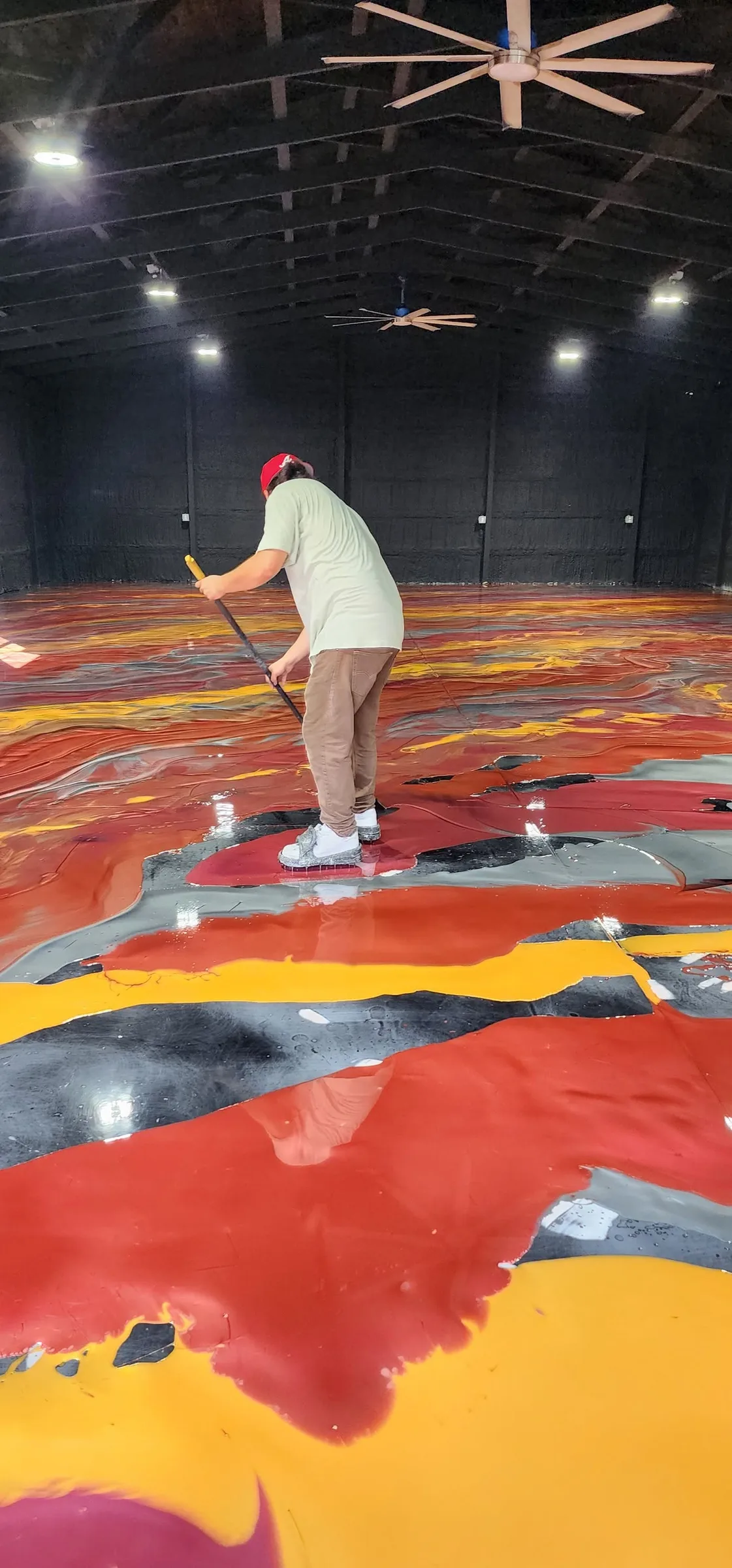
The color coat goes down, often a dark solid or metallic picked for how cars reflect in it, and a topcoat chosen for vehicle traffic seals it. Entry areas near the doors can take a light texture for wet days.

Driving the first car in
After the cure, the first car is driven in slowly with cool tires and parked with its wheels straight. Danny and the manager check the floor at the doors and under that car before the rest of the inventory follows.
More of Danny’s floors
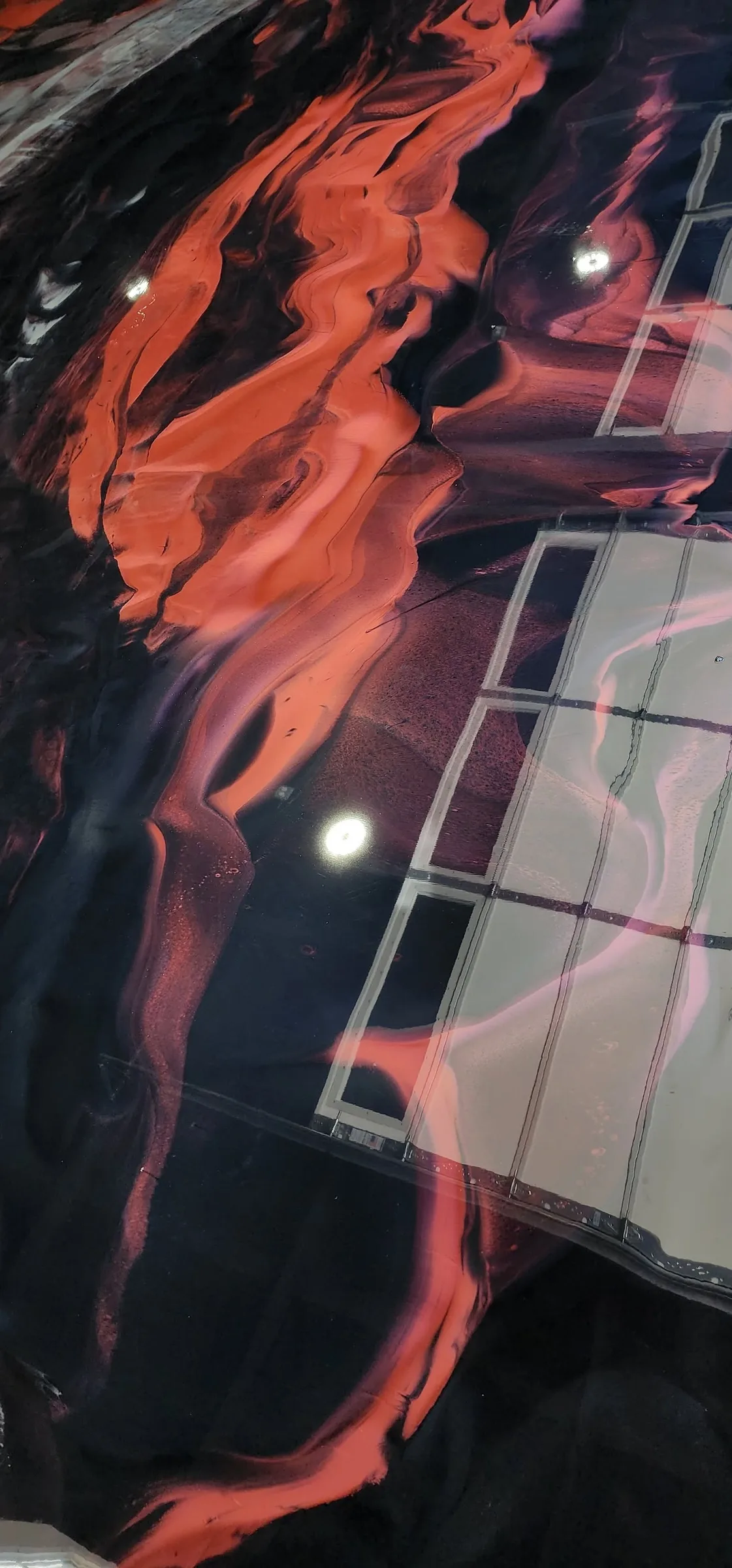
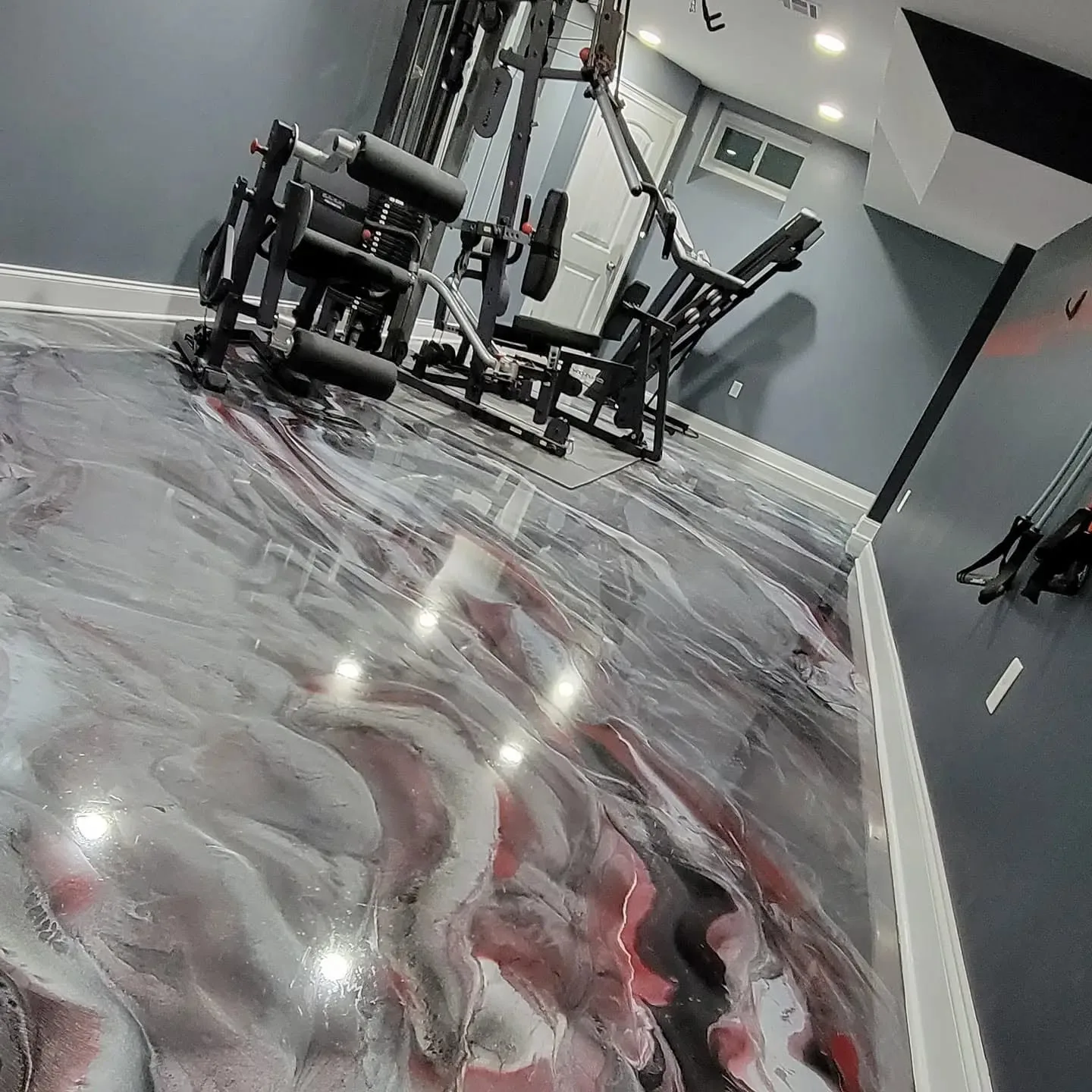
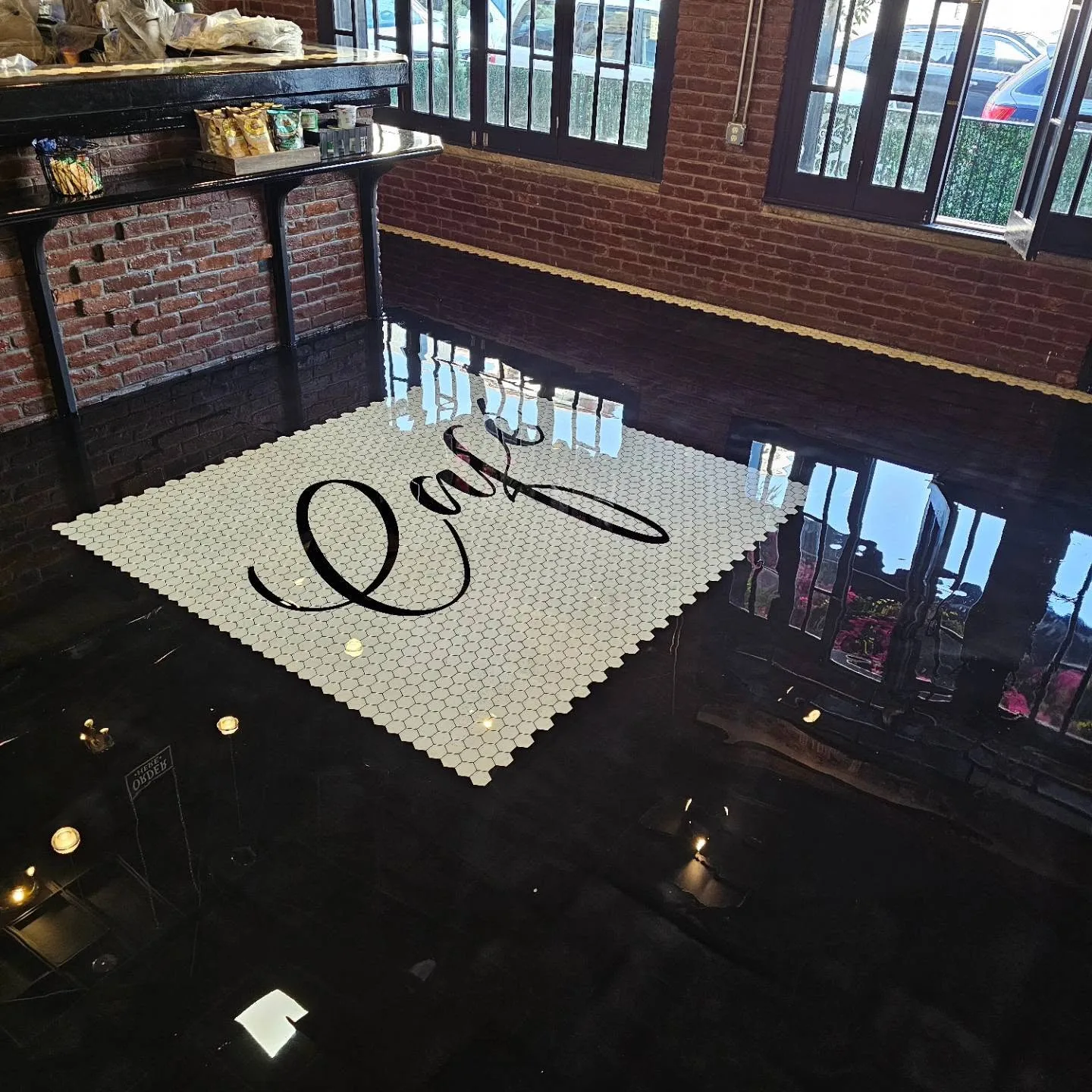
Other jobs from the file, not all of them this service. See the gallery



Questions about auto dealership showroom flooring
Will hot tires mark the floor?
Hot tires can leave marks on many floor coatings, which is why the topcoat for a dealership is chosen with vehicle traffic in mind. Letting cars cool before they come in, and parking with wheels straight, helps a lot. Danny walks through the product data with you and is straight about what any finish will and will not do.
Can the showroom stay open during the work?
Not the part being poured. The cars have to come out, and the grinding raises dust. Large showrooms can sometimes be done in halves with cars staged on the other side, while smaller rooms usually close for the whole job. Danny lays out the options after seeing the space and the dealership’s schedule.
Is a glossy floor slippery for customers?
A high-gloss topcoat can be slick when wet, which mostly matters at the entrance on rainy and snowy days. Walk-off mats at the doors help, and a light texture can go into the topcoat near entries without changing the look much. Danny will let you feel the texture options on a sample before anything is decided.
Does tire shine come off on the floor?
It can. Silicone tire dressing that has not dried transfers onto many floors and leaves dark marks or slick spots under each wheel. Letting dressing dry fully before a car comes inside, or applying it in the lot, keeps the showroom floor cleaner. Danny will mention it to the detail team when the floor is handed over.
Can the customer delivery area match the main showroom?
Yes. A delivery bay or handover area can carry the same color and finish so the customer’s last look at the store matches the first. If cars are prepped or washed there, it may need more texture or a tougher topcoat. Danny looks at what happens in that space before suggesting how closely it should match.
What happens to the floor under a car parked for months?
A car that sits in one spot for a long time puts steady weight on four small areas, and any slow drip lands in the same place. Rotating display cars now and then, keeping mats under the engine area and cleaning under each car keeps those spots from marking. Danny can point out the long-term display positions to watch.
Related floors
Salons, barbershops, showrooms, restaurants, offices, gyms and clinics, worked around your hours.
- Veterinary Clinic Floor CoatingsSealed vet clinic floors with flake and texture options that hide claw marks, wash down in kennel areas and give paws grip.
- Gym and Fitness Studio FlooringCoated floors for gym lobbies, locker rooms and studio rooms, planned around rubber in the weight areas and texture where floors get wet.
- Hotel Back-of-House FlooringContinuous floors for hotel service corridors, linen rooms and receiving, done in sections so housekeeping keeps moving during the work.
- Commercial Hallway Floor CoatingsHallway floors poured in one continuous run, with planned edges at every door and colors chosen to hide the wear path.
- School and Classroom Floor CoatingsClassroom and art room floors with no yearly waxing, planned around the school calendar and any district flooring requirements.
Based in Cranford, NJ. Danny takes work across New Jersey, the five boroughs, Long Island, Westchester and Rockland, Fairfield County and Bucks County. See every areaSee the gallery
Danz Handz
Danny Carrero, epoxy specialist
dhepoxy@gmail.com
Cranford, NJ. Mon to Sat, 8 to 6. Hablamos español.
Book a walkthrough
Tell Danny what you are working with. He will call, then come look before anyone talks numbers.