
Choosing the right coating for an industrial warehouse
The battery charging area, the shipping lane and the mezzanine office in one building can each need a different coating, and Danny maps them zone by zone on the walk. He looks at what drips in each spot and what rolls over it. Then the work gets sequenced so one zone closes while the others keep running.
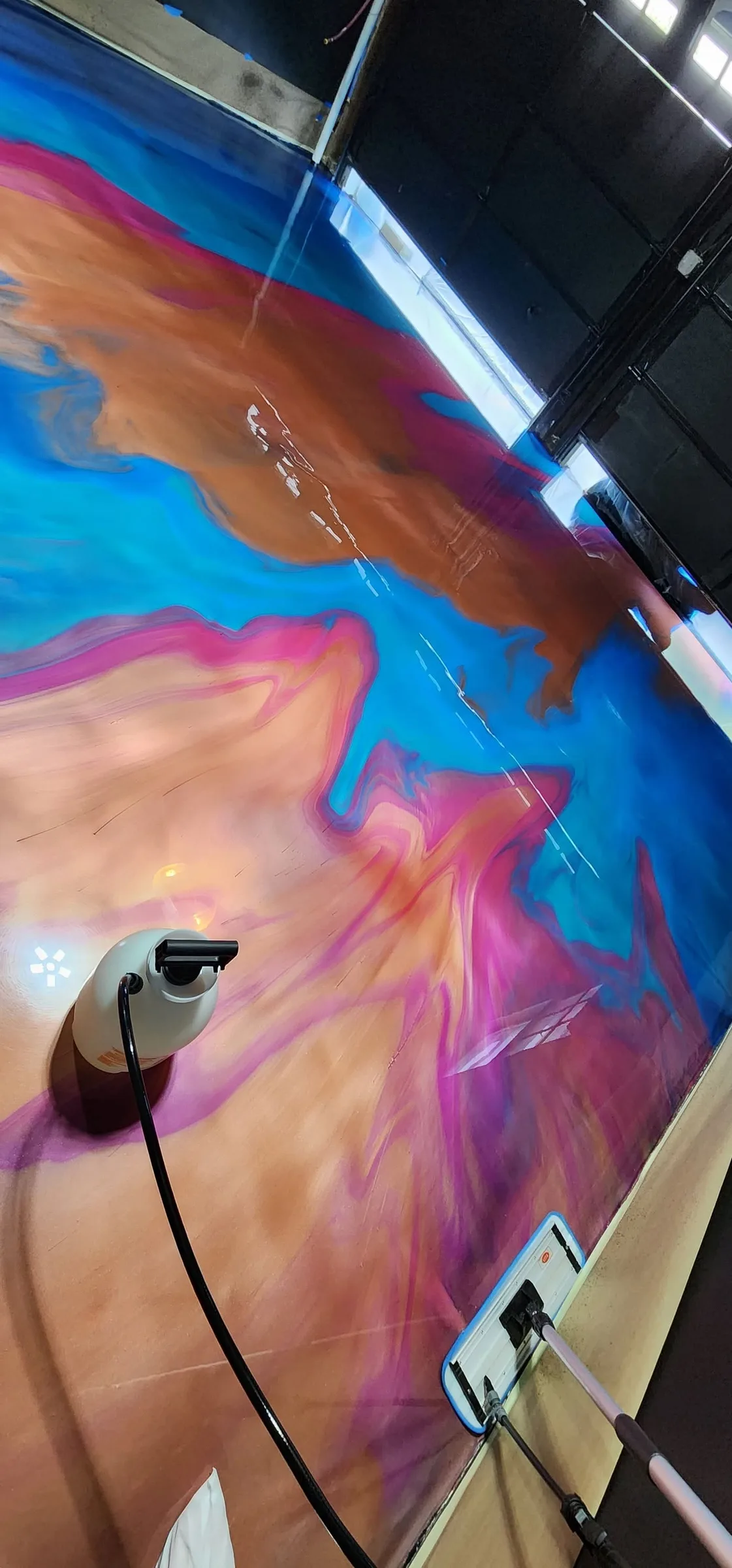

Industrial Warehouse Floor Coatings, from Danny’s side of the job
Industrial warehouse coatings are a family of resin systems: epoxies, urethane topcoats, polyaspartics and penetrating sealers, each with strengths. An epoxy builds a hard bonded layer, a urethane topcoat over it is often used in busy lanes, and a sealer may be enough for a back corner that only needs to stop dusting. Before choosing, Danny sizes up the building zone by zone, its traffic, and the fluids that end up on the floor. The final system follows the job’s requirements and the manufacturer’s data.
The final walk goes zone by zone with the facility manager so every area is checked against its plan.
The honest limit is that no coating does everything. A floor chosen for spills in the charging area may be more than the pick aisles need, and a system chosen for looks may not survive the dock. Mixing systems by zone gives each area what it needs, but it means more planning and more transitions. Slabs with moisture problems, deep spalls or failing joints need those repaired first, or any coating will follow the damage. Danny would rather say that early than after the pour.
Zones get drawn on the first walk: lanes, aisles, staging, charging, maintenance, offices. Danny notes the traffic in each, what drips or gets spilled, and the condition of the slab and joints, then recommends a system for each zone and an order for doing them. Each section is diamond ground, joints and cracks are repaired, and the coating is poured and cured before traffic returns. Where two systems meet, the line is placed at a natural break. The final walk goes zone by zone with the facility manager so every area is checked against its plan.
Different parts of a warehouse wear differently, so they rarely need the same floor.
How Danny does the job
An industrial warehouse often needs more than one system under one roof. These stages cover how the zones get drawn and how two systems meet at their edges.
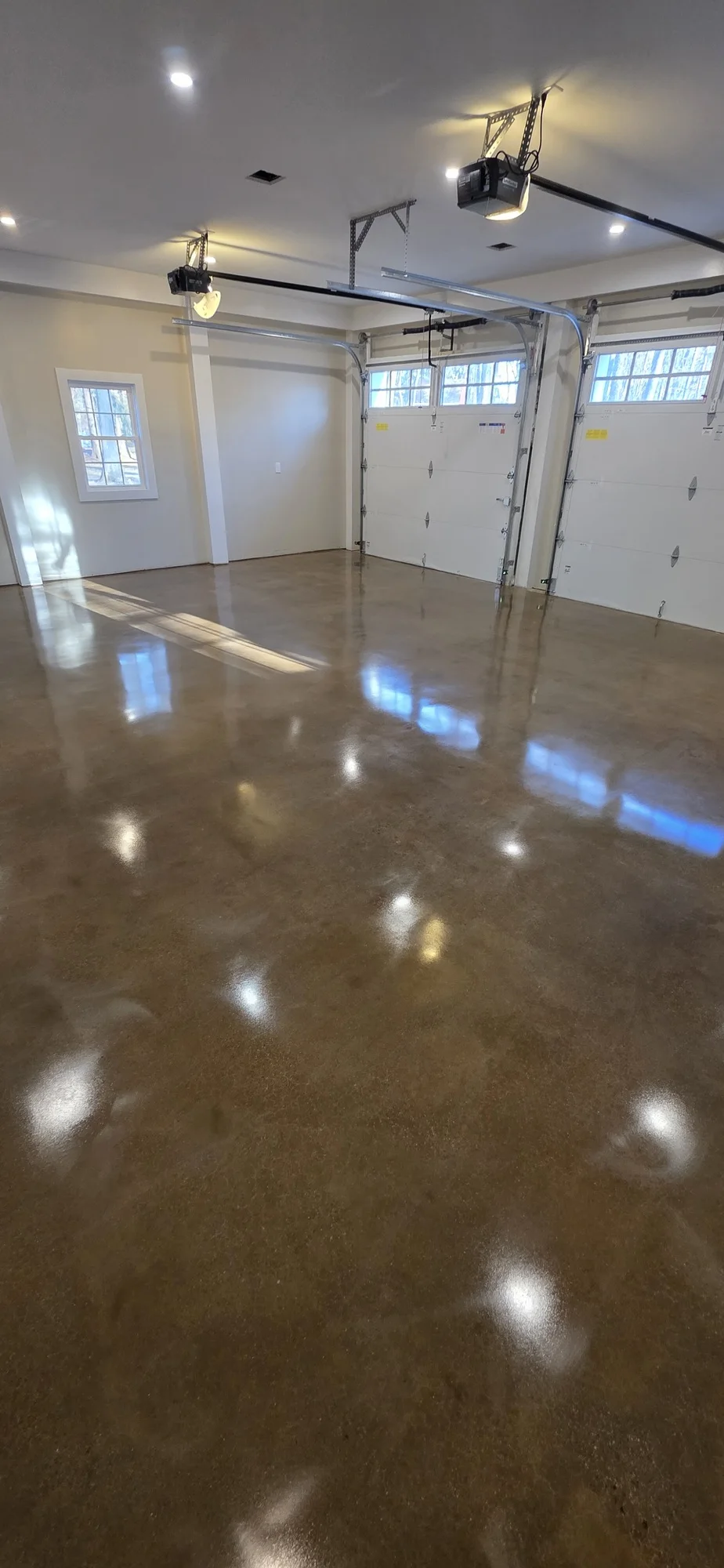

Marking zones on the floor plan
Danny takes a printed floor plan on the walk and colors in each area by use: battery charging, maintenance, staging, storage aisles, the mezzanine offices. Notes beside each zone list its traffic and the fluids found there.

Assigning a system to each zone
Each zone gets its own recommendation, from a sealer in a quiet back corner to an epoxy with a urethane topcoat in busy lanes. The choices are checked against the product data and explained to the facility manager zone by zone.

Taking the charging area first
Areas that see battery water and acid drips are often in the worst shape, so they tend to go early. Damaged concrete is ground out until it is sound, and the system for that spot goes down with a cove where spills reach the walls.
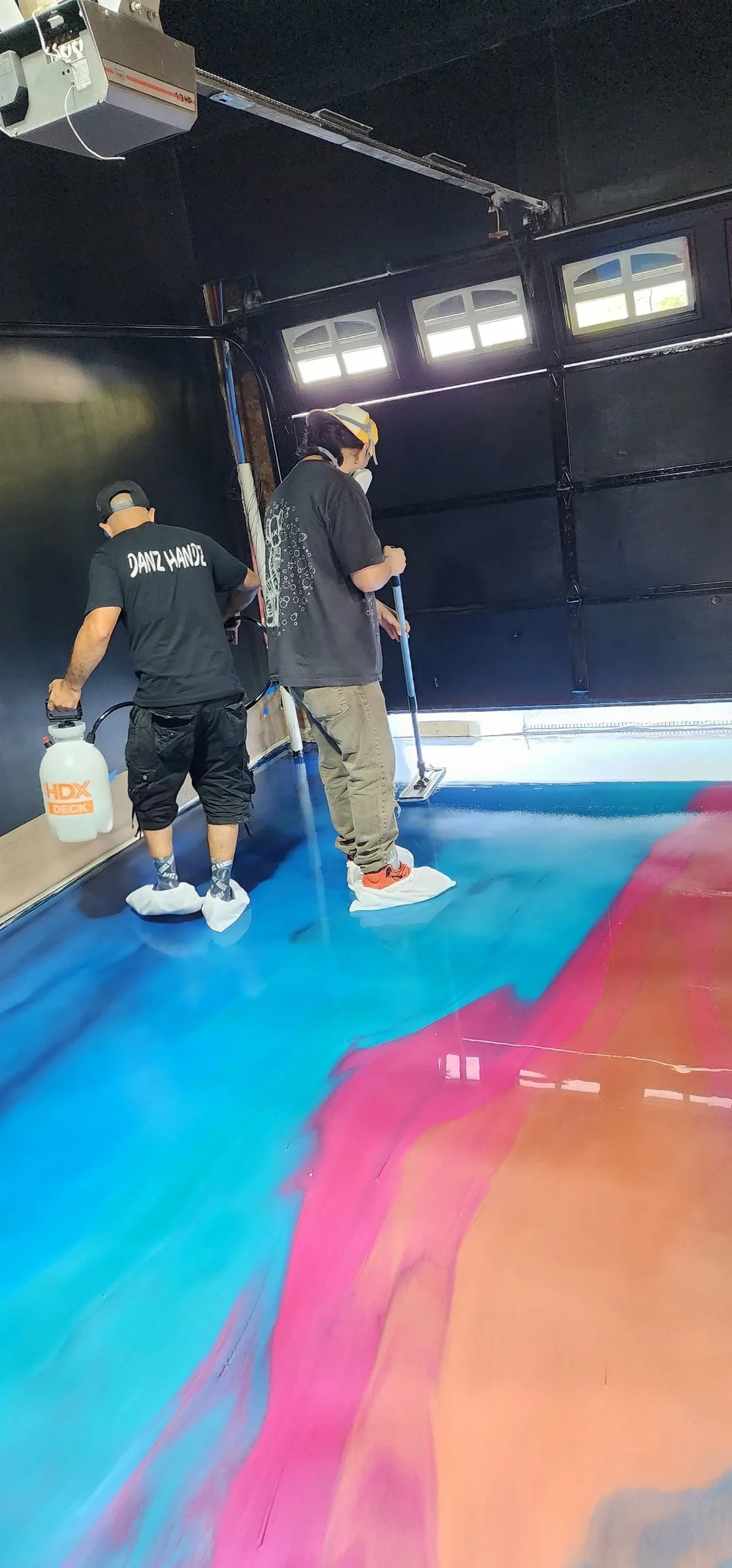
Saw-cut lines between systems
Where two systems meet, Danny cuts a shallow keyed edge into the slab so each coating ends cleanly instead of feathering thin. Those lines follow column rows, rack ends or painted walkway edges so the change looks planned.
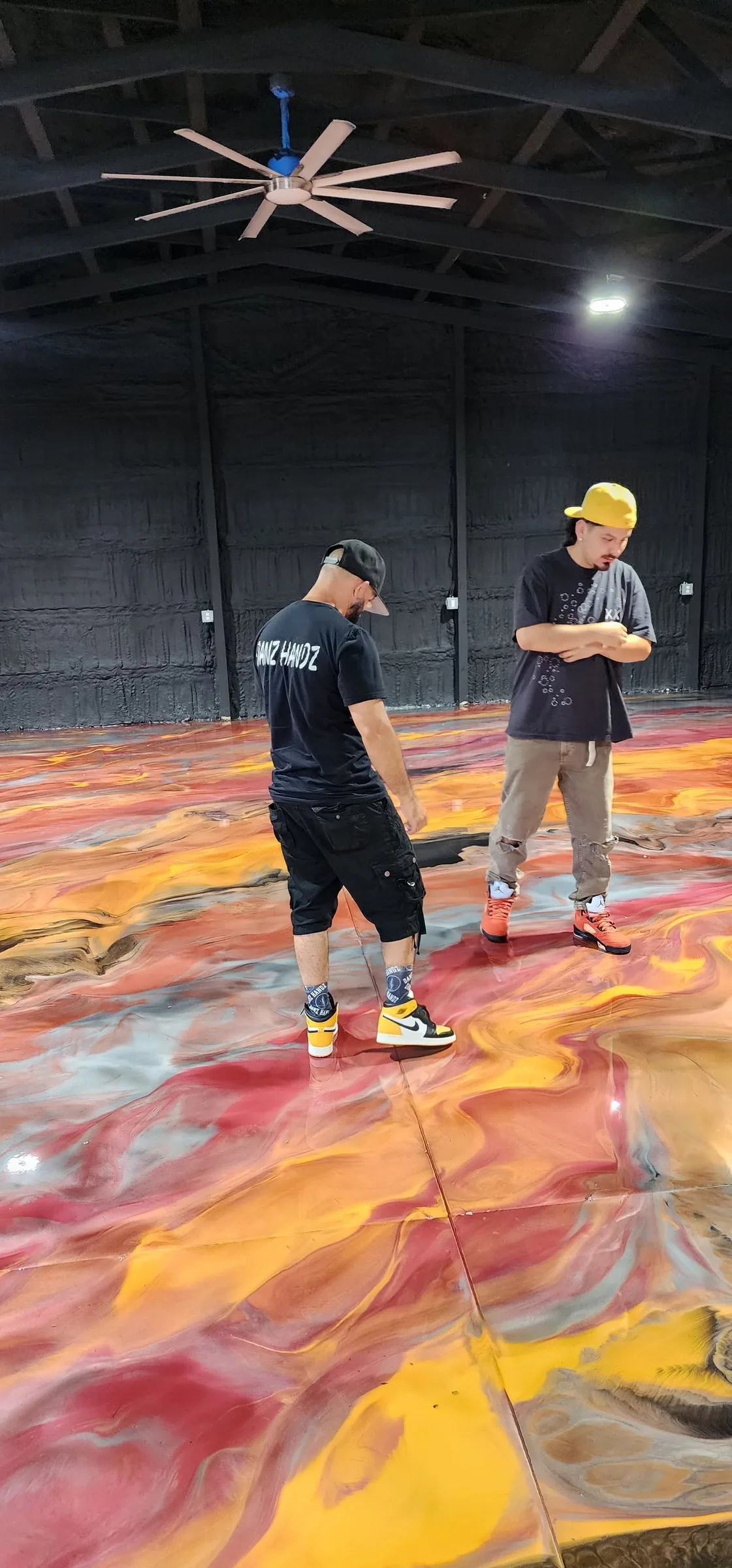
Checking each zone against its plan
When the zones are done and cured, Danny walks the building with the facility manager, plan in hand, and confirms each area got the system written for it. The cleaning crew gets a note on which zones need which care.
More of Danny’s floors
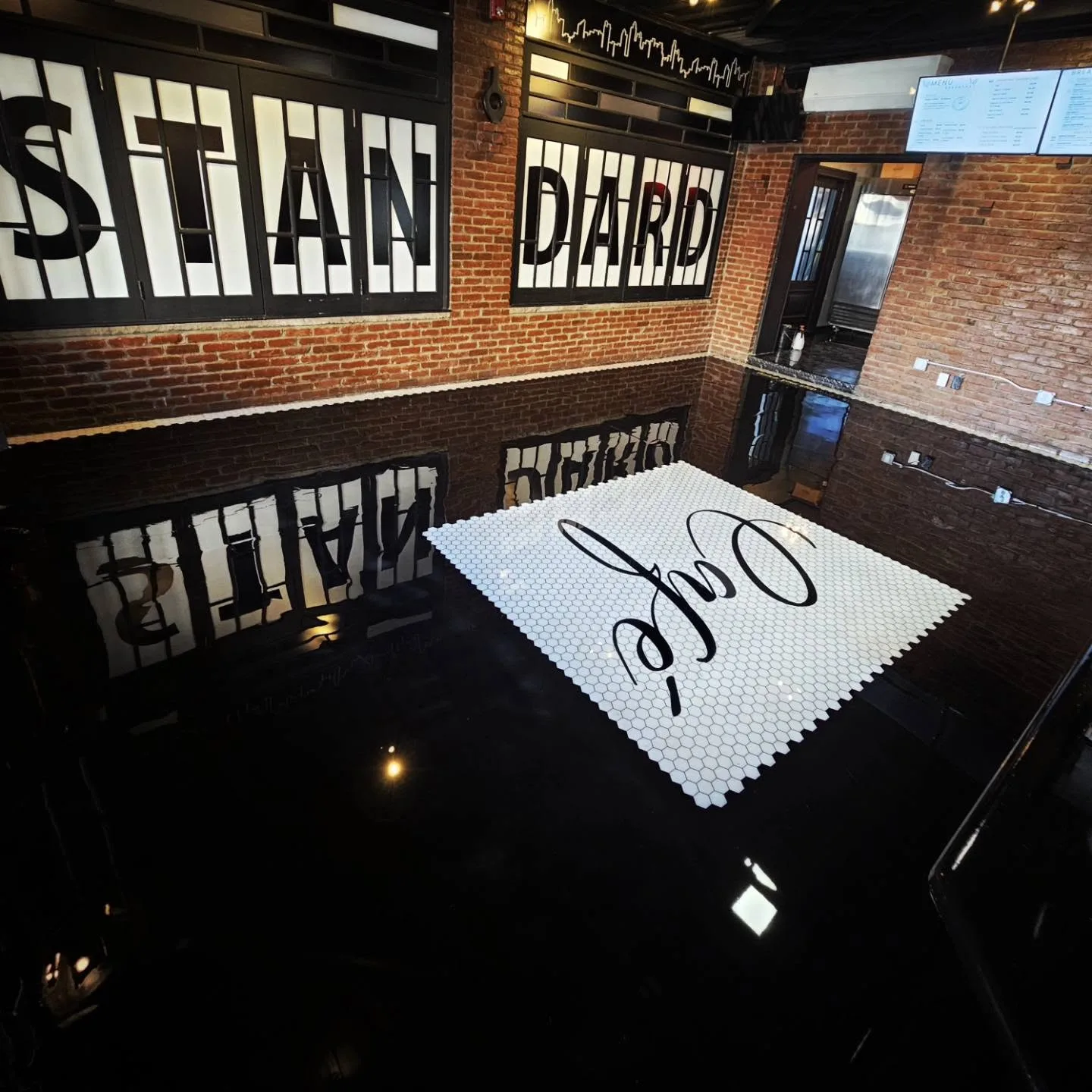
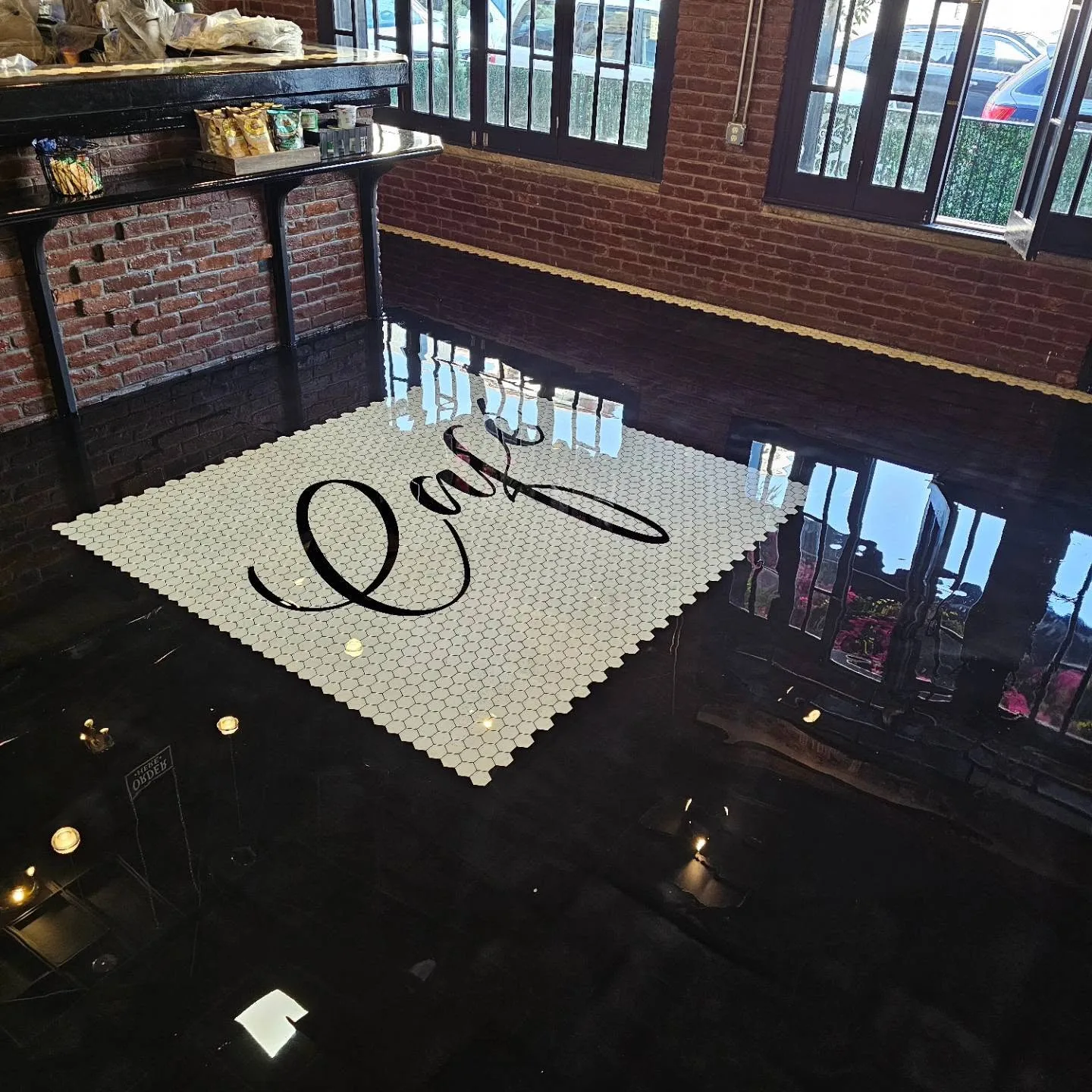
Other jobs from the file, not all of them this service. See the gallery




Questions about industrial warehouse floor coatings
What is the difference between epoxy, urethane and polyaspartic?
They are different resin chemistries. Epoxy builds a hard bonded layer and is often the base of a system. Urethane topcoats are commonly used over epoxy where wear or staining is a concern. Polyaspartics are used where getting back into service sooner matters. The right mix depends on your building, and Danny chooses it from the traffic and the product data.
Do we need the same coating everywhere?
Rarely. Most industrial warehouses have a few distinct zones, and the right system for a charging area or maintenance bay is often heavier than what a pick aisle needs. Coating zone by zone puts the heavier systems where they earn their keep. Danny will tell you where one system is enough.
Can a sealer work in place of a coating?
In low-traffic areas where the goal is only to stop dusting, a penetrating sealer can be the right answer. It does not build a layer on top, so it will not protect against heavy wear or spills the way a coating does. Danny will point out the areas where a sealer makes sense and where it does not.
What should go in the battery charging area?
Charging areas see battery water and spilled electrolyte, which can attack concrete and some coatings. Danny looks at the chargers, the battery type in use and how spills are cleaned up, then picks a system from the product data for that exposure. The coating often turns up the wall there to keep drips off the base.
Can a mezzanine be coated along with the main floor?
If the mezzanine deck is concrete, often yes, and it can share a system with the offices or storage on the main level. Steel or wood decks are a different surface and need their own look. Danny checks how the mezzanine is built and how material can get up there before including it.
How are the transitions kept from chipping?
Transitions chip when a coating ends in a thin, feathered edge that wheels catch. A keyed saw cut lets each system end at full thickness, so wheels roll over a solid edge. Placing those lines away from turning spots also helps. Danny shows where each transition will fall before work begins.
Other industrial work
Warehouses, plants, loading docks and machine shops, with safety striping and aisle marking when the space needs it.
- Forklift Traffic Floor CoatingsForklift traffic coatings built heavier at turning spots and joints, chosen for the trucks, routes and fluids in your building.
- Heavy-Traffic Concrete CoatingsHeavy-traffic concrete coatings with extra build in the lanes, doorways and turning spots where the traffic in your building actually concentrates.
- Industrial Floor ResurfacingIndustrial floor resurfacing that rebuilds scaled, pitted and worn concrete into a smooth, usable surface, ready to coat or put back to work.
- Industrial Floor RepairIndustrial concrete repair for spalled joints, potholes, failed patches and cracks, done on its own or ahead of a new coating.
- Chemical-Resistant Industrial FlooringIndustrial flooring systems selected against your actual chemical list and the product data, with honest answers about what each system handles.
Based in Cranford, NJ. Danny takes work across New Jersey, the five boroughs, Long Island, Westchester and Rockland, Fairfield County and Bucks County. See every areaSee the gallery
Danz Handz
Danny Carrero, epoxy specialist
dhepoxy@gmail.com
Cranford, NJ. Mon to Sat, 8 to 6. Hablamos español.
Book a walkthrough
Tell Danny about the space. He calls you back, comes out, looks at the concrete and talks it through before anything gets decided.