
Floors for an outdoor kitchen that takes grease and spills
Grease off the grill, marinade, red wine and dropped food all land on the concrete around an outdoor kitchen, and the area by the grill station stains dark first. A coating gives that floor a surface that wipes clean after a cookout and still looks good next to the counters.
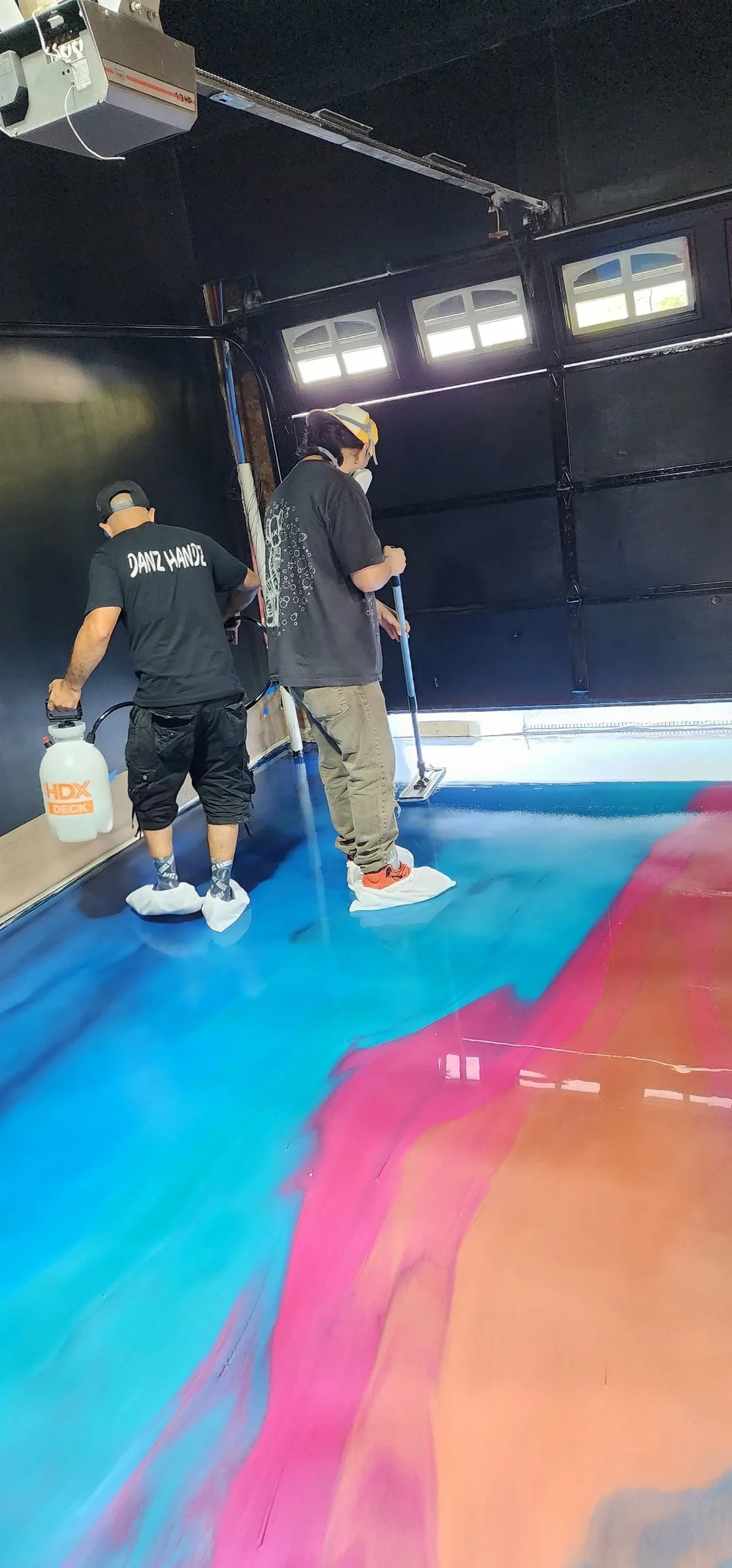
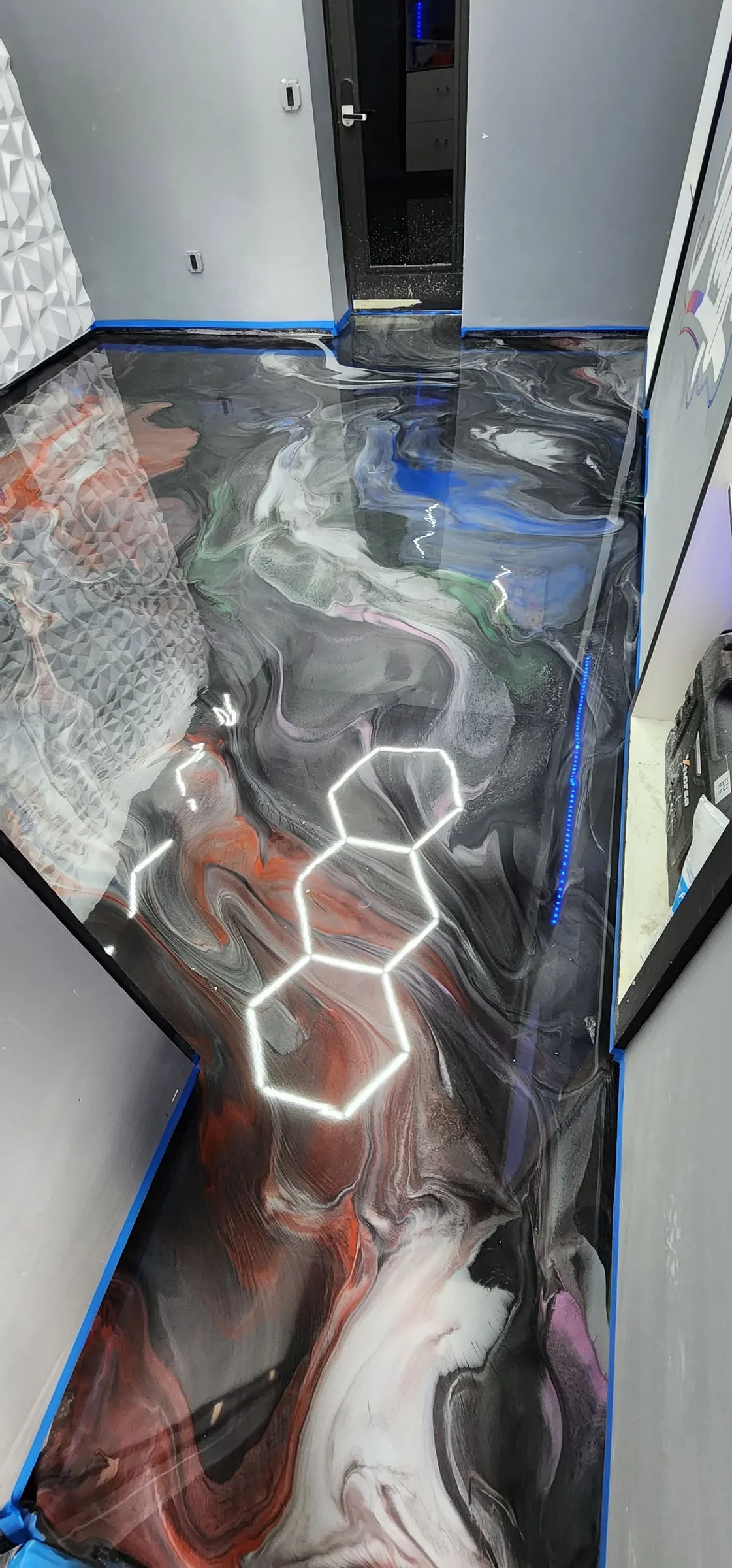
Outdoor Kitchen Floor Coatings, start to finish
An outdoor kitchen floor coating is an exterior resin system laid on the slab under and around a grill island, a bar or an outdoor counter. Bare concrete soaks up grease, and those stains spread every season. A coated slab keeps spills on the surface, where a scrub brush and a hose can reach them. Danny usually suggests a flake broadcast in a color that hides grill drips, with a topcoat chosen from the product data for outdoor exposure and the mess a kitchen makes.
Danny walks the outdoor kitchen and looks at where the cook stands, where the grill drips and where guests gather.
It works best when the floor goes down before the islands and counters are built. It still works around existing islands, with the coating stopping at their base. Heat is the main limit. Coals, hot ash and dropped grill tools can mark most coatings, so the area right at the grill often gets a mat or a stone pad. Gas lines, electrical outlets and sinks belong to licensed trades, and Danny coats around whatever they install. Old grease stains need extra grinding and may leave faint shadows.
Danny walks the outdoor kitchen and looks at where the cook stands, where the grill drips and where guests gather. Old grease spots get noted, since they take extra passes. If the islands are not built yet, he plans the floor first. He diamond grinds the slab, digs out grease that has soaked in, repairs cracks and levels low spots near the counters where water and drips collect. The coating and topcoat go down in dry weather, and the area stays closed through the cure. The final walk covers grill mats and which cleaners to use on grease. Material comes from Bulletproof Resins, which Danny partners with, and the color gets mixed on site in small batches.
Grill grease spreads into bare concrete a little more every season.
From bare slab to finished floor
Every floor goes through the same five stages. What changes is how much each one takes, and that gets settled at the walkthrough.
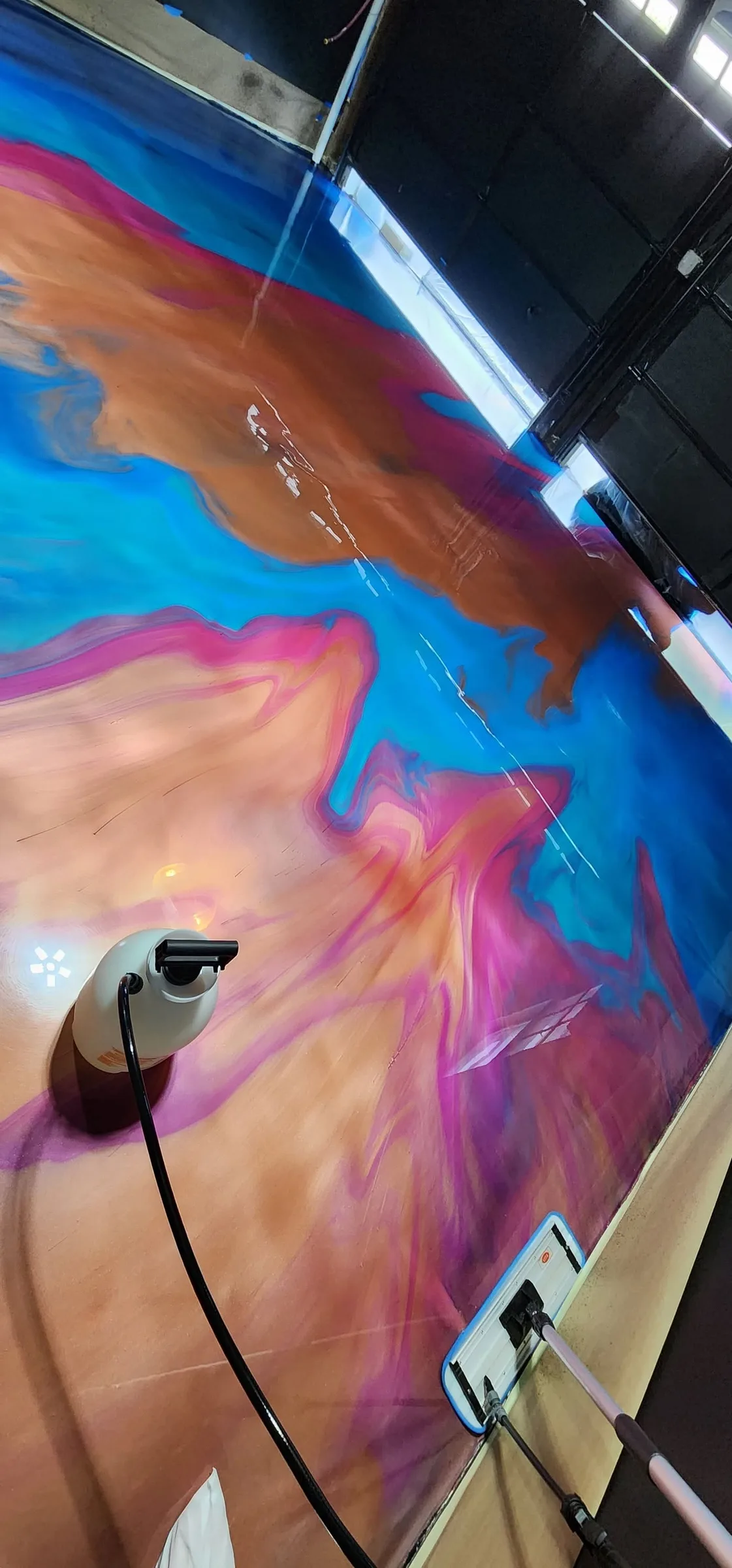

Walk the space
First visit is a look at the concrete and a talk about the look you want and how hard the floor works.

Prep the concrete
Grinding opens up the top of the slab. It is the step that decides whether a coating holds.

Fix what is underneath
Low spots, holes and broken edges get dealt with while the slab is still bare.

Lay it down
The system goes down in the order it needs, mixed in small batches and worked while it is still wet.
Cure and the final walk
Once the floor has cured, Danny walks it with you and goes over care and cleaning.
More of Danny’s floors
Other jobs from the file, not all of them this service. See the gallery





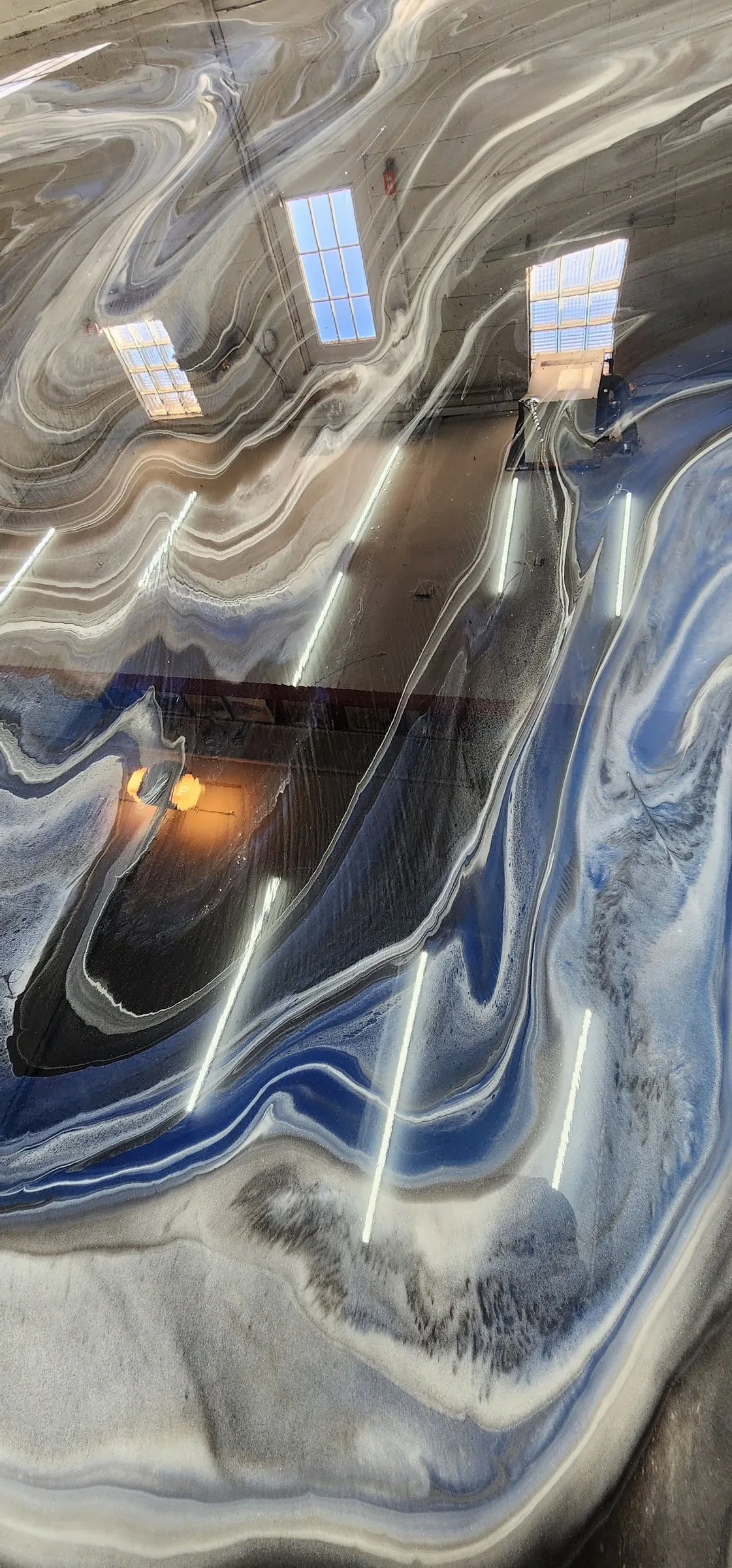
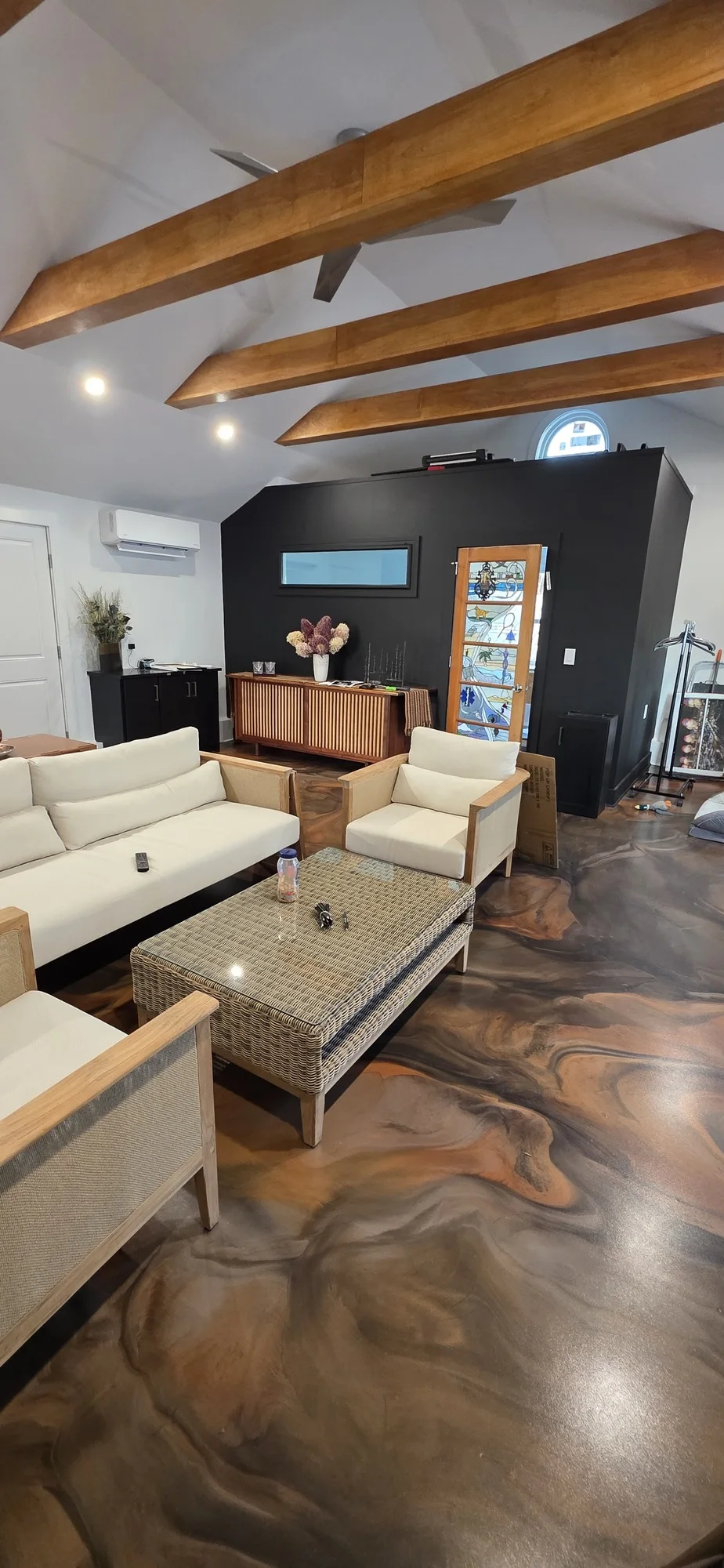
Questions about outdoor kitchen floor coatings
Can you get old grease stains out before coating?
Most come out in the grind, with extra passes over the worst spots. Grease that has soaked deep into concrete can leave faint shadows even after grinding, and a flake broadcast hides what remains. Now and then a badly soaked area gets cut out and patched before the coating goes down, and Danny will point that out on the walk.
Will the coating handle the heat from the grill?
The floor near a grill sees radiant heat, hot grease and the occasional dropped coal. Coatings vary in how they handle that, and the system is chosen from the product data. Even so, a grill mat or a stone pad in front of the cooking area is the practical answer, since direct contact with hot coals can mark most floors.
Should the floor go in before or after the outdoor kitchen is built?
Before is better. The coating runs wall to wall under the islands, and nothing needs to be worked around. If the kitchen is already built, Danny coats up to the base of each island and finishes the edges neatly. Either way, utility work by the gas, electrical and plumbing trades should be finished first.
Do you speak Spanish?
Sí. Hablamos español. Call or write in whichever language is easier for you.
Can I pick the color and the finish?
Yes. Danny brings samples and photos of past floors, and you settle on the color, the finish and how much movement or texture you want at the walkthrough.
Why does the concrete get ground first?
A coating holds onto concrete by getting into the top of it. A smooth or sealed slab gives it nothing to grab, so grinding comes first and the dust gets vacuumed off.
More from the outdoor section
Patios, pool decks, porches, walkways and driveways, finished with UV-stable topcoats for sun and weather.
- Covered Patio Floor CoatingsDecorative coatings for patios under a roof or pergola, with finishes chosen for a space that gets used like a room.
- Pool Deck ResurfacingRepaired and recoated concrete around the pool, with a textured exterior finish in colors that suit the yard and the sun.
- Covered Porch CoatingsCoated finishes for concrete front and side porches, with old paint ground off and colors chosen to suit the house.
- Exterior Stair CoatingsRebuilt edges and a textured exterior coating for outdoor concrete steps, matched to the porch or walkway they lead to.
- Balcony Concrete CoatingsExterior finishes for concrete balconies, with flaking and cracks repaired and drainage checked before the coating goes down.
Jobs run about 60 miles out from the Cranford shop, from the Jersey shore and the Poconos to Long Island and Fairfield County. See every areaSee the gallery
Danz Handz
Danny Carrero, epoxy specialist
dhepoxy@gmail.com
Cranford, NJ. Mon to Sat, 8 to 6. Hablamos español.
Start with a visit
Send a few lines about the room and the look you want. Danny will call and set up a time to see it.