
Coatings for car wash bays that stay wet all day
Soap, wax, road salt and grit come off every car that goes through a wash, and the bay floor almost never gets a chance to dry. Before anything else, Danny looks at where water ponds and where the concrete has started to pit, since those spots decide how much prep the bays need.

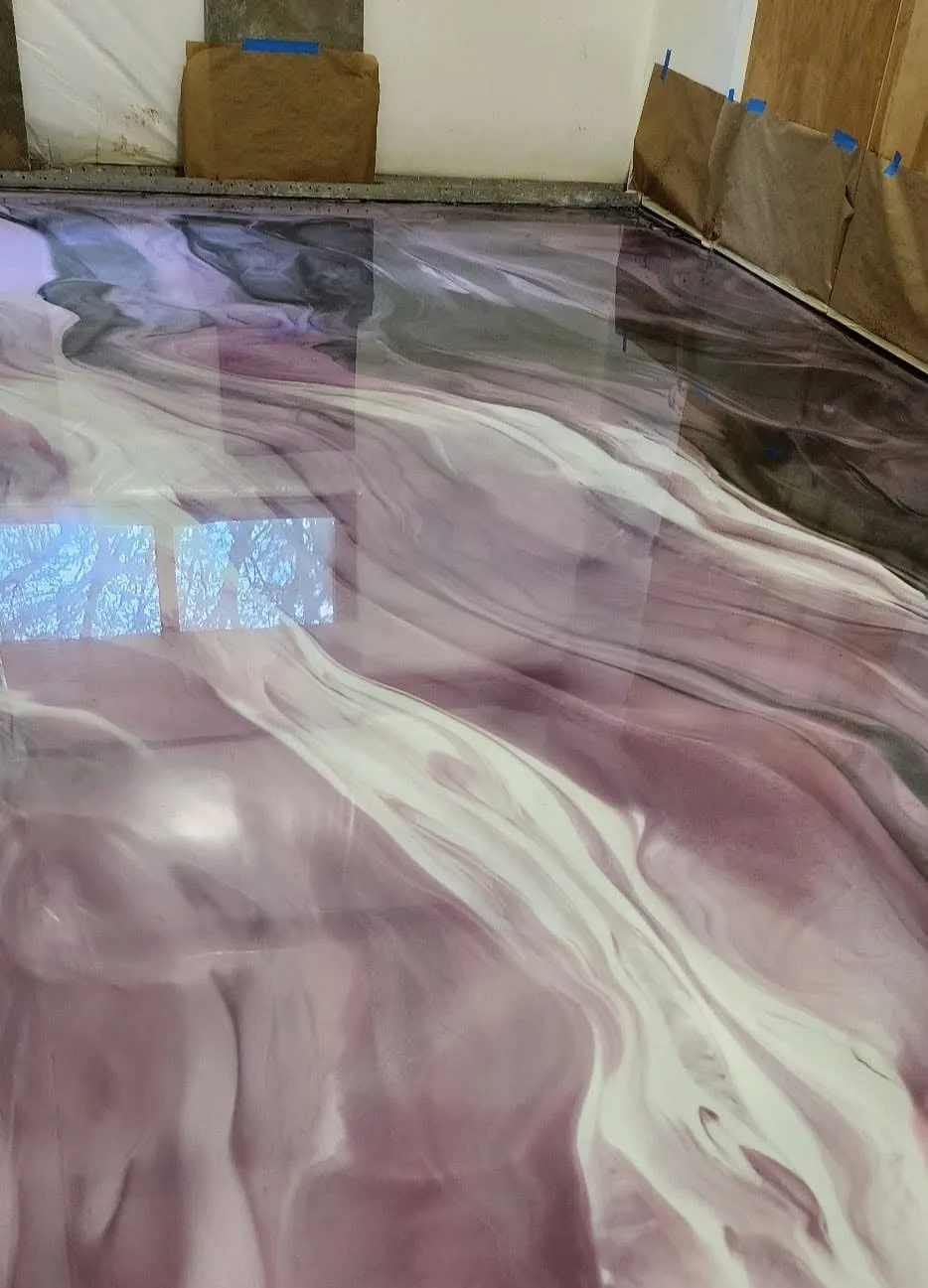
Car Wash Facility Floor Coatings, start to finish
A car wash coating is a resin system bonded to ground concrete and finished with a textured topcoat for footing. It seals the slab against the constant water and the wash chemicals, which helps slow the pitting and scaling that bare concrete shows over time. Equipment bays, prep lanes, self-serve stalls and the walkways employees use all fit. The texture is the part that matters most to the people walking on it, and its level is set with the owner on the walk.
Low spots can be repaired, and a real change in slope is concrete work.
There are limits, and they are worth hearing up front. A coating needs a slab it can bond to, and a floor that has been soaked for years may need extra prep or may not be a good candidate for every system. Tunnel equipment, conveyor tracks and drain grates are set by other trades. Pitch is also set by the concrete. If water ponds now, the coating will not move it toward the drain. Low spots can be repaired, and a real change in slope is concrete work.
Danny walks the wash while it is shut down, looking at where water sits, where the concrete has scaled and where old coatings have let go. The bays have to be dry before grinding, so the schedule starts with drying time. He diamond grinds the slab, repairs pitted and broken areas, and levels low spots where he can. The pour goes down with a textured topcoat sized to how wet and soapy the floor gets. The bay stays closed through the cure, then he walks it with the operator.
Water never really leaves a car wash floor, so the coating has to live with it.
What happens on the job
A car wash has to be fully dry before coating, so this job is planned around a shutdown, a drying stretch and a reopening with the equipment back on line.
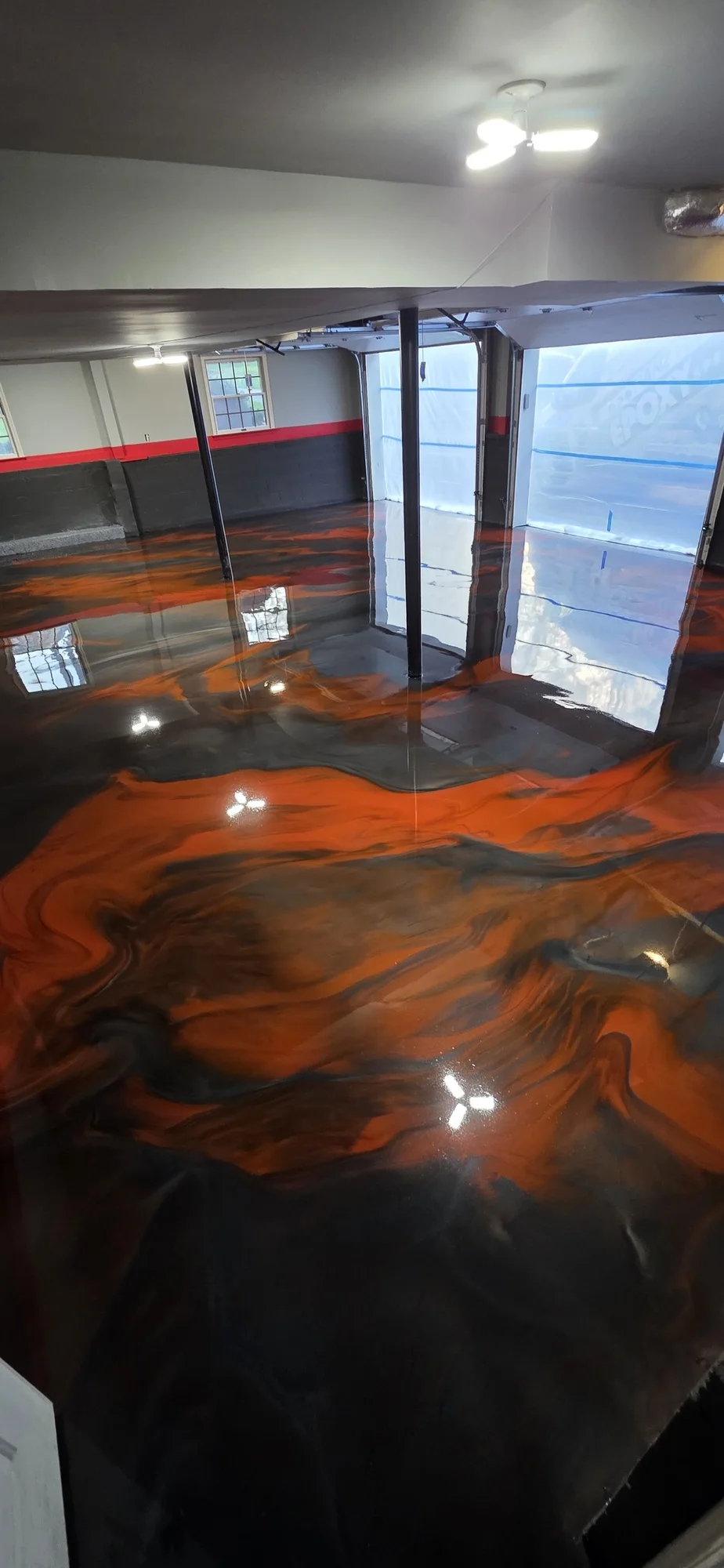

Watching a full wash cycle
Before the shutdown, Danny watches cars go through and notes how far the spray and foam reach, where crews stand to prep cars, and which corners stay wet long after a car leaves. Those notes set where texture and repairs matter most.

Shutting down and drying out
The operator closes the bay, and the equipment tech ties up brushes, arms and hoses so they stay clear of the floor. The concrete is swept, squeegeed and left with air moving until it is dry enough to take a coating.

Rebuilding scaled entry concrete
Salt carried in on cars all winter eats the concrete just inside the entry. That scaled layer is ground back to sound material and rebuilt, and pitted spots along the conveyor or in the self-serve stalls are filled at the same time.

Textured coats through the spray zone
The coating goes down to the trench grates and conveyor track with a broadcast texture in the topcoat. Wash chemicals on the operator’s list, including wheel and tire cleaners, are checked against the product data when the topcoat is picked.
Running the first cars through
With the cure complete, the equipment tech brings the system back on line and the first cars go through. Danny watches how water moves across the new floor and walks the bay with the operator, looking at edges around grates and tracks.
More of Danny’s floors
Other jobs from the file, not all of them this service. See the gallery






Questions about car wash facility floor coatings
Can you coat a car wash floor that is always wet?
Not while it is wet. The slab has to be dry enough to bond before Danny grinds and pours, which means shutting down the bay for a stretch. How long that takes depends on the concrete and the weather. If the slab has a moisture problem from below, a moisture test arranged by the owner is the place to start.
Will the floor be slippery?
Any wet floor can be slippery. The topcoat on a car wash job gets a broadcast texture so feet and tires have something to grip. The amount of texture is a choice made with the operator, because more texture means more scrubbing to keep it clean. Danny talks through that balance on the walk.
Do you install drains or change the slope?
No. Drain work belongs to a plumber, and regrading a floor is concrete work done before the coating. Danny repairs and levels low spots and damaged areas as part of his prep. If the wash needs new drains or regrading, the owner arranges that first and Danny coats the finished slab.
Do strong wheel cleaners affect the floor?
Some wheel and tire cleaners are strong, and a coating can dull where they pool day after day. The topcoat is picked from the product data with those products in mind, and rinsing the bay often keeps them from sitting. If a particular cleaner is very harsh, Danny will say so before anything is ordered.
Can the vacuum area and employee walkways be coated too?
Yes. Vacuum islands and the paths employees walk between the office and the bays collect grit, spilled drinks and salt slush. A coating with lighter texture suits those spots, since they stay drier than the wash bay. Danny looks at them on the same walk so the whole site can be scheduled together.
Is summer or winter better for the work?
Drying is the main factor. Warm, dry weather lets the slab dry out faster, and the coating has to go down in the conditions the product data lists. Many washes are busiest after winter storms, so a stretch in late spring or early fall often works. Danny sets the timing with the operator.
Also in automotive
Repair shops, detailing studios, dealership bays and showrooms, where oil, tires and lifts meet the floor every day.
- Oil Change Shop Floor CoatingsCoatings for quick lube lanes and lower bays, textured for oily floors and done one lane at a time so cars keep coming.
- Tire Shop Epoxy FlooringCoated floors for tire shops that stand up to jacks, stacked tires and rubber dust, and clean up with a mop.
- Auto Body Shop FlooringSealed floors for collision and body shops that hold sanding dust and overspray on the surface so the crew can sweep it up.
- Vehicle Detailing Studio FlooringDetailing studio floors with a finish customers notice, from solid colors to metallic epoxy, with texture where the soap and water land.
- Motorcycle Workshop FlooringCoated floors for motorcycle shops and home bike garages, chosen for kickstand loads and oil drips, with flake or metallic looks.
The shop is in Cranford. Most jobs are within an hour or so, across four states. See every areaSee the gallery
Danz Handz
Danny Carrero, epoxy specialist
dhepoxy@gmail.com
Cranford, NJ. Mon to Sat, 8 to 6. Hablamos español.
Tell Danny about the floor
Start with the room and the idea. Danny follows up by phone and comes to see the slab.