
Floors near ovens, fryers and hot equipment
The floor in front of a fryer, oven, kiln or hot press stays warm for hours, and hot grease or parts land on it too. That steady heat is why a coating can soften and discolor in one spot while the rest of the floor holds up. Danny maps those hot zones on the walk and treats them on their own.

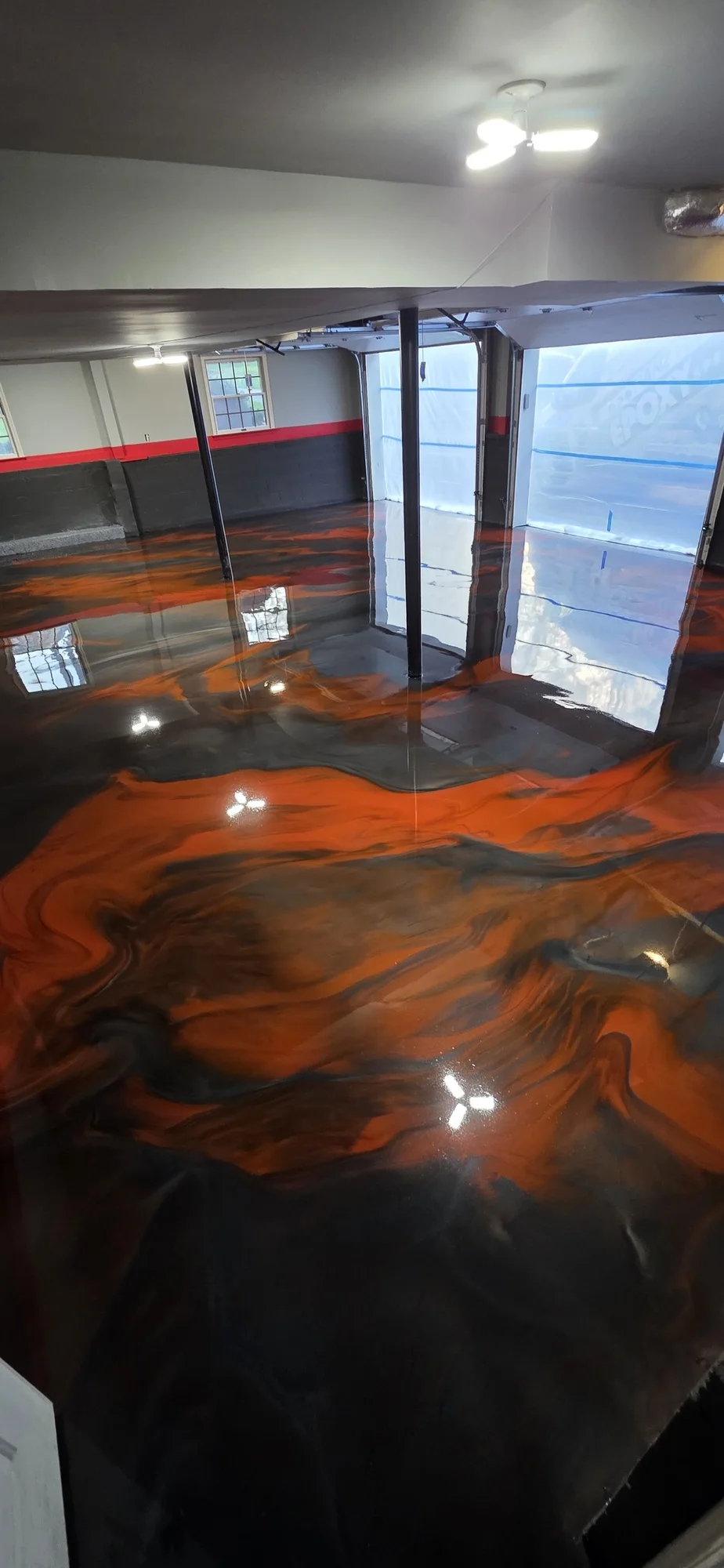
High-Temperature-Resistant Floor Systems, from Danny’s side of the job
A high-temperature-resistant floor system uses resins chosen for heat that stays put, plus the occasional hot spill. Standard epoxy has limits on heat, and past them it can soften, yellow or lose its bond. Other resin systems are made for warmer conditions. The product data shows what each can handle, and Danny matches that to what the facility says the floor actually sees. Often only the hot zones need the heavier system, with the rest of the room in something simpler.
After the cure, the equipment goes back in and the final walk covers cleaning.
It fits kitchen cook lines, bakery oven fronts, kiln rooms, and shops with heat-treat or welding areas. It does not make a floor fireproof, and it does not replace the fire and safety rules that apply to cooking or hot work. Those belong to the facility. Danny considers the room, the foot traffic and what hits the floor, and he asks how hot it gets at floor level before recommending anything. If the heat is beyond what his systems handle, he will tell you.
Danny walks the room with the equipment running if he can, so he can see where the heat sits and where grease or hot parts land. He asks for temperature readings at floor level from the facility if it has them. The old coating comes off the hot zones, the concrete gets diamond ground and repaired, and the right systems go down in each zone. Equipment has to be moved out by the facility and cooled before work starts. After the cure, the equipment goes back in and the final walk covers cleaning.
The coating in front of the oven is usually the first to give up.
How Danny does the job
Steady heat lives in front of a few machines, and the floor there is treated as its own zone. Danny walks the room, traffic and spills before recommending anything.
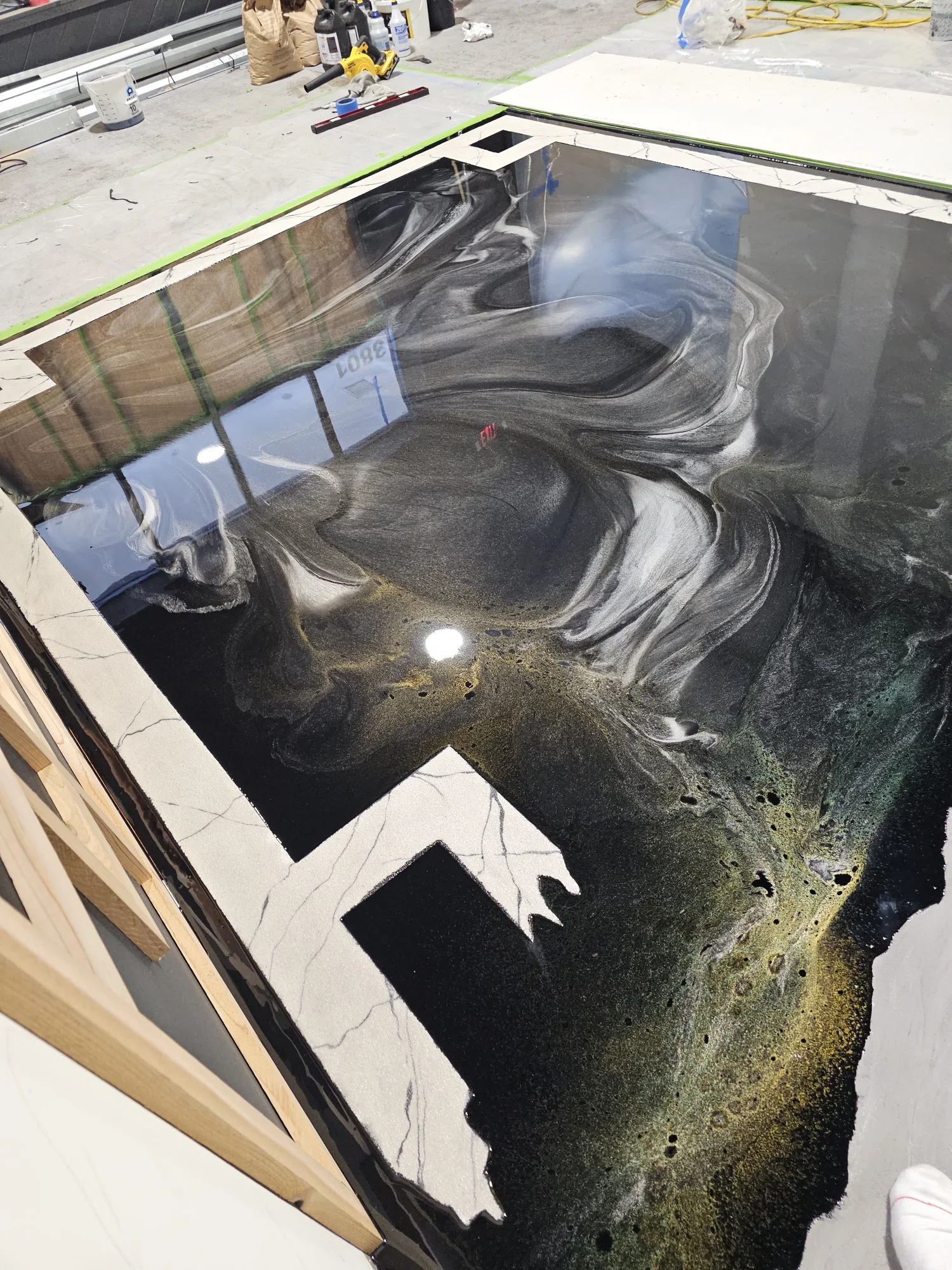

Reading the heat at floor level
With the equipment running, Danny looks at where heat collects on the floor and where hot grease, slag or parts land. Floor-level readings from the facility, if it has them, go into the product choice along with the type of equipment.

Cooling and moving the hot line
Ovens, fryers, kilns and presses are shut down and allowed to cool, then disconnected by the facility’s own trades and moved out. Anything that cannot move is protected and worked around with smaller tools while the rest of the room is cleared.

Grinding off baked-on grease
Grease and residue baked onto the floor in front of hot equipment are scraped and ground through to clean concrete. Spalled areas from heat and dropped hot parts are rebuilt so the hot-zone system has a sound base.

Hot zone, cool zone systems
The heat-zone system goes down in front of the equipment, chosen from the product data for the conditions described. The rest of the room gets a simpler system, and the two meet at a clean line cut into the slab.
Firing the equipment back up
After the cure, the trades reconnect the equipment and it gets fired up for the first time on the new floor. Danny walks the hot zones with the operator and goes over grease cleanup and what to watch for.
More of Danny’s floors
Other jobs from the file, not all of them this service. See the gallery






Questions about high-temperature-resistant floor systems
Why did the coating fail only near the fryers?
That area sees steady heat and hot grease, and a standard epoxy can soften or lose its bond under those conditions while the rest of the floor stays fine. It is a sign the hot zone needs a different system. Danny looks at the failed area and asks what temperatures the floor sees before recommending one.
Is a high-temperature floor fireproof?
No. It is chosen to hold up to heat and hot spills better than a standard coating, based on the product data. Fire safety for cooking and hot work belongs to the facility, its fire marshal and the codes it follows. Danny does not make fire safety claims about any floor.
Can you do the cook line overnight?
Sometimes, depending on the size of the area, the system and the cure the product needs. Many kitchens can only close for short windows, so the schedule gets planned around them. Danny works out the timing with the operator after the walk, once he knows which system the hot zone needs.
Can hot parts be set straight down on the floor in a welding area?
It is a habit worth breaking. Even a floor chosen for heat has limits, and a glowing part set down in one spot concentrates heat far beyond what spills or radiant warmth do. A steel plate or a sand table for hot parts protects the floor. Danny points out where those belong on the walk.
Do floor mats in front of fryers help or hurt?
Mats help with footing and fatigue, but grease trapped under them can sit against the coating and hold heat. Lifting and cleaning mats often keeps that from building up. Danny looks at the mats in use and suggests whether the floor under them needs any extra attention.
Will the hot-zone floor look different from the rest of the room?
It may. Systems made for heat often come in fewer colors and finishes, so the hot zone can look slightly different from the surrounding floor. Placing the line at the edge of the cook line or a work cell makes the change look intentional. Danny shows the options before anything is ordered.
Other performance work
Slip, chemical, impact, heat and static control. Danny looks at the space first and says what fits before anyone orders material.
- Heavy-Load Industrial FlooringResin floors for warehouses and plants with racking, presses and heavy machines, chosen for the load around base plates and anchors.
- Forklift-Resistant Floor SystemsResin floor systems for warehouse aisles and docks, chosen for turning forklift wheels, loaded trucks and the joints they cross.
- UV-Resistant Floor TopcoatsClear UV-resistant topcoats for floors near garage doors, windows and skylights, chosen to slow the yellowing that sunlight causes in epoxy.
- Corrosion-Resistant Floor SystemsResin floor systems that keep salt, brine and corrosive washdowns out of the concrete, chosen for the exposure and applied over sound slabs.
- Waterproof Concrete Coating SystemsResin coatings that seal the top of a concrete floor so spills, mop water and wet tires stay on the surface and clean up.
Based in Cranford, NJ. Danny takes work across New Jersey, the five boroughs, Long Island, Westchester and Rockland, Fairfield County and Bucks County. See every areaSee the gallery
Danz Handz
Danny Carrero, epoxy specialist
dhepoxy@gmail.com
Cranford, NJ. Mon to Sat, 8 to 6. Hablamos español.
Schedule a look at your floor
Tell Danny about the space. He calls you back, comes out, looks at the concrete and talks it through before anything gets decided.