
Coated floors for new tenant Build-Outs
The usual question on a build-out is when the floor goes in. Pour too early and the drywall crews and lifts beat it up. Danny wants a slot after the messy trades are out and before the fixtures and furniture arrive, and he works that date out with the general contractor.
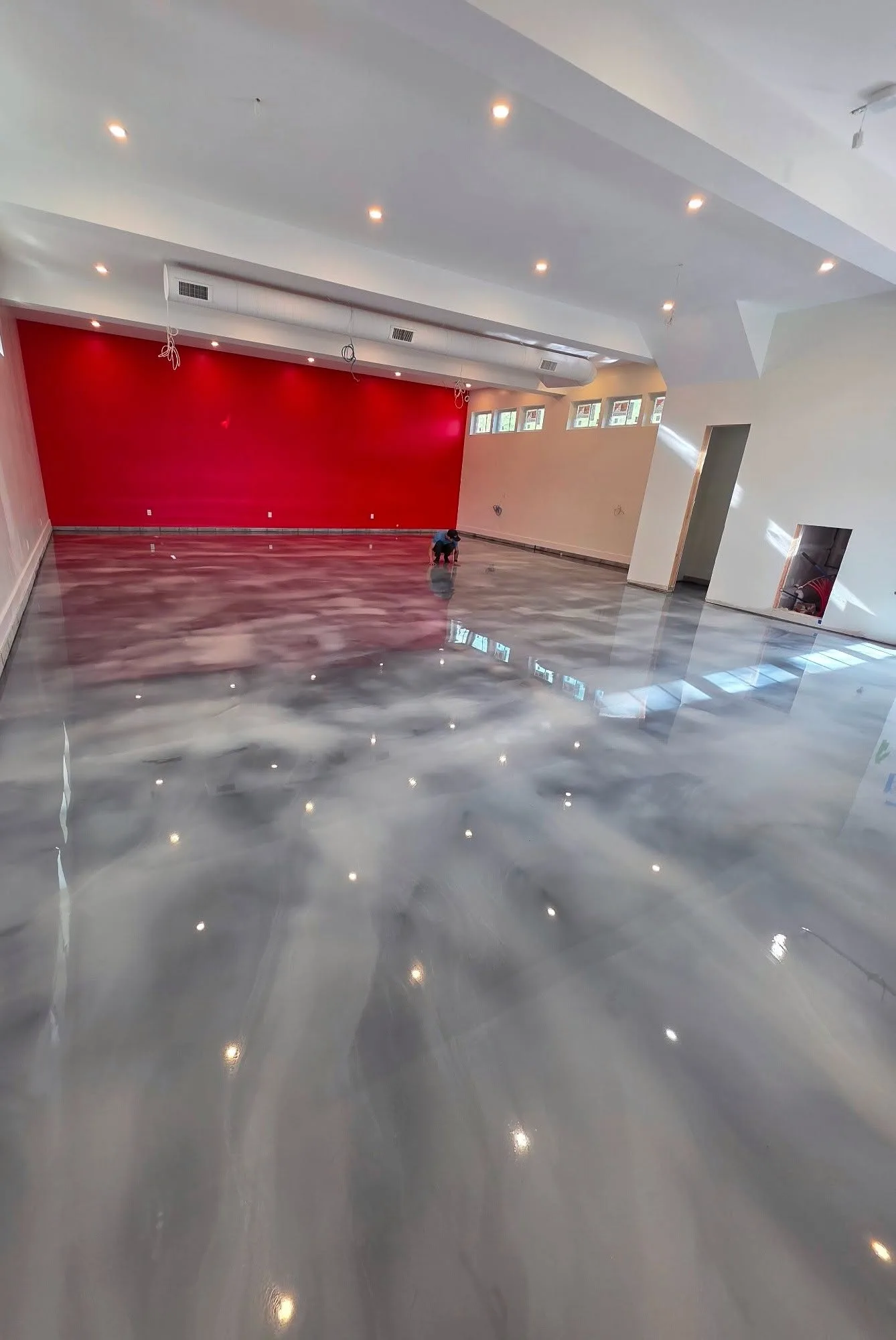

What goes into tenant improvement flooring
In a tenant build-out, the coating goes over the slab that came with the space, often after walls are up and before fixtures, millwork and furniture go in. Danny pours whatever the space calls for: a metallic for a boutique or restaurant front, a solid for a clinic or office, flake for a back room or the warehouse section of a unit. The room is often empty at that stage, which makes it the best time to coat, since grinding and pouring have the space to themselves.
Landlord approval may also be required before a tenant coats the slab.
Timing is the limit. Other trades walking on a fresh floor, dragging ladders or dropping drywall mud, will damage it, so the floor needs to go in after the messy work and be protected once it is done. Landlord approval may also be required before a tenant coats the slab. Whatever the previous tenant left on the slab has to come off first, and spaces where the slab has been cut for new plumbing need those trenches repaired level before the pour.
The slab that came with the space gets looked at as it is: old glue, saw cuts, plumbing trenches, cracks and patches. Danny walks it with the contractor or tenant and asks for the construction schedule and where the floor fits in it. Once the walls and messy trades are done, the slab is diamond ground, and trenches and cracks are repaired level. The coating is poured, and the space stays closed to other trades through the cure. After that, Danny walks it with the contractor or tenant, and the floor gets covered before the final trades come back in.
A tenant floor goes in after the drywall dust settles and before the furniture arrives.
The order the work goes in
On a build-out the floor is one trade among many. These stages show where the coating fits between framing, the messy trades and the tenant’s move-in day.


Reading the plans and finish schedule
Danny reviews the drawings with the contractor or tenant: which rooms get a coating, which get another finish, and where the transitions fall. The finish schedule tells him what each area should look like and where edges meet carpet or tile.

Inspecting trenches and saw cuts
New plumbing usually means trenches cut through the slab. Danny checks how each is being backfilled and capped with concrete, since a trench patched low or with the wrong material shows through a coating later. He notes saw cuts and core holes at the same time.

Booking a window with the GC
The contractor holds a slot on the schedule after drywall, ceilings and primer paint, and before millwork and fixtures. Danny confirms the space will be swept, closed off and free of other trades for the whole time he needs it.

Grinding, patching and pouring the shell
The slab is ground to clean concrete, the trench patches and saw cuts are blended level, and the coating goes down in the finish the plans call for. Doors to the space stay locked to other trades until it cures.

Covering it until the tenant arrives
After Danny walks it with the contractor, the floor is covered with protection board for the last trades. The cover comes off right before move-in, and any scuff that got through is touched up on the punch list.
More of Danny’s floors
Other jobs from the file, not all of them this service. See the gallery








Questions about tenant improvement flooring
When in the build-out should the floor go in?
Usually after walls are framed, drywall is finished and messy work like ceilings and paint is done, and before millwork, fixtures and furniture. Every project is a little different, so Danny looks at the schedule with the contractor and picks the window. The space needs to stay clear of other trades during the pour and cure.
Can you work with our general contractor?
Yes. Danny coordinates timing and access with the contractor’s schedule and talks through what the floor needs from other trades, such as trenches patched and the space swept and closed off. Clear communication about dates keeps the floor from getting walked on before it cures, or rushed in before the drywall is done.
What if the previous tenant left glue and paint on the slab?
That is common. Old adhesive and paint have to be diamond ground off so the new coating bonds to clean concrete. Danny sees what is there on his walk-through and includes that grinding in the plan. Anything that turns out to be a bigger problem, like a cracked or damp slab, gets flagged before the pour.
Does the landlord need to approve the floor?
Many leases require the landlord to sign off on finishes, and some say how the space must be left at the end of the lease. Ask the landlord early. Danny can provide a written description of the system and color for that approval, so the sign-off does not hold up the construction schedule.
Who protects the floor after it is done?
That is usually agreed with the contractor before the pour. Protection board goes down once the coating has cured, and the contractor keeps it in place while later trades work. Damage from ladders or dropped tools under the cover gets fixed on the punch list. Danny can do those touch-ups before the tenant moves in.
Can the coating match finishes in the tenant’s other locations?
If the tenant has a standard look from other stores or offices, Danny can work from photos, finish specs or a sample of the existing floor to match it as closely as the materials allow. Poured floors vary a little from pour to pour, especially metallics, so the goal is a close family match.
Close to this one
Salons, barbershops, showrooms, restaurants, offices, gyms and clinics, worked around your hours.
- Commercial Storage Room FlooringSealed storage room and stockroom floors that stop concrete dust, brighten the room and roll easily under carts and hand trucks.
- Apartment Common-Area Floor CoatingsCoated floors for apartment laundry rooms, mail rooms, storage and trash rooms, scheduled room by room so residents keep access.
- Property Management Floor Coating ServicesFloor coating for property managers, with one contact walking every building and consistent colors across laundry rooms, storage and lobbies.
- Commercial Renovation Floor CoatingsCoated floors for commercial renovations, starting with removing the old flooring and adhesive and repairing whatever the slab reveals.
- Retail Store Epoxy FlooringMetallic, solid and flake epoxy floors for boutiques and shops, matched to the brand and scheduled around store hours.
Cranford is home base. Danny covers 33 counties in New Jersey, New York, Pennsylvania and Connecticut. See every areaSee the gallery
Danz Handz
Danny Carrero, epoxy specialist
dhepoxy@gmail.com
Cranford, NJ. Mon to Sat, 8 to 6. Hablamos español.
Start with a visit
Describe the floor and what you have in mind. Danny calls back and comes out to look at it.