
Polishing an existing slab or reviving a dull one
A slab exposed when the carpet came up, a shop floor nobody ever treated, a polished floor gone dull under years of foot traffic. Each of these is already concrete and only needs finishing. Polishing brings what is there to a clean, even sheen, and Danny grinds to the depth that slab needs before polishing up from there.
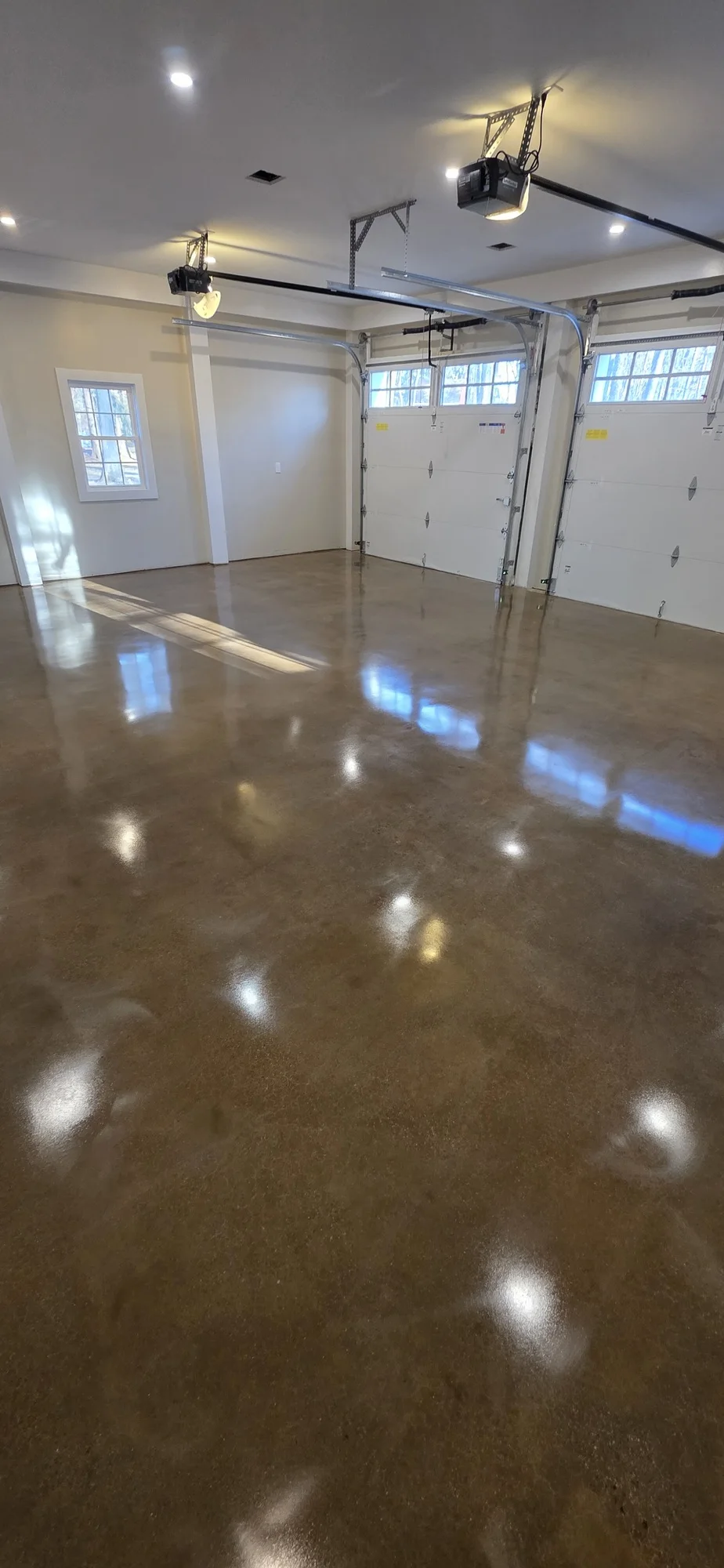

What goes into concrete polishing
Concrete polishing is the work of taking an existing slab through grinding and refining passes with diamonds, from coarse to fine, until the surface is smooth and reflects light. A densifier goes in partway through to harden the concrete so it takes the polish, and a protective treatment goes on at the end. On a floor that was polished before and has dulled, the work often starts at a finer stage, refining the worn surface back up to its original sheen without regrinding the whole slab.
He checks cracks and holes and runs a hand over the surface to feel how it wears.
It fits bare, sound slabs in homes, shops, retail spaces and warehouses, and older polished floors that have lost their shine. It does not hide cracks, patches or stains, which show through the finish. Floors with glue, paint or coatings on them need those removed first, which adds to the job. A polished floor also wears, especially in entries and traffic paths, so it benefits from a periodic refresh. Danny tells you what your slab will look like before committing to the work.
Danny walks the floor and looks at what he is starting with: bare concrete, leftover adhesive, an old coating, or a polished surface that has dulled. He checks cracks and holes and runs a hand over the surface to feel how it wears. On a raw slab, the floor is ground flat, repaired, densified and refined through finer grits to the sheen you chose. On a dull polished floor, he works from a finer stage to bring the existing polish back. The protective treatment goes on last. On the final walk, he checks the reflection with you from a few spots in the room.
A dull polished floor can often be brought back without starting from scratch.
From bare slab to finished floor
Polishing an existing slab starts by finding out how much work the surface needs, so these stages decide where the diamonds begin before refining upward.
Finding the starting grit
Danny runs a test pass in a corner with a mid-range diamond and looks at the result. If the old scratches and wear disappear, the floor can start there. If they remain, the job steps back to a coarser grit across the room or in the worn areas.
Comparing worn paths to edges
On a previously polished floor, the walking paths are compared with the edges of the room, which keep more of their original shine. The difference shows how much refining the paths need and whether the whole room or only the lanes should be worked.
Clearing glue and coatings first
On a slab freshly uncovered from carpet or tile, adhesive and any old coating come off before polishing starts, with older adhesive tested by a third party the owner arranges. Holes from tack strips and old anchors are filled so they do not show as dark specks.
Climbing through the grits
The floor is worked up through finer diamonds from the starting point, with densifier added when the surface is open enough to take it. Every step up erases the marks of the previous one, and Danny looks across the floor with a light at a low angle before moving on.
Burnishing the guard and standing back
A guard treatment is spread and burnished in to protect the finish against spills and scuffs. Danny and the owner then look at reflections of windows and light fixtures across the floor, the simplest way to judge how evenly the sheen came up.
More of Danny’s floors
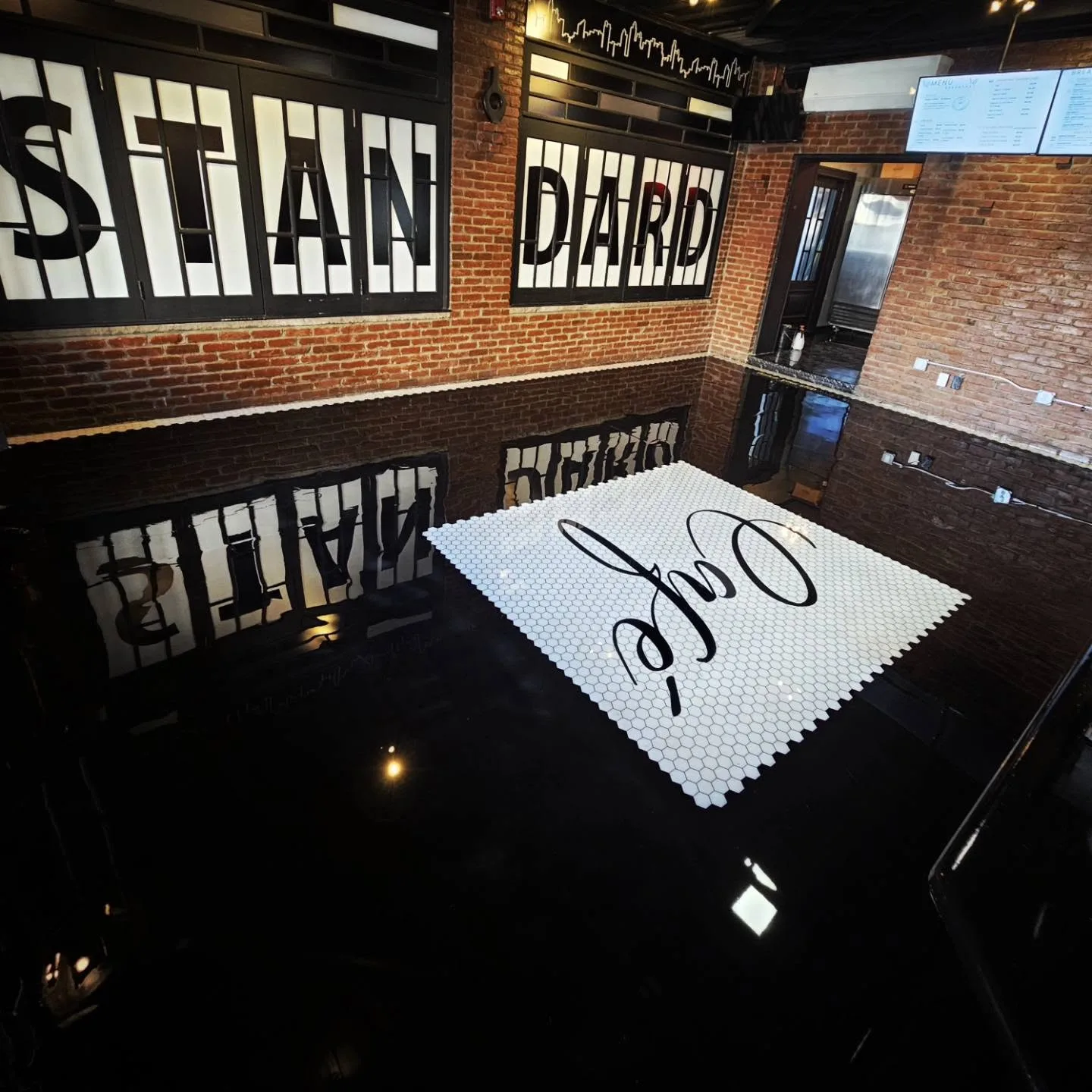
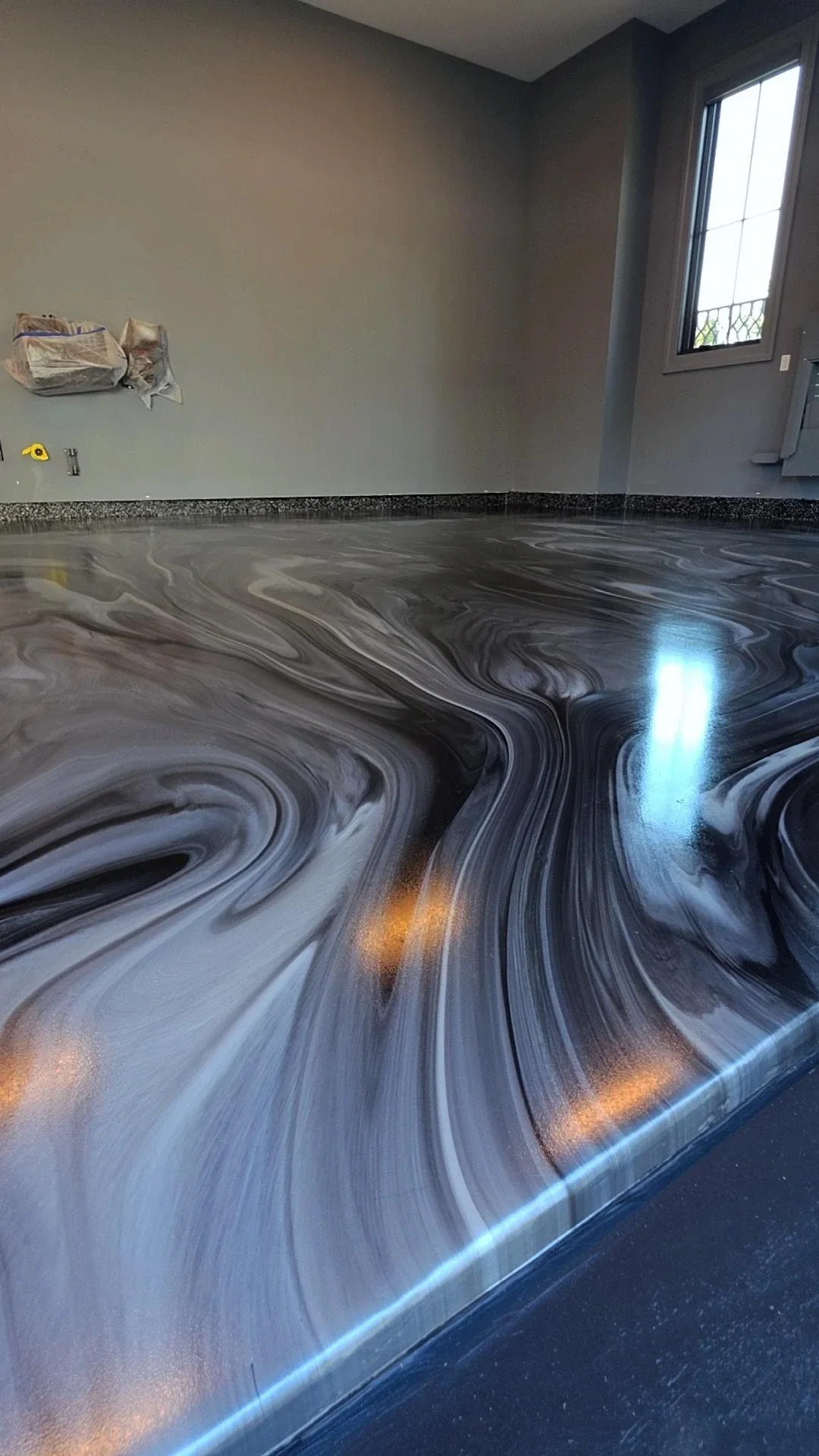
Other jobs from the file, not all of them this service. See the gallery






Questions about concrete polishing
Can a dull polished concrete floor be restored?
Usually, yes. If the floor was polished before and has dulled with wear, it can often be refined from a finer stage back up to its original sheen. Deep scratches or damage may need a coarser start in those areas. Danny looks at the floor and tells you where the work needs to begin.
What if my slab has glue on it from old carpet or tile?
The adhesive has to be ground off before polishing, since it would otherwise smear and show through the finish. Some older adhesives can contain materials that need special handling, so the owner should confirm what is on the floor before it is disturbed. Danny plans the removal into the job.
Does polished concrete need maintenance?
Some. Daily care is simple, with a dust mop and a neutral cleaner. Over time, entries and traffic paths wear and lose their sheen, and a periodic refresh brings them back. How often depends on the traffic the floor sees, and Danny can walk it with you to judge.
Can a polished floor be polished again after a renovation scuffed it?
Yes. Scuffs, paint drips and grit dragged across a polished floor by other trades can usually be cleaned and then refined out with a few passes at finer grits. Deep gouges from dropped tools may need a coarser start in those spots. Protecting the floor during construction saves most of that work.
Is polishing the same as applying a shiny sealer?
No. Polishing refines the concrete itself with diamonds until it reflects light, while a shiny sealer adds a coating on top that creates gloss. The polished sheen lasts as long as the surface does and cannot peel. A sealer’s shine wears or scratches and needs reapplying. Danny explains both if you are deciding between them.
Can a shop floor be polished while equipment stays in place?
Partly. The open floor can be polished around fixed machines, with edges done by a hand grinder as close as possible to each base. The concrete under the equipment stays as it is. If machines may move later, Danny suggests scheduling the polish when they are out, so the floor beneath them matches.
More from the sealing section
Sealing, densifying, polishing and waterproofing for the slabs that do not need a full coating.
- Penetrating Concrete SealersSealers that soak into bare concrete and leave no film, slowing water and spills while the slab looks and feels unchanged.
- Decorative Concrete SealingStamped, stained and exposed aggregate slabs cleaned and resealed so the color and pattern come back, with failed cloudy sealer dealt with first.
- Concrete DensificationA liquid hardener that soaks into bare concrete to cut dusting and toughen the surface, often paired with sealing or polishing.
- Polished Concrete FlooringThe slab itself ground, refined and finished to the sheen you choose, with as much or as little stone aggregate showing as you want.
- Concrete Stain RemovalOil, rust, paint and old spill stains cleaned or ground out of bare concrete, ready for a sealer, polish or new coating.
Jobs run about 60 miles out from the Cranford shop, from the Jersey shore and the Poconos to Long Island and Fairfield County. See every areaSee the gallery
Danz Handz
Danny Carrero, epoxy specialist
dhepoxy@gmail.com
Cranford, NJ. Mon to Sat, 8 to 6. Hablamos español.
Tell Danny about the floor
Send a few lines about the room and the look you want. Danny will call and set up a time to see it.