
A salon floor built for acetone and wet feet
A salon floor takes more abuse than it looks like it does. Acetone drips at the nail tables, hair color lands by the bowls, water pools under the pedicure chairs and clippings get swept a dozen times a day. Nail salons, spas and barbershops all get metallic or solid epoxy from Danz Handz, and a storefront in downtown Westfield is planned the same careful way. The topcoat is matched to what your techs use, grip goes where feet are bare, and the work fits around the days you close. The full service is on the salon and spa floor coatings page.
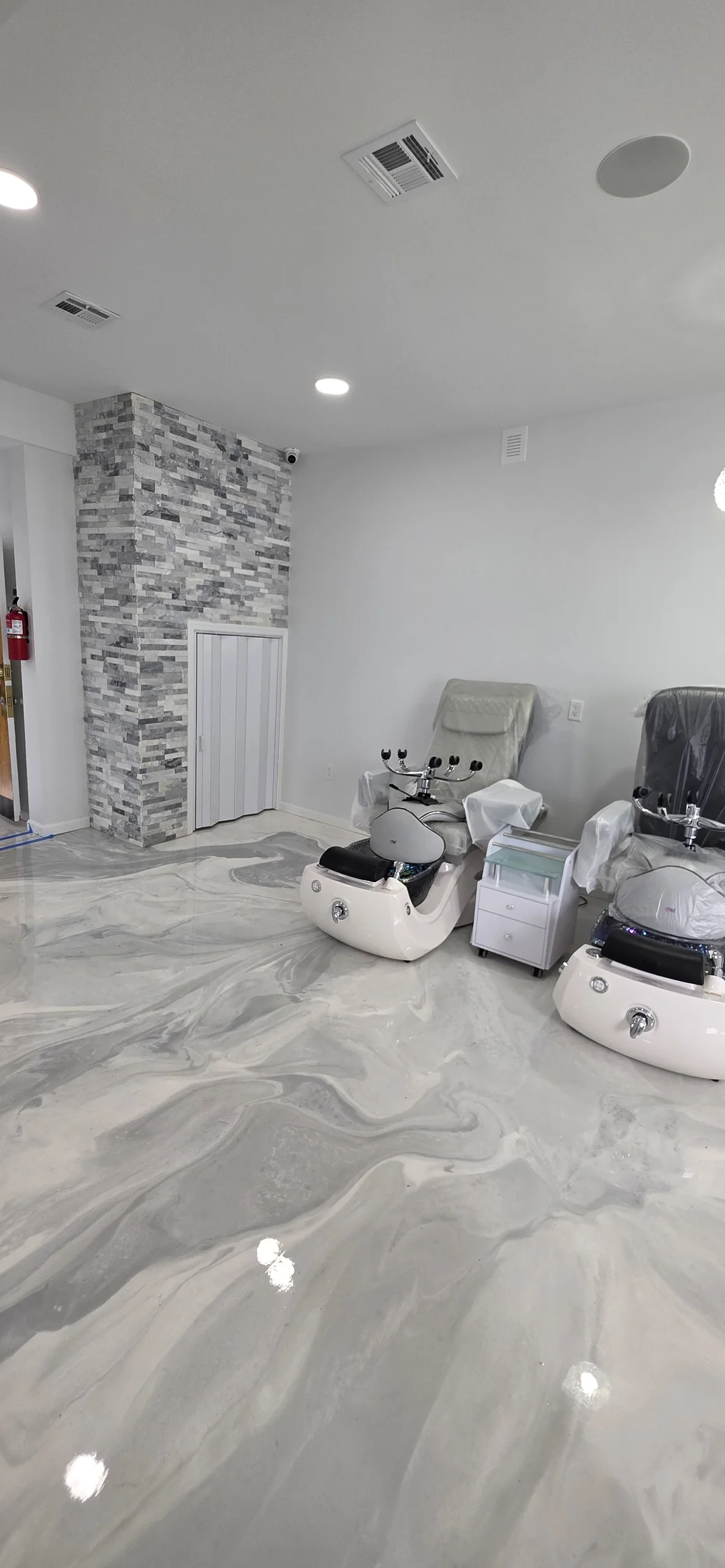

Where a salon floor gets worked hardest
Polish remover is the roughest thing a salon throws at its floor. Acetone left sitting on the wrong topcoat can soften it or leave a dull patch about the size of a dropped cotton pad. So before any color talk, Danny asks which removers, monomers and cleaners the techs keep at each table, checks them against the data for the topcoat he has in mind, and picks a finish that stands up to that list. Hair color is a different worry. It rarely attacks the coating, but dye left to dry overnight can leave a faint shadow, which is why the floor color matters as much as the topcoat.
Pedicure chairs and shampoo bowls are the wettest spots in the room. Feet come out of a tub bare and slick, and a high-gloss floor with no texture is a real hazard right there. Danny works a fine grit into the topcoat around those stations, enough to grip without feeling rough underfoot, and he can carry it along the path to the dryers or the restroom. Away from the water the floor can stay smooth, which keeps it easy to sweep and keeps the metallic movement crisp under the lights.
Acetone at the nail table and water at the pedicure tub decide the topcoat long before anyone picks a color.
Some things in a salon move and some stay put. Styling chairs usually unbolt, manicure tables lift out and carts roll away, so the coating can run under the spots where they stood. Pedicure thrones and bowls tied into plumbing are another matter. Some owners have their plumber disconnect them so the floor runs clean underneath, while others keep them in place and Danny pours around each base with a tight edge. He goes through the room with you, station by station, and writes down what leaves and what stays before anything gets scheduled.
Then there is the look. Gray and white metallic reads clean and bright in a nail salon, and a stray drip of pink disappears into it better than it would on flat white. A barbershop can go darker, with one bold streak of color running through the gray. Spas tend to want slow, soft movement that feels closer to stone. Danny can also mix a shade from a swatch or a brand color the way he does on custom blend floors. For something calmer still, the pearl metallic page shows that quieter range.
From the last client to the day you reopen
Every day a salon stays closed is a day of bookings moved, so the plan starts from your calendar. Danny sets the job around a closed day or two, a holiday stretch or a slow week, and tells you up front when each station can come back into use.

A visit during business hours
Danny likes to see the room working: where techs set bottles down, where water splashes past the tubs, how people move from the front desk to the chairs. He checks the slab or whatever covers it and talks through color in the light you actually have. You come away knowing what the job involves.
Clearing the stations
On the first closed day, chairs come off their bases with the bolt holes marked, tables and carts go out, and anything staying behind is wrapped and taped. Your plumber disconnects the bowls or tubs you agreed would come out. Mirrors, cabinets and the reception desk get covered against grinding dust.
Grinding and repairs
Old tile, vinyl or glue comes up and the concrete is ground back to a fresh, open surface. Anchor holes from earlier layouts, cracks and low spots near the drains are filled flat. A storefront that has been a few different salons over the years often hides patched concrete, and this is the step where it shows.
Color, then texture
The base coat goes down, then the metallic or solid color, worked by hand across the room. The topcoat follows, with grit broadcast into it around the tubs, bowls and any wet path. Danny plans the floor and is there for the pour, watching how the resin moves around the bases that stayed.
Cure and setting up again
The salon stays shut and empty while the floor cures. Then chairs return to their marks with pads under the swivel bases, the plumber reconnects, and Danny checks each station with you. He goes over the cleaners that keep the topcoat bright and the strong products to keep off it.
Salon storefronts around downtown Westfield
A salon in a downtown Westfield storefront often sits on concrete that has been covered more than once: tile from one tenant, vinyl from the next, glue from both. All of it has to come up before a coating will hold. Danny looks at what is under the current floor on his first visit, because the amount of removal decides how many days you stay closed. He also checks the back of the room, where the plumbing for the bowls and tubs usually runs.
Winter brings its own mess to the front door. Clients come in with road salt and slush on their boots, and the first few feet inside catch most of it. Some texture at the entrance helps, along with a mat that actually gets shaken out. Salt residue wipes off a cured topcoat with a damp mop, and the sealed surface gives it nowhere to soak in, something bare concrete and old grout lines cannot claim.
Danny drives over from Cranford for the first look, so stopping by after the last appointment or on a closed day is no trouble. The Westfield page lists the rest of his work around town, and if the shop next door has been eyeing its own floor, the retail floor page covers that job. Salon and barbershop floors sit among the others in the gallery, or you can send Danny a note with a few photos of the room.
The Census counts about 11,192 homes in Westfield.
What salon owners ask before booking a floor
Will acetone ruin an epoxy floor?
It depends on the topcoat. Some finishes soften or go dull where polish remover sits, and others handle a quick spill without a mark. Danny picks the topcoat after seeing which removers your techs use, and he still suggests a mat or tray under each nail table. Wipe spills as they happen and the finish keeps its shine.
Is a glossy floor safe beside the pedicure chairs?
Gloss on its own can be slippery for wet bare feet, so those areas get texture worked into the topcoat. It is a fine grit you notice more by feel than by sight. Danny maps where the water lands during the walkthrough and carries the texture far enough out from each tub that clients stand up on grip.
Do the pedicure chairs have to come out?
Not always. If your plumber can disconnect them, the floor runs under where they sat and looks continuous from wall to wall. If they stay, Danny pours around each base and keeps the edge tight so water cannot creep under it. He looks at the plumbing and the chair bases first, then lets you decide.
How many days will we be closed?
That depends on the size of the salon, how much old flooring has to come up and which system goes down, and the temperature in the room changes the cure as well. Many owners line the job up with days they already close. You get the schedule from Danny after the walkthrough, before a single booking moves.
Which colors hide hair and dye best?
Mid grays and soft metallics are the forgiving choice. Dark and pale hair both stand out against them enough to sweep up, and a stray drop of color does not jump out the way it would on pure white or black. Barbershops often go a shade darker. Danny brings samples so you judge them under your own lights.
Can we keep working in half the salon during the job?
Usually not. Grinding raises dust, and the coating needs the room shut and empty while it cures, so the whole floor gets done in one closed stretch. Splitting it leaves a seam down the middle of the room and means closing twice. Danny would rather plan one clean window than break the job in two.
More floors in Westfield
More of what Danz Handz pours for Westfield homes and storefronts:
- Metallic garage floorsA garage floor with real movement in it.
- Whole-house floorsLiving rooms, foyers and kitchens.
- Pearl metallic floorsSoft cream and pearl tones.
- Shop floorsStorefronts, showrooms and boutiques.
- WestfieldEvery other Westfield floor, in one place.
- Salon and Spa Floor CoatingsThe service, anywhere Danny works.
Danz Handz
Danny Carrero, epoxy specialist
dhepoxy@gmail.com
Cranford, NJ. Mon to Sat, 8 to 6. Hablamos español.
Start with a visit
Have Danny look at it on a day you are closed or after the last client leaves. He will go through the stations, ask about your products and lay out how long the salon would be shut. Call (908) 577-7104.