
A shop floor customers notice from the door
In a small shop the floor covers more ground than any display, and customers see it before they reach the product. Danz Handz pours metallic and solid epoxy for boutiques and stores, from a new tenant’s empty space to a shop that has to plan its closing days carefully. The entrance and the register take the heaviest wear, so the system is chosen for traffic as much as for color. The whole service is laid out on the retail store epoxy flooring page.
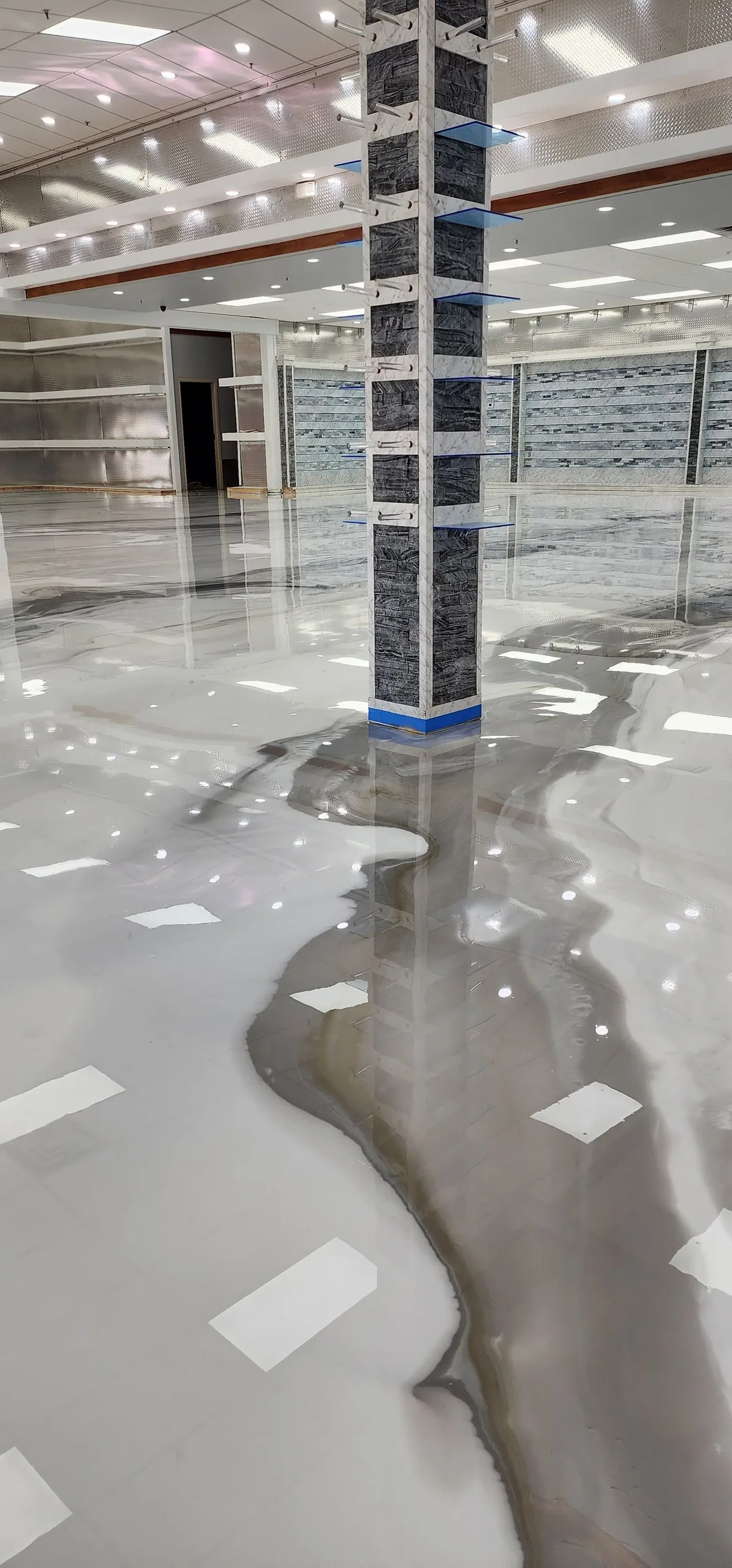

A floor that belongs to the brand
A boutique already has a look: the fixtures, the wall color, the logo printed on the bags. A poured floor can pick up one of those colors and carry it across the room, or stay neutral so the racks and shelves stand out. Danny asks to see the brand colors, a shopping bag or a sign, and mixes samples against them. White and gray metallic opens up a narrow space. Deeper tones with a streak of color make more of a statement, which suits some shops and fights the merchandise in others.
Wear is never spread evenly across a sales floor. Most of it lands in a strip just inside the door, along the main aisle and in front of the register, where people stop, turn and wait in line. Grit carried in from the sidewalk works like sandpaper in those spots. Danny plans a thicker, harder topcoat where the traffic concentrates and talks with you about an entrance mat that gets cleaned regularly. A satin sheen hides fine scratches in those lanes better than full gloss does, which is worth weighing against the shine.
Customers size up a store from the doormat in, and the floor is most of what they are looking at.
Fixtures shape the plan too. Freestanding racks and tables move out of the way for the pour, while wall shelving, a built-in cash wrap or a fitting room partition may stay. Where something stays, the floor is cut in cleanly along its base. Where it leaves, the color runs underneath, so moving the layout around next year does not reveal a bare outline. Heavy display units go back on felt or rubber pads, because a sharp metal foot dragged across a cured floor can still mark it.
A new tenant fit-out is the simpler version: an empty room, no stock and a schedule that only has to fit around the other trades. Danny comes in once the painters are finished and before the shelving shows up, which keeps ladders and paint off the new surface. Refreshing a store that is already open takes more planning, covered further down. For build-outs with several trades on site, see tenant improvement flooring, and the metallic epoxy flooring page shows the range of looks a sales floor can carry.
Working around store hours and the stockroom
An open store cannot disappear for a week without warning its customers, so the schedule gets settled before any grinding. Danny works out with you whether the job fits a closed stretch, a slow season or the days before an opening, and what has to be boxed and moved.

Seeing the store on a normal day
Danny comes by while you are open to watch where people walk in, where they slow down and where the line forms at checkout. He checks what sits under the current floor, asks about the brand colors and sets samples near the windows and under the store lights so you can compare them.
Stock out, fixtures sorted
Inventory gets boxed and moved to the back room, a truck or a storage unit, whichever you arranged. Racks and tables come out. Built-ins that stay are taped and wrapped, and the register area is covered so grinding dust stays off the screens and card readers.
Taking up the old floor
Tile, vinyl plank or carpet comes up along with the adhesive under it, and the slab is ground clean. Cracks, holes left by old fixture anchors and dips in the concrete are filled flat. An older storefront tends to reveal its history at this stage, and that can add a day to the work.
Color across the sales floor
The base and color coats go down by hand, with the metallic movement laid out so it flows from the door toward the back of the store. The harder topcoat follows, built up heavier in the traffic lanes. Danny settles the design with you beforehand and is on site for every pour.
Cure, restock, reopen
The store stays locked while the floor cures. Then fixtures return with pads under their feet, stock goes back on the shelves, and Danny walks the sales floor with you before the doors open. He leaves notes on mopping, mats and what should never sit on the finish.
Shop floors in older Westfield buildings
If your shop sits in an older building, the concrete under the floor may be soft on top, out of level or patched in several places, and a vinyl or tile floor can hide all of that for years. Danny lifts a corner or checks a closet during the first visit to get a read on it. Soft concrete gets ground back to solid, and low spots are filled before any color goes down, so the finished floor does not show every dip under bright store lighting.
Traffic on a shopping street changes with the seasons. The holiday rush puts the most people through the door at the same time of year that boots carry in slush and road salt, which makes late fall a poor time to start a floor and winter its toughest test. Plenty of owners book the work for a quieter stretch after the holidays or in summer, so the coating is fully cured before the busy months come back around.
The drive from Danny’s Cranford shop is short, so a look before opening or after closing is easy to arrange. For everything else he does in town, start at the Westfield service area page. If a neighbor runs a nail salon or spa, the salon floor page covers that kind of job. Finished commercial floors are in the gallery, and you can write to Danny with the size of the store and a few photos.
Westfield lies about 2.1 miles west of Cranford, and of the towns Danny lists, Garwood sits nearest to it.
Shop owners’ questions before the pour
Can the store stay open while the floor goes down?
Not in the area being coated. Grinding is loud and dusty, and the floor has to stay clear while it cures. A store with a separate back room or a second level can sometimes keep part of the business going there. Most owners close for the stretch and choose a slow week, and Danny lays out the timeline before you commit.
Do you take up the old tile or carpet?
Usually, yes. The old flooring and its adhesive normally come up as part of the prep, since a coating wants bare, ground concrete to bond to. Tile that is still firmly bonded can sometimes stay and be coated over, and Danny checks that at the walkthrough. Removal adds time, and some older floors hide more layers than anyone expects.
Can the floor match our brand color?
It can get close. Danny mixes samples from a swatch, a logo, a bag or a paint chip and lays them out in the store so you see them under your own lights. A metallic adds movement, so the color reads a little differently across the room, which most owners end up liking.
What finish holds up best at the front door?
A hard topcoat with a satin sheen is the usual pick for the entrance and the register. It hides the fine scratches grit leaves behind better than high gloss and keeps its look longer under heavy traffic. A good entrance mat, shaken out often, does a lot of the work of keeping sand off the floor in the first place.
We’re moving into an empty space. When should the floor go in?
Usually after the walls and ceiling are painted and before fixtures and stock arrive. That way no other trade drips paint or drags a ladder across the finished surface. Tell Danny who else is working in the space and when, and he will fit his days into the build schedule so nobody is waiting on anyone.
How do we clean it once the store reopens?
Sweep or dust mop daily so grit does not get ground into the traffic lanes, then wet mop with a neutral cleaner. Skip harsh degreasers and scouring pads, which dull the finish over time. Put pads under rack feet and anything that gets dragged. Danny goes over the routine when he walks the finished floor with you.
More floors in Westfield
Other Westfield pages, for homes and for businesses:
- Metallic garage floorsA garage floor with real movement in it.
- Whole-house floorsLiving rooms, foyers and kitchens.
- Pearl metallic floorsSoft cream and pearl tones.
- Salon floorsNail salons, spas and barbershops.
- WestfieldEvery other Westfield floor, in one place.
- Retail Store Epoxy FlooringThe service, anywhere Danny works.
Danz Handz
Danny Carrero, epoxy specialist
dhepoxy@gmail.com
Cranford, NJ. Mon to Sat, 8 to 6. Hablamos español.
Schedule a look at your floor
Before the store opens or after it closes, Danny can walk the sales floor with you, check what sits under the old flooring and go through color and timing. Schedule a visit at (908) 577-7104.