
Every winter, a car carries a load of salt brine into the garage and leaves it on the floor to dry. Do that for a few seasons and bare concrete starts to show it. The surface flakes, small pits open up, and white stains spread out from where the tires sit. Garages in New Jersey, New York, Connecticut and Pennsylvania all take this beating. Knowing what the salt does to the slab makes it easier to see what a coating changes.
What salt and slush do to bare concrete
Road salt melts ice by lowering the temperature at which water freezes. That is good for the road and hard on concrete. Slush that drips off a car is a salty brine, and bare concrete soaks it up like a sponge soaks water. Once the brine is inside the top layer of the slab, it does its damage in two ways.
First, the water in the pores freezes and thaws as the garage temperature swings. Water expands when it freezes, and over many cycles that pressure breaks the top layer apart. Second, as the brine dries, salt crystals form inside the pores and push outward as they grow. Both of these attack the same thin layer at the top of the slab.
Salt can also work its way down toward any steel in the slab and cause rust over the long term, though in a garage floor the surface damage is what most owners notice first.
A garage floor takes this harder than a driveway does. A driveway gets rinsed by rain and dried by sun. A garage floor gets brine dropped in the same two spots every evening, then sits closed up while it dries, so the salt stays put. That is why the damage is usually heaviest right where the car parks.
Scaling, pitting and stains
The damage tends to show up in a few common forms. They often appear right where the car sits, in two strips under the tires, and along the line where water runs toward the door.
- Scaling, where the top skin of the slab flakes off in thin chips and leaves a rough surface.
- Pitting, small holes and pockmarks where bits of the surface have popped out.
- White salt stains that come back no matter how many times the floor is mopped.
- Exposed stone, where scaling has gone deep enough to show the gravel in the mix.
What a coated floor changes
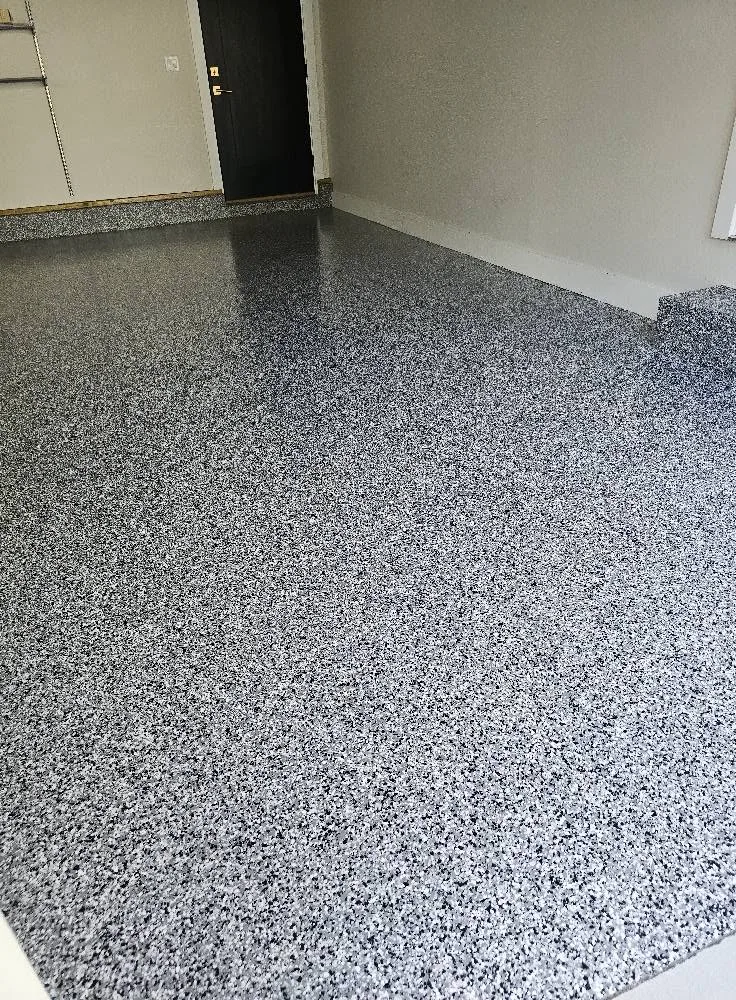
A coated floor puts a sealed layer between the brine and the concrete. Slush lands on the coating, sits on top, and can be wiped or rinsed away. It does not soak into the slab, so it cannot freeze inside the pores or leave salt crystals there. The concrete under the coating is protected from the cycle that breaks bare floors down.
Flake floors are the usual pick for a garage that sees heavy winter driving. The speckled finish hides the white film road salt leaves behind, and the texture gives some grip when the floor is wet. Metallic floors handle salt the same way underneath, but they show the film more, especially in darker colors. They need wiping more often through the winter to keep looking clean.
No coating makes a floor maintenance free. Salt left to dry in thick layers on any floor looks bad and can dull the topcoat over time. The difference is that on a coated floor the problem stays on the surface, where a mop and a squeegee can deal with it.
The edges of the floor matter here as well. Brine collects along the walls and at the door threshold, where water runs as it drains. Danny carries the coating all the way to the edges and can run it a short way up the base of the walls as a cove, which leaves slush fewer places to sit on bare concrete.
Fixing a floor that is already damaged
Many garages Danny looks at already have scaling or pitting. That does not rule out a coating, but it adds work. The grinder takes the slab down past the loose, flaking layer to sound concrete. Pits and scaled areas get filled with a patching material. Deep damage may need a resurfacing layer to bring the floor back to flat before anything else goes on.
This is one reason he walks every slab before recommending a system. A floor that only needs a grind and a few patches is a different job from one where most of the surface has flaked away. He tells you what he sees, and the plan follows from that.
The sooner a salt-damaged floor gets coated, the less repair it tends to need. Scaling usually gets worse each winter once it starts.
Resurfacing comes up often enough to explain. A resurfacing layer is a thin topping that fills a badly scaled slab back to a flat surface. It gives the coating a sound, even base when grinding alone would leave too many low spots. Danny suggests it only when the slab calls for it.
Cleaning a coated floor in salt season
Winter cleaning on a coated floor is mostly about not letting brine dry and build up. A squeegee pushes melted slush toward the door or a drain before it dries into a white film. A rinse with warm water and a mild cleaner takes off what is left. Strong acids and harsh degreasers are not needed and can be hard on the topcoat over time.
Some owners put down a garage containment mat where the car parks. It holds the slush in one place so it can be pushed out, and keeps the rest of the floor drier. Ordinary rubber-backed mats can trap water and sometimes leave marks on a coating, so ask Danny which kind suits your floor before buying one.
On a cold day, wipe up the puddle under the car before it freezes. A little attention through the season keeps the floor looking the way it did when it was finished.
Pay attention to the door threshold. The strip where the garage floor meets the driveway takes the most water and the most salt, and it is the first place any coating shows wear. Keeping it squeegeed and rinsed through the winter does more for the floor than a big cleaning in spring.
Why some slabs scale and others hold up
Two garages on the same street can go through the same winter and come out looking very different. Much of that comes down to how the concrete was made and finished. Concrete meant for outdoor use in cold climates is usually mixed with tiny air bubbles that give freezing water room to expand. Garage slabs do not always get that mix, since they were poured as interior floors.
How the surface was finished matters too. A slab that was worked too wet, or troweled while water was still rising to the top, ends up with a weak surface layer. That layer is the first to flake when salt and freezing water get into it. Slabs that dried too fast in hot weather can carry the same weakness.
Age plays a part. An older slab has been through many winters and often has small cracks and worn spots where brine gets in more easily. Once scaling starts, the rough surface holds more water and salt than a smooth one, so the damage tends to speed up.
None of this is something a homeowner can change after the fact. It is useful to know, though, because it explains why one garage floor needs only a grind and a few patches while another needs real repair before it can be coated. Danny reads the slab on the walkthrough and plans the prep around what it shows.
A coating stops the cycle where it stands. Once the slab is sealed under epoxy, brine can no longer get into the pores, so the scaling that was already under way stops spreading from below. The repairs made during prep stay protected along with the rest of the floor.
Oil, antifreeze and other winter drips
Cars drop more than salt in winter. Older cars in particular leave oil, coolant and transmission fluid on the floor. On bare concrete those soak in and leave dark stains that are hard to remove, and some can weaken the surface over time.
On a coated floor, the same drips sit on top. They wipe up with a rag and a cleaner suited to epoxy, and they do not soak into the slab. Danny still suggests wiping them up quickly, since anything left for a long time is harder to clean and can mark the topcoat. A drip pan under a car that leaks keeps things simpler.
Antifreeze deserves a special word. It is sweet and poisonous to pets, and on a coated floor it pools on the surface, so it is easier to see and clean. Any puddle under a car should be cleaned up right away, for the floor and for anything with four legs that wanders into the garage.
Floors with old oil soaked into the concrete need extra prep before they are coated. Oil works its way into the slab and can keep a coating from bonding. Danny grinds through the stained layer and treats deep spots so the new floor bonds evenly. A slab with years of oil in it is still a good candidate; it just takes more work up front.
Grit rides in with the slush. Sand mixed into road salt gets carried in and dragged under the tires every time the car moves. A regular sweep or squeegee keeps that grit from wearing the topcoat in the tire strips, which is where any garage floor shows its age first.
Planning a coating around the weather
If the floor is already scaling, another winter on bare concrete will usually make the repair bigger. Booking a walkthrough before the cold sets in leaves room to plan the prep, the repairs and the system without rushing any of it.
Coatings need certain conditions to go down and cure properly, and an unheated garage in deep winter can be too cold for that. Danny plans garage work around the weather and will talk through timing on the walkthrough. Many owners book the floor so it is finished before the first snow. To set that up, call (908) 577-7104.
Questions
Should I keep salting the driveway once the garage is coated?
Most people keep salting the driveway, since safe footing outside matters most. The coating protects the garage floor from the brine that gets tracked in. Some owners switch to a de-icer that is gentler on concrete for the driveway itself. Either way, rinsing and squeegeeing the garage floor through the winter keeps the coating looking right.
Is a flake floor slippery when it is covered in slush?
Any floor has less grip with slush on it. Flake keeps a slight texture from the chips, and Danny can add an anti-slip aggregate to the topcoat for more grip. Pushing slush out with a squeegee after the car comes in is the simplest way to keep footing good through the winter months.
Will salt stain a coated floor?
Salt can leave a white film on top of a coated floor when slush dries, but it sits on the surface and does not soak into the concrete. A rinse and a mild cleaner usually take it off. Letting thick layers of salt build up all winter can dull the topcoat over time, so regular cleaning helps.
Can a badly scaled floor still be coated?
In most cases, yes. The grinder removes the loose, flaking layer, and the scaled and pitted areas get patched or resurfaced before the coating goes down. The more damage there is, the more repair the job needs. Danny will tell you on the walkthrough how much work your slab requires.
Does sealing bare concrete stop salt damage?
A penetrating sealer can slow salt damage on bare concrete, but it wears off and needs to be reapplied. It also makes a later coating harder, since a sealer has to be ground off before epoxy will bond. If a coated floor is the plan, it is usually better to skip the sealer and coat once.
Which floor color hides winter grime best?
Mid-tone flake blends with a mix of grays, tans and black hide salt film and dirt best. Very light solid colors show dirt quickly, and dark metallics show the white salt film. Danny can bring samples so you can judge them against the kind of mess your garage sees in winter.
More on the work in this post: garage concrete crack repair, garage floor spall repair and driveway coatings.
Danny walks every floor before anything gets decided. Book a walkthrough, call (908) 577-7104, or look through the gallery first.