
A shop floor that sweeps clean after a long weekend
A home workshop takes more abuse than most rooms in a house: rolling tool chests, a bench that gets dragged, a motorcycle on its stand and a socket dropped from waist height. Sawdust and solvent drips land on it every week. The right floor depends on what you build or fix out there, and whether the shop lives in the garage or a building out back. Have Danny take a look at your floor and talk it through.
What a working shop does to concrete
Bare concrete in a shop soaks up everything. Oil from a bike, a splash of thinner, the stain from a project left on the floor overnight: it all goes into the pores and stays there. Sawdust grinds into the surface and never quite sweeps out. A sealed floor changes that, since spills sit on top long enough to wipe up and a push broom actually gets the dust. The full range of options is on the home workshop epoxy flooring page.
Where you stand matters as much as where things roll. In front of the bench and the saw, a textured topcoat gives boots some grip when there is sawdust or a little oil underfoot. Where the tool chest and the rolling cart travel, a smoother finish lets the casters glide. Heavy stands, a drill press or a motorcycle lift get their spots marked at the walkthrough, so the floor under them is planned for the load and for the feet that dig in.
Mark the spots where the heavy stands sit before the grinder starts, so the floor is built for them.
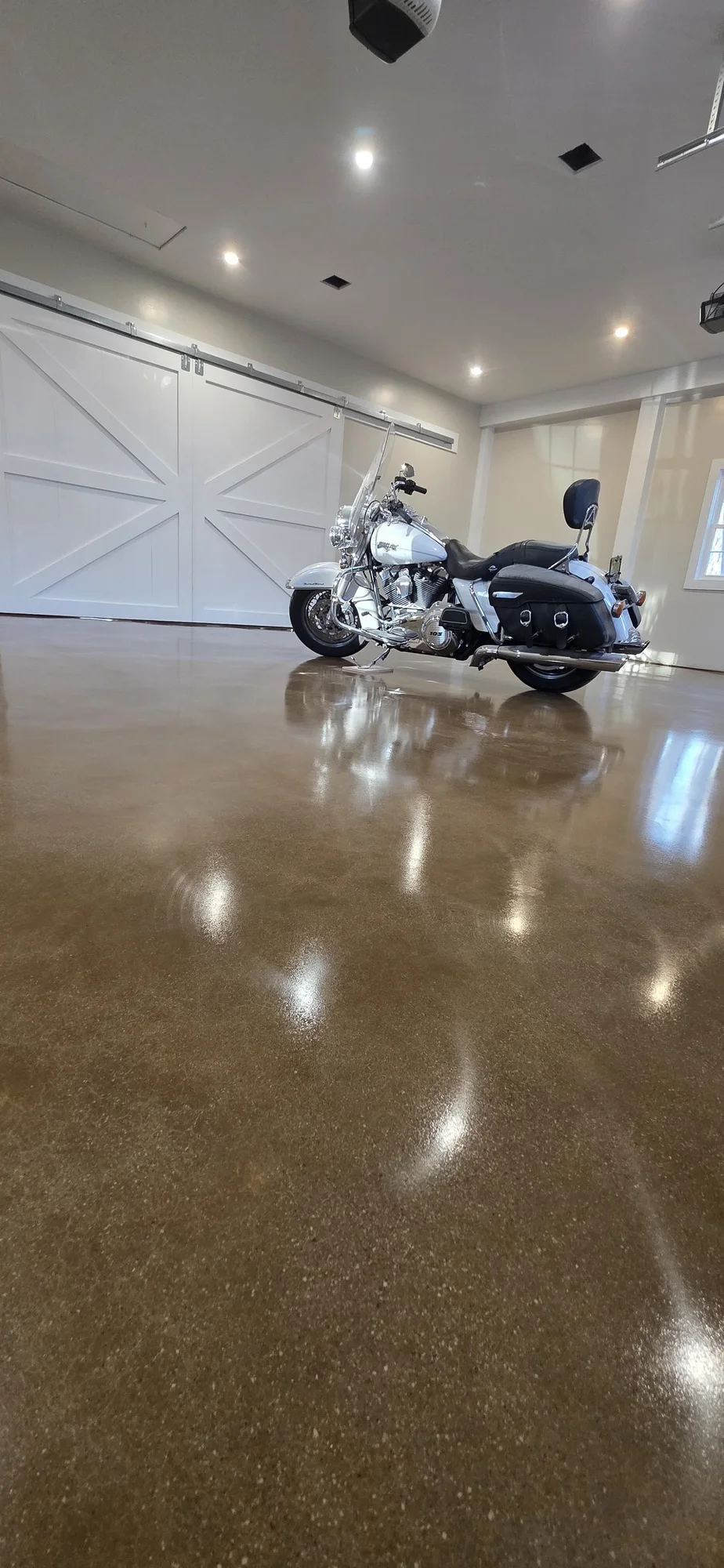
Polished concrete deserves a fair hearing for a shop. It is the slab itself, ground and polished to a hard sheen, with no coating on top to chip under a dropped wrench. It handles rolling loads well and suits someone who likes a plain, industrial floor. Polished concrete is a different floor from epoxy: it holds no color and shows old stains instead of covering them, so it fits a clean slab better than a stained one. The polished concrete flooring page goes into it.
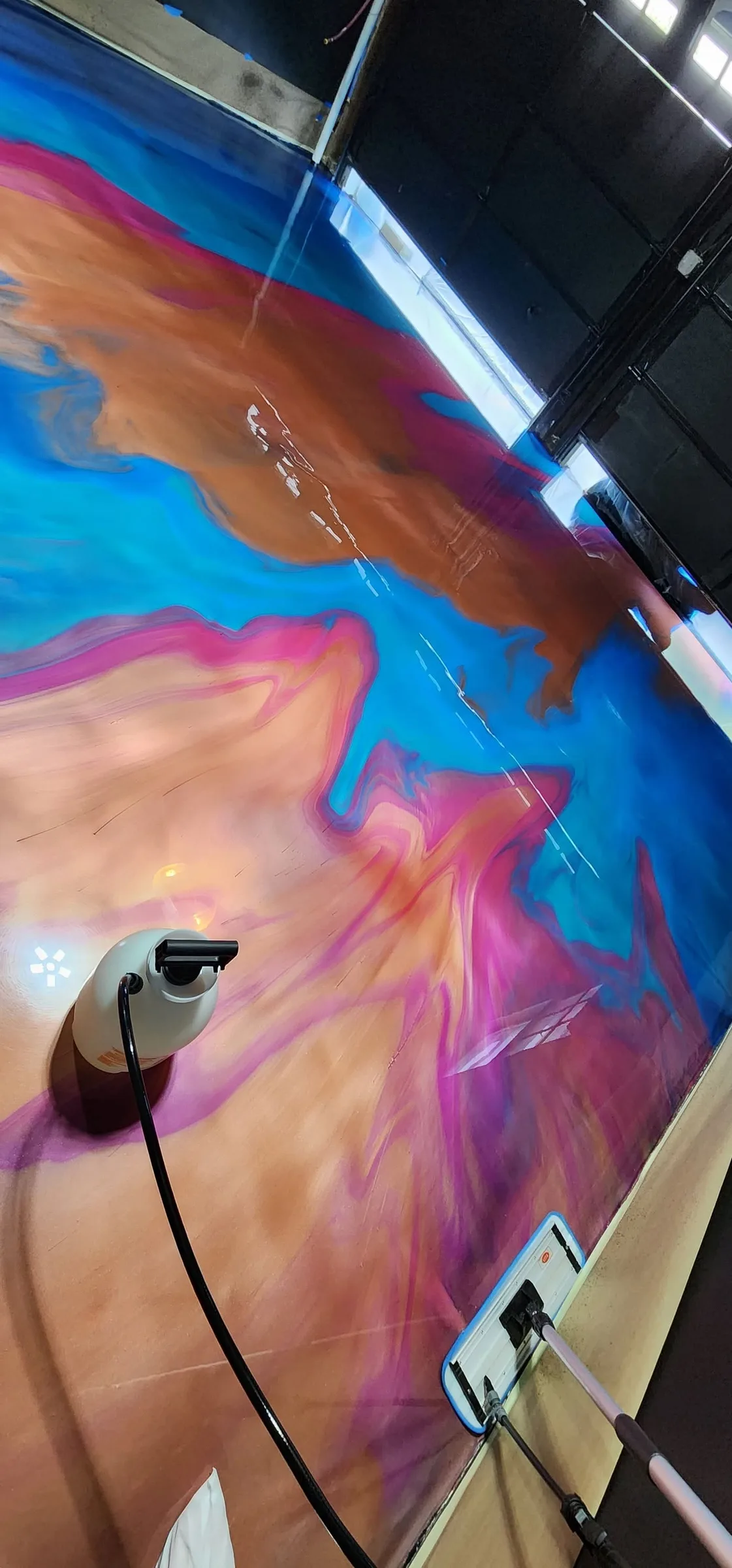
Then there is the shop as a showpiece. Some people want the room where they restore a car or build furniture to look as good as the work coming out of it, and a metallic floor in blue, copper or bronze does that. It asks for a little more care around sharp tools and heavy drops, and mats under the vise and the anvil help. For a finish shaped around a particular trade, the custom workshop floor finishes page has more.
Clearing a shop out and putting it back together
Most of the effort on a shop floor goes into emptying the room and getting years of grime out of the concrete. Danny goes over what has to move, what can stay and how long the shop is out of use before anything starts.

Walk the shop and how it is used
Danny looks at the slab, any drains, the stains and the cracks, and asks what you build or fix in there. From that he suggests a coated floor, polished concrete or a metallic, and marks where a textured finish belongs.
Pull the oil and grind
Oil and solvent stains are cleaned out of the concrete first, since nothing bonds over a soaked slab. Then the grinder works across the whole floor to clean concrete, into the corners where shavings collect.
Fix cracks and anchor holes
Cracks get opened up and filled level with the floor. Old anchor holes from machines that have moved on are patched, and low spots that would hold a spilled fluid are brought up.
Coat or polish
For a coated floor, primer seals the slab and the base and topcoat follow, with texture where you stand. For polished concrete, the slab is ground through finer and finer diamonds to a hard sheen. A metallic is worked by hand, with Danny on site for the pour.
Cure, mark and move back in
Once the floor has cured, you walk it together and Danny goes over cleaning and mats for the heavy spots. Then the bench, the chests and the stands roll back to the places you planned for them.
Garage shops and backyard buildings in the borough
In Kenilworth, a home workshop usually lives in one of two places: a bay of the garage or a building out back. A garage shop shares its floor with the car, so it has to take tires and salt as well as tools. A backyard building can sit on a thinner slab that is rougher and less level than the house’s own concrete. Danny reads it as it is and says plainly how much work it needs.
Plenty of Kenilworth’s houses date from the 1950s, and slabs from that period were often laid on bare ground with no plastic sheet below. In a shop that sits low, damp can rise through that concrete and push a coating off from underneath. A moisture check settles it before the floor is chosen, and the oil-stained concrete preparation page covers the cleanup a working garage usually needs.
A shop that shares the garage with two cars is covered on the two-car garage page, and a coating that has already failed is handled on the old epoxy removal page. Past shop and garage floors are in the gallery, and the other Kenilworth floors are on the Kenilworth page.
Owners live in 74% of Kenilworth’s occupied homes, according to the Census.
Shop owners ask about the floor under the bench
Will a dropped tool chip an epoxy shop floor?
A heavy, sharp drop can nick any floor coating. A well-built floor handles the everyday drops of a working shop, and a small chip can be touched up. Mats under the vise, the anvil or the welding corner take the worst of the abuse.
Is polished concrete a better choice for a workshop?
It can be. Polished concrete has no coating to chip and handles rolling loads well, but it shows stains more and holds no color. It works best on a clean, sound slab. Danny looks at yours and tells you which floor suits the way you work.
Can the floor handle a motorcycle on its kickstand?
A kickstand puts a lot of weight on a small point, especially on a hot day. A puck or plate under the stand spreads the load and protects any floor. Danny can plan the bike’s spot so it sits on the toughest part of the finish.
What about oil, brake fluid and solvents?
Wiped up promptly, most shop fluids leave no mark on a sealed floor. Strong solvents left to sit can dull or soften a coating, so keep rags handy and a drip tray under anything that leaks. Old oil stains in the slab are cleaned out before the coating goes on.
Will sawdust make a textured floor hard to clean?
A fine texture holds a little dust, but a push broom and a shop vacuum clear it easily. Most people keep the texture where they stand and a smoother finish where things roll, which makes the whole floor faster to sweep at the end of the day.
My shop is in a building out back. Can that slab be coated?
Usually, if the concrete is sound. Outbuilding slabs are often thinner and less level, so they may need more patching and leveling first. If it has cracked into loose pieces or settled badly, Danny will tell you plainly what has to be fixed first.
More floors in Kenilworth
Other floors Danny plans for Kenilworth garages and shops:
- Marble-look floorsVeins and clouds poured in place.
- Two-car garagesBoth bays, one floor, one schedule.
- Old coating removalOff with the failing coat.
- Multi-color floorsSeveral colors, one pour.
- KenilworthEvery other Kenilworth floor, in one place.
- Home Workshop Epoxy FlooringThe service, anywhere Danny works.
Danz Handz
Danny Carrero, epoxy specialist
dhepoxy@gmail.com
Cranford, NJ. Mon to Sat, 8 to 6. Hablamos español.
Tell Danny about the floor
Roll the chests aside and show Danny where the bench and the stands go. He will look at the slab and talk through coated, polished or metallic. Call (908) 577-7104 to have Danny look at it.