
Watching a metallic pour on video makes it look easy. The epoxy spreads, the colors swirl, and soon there is a floor that looks like marble. Doing it yourself is a different experience, and most of what goes wrong happens before the pour or in the minutes right after it. Danny teaches hands-on epoxy classes where students work with the material themselves. A class runs from the bare surface to the final topcoat, and it suits more kinds of people than most expect.
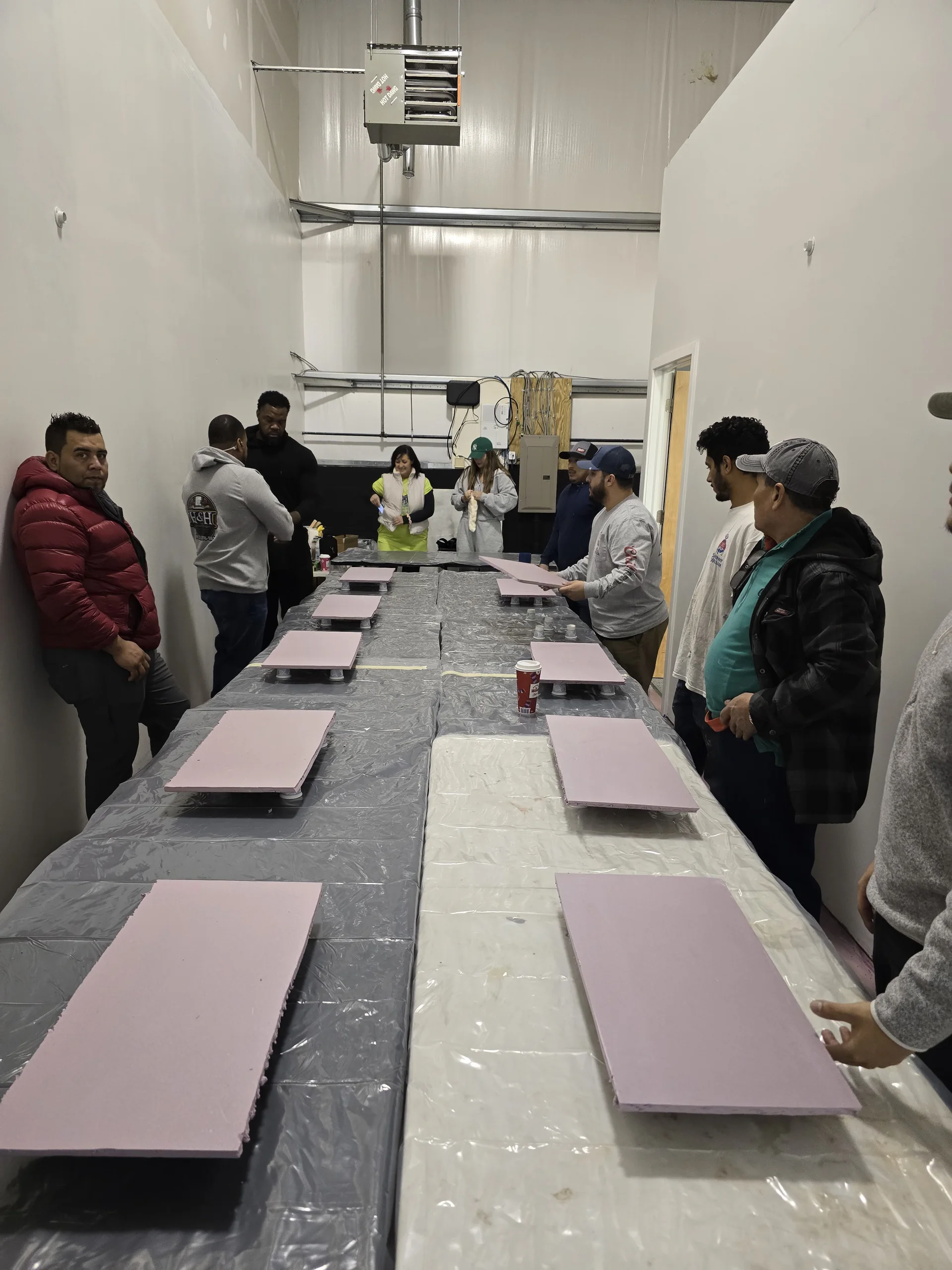
Why the class is hands-on
Epoxy is a material you learn with your hands. Reading about working time does not prepare you for how fast a mix starts to change once it is on a surface. Watching someone pull a vein through a metallic pour does not teach you how much pressure to use. Students in Danny’s classes mix, pour and work the material themselves, with him there to show what to do and to point out what is happening as it happens.
The point is to make your mistakes in a class, before you ever touch a customer’s floor or your own kitchen counter. People leave with a feel for the material that is hard to get any other way.
A class is also a chance to ask about your own project. Someone planning a kitchen counter or a basement floor can talk the details through with a person who does that work for a living, and go home with a clearer idea of what the job will take.
Surface prep comes first
A class starts where every job starts, with the surface. Danny covers why prep decides whether a coating holds, and what that means on concrete floors and on countertops. On floors, that is diamond grinding, crack and pit repair, and getting dust off the slab. On countertops, it is checking that the base is solid, filling seams and grout lines, and scuffing glossy surfaces so the epoxy can grip.
Students learn to look at a surface the way he does on a walkthrough. Is it sealed. Is it damp. Is it flexing. Those questions come before any talk of color, because a beautiful pour on a bad surface will fail.
This part of the class often surprises people who came only for the art side of epoxy. It is also the part many say they needed most.
Students also see why a damp or sealed surface causes trouble and how to check for it. A coating that fails on a floor down the road usually failed because of something that could have been found before the first bucket was opened.
Mixing and working time
Most epoxy problems start in the bucket. The two parts have to be measured correctly and mixed thoroughly, scraping the sides and bottom so nothing goes on the surface unmixed. Unmixed material leaves soft or sticky spots that will not cure properly. Danny shows how to mix, how long to keep at it and how to tell a good mix from a bad one.
Then there is working time, the window when the epoxy can still be moved and shaped. Temperature, the size of the batch and the product all change how long that window lasts. Students learn to plan a pour so the material is used while it is still workable, which is the difference between smooth results and a rushed mess.
Pigments and metallic powders are part of this too. How much to add and how to mix them in evenly changes the final color more than most beginners expect.
Air gets attention here as well. Bubbles get whipped into epoxy during mixing and come out once it is poured, and how a batch is mixed affects how much air ends up trapped. Danny shows how to mix without beating air in and how to release bubbles from a fresh pour.
Metallic and countertop technique
With the basics covered, the class moves into the techniques Danny is known for. Metallic work is about moving color while it flows: spreading the base, adding accent colors, pulling veins and letting the metallic powder settle into movement. Students try different tools and see how each one changes the pattern.
Countertop work adds edges and vertical surfaces. Epoxy runs downhill, so students learn to control the flow over an edge, catch drips underneath and keep a front edge even. Marble looks get their own attention, since believable veining takes practice. Danny shows how veins should break, thin out and wander, and students lay them in themselves.
- Spreading and leveling a base coat.
- Laying in metallic color and pulling veins.
- Building a marble look with a white base and hand-placed veins.
- Handling edges, drips and corners on a countertop.
- Putting a clear topcoat over finished color.
Topcoats and finishing
The topcoat is what protects the color and what the owner lives with day to day. A class covers why a clear coat goes over the color layer, how it is applied, and how to keep dust and bubbles out of it. Students also learn where anti-slip aggregate fits on a floor and why some jobs call for it.
Danny goes over common finishing problems and their causes: bubbles, fisheyes, cloudy spots and uneven gloss. Knowing why each one happens is most of the fix.
Tools and safety come up in this part too. Students learn which tools are worth owning, how to protect their skin and lungs while they work, and how to clean up so a project does not leave epoxy on everything in the room.
Where the classes happen and who teaches them
Danny has taught hands-on epoxy classes in Cranford, NJ for three years. What he teaches comes from work he does on real jobs, from garage floors to marble-look kitchen counters and high-end metallic floors.
That background shapes the class. Danny teaches the process he uses himself, step by step, including the parts that rarely show up in videos, such as reading a slab, deciding on prep and planning a pour so the material is used while it is still workable. Students see the reason behind each step, which makes it easier to adapt when their own project does not match the example.
The classes follow the same order of work he uses on a customer’s floor: walk and assess the surface, prep it, make repairs, pour, let it cure and check the finish. Students learn the job in the order it is actually done, so nothing feels like a trick pulled out of context.
Danny partners with Bulletproof Resins for material and pours CRYZTAL epoxy on countertops, so students get to know the kind of products he works with on his own jobs. Knowing how a specific system mixes and flows is part of what makes the techniques repeatable at home or on a job.
Because the classes are hands-on, the pace follows the students. Danny watches each person work, steps in when a mix or a pour starts to go wrong, and explains what happened. Seeing why a pour went wrong in the moment teaches more than any amount of reading after the fact.
The class also covers what happens after the pour. Danny talks through how finished floors and counters are cared for, what wears first and when a recoat makes sense, so students understand the whole life of the surface they are learning to make. Contractors in particular find this useful, since customers ask the same questions.
Common mistakes a class helps you avoid
Epoxy mistakes are easy to describe and easier to make by accident. Students try the right way and, in some cases, see what the wrong way produces, so the lesson sticks. That kind of learning is hard to get from the instructions on a can.
Metallic work has its own traps. It is tempting to keep pushing color around because the floor still looks like it could be better, and every extra pass blends the colors further. Knowing when to stop is one of the hardest skills in metallic work, and it only comes from practice. The class gives students room to find that point on a practice surface.
Countertop students learn to plan the order of a pour, so edges, corners and seams are covered before the material starts to set. They also see how to protect cabinets and floors, which saves a lot of cleanup at home.
Patience rounds out the list. A new pour has to be left alone while it cures, and touching it, setting things on it or adding a coat too soon spoils the finish. Students learn how to tell when a surface is ready for the next step without guessing.
Cleanup is the last place people slip. Uncured epoxy is far easier to clean off tools and surfaces than cured epoxy, and leaving tools for later can mean throwing them away. Students learn a cleanup routine as part of every pour.
Most first-time epoxy problems come from a short list of mistakes. A class puts each of them in front of you, so you know what it looks like and how to prevent it:
- Coating a sealed, dirty or damp surface the epoxy cannot grip.
- Measuring the two parts by eye, or mixing them too briefly.
- Mixing a batch too large to use before it starts to set.
- Overworking a metallic pour until the movement turns muddy.
- Letting drips harden under a countertop edge.
- Rolling a topcoat in a dusty room.
Who a class suits
The classes suit a range of people. Contractors who want to add epoxy floors or countertops to their work come to learn the process from someone who does it full time. Homeowners planning their own countertop or a small floor come to avoid the mistakes that ruin a first pour. Artists and people who work with resin on tables and smaller pieces come for the metallic and color techniques. Some come with no experience at all and leave knowing whether this is work they want to pursue.
A single class will not make anyone an expert. What it gives is a clear picture of the steps, the timing and the common mistakes, so a first project at home or on a job starts on solid footing.
Danny also sells Glitter ELEMENTZ, his ultra-reflective polyester glitter for epoxy and resin, and students often try it during a class. To ask about upcoming classes, call (908) 577-7104. Hablamos español.
Questions
Where are the classes held?
Danny teaches his hands-on epoxy classes in Cranford, NJ, and has been running them for three years. Each class works through surface prep, mixing, metallic and countertop technique and topcoats, with students handling the material themselves. Ask about upcoming classes when you call, and Danny can tell you which one fits what you want to learn.
What should I wear to a class?
Wear clothes and shoes you would not mind getting epoxy on, since it does not wash out once it cures. Long sleeves and closed shoes are a good idea. Danny covers skin and lung protection during the class, and you can ask on the phone about anything else worth bringing along on the day.
Do I need any experience before taking a class?
No. Classes start with the basics of surface prep and mixing, so people with no epoxy experience can follow along. Contractors and resin artists who already know some of the material still get value from the prep, metallic and countertop technique. Danny adjusts the pace to the people in the room.
Do I get to pour epoxy myself?
Yes. The classes are hands-on, so students mix, pour and work the material themselves instead of only watching a demonstration. That is the main point of the class. Getting a feel for how epoxy moves and how fast it changes is hard to learn from videos or reading.
Will the class help me start doing epoxy for customers?
A class gives you a solid grounding in prep, mixing, metallic and countertop technique, and topcoats, which is where anyone starting out needs to begin. Doing customer work well also takes practice on your own projects. Many contractors use the class as a starting point and keep building from there.
How do I find out when the next class is?
Call Danny at (908) 577-7104 to ask about upcoming classes and what each one covers. He can tell you whether a class fits what you want to learn, whether that is floors, countertops, metallic work or general technique. You can also ask about Glitter ELEMENTZ on the same call.
More on the work in this post: Danny’s epoxy training classes.
Danny walks every floor before anything gets decided. Book a walkthrough, call (908) 577-7104, or look through the gallery first.