
A pearl metallic is the quietest color in the metallic family, and also the one most changed by light. Many people start thinking about a new floor in late fall, when the holidays bring guests and the days get short. That is a good time to choose a pearl, as long as you know what the season is doing to the samples in your hand. Judging pearl in winter takes a little planning so the floor still looks right in summer.
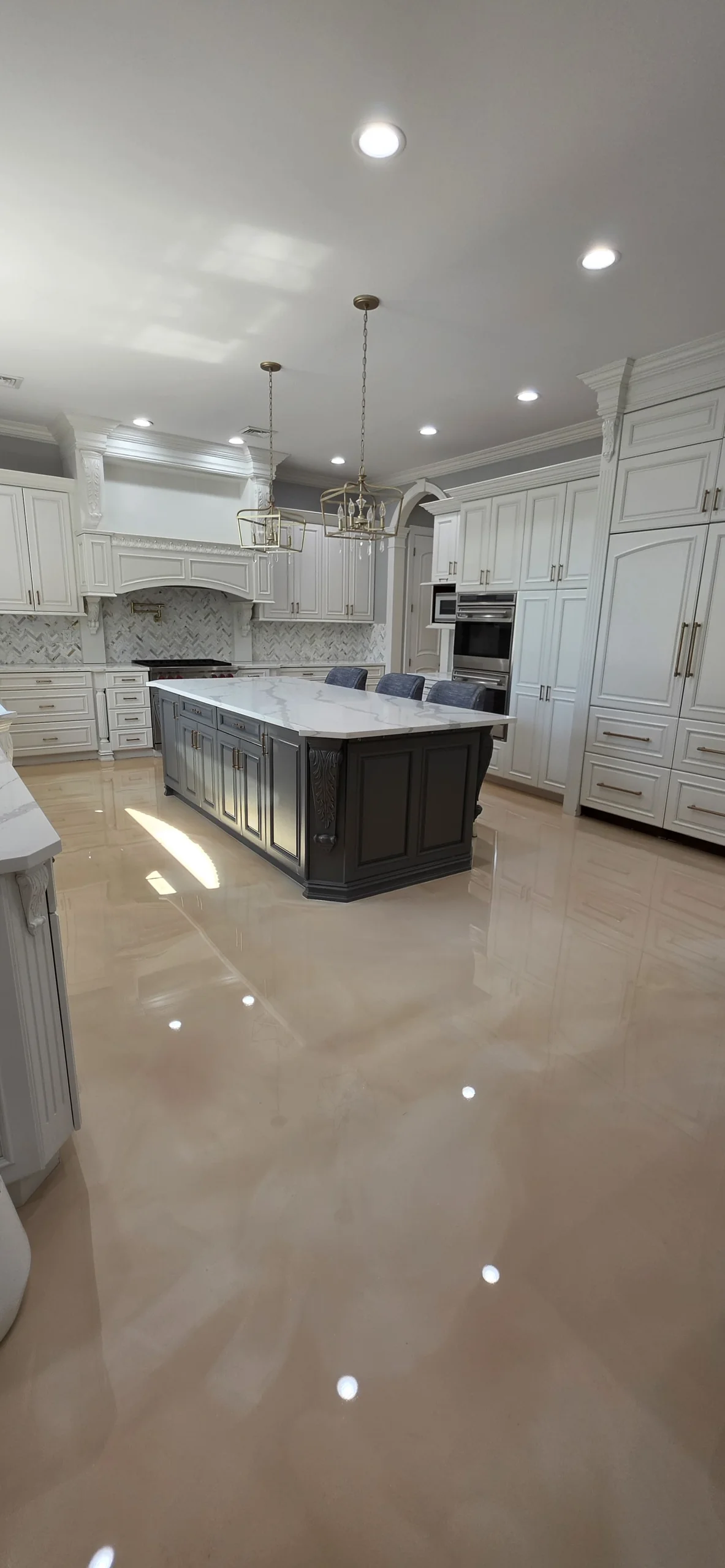
What pearl does with the light it gets
A pearl or cream metallic carries fine powder that reflects softly instead of throwing back hard silver flashes. Up close it looks like satin or the inside of a shell. From across a room it reads as a warm, pale floor with gentle movement. Because the contrast inside the pour is low, the color leans heavily on whatever light is falling on it.
Cool daylight pulls pearl toward gray and silver. Warm lamps push it toward cream, sand or even pale gold. A chandelier adds sparkle in small points. Sun from a tall window lying across the floor at a low angle brings out the movement, while light from straight overhead flattens it. One floor can show all of those moods in a single day.
That is why Danny never asks anyone to choose pearl from a photo or a small chip. It has to be seen in the room, and ideally at more than one time of day.
Why December samples can mislead
Winter light is low and brief. The sun crosses the sky at a shallow angle, reaching deeper into south-facing rooms than it does in summer, and by late afternoon most houses are running on lamps. A pearl sample judged at four in the afternoon in December is really being judged under bulbs.
Snow shifts things too. A bright snowy yard throws cold blue light through the windows, which can make a cream sample look grayer than it will in May. On an overcast day everything goes flat. Winter is still a fine time to choose, as long as the samples get seen in a few conditions before anyone decides.
A simple habit helps: photograph the sample spots on your floor in the morning and again at night with the lamps on, even if that means asking for a second short look. Most people find one tone they like in every light, and that is usually the right pick.
Lamps, chandeliers and the bulbs you already own
Winter evenings are when many families use their main rooms most, so the bulbs matter as much as the sun. Warm white bulbs flatter cream and sand pearls. Cool white or daylight bulbs pull the same floor toward gray. A mix of both in one room, common after years of replacing bulbs one at a time, can make a pearl floor look patchy from corner to corner.
Before settling the color, decide on a bulb color for the room and swap out the odd ones. A chandelier in a foyer or over a dining table scatters small bright points across a pearl floor, which many people love. Recessed lights in a grid give an even wash that shows the movement less.
If new lighting is planned for spring, settle the fixtures first, then pick the floor under the light it will actually live with.
Planning for June while choosing in January
A floor chosen in winter has to work in summer, when the sun is high, the windows are open and the trees outside throw green light into the room. Rooms that get little direct sun will look close to their lamp-lit winter selves all year. Rooms with big south or west windows will look brighter and cooler in summer than they did on the day the samples came out.
For those bright rooms, a slightly warmer pearl than the one that looks perfect in winter daylight is often the safer choice, since strong sun tends to pull pearl toward silver. For lower levels and rooms with few windows, the winter evening view is close to how the floor will look in every season, so trust it.
Finished pearl rooms in the gallery help here as well, especially when the room itself is dark at the time of the visit and the samples are hard to read.
Getting the slab ready for a soft color
Pearl is honest about what lies under it. With so little contrast in the pour, there is no busy pattern to hide a patch, a trowel ridge or a ghost line where an old wall or carpet tack strip sat. Winter sun lying low across a room makes those even easier to spot. So the prep for a pearl floor goes a step further than it would for a darker, louder blend.
The slab is ground flat, cracks are filled flush and patches are feathered until they disappear. Westfield’s median build year is 1953, and slabs from that era often carry old adhesive or paint that has to come off before any of that work can begin.
The pearl metallic floor page for Westfield walks through the prep and the pour, and the pearl effect metallic flooring page explains the system. For pearl that runs through several connected rooms, see the whole-house metallic floors for Westfield.
Questions
Is pearl a good color for a room with no windows?
It can be one of the best. A pale pearl bounces lamp light around a basement or an interior hall and makes the room feel larger. Choose it under the bulbs the room really uses, since there is no daylight to change it. Warm bulbs keep it creamy, and cool ones turn it closer to a silver gray.
Can a pearl floor have some stronger movement in it?
Yes. A second, slightly darker tone can be worked into the pour for more visible veins and swirls while the overall look stays soft. Many people pair pearl with a pale gold or a light taupe for that. Danny brings a few combinations so you can see how much movement suits the room before anything is decided.
Should I wait until spring to choose the color?
There is no need. Winter is a fine time to look at samples, as long as you see them in more than one light and keep summer in mind for the brightest rooms. Choosing early also leaves time to sort out lighting and furniture before the pour date, which tends to make the whole job go smoother.
To see pearl samples on your own floor under your own lights, schedule a visit, and browse finished pearl rooms in the gallery. The number is (908) 577-7104.