
Diamond tooling matched to your concrete
Diamond grinding uses tooling with industrial diamonds set into it, and the tooling gets picked for how hard the slab is and what has to come off: a sealer, a kit coating, a weak skin. Danny swaps tooling as he reads the floor, which is why the right diamonds matter as much as the machine.


What goes into diamond concrete grinding
The heads of the grinder carry small segments with industrial diamonds set in metal or resin. Metal-bond segments are for cutting, which means removing coatings, opening the surface and taking down high spots. Resin-bond pads are finer and used for smoothing and, on polished floors, refining. Each comes in coarse to fine grits. Hard concrete needs a softer bond that wears away to keep fresh diamonds exposed, and soft concrete needs a harder bond so the segments are not eaten up quickly. The wrong combination wastes time or leaves a poor surface.
Edges get a hand grinder with matching tooling so the perimeter has the same surface as the middle.
Diamond grinding fits almost every coating job and most coating removals. It gives a consistent profile across the floor, so the coating bonds evenly. It is slower than shot blasting on very large open slabs, and it is not the right first tool for thick layers of tile mortar or old leveler, where scraping or scarifying might come first. On very soft or damaged concrete, aggressive tooling can tear the surface, so Danny adjusts the tooling and the number of passes in place of pushing harder.
Before he starts, Danny grinds a small test area, which tells him how hard the concrete is and how any coating on it will come off. He sets up the grinder with tooling to match, connects the dust vacuum and runs the open floor in passes, checking the scratch pattern as he goes. If segments glaze over or wear too fast, he changes them. Edges get a hand grinder with matching tooling so the perimeter has the same surface as the middle. A final vacuum leaves the slab clean and ready for the repairs that come next.
Hard concrete and soft concrete need different diamonds, and the slab tells you which.
How the work runs
Diamond grinding comes down to matching tooling to the slab, and these steps follow how Danny reads a floor and changes tooling as he goes.
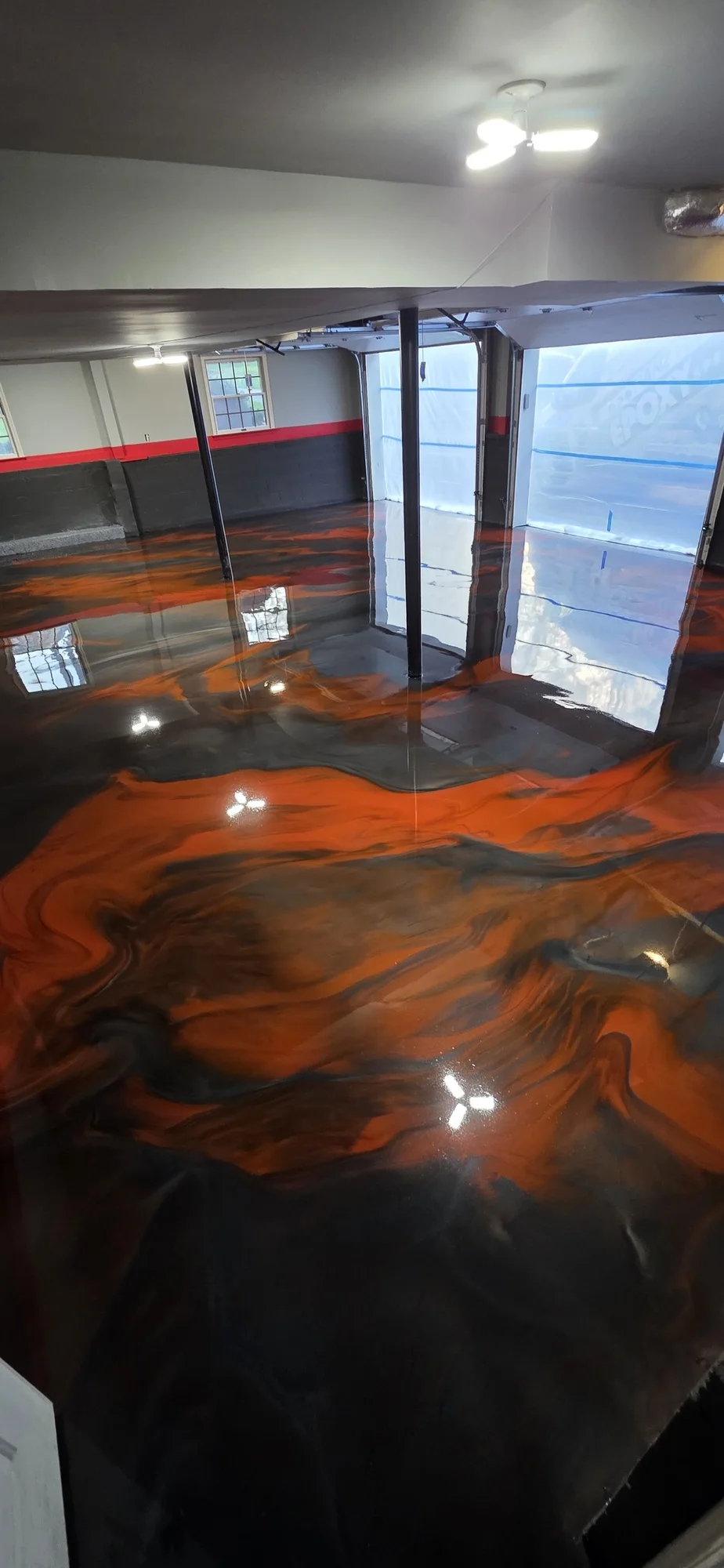

Grinding a test patch
A small area gets ground first. How fast the diamonds cut, and whether they glaze over or wear away quickly, tells Danny how hard the concrete is and how any coating on it will come off once the main machine starts working.

Choosing bond and grit
From that test he picks metal-bond segments with a bond suited to the slab’s hardness and a grit coarse enough for what has to come off. Hard concrete gets a softer bond. Soft concrete gets a harder one so the segments last through the job.

Swapping tooling mid-room
Slabs rarely wear evenly. By a garage door or along a worn traffic path the concrete can grind differently from the rest, so Danny checks the segments and the scratch pattern as he goes and changes tooling where the floor itself changes.

Matching the edges to the field
The hand grinder along the walls carries tooling close to what the main machine is running, so the perimeter ends up with the same scratch pattern as the middle of the floor and the coating bonds evenly to both parts.
Looking across the scratch pattern
When the floor is done, Danny looks across it for one even scratch with no glossy holdouts and a consistent surface from wall to wall. Then the dust comes up, and the slab goes on to crack and hole repair.
More of Danny’s floors
Other jobs from the file, not all of them this service. See the gallery







Questions about diamond concrete grinding
What is the difference between diamond grinding and regular grinding?
In practice, most coating prep today is diamond grinding. The term points to the tooling, diamond segments or pads, as opposed to older abrasive stones or discs. Diamonds cut concrete faster and more evenly, and they can be chosen to suit the hardness of the slab, which older abrasives cannot do well.
Will diamond grinding make my floor smooth?
Smoother, in that high spots and ridges come down, but the surface is left with a slight texture on purpose so the coating can grip. If you want a smooth, polished look on bare concrete, that is a polishing job with finer tooling and more steps, and it is different from coating prep.
Can diamond grinding remove an old coating?
Thin coatings, paint and many sealers come off with coarse diamond tooling. Thick or gummy layers can clog the segments, so those may get scraped first or removed with tooling made for the job. Danny tests a small area during the walk-through to see how the coating reacts before he plans the removal.
Do the diamonds leave swirl marks in the concrete?
They leave a fine scratch pattern, and coarse tooling can leave visible swirls on bare concrete. Under a coating those marks disappear, because the base coat fills them. On very thin finishes, Danny may finish with a finer grit so the scratch does not show through. On floors left bare, swirls become a polishing question.
Why did a rental grinder barely scratch my floor?
Usually because the tooling did not suit the concrete. On a hard slab, a hard-bond segment glazes over and stops cutting, so the machine skates across the surface. On a soft slab, the wrong segment wears out fast. Matching bond and grit to the floor is most of what makes diamond grinding work.
Can diamond grinding remove a curing compound on a new slab?
Yes. Finishers often spray a curing compound on fresh concrete, and it forms a film epoxy will not bond to well. Diamond grinding cuts through that film along with the smooth top layer. Danny checks for it on new slabs, since it can be hard to see until the grinder starts.
Next to this on the list
Grinding, shot blasting, crack and joint filling, leveling and moisture testing, done before any coating goes down.
- Concrete Moisture TestingMeasuring the moisture in a slab before the floor is chosen, then matching the primer and system to the reading and the product data.
- Concrete Vapor Mitigation SystemsA moisture-tolerant layer under the finished floor for slabs that test high, chosen from the readings and the product data.
- Concrete Primer ApplicationThe thin first coat that soaks into ground concrete, seals the pores against bubbles and gives every coat above it a bond.
- Concrete Profile PreparationGrinding a slab to the texture the coating system calls for, rough enough to grip and smooth enough not to show through.
- Floor Drainage Slope CorrectionBuilding up low or backward-sloped floors so water runs to the drain or door before the coating goes on, with drain moves left to a plumber.
He drives out from Cranford about 60 miles in every direction for floors like this one. See every areaSee the galleryRead: Why Every Good Epoxy Floor Starts With a Diamond Grinder
Danz Handz
Danny Carrero, epoxy specialist
dhepoxy@gmail.com
Cranford, NJ. Mon to Sat, 8 to 6. Hablamos español.
Schedule a look at your floor
A short note about the space is enough. Danny calls back and books a walkthrough.