
A new surface for pitted, worn and patched floors
When the top of a slab has given out, with pits, spalls and years of patches, the concrete underneath is often still sound. Danny taps the floor and sorts surface damage from damage that runs deeper, because only the first kind can be rebuilt on the same slab.
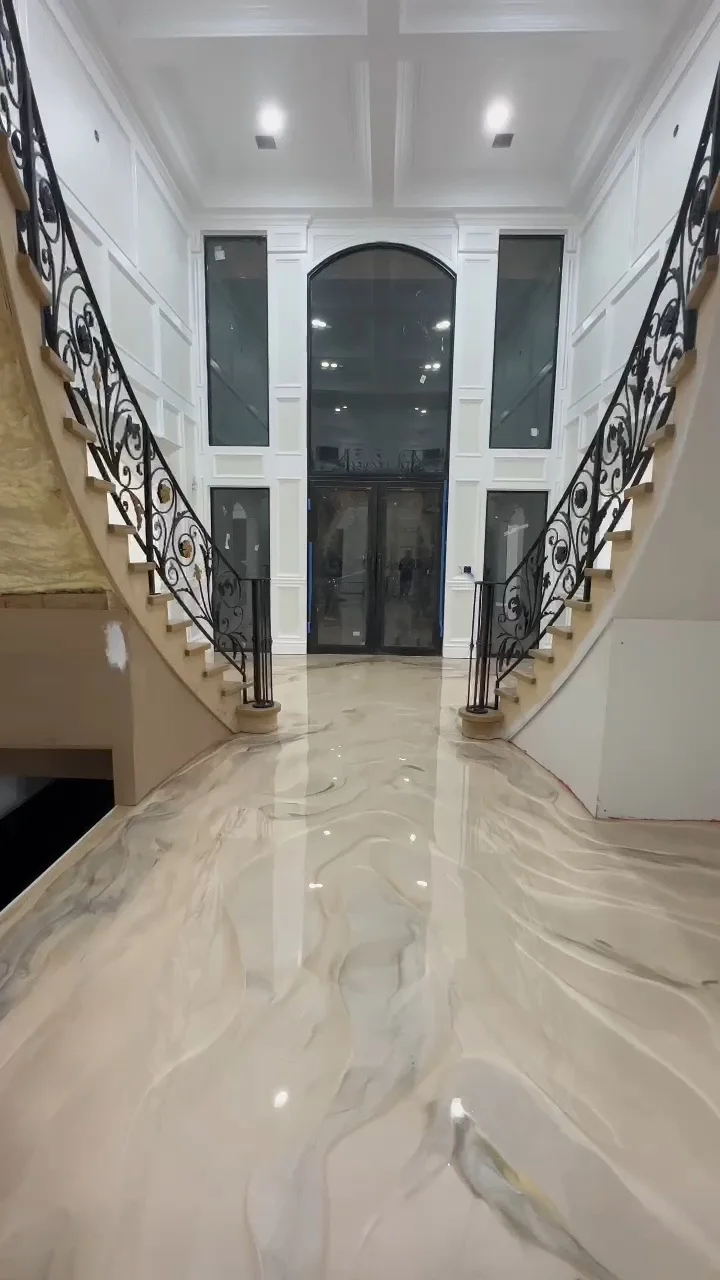

Epoxy Floor Resurfacing, start to finish
Resurfacing rebuilds the wearing surface on top of the slab you already have. The floor is ground to remove loose material and old finishes, then damaged areas are filled with repair mortar or epoxy patching and ground flat. Where the floor is rough overall, a skim or leveling coat can even it out. Once the surface is sound and smooth, the coating system goes on: primer, body coat in your color or finish, and topcoat. You end up with a fresh surface over the same concrete.
Spalls, pits and joints are rebuilt and ground flush, and a leveling coat goes on if the floor needs it.
It works when the slab underneath is solid and the damage is in the top. It is a poor fit if the concrete is breaking apart deep down, heaving or sinking, since a new surface rides on whatever the slab does. Very large cracks from settlement may need a concrete contractor first. Resurfacing also adds time on site for the repairs. Danny tells you on the walk whether your floor is a resurfacing job or one that needs more than a coating can give.
Danny walks the floor and sorts the damage into what can be fixed in the surface and what goes deeper. He taps and looks for hollow spots, checks old patches and notes where water or salt did the harm. Install starts with grinding to sound material. Spalls, pits and joints are rebuilt and ground flush, and a leveling coat goes on if the floor needs it. The coating system follows, layer by layer. At the walk-through you see the floor the way it should have looked, and he shows you which repairs were the big ones.
If the slab is sound, the surface can be rebuilt on top of it.
Five stages, every time
Resurfacing rebuilds the top of a worn slab before any color goes on. The stages below follow a pitted, patched floor from the first tap test to its new surface.
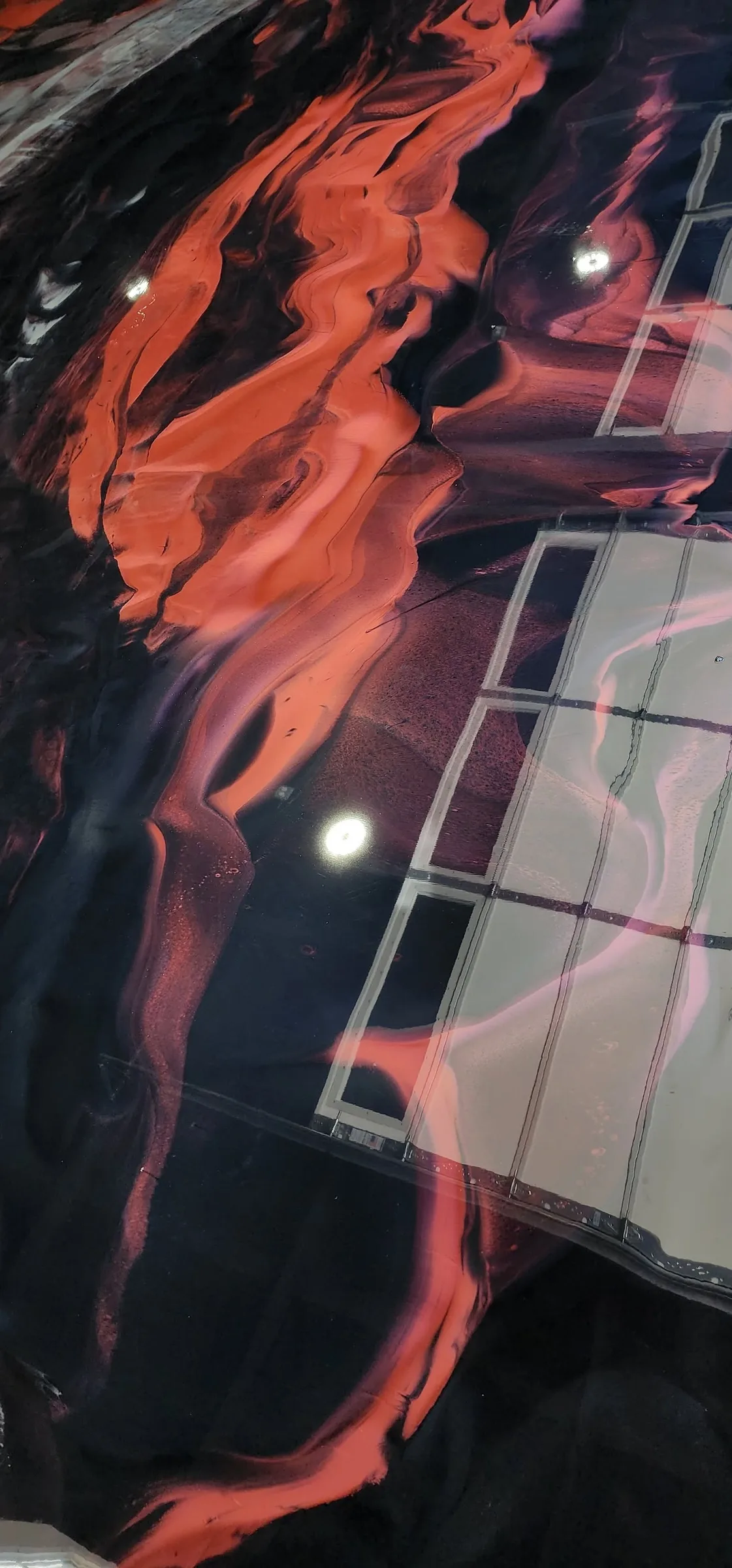

Sound out the damage
Danny drags a chain or taps with a hammer across the floor and listens. A dull, hollow note marks concrete or old patching that has let go underneath. Those areas are chalked out so you can see how much of the floor needs rebuilding.

Remove loose material
Hollow and crumbling areas are broken out down to solid concrete, and old soft patches come out entirely. The whole floor is then ground to strip any finish and expose sound concrete around every repair area.

Rebuild with repair mortar
Spalls and pits are filled with a repair mortar or epoxy patching compound, built up in layers where they are deep. Once hard, each repair is ground flush so the new surface has no ridges at the patch edges.

Skim the rough field
Where roughness covers the whole floor, a leveling skim coat goes over it. It evens out the texture so the color coat goes down smoothly and the old damage does not telegraph through. Floors with only scattered damage skip this step.

Coat the rebuilt surface
Primer, body coat and topcoat go over the repaired slab like any new floor. At the walk-through, Danny goes over what caused the original damage, so the same salt, water or impact does not undo the work.
More of Danny’s floors
Other jobs from the file, not all of them this service. See the gallery








Questions about epoxy floor resurfacing
Is resurfacing the same as recoating?
No. Recoating freshens a floor whose coating is still sound by scuffing it and adding a new topcoat. Resurfacing goes deeper: grinding, repairing the concrete and building a new coating system on top. Danny decides which one your floor needs on the walk, and sometimes a room needs resurfacing in one area and only a recoat elsewhere.
Can you resurface a floor with oil stains?
Usually. Oil soaks into concrete, so heavy stains get ground and cleaned until the primer can bond, and stubborn spots may need extra work. Old, deep contamination can keep seeping, and Danny checks for that before promising a clean result. He would rather spend time on a stain during prep than see it lift later.
Will the floor be level after resurfacing?
It will be much flatter and smoother than a pitted floor. A leveling coat can take out dips and rough patches, but a slab that slopes on purpose toward a drain or a garage door keeps that slope. Danny asks about any spot where water collects so the plan addresses it.
How do you know the slab underneath is sound enough?
Tapping and chain-dragging find hollow spots, and grinding shows whether the concrete below the damaged layer is hard and clean. If the concrete keeps crumbling as it is ground, or large areas sound hollow, the damage runs deeper than a resurfacing can fix. Danny explains that on the walk before any work is booked.
Can one part of a floor be resurfaced and the rest just coated?
Yes, that is common. The damaged areas are rebuilt and the sound areas are simply ground and primed, then the whole floor gets the same color and topcoat. Because the final coats run across both, the floor reads as one surface even though the work underneath varied from spot to spot.
Is resurfacing worth it compared with pouring a new slab?
For a slab that is structurally sound, resurfacing keeps the concrete you have and rebuilds only the worn top, which is far less disruptive than breaking out and repouring. A new slab makes sense when the concrete is cracked through, sinking or crumbling deep down. Danny tells you which side of that line your floor falls on.
Related floors
The core systems: residential, commercial and industrial epoxy, on new slabs and old ones, inside and out.
- Epoxy Flooring for New ConstructionEpoxy planned into a new build, from slab details before the pour to a coating timed with the finish schedule and closeout.
- Interior Concrete Floor CoatingCoatings for indoor concrete in lofts, studios, offices and living spaces, from a clear seal to color or metallic in the sheen you choose.
- Exterior Concrete Coating SystemsExterior coating systems for patios, walkways and porches, using resins made for sunlight and texture chosen for rain and winter.
- Seamless Resin FlooringSeamless resin floors poured as one continuous surface, with no grout lines or tile joints, and an optional cove base up the wall.
- Resinous Floor InstallationResinous floors built from epoxy, polyaspartic and urethane, with each layer picked for the room’s traffic, cleaning and sunlight.
Danny works out of Cranford, NJ and covers about 60 miles: North and Central Jersey, the city and Long Island, the Hudson Valley counties, Fairfield County and eastern Pennsylvania. See every areaSee the gallery
Danz Handz
Danny Carrero, epoxy specialist
dhepoxy@gmail.com
Cranford, NJ. Mon to Sat, 8 to 6. Hablamos español.
Tell Danny about the floor
Tell Danny what you are working with. He will call, then come look before anyone talks numbers.