
Metallic epoxy floors for North Amityville
More of the homes in North Amityville were built in the 1970s than in any other decade. Slabs from those years were often poured on bare soil, so moisture is checked before a primer is picked.
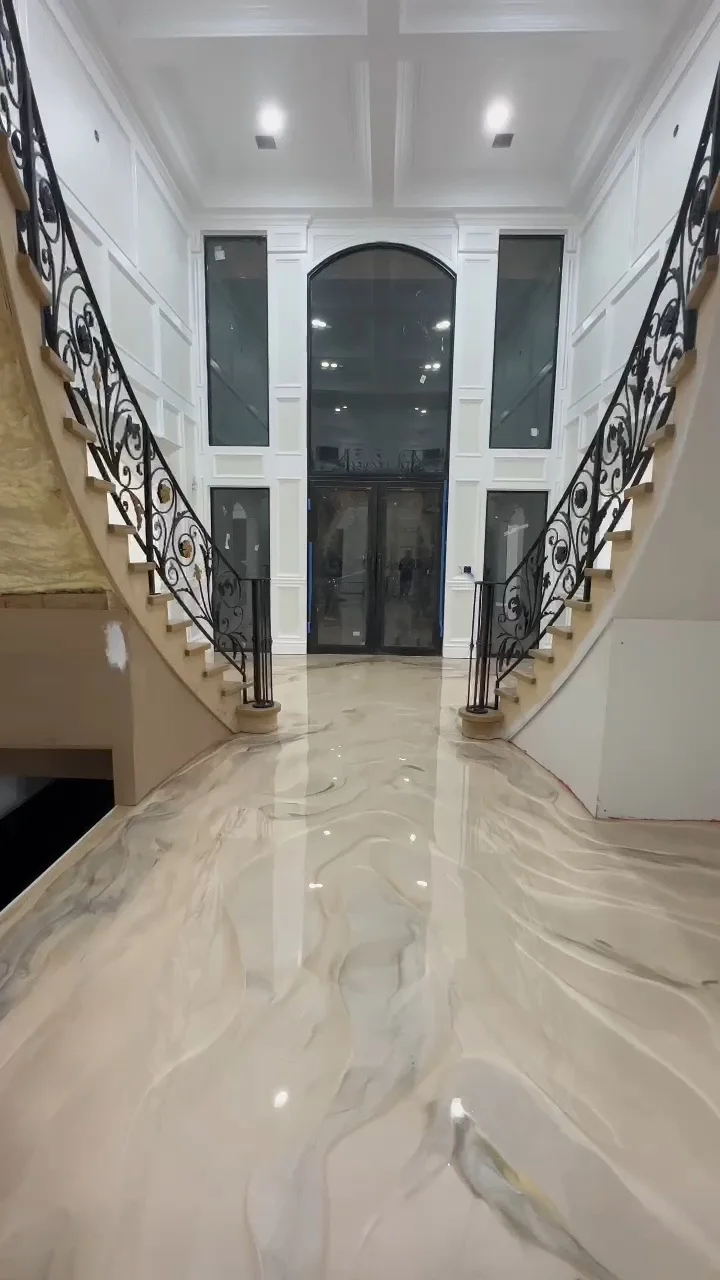
The houses in North Amityville
North Amityville is a community in the Town of Babylon, Suffolk County, New York.
The Census counts about 5,884 homes in North Amityville, with a median build year of 1975.
Sources: US Census Bureau, American Community Survey 2024 5-year survey, for North Amityville, NY; FEMA National Flood Insurance Program claims, 1978 to 2026, for the Town of Babylon.
Next stops from North Amityville
- North Lindenhurst1.4 mi east
- Amityville2.1 mi south
- East Massapequa2.1 mi southwest
- South Farmingdale2.2 mi northwest
- Copiague2.3 mi southeast
- Lindenhurst2.3 mi southeast
Every town in Suffolk County is on the Suffolk County page.
What the houses in North Amityville mean for the floor
Houses from the postwar decades tend to have garage and basement slabs carrying old paint or floor tile, and all of it gets ground off before the pour.
A house from the 1960s or 70s may have had its basement finished twice, once with paneling and carpet and again with laminate or tile. Each round left something behind on the slab. Danny strips the floor to bare concrete before planning anything, because the right coating depends on what is underneath. A home gym wants a different floor than a playroom does, and he will talk through which system fits the room you actually plan to use.
Floors for North Amityville’s 1970s houses
All 380 services- Concrete Moisture TestingMeasuring the moisture in a slab before the floor is chosen, then matching the primer and system to the reading and the product data.
- Garage Floor Coating RemovalGrinding failed paint, DIY kits and old epoxy off garage floors down to clean concrete, ready for a new system to bond.
- Basement Epoxy FlooringBasement floors with personality, often a metallic under recessed lights, poured on a dry slab for bars, media rooms and playrooms.
- Indoor Concrete Floor CoatingResin coatings for slab floors inside the house, from dens to converted rooms, ground and leveled before the finish goes down.
- Garage Floor RecoatingRecoating sound garage floors with a fresh clear topcoat before traffic lanes wear through, with options to add grit or change sheen.
- Apartment Common-Area Floor CoatingsCoated floors for apartment laundry rooms, mail rooms, storage and trash rooms, scheduled room by room so residents keep access.
Questions about North Amityville
How far is North Amityville from Danny’s shop?
About 47 miles east of Cranford. North Lindenhurst is the closest town to it on Danny’s list.
How old are the houses in North Amityville?
The Census puts the median build year in North Amityville at 1975. By decade built: the 1950s, 14%; the 1960s, 16%; the 1970s, 24%; the 1990s, 13%.
What do FEMA’s flood records show for the Town of Babylon?
FEMA’s flood insurance records show 4,631 claims from the Town of Babylon since 1978, the most after Hurricane Sandy in 2012 (2,201). FEMA files North Amityville under the Town of Babylon, so the count covers all of the Town of Babylon, not North Amityville alone.
What kind of housing is in North Amityville?
By the Census count for North Amityville: 62% single-family detached houses, 5% townhouses and attached homes, 24% buildings of five units or more. 64% of occupied homes are lived in by their owners.
Should the garage and the basement get the same floor?
Usually not. A garage takes hot tires, salt, oil and grit, so a flake floor with texture tends to suit it. A basement is more of a room, where a metallic or a solid color can carry the look. Basements also bring moisture into the picture, so Danny checks that slab separately and recommends what fits each space.
What material does Danny use?
He partners with Bulletproof Resins for his material and picks the specific system for each floor after the walkthrough. A garage that sees salt and hot tires gets a different build from a basement or a showroom. He explains what he is putting down and why, so you know what is going on your floor before the pour starts.
How do we settle on colors for a metallic floor?
Danny starts with the picture in your head, then holds real samples next to your walls, cabinets and lighting. Metallic floors move, so he explains how the color will flow and where it tends to gather. His job is to get into your vision and keep it from heading in ten directions at once. Once the design is set, the pour follows that plan.
Why does Danny need to see the floor first?
Because the slab decides the job. Two garages of the same size can need very different prep, depending on cracks, old coatings, moisture and how level the concrete is. Seeing it lets Danny recommend the right system and plan the work honestly. It also gives you a chance to look at samples in the actual room before you decide anything.
Will the grinding make a mess of the house?
Grinding is loud and throws fine dust, so it helps to plan for it. In a basement or an attached garage, close the doors to the rest of the house and move anything delicate out of the rooms nearby. Danny talks through the setup on the walk. Once the prep is done, the pour itself is quiet, careful work.
Can Danny match a floor I saw online?
Often he can get close, and sometimes he will suggest a change that suits your room better. Bring the photos to the walkthrough. Metallic floors are poured by hand, so no two come out exactly alike, and Danny is straight with you about that. He works out what you liked about the picture and builds the floor around it.
Danz Handz
Danny Carrero, epoxy specialist
dhepoxy@gmail.com
Cranford, NJ. Mon to Sat, 8 to 6. Hablamos español.
Tell Danny about the floor
Tell Danny about the floor. He calls back and comes out from Cranford, 47 miles east, to look at it.