
Satin epoxy, the middle ground between gloss and matte
Satin sits between gloss and matte: enough sheen to keep color rich and easy to wipe, with far less of the glare that makes every footprint and ceiling light show. It is a common pick for family basements, kitchens and playrooms, and for offices and shops where the floor should look finished without shining.


What goes into satin-finish epoxy flooring
Satin is a topcoat with a sheen between full gloss and matte. It goes over the same systems as any epoxy floor, from solid colors to metallics and flake. Light hitting it spreads a little before it comes back, so lamps and windows show as a soft glow on the floor in place of sharp reflections. Colors stay deeper than they would under matte. Metallic patterns keep most of their movement, which makes satin a common choice for decorative floors in rooms people actually live in every day.
Danny usually brings up satin when a client is stuck between the shine they like in photos and the upkeep they want in real life.
Satin forgives the most for the most people. It hides light scratches, dust and footprints better than gloss and stays easier to clean than most matte finishes. It is a weaker choice when the floor is meant to be a mirror-shine centerpiece, like a collector’s garage under display lights, and it will not hide grit the way a flake or quartz texture does. Very dark satin floors still show dust. Over time, heavy walkways can polish a satin coat a little shinier along the paths people walk most.
Danny usually brings up satin when a client is stuck between the shine they like in photos and the upkeep they want in real life. On the walk-through he asks who uses the room, whether there are kids, pets or a home gym, and how much daylight comes in. Prep runs in a set order here: grinding, crack and spall repair, leveling where the slab dips and a full vacuum. The base system goes down in the chosen color or pattern. The satin topcoat goes over it once the base is ready, and the client sees the finished floor both in daylight and with the lights on.
Satin keeps the color deep and lets the footprints fade into the background.
From bare slab to finished floor
Satin usually answers a household’s question about shine versus upkeep, so the process opens by working out who uses the room and how hard.

Weighing shine against upkeep
Danny asks what drew the client to epoxy in the first place, often a glossy photo, and then how many kids, pets and muddy shoes cross the floor on a typical day. Satin usually comes up once both answers are honestly on the table.

Satin and gloss boards side by side
He sets a satin board beside a gloss board in the room’s daylight, since satin varies a little between products and a label does not show where this one lands. The client picks with both samples in front of them and the room’s own light falling on them.

Prep for a family room floor
Grinding, crack and spall repair and leveling where the slab dips all happen before color. Satin forgives scuffs on the surface. It does nothing for a ridge underneath, so the repairs are still ground flat and checked by hand like any other floor.
Satin over the chosen look
The base system goes down in the chosen color, metallic or flake, and the satin topcoat follows once the base is ready. Danny keeps the coat even across the room, since a heavy spot can read a touch glossier than the floor around it.
Afternoon sun test
After the cure, the floor is looked at when the room’s strongest light comes in, often late afternoon sun, then again with the lamps on at night. Satin should soften both kinds of light without flattening the color underneath it.
More of Danny’s floors
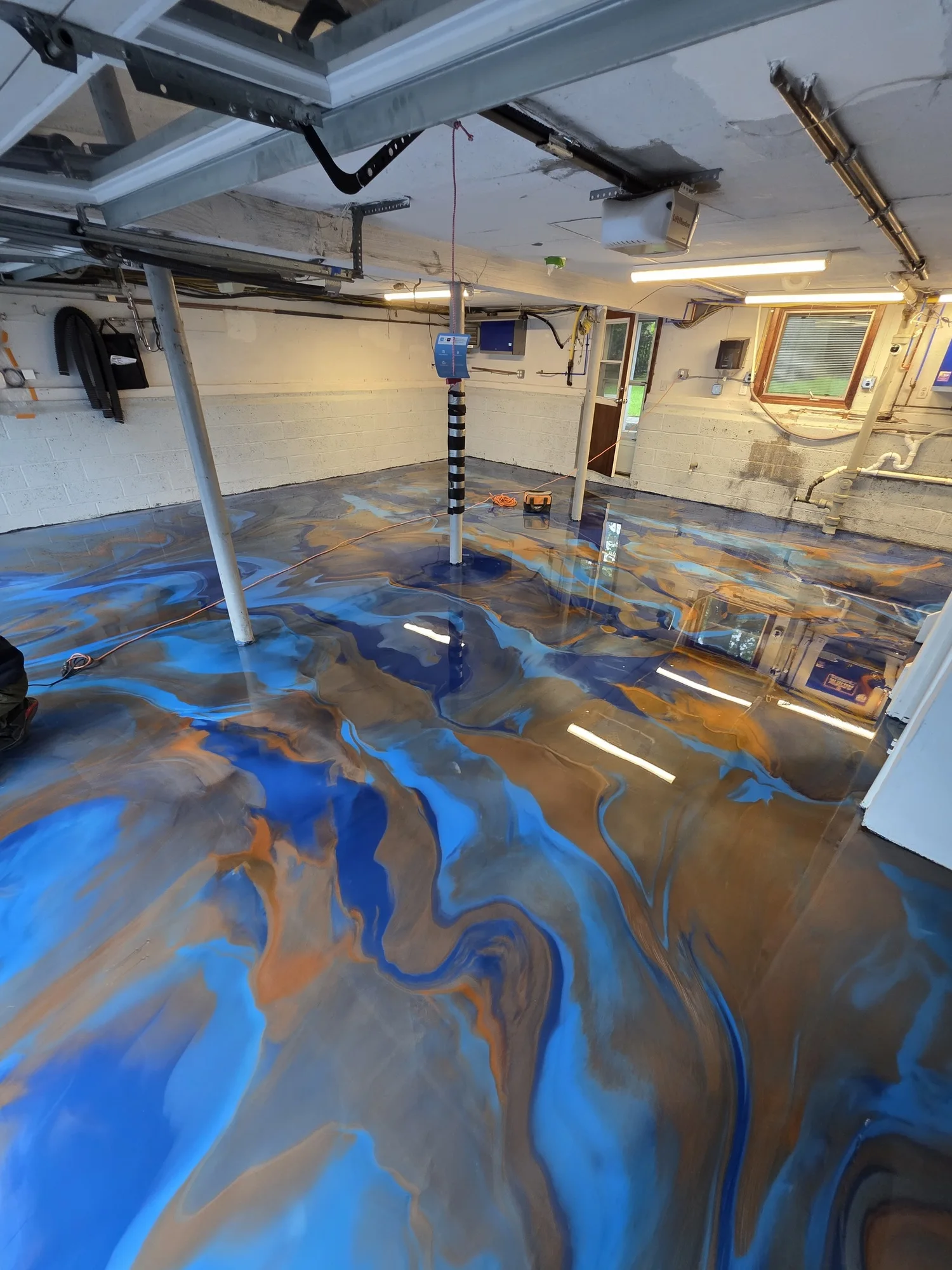
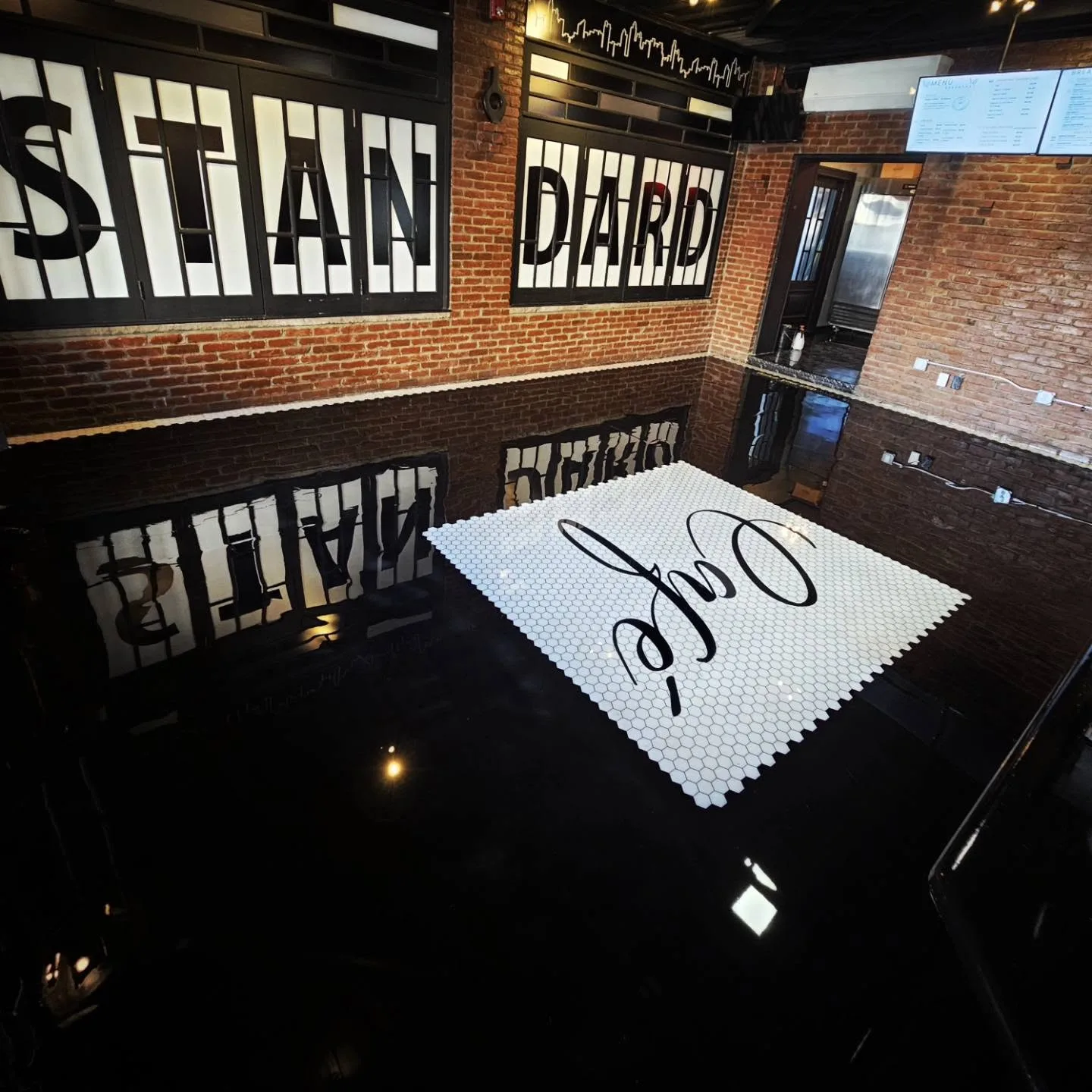
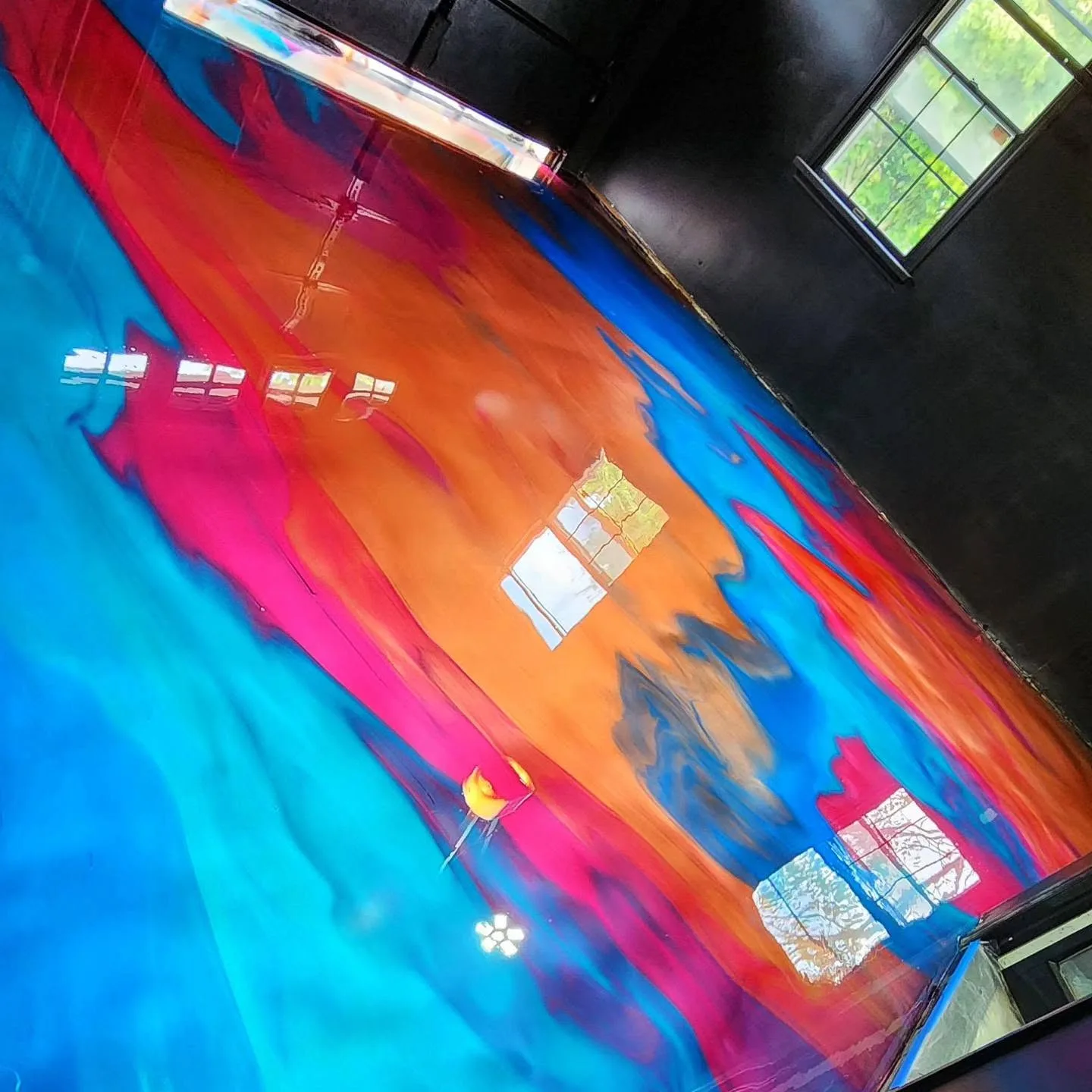
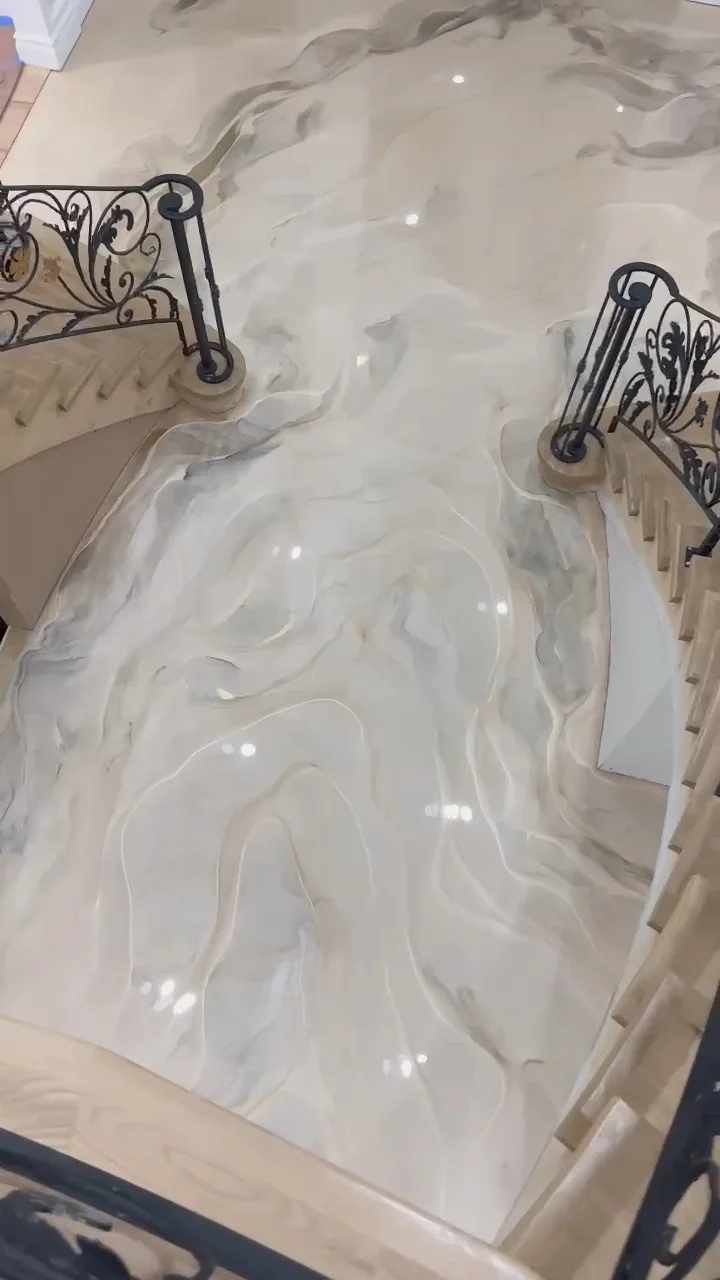
Other jobs from the file, not all of them this service. See the gallery




Questions about satin-finish epoxy flooring
Is satin a good choice for a metallic floor?
For most homes, yes. Satin keeps most of the depth and movement of a metallic pour while softening the reflections that make gloss hard to live with. If the floor is purely for show, under strong lights, gloss brings out more drama. Danny can describe how your specific colors will read under each sheen before you choose.
Does satin show scratches?
Less than gloss does. Fine scratches catch light on a shiny floor and stand out, while satin scatters that light so small marks blend in. Deep gouges from dragged furniture or dropped tools show on any sheen. Felt pads, door mats and lifting heavy items instead of sliding them protect a floor more than the choice of sheen.
Which rooms should skip satin?
Rooms where water stands or grease builds up, like wash bays and commercial kitchen lines, usually do better with a textured quartz or flake system. A display garage meant to shine under lights is better in gloss. For most finished rooms in a house, satin works, which is why it ends up being the answer for so many clients.
Is satin easier to touch up than gloss?
Usually. A small recoat on satin blends into the surrounding floor more easily, because the lower sheen does not show the edge of a repair as sharply as a mirror finish would. Large areas still get a full recoat so the sheen stays even across the whole room.
Does satin look different on light and dark floors?
Yes. On a pale floor satin reads soft and almost matte. On a dark floor the same topcoat shows more sheen, because darker colors make any reflection more visible. To avoid surprises, Danny shows the satin sample over the actual color chosen for the floor before anything is ordered.
Is satin a good pick for a basement playroom?
It is one of the most common choices there. Crumbs, toy scuffs and small footprints fade into a satin finish where they would stand out on gloss, and spills wipe up easily. For a playroom with a lot of barefoot time, Danny may also suggest a warmer color that feels less like a garage.
More from the decorative section
Metallic marble, 3D, pearl and two-tone pours, custom blends and logo inlays. This is the work Danny is known for.
- 3D Epoxy FlooringLayered metallic epoxy worked by hand so the floor looks deep and moving, at its best in rooms with good light and open floor.
- Decorative Flake Epoxy FlooringEpoxy with vinyl chips broadcast into the base coat for a speckled finish that hides dirt in basements, mudrooms and work rooms.
- Color-Flake Floor CoatingsFlake floors where the chip blend and base color are chosen to sit right with your walls, cabinets, siding or brand colors.
- Quartz Aggregate FlooringColored quartz granules sealed in epoxy for a dense, sandy-textured floor suited to kitchens, locker rooms and other rooms that get washed.
- Solid-Color Epoxy FlooringA single pigmented color wall to wall for workshops, gyms and back rooms that need a bright floor where spills and parts show up fast.
From Union County out to the Lehigh Valley, Long Island and Fairfield County, the work is all within about 60 miles of Cranford. See every areaSee the gallery
Danz Handz
Danny Carrero, epoxy specialist
dhepoxy@gmail.com
Cranford, NJ. Mon to Sat, 8 to 6. Hablamos español.
Tell Danny about the floor
Send a few lines about the room and the look you want. Danny will call and set up a time to see it.