
One-Color epoxy for clean, simple floors
One color, wall to wall, with no chips and no metallic swirl is the most practical floor in the lineup for a shop, home gym or storage room. On a bright, plain surface a slow leak or a lost washer shows up right away, and the only real choice left is the color and the sheen of the topcoat.
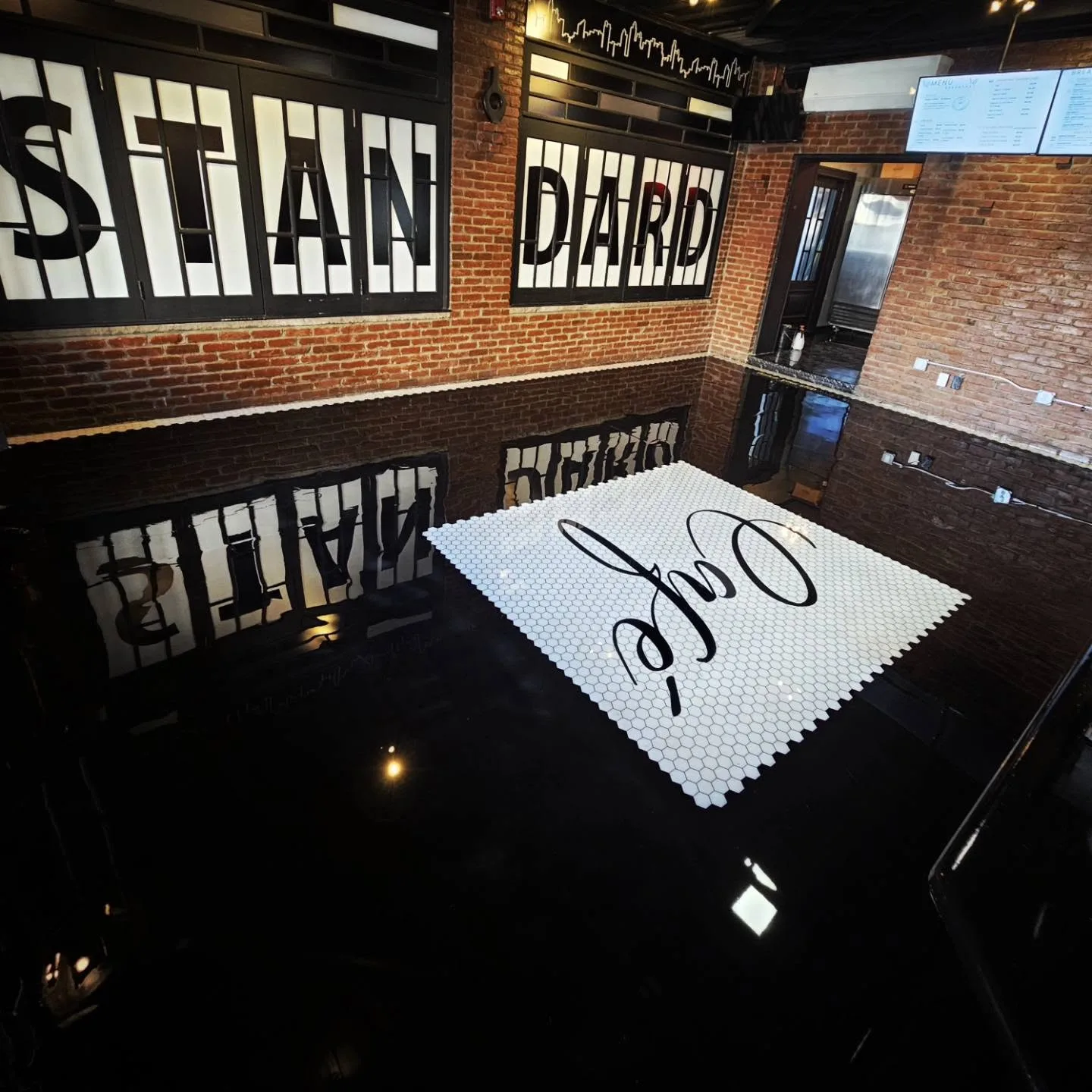

How Danny approaches solid-color epoxy flooring
This is the most direct epoxy floor there is. After the slab is ground and repaired, Danny rolls pigmented epoxy in a single color, usually in more than one coat so the concrete does not shadow through, and finishes with a clear or tinted topcoat in the sheen the client picks. Light grays, beige, whites and soft blues are common. The result is a flat, even color that bounces light around a room, which is a big part of why shop owners like it for spaces where they work with their hands.
Danny looks at how the room is lit and what gets done in it, because the right color for a woodshop is rarely the right color for a gym.
Solid color suits workshops, home gyms, storage rooms, utility rooms and commercial back rooms where a clean, bright floor matters more than a decorative one. It is honest about dirt. Every tire mark, scratch and spill shows on it, which helps when you are hunting for a leak and works against anyone who wants a floor that looks clean between moppings. Darker solids show dust and scratches more than mid grays. In a garage that takes winter salt and hot tires, Danny will often suggest flake or another broadcast system.
Danny looks at how the room is lit and what gets done in it, because the right color for a woodshop is rarely the right color for a gym. On the walk-through he checks the slab for cracks, oil and moisture. Prep matters more on a solid floor than almost any other. Every patch, ridge and grind mark can show through a single flat color, so he grinds evenly, fills and feathers repairs and vacuums thoroughly. The color goes down in coats, then the topcoat. At the end he checks the floor in raking light, which is the light that shows flaws.
On a single-color floor, every patch and grind mark has nowhere to hide.
The order the work goes in
One flat color leaves nowhere to hide, so most of this process goes into making the slab flat and even before any color is rolled out.
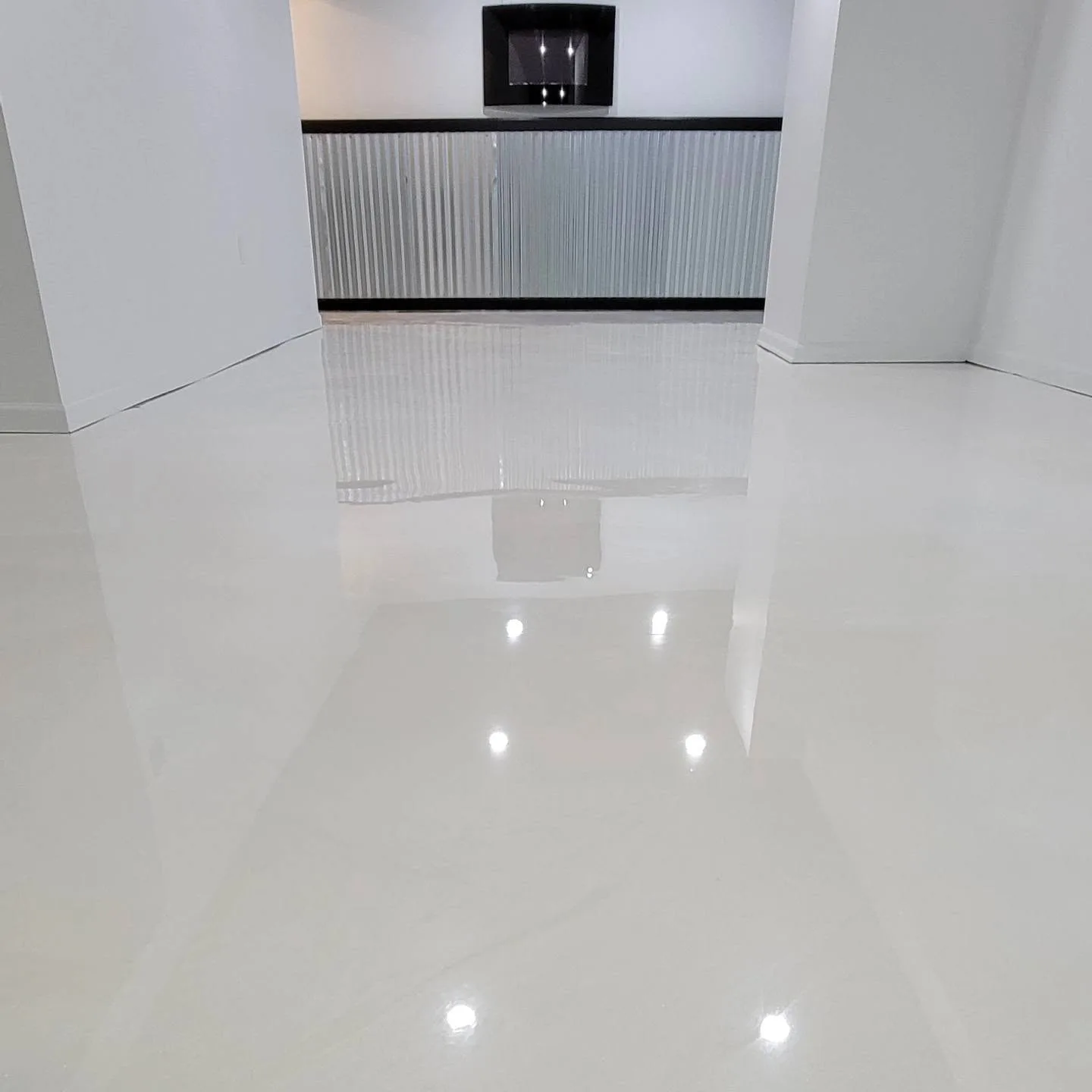

Matching the color to the work
Danny asks what happens in the room: woodworking, lifting, storage, light assembly. A woodshop may want a shade that shows a dropped screw, while a gym may want one that hides chalk. The color gets picked in the room’s own light before anything else happens.

Grinding without bands
On a single color, a heavier grind in one patch can show as a band through the finish. Danny keeps his passes even across the open floor and along the walls, so the whole surface takes the color the same way and no lane stands out under the lights.

Feathering every repair
Cracks, holes and old patches are filled and ground, then feathered until their edges disappear. Danny runs a hand across each one and checks it with a light held low, because a ridge too small to feel can still throw a shadow through a solid color.
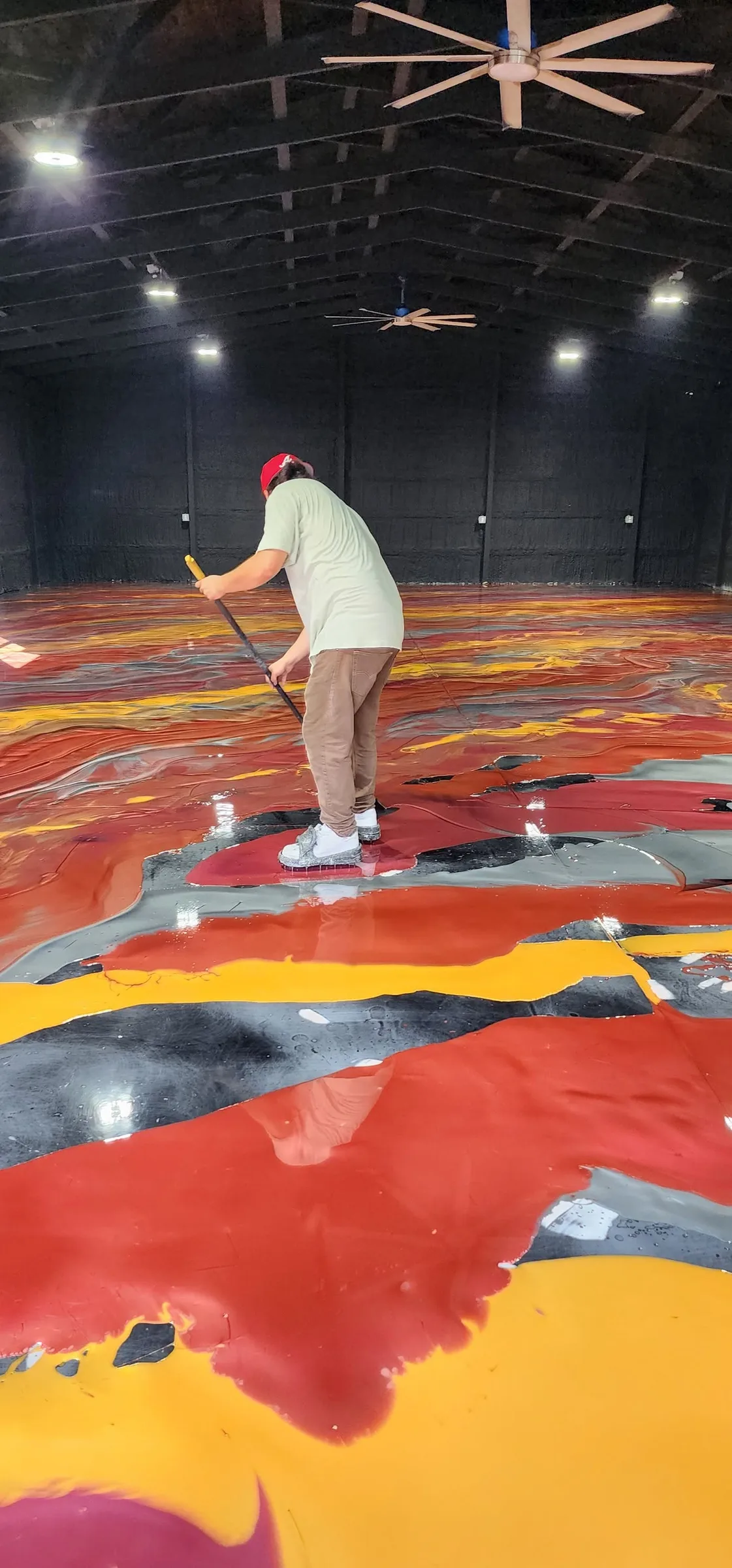
Rolling full coats of color
The pigmented epoxy goes on in coats until no concrete shadows through. If the floor gets lines for parking, a lifting area or separate work zones, those are taped and rolled in a second color once the main coat is ready for it.
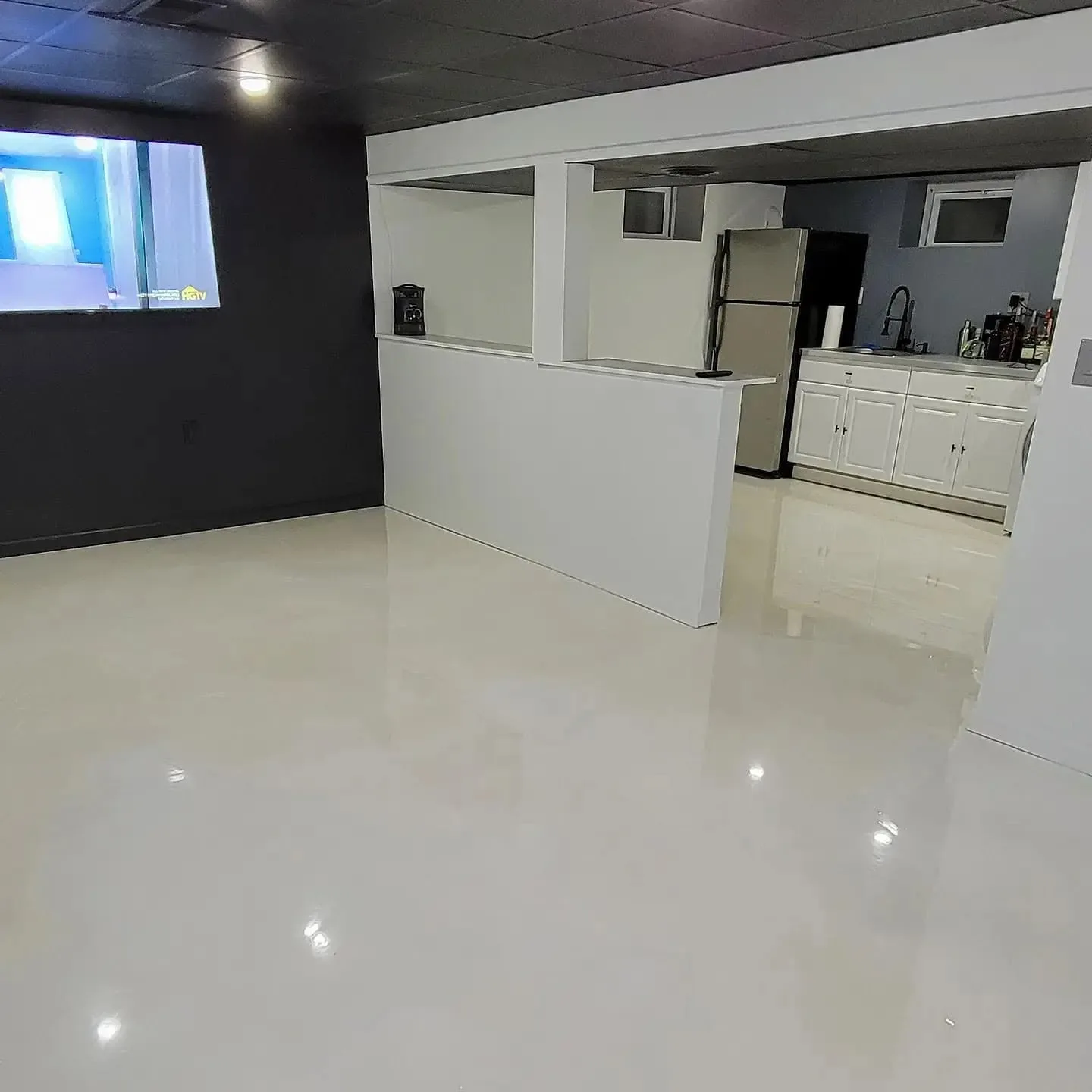
A low-light inspection
After the topcoat, Danny lays a light on the floor and looks across it, which shows roller marks, patches and specks that overhead light hides. The client looks the same way, then again with the shop lights switched on, before the room is handed back.
More of Danny’s floors
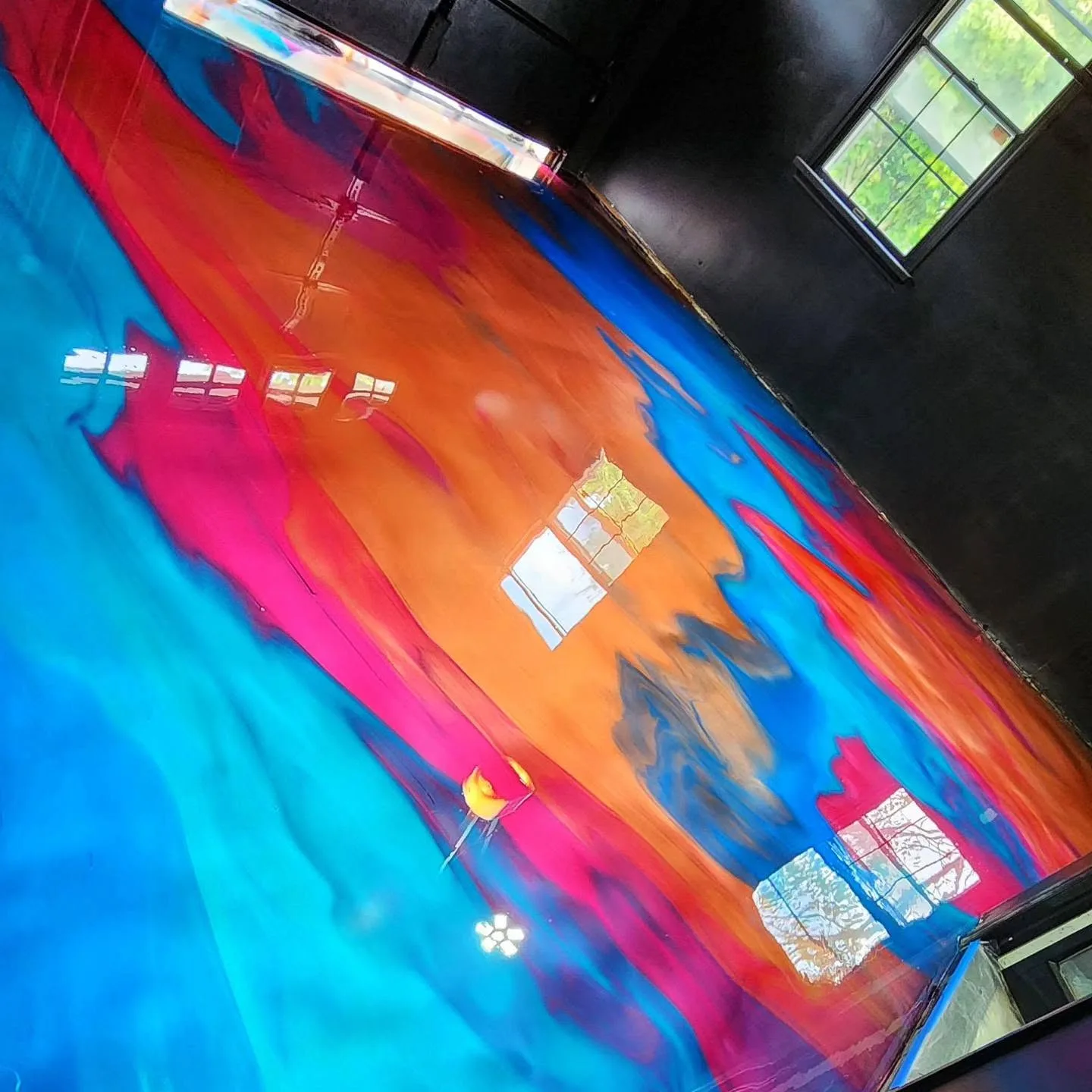
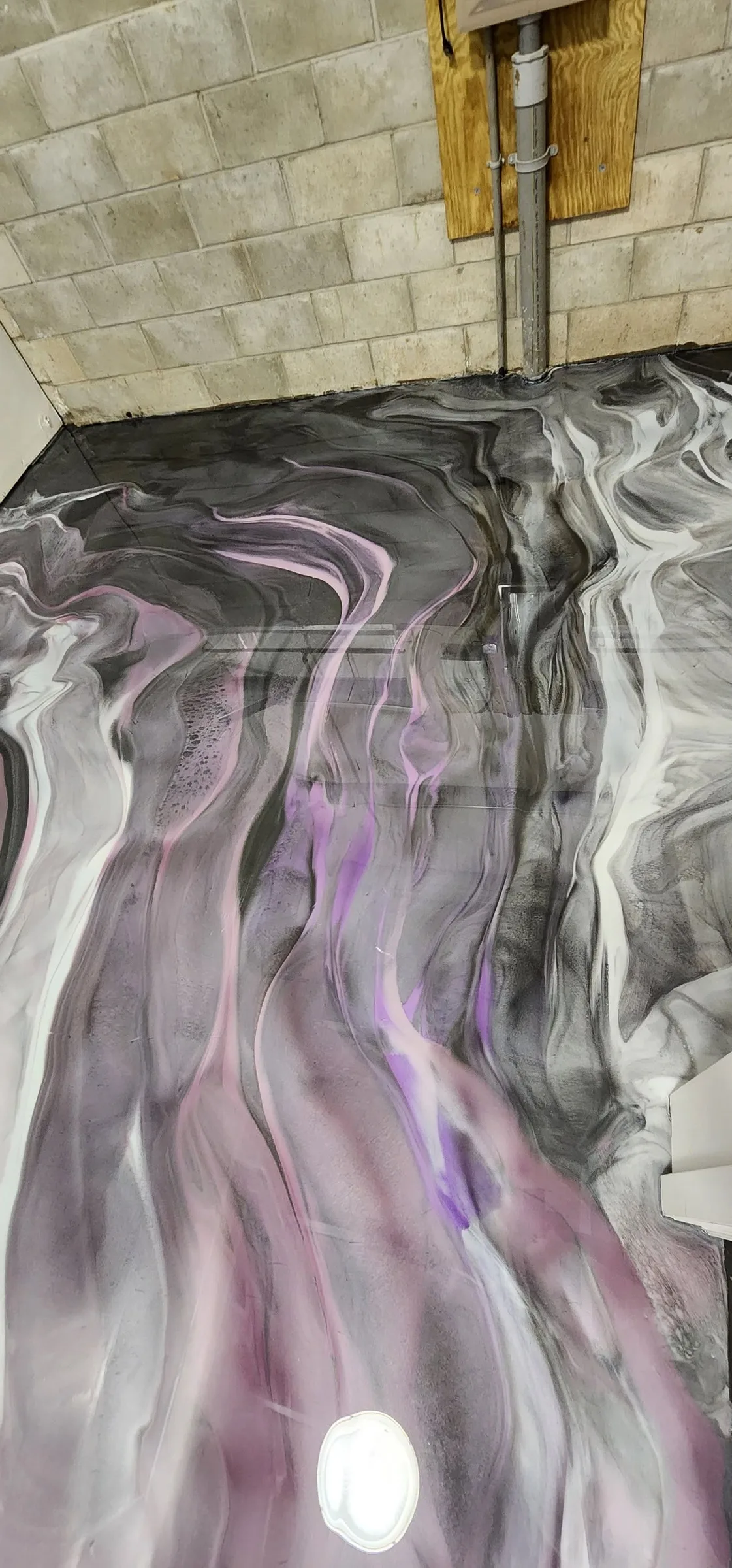
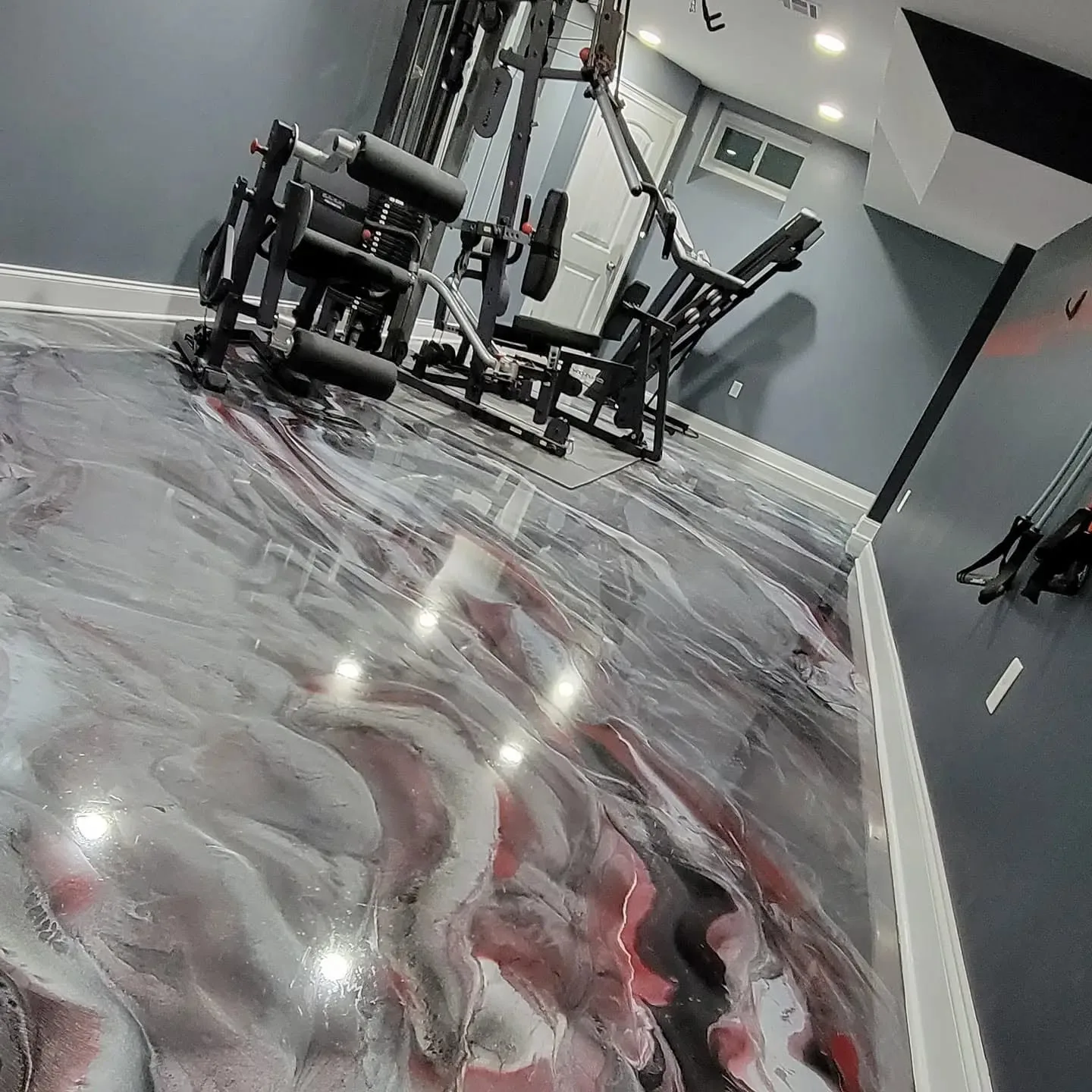
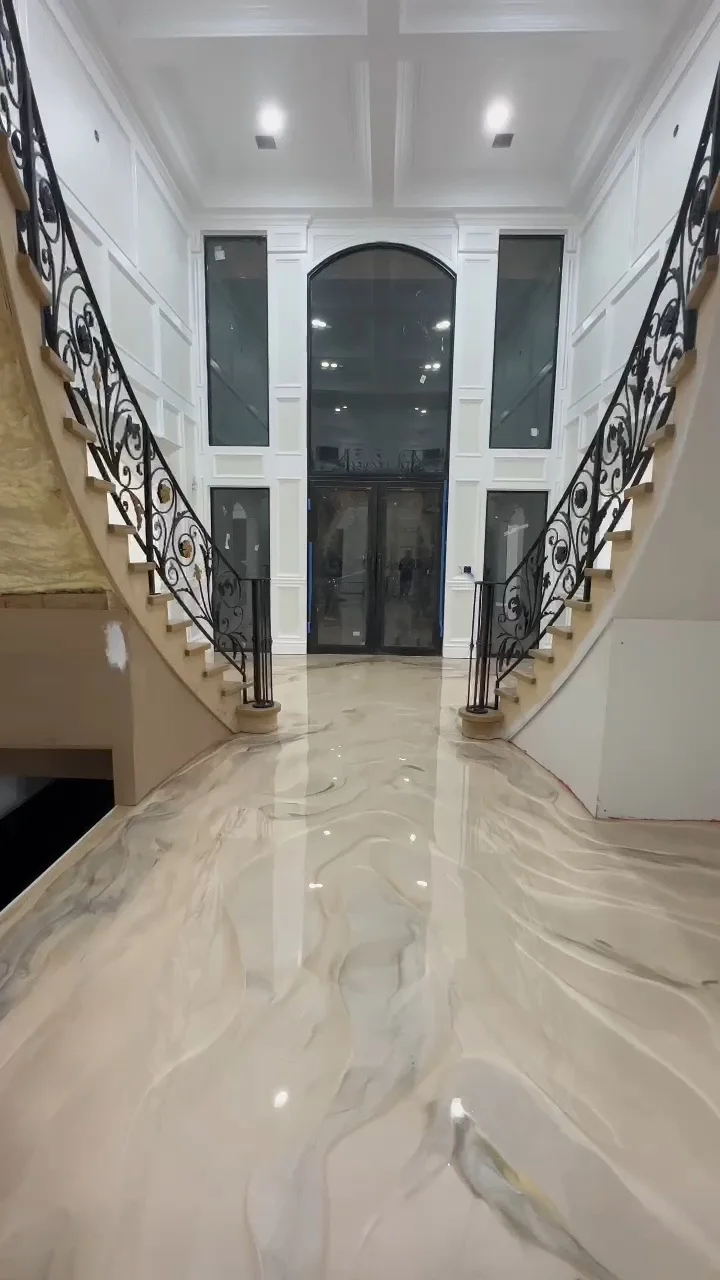
Other jobs from the file, not all of them this service. See the gallery



Questions about solid-color epoxy flooring
Can I add flake to a solid floor later?
Not as a simple add-on. Flake has to go into a wet base coat, so adding it later means sanding the floor and building a new base and broadcast over it. If you are torn, a light partial broadcast at the start gives you mostly solid color with a little speckle to help hide dust and scuffs.
Why did the paint on my floor peel, and will epoxy do the same?
Most peeling garage and basement paint went on over concrete that was never ground, so it had nothing to grab. A ground slab gives the epoxy an open surface to bond into. Danny also checks for moisture and oil, the other common reasons coatings let go, before he recommends any coating for the room.
Which sheen should I pick for a solid floor?
Gloss bounces the most light and is easiest to wipe, though it shows scratches and dust. Satin softens reflections and hides wear better. Matte looks modern and quiet and needs the right topcoat to stay easy to clean. In a shop most people go with gloss for the light. In a home gym, satin is a common middle ground.
Will a solid color brighten a dark basement or shop?
Usually, yes. Light grays, soft whites and pale tans bounce back more of the room’s light than bare concrete does, so the space reads brighter with the same fixtures. Gloss adds to the effect. Very dark solids do the opposite, so in a dim room Danny tends to steer toward a lighter shade.
How is a scratch on a solid color floor fixed?
A scratch in the topcoat can usually be sanded and recoated. A gouge that goes through the color needs the color mixed again and blended in, which is easier on mid tones than on bright white or near black. Danny keeps a note of the color used so a later touch-up starts from the right mix.
Do tire marks come off a solid color floor?
Most scuffs lift with a cleaner and a soft brush. Marks from hot tires can be harder to remove on light colors, which is one reason Danny often points garage owners toward mid grays or a broadcast system. In a shop or gym where no cars park, tire marks are rarely a concern at all.
Close to this one
Metallic marble, 3D, pearl and two-tone pours, custom blends and logo inlays. This is the work Danny is known for.
- Pearl-Effect Metallic FlooringEpoxy with pearlescent pigment for a soft shimmer that moves as you walk, suited to pale, light-filled bedrooms, baths and salons.
- Two-Tone Epoxy FlooringA floor split into two colors, as borders, walkways or separate zones, laid out around how a garage, shop or basement actually gets used.
- Multi-Color Epoxy FlooringThree or more epoxy colors poured and worked together into swirls or abstract fields, for rooms where the floor is the art.
- Custom Logo Floor InlaysBusiness logos, team marks or initials built into an epoxy floor and sealed under the topcoat, sized on the slab before anything is permanent.
- Decorative Concrete Coating SystemsThe layered build behind every coated floor, prep, primer, color or broadcast and topcoat, chosen to match the room and the look.
Danny works out of Cranford, NJ and covers about 60 miles: North and Central Jersey, the city and Long Island, the Hudson Valley counties, Fairfield County and eastern Pennsylvania. See every areaSee the gallery
Danz Handz
Danny Carrero, epoxy specialist
dhepoxy@gmail.com
Cranford, NJ. Mon to Sat, 8 to 6. Hablamos español.
Book a walkthrough
Describe the floor and what you have in mind. Danny calls back and comes out to look at it.