
Laundry room floors that stay put under water and machines
Find the spots where water still sits after a busy day. A coating follows the shape of the slab it goes on, so Danny checks those low spots and the drain pitch before he talks about flake colors. The other early question is which washers are bolted down and who services them.

Commercial Laundry Flooring, start to finish
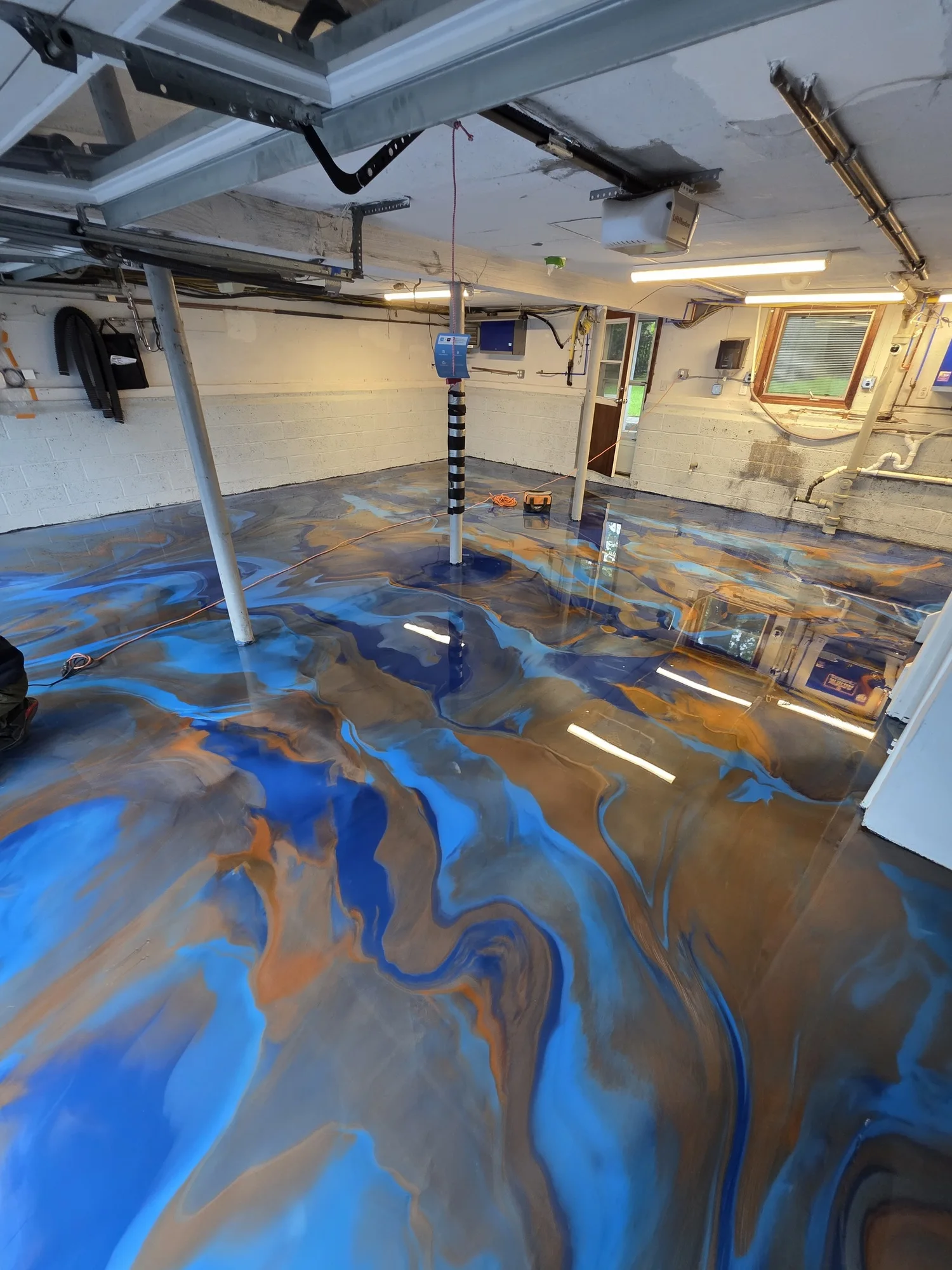
The coating is a resin system over the slab that seals the concrete so water and detergent stay on top where they can be squeegeed or mopped toward the drain. Around machine bases, it forms one surface without grout joints for soap scum to build in. Flake in mid tones is the practical choice, since it hides water spots and lint. A light texture in the topcoat helps on wet floors, and the coating can turn up the wall base so mop water does not reach the drywall.
A light texture in the topcoat helps on wet floors, and the coating can turn up the wall base so mop water does not reach the drywall.
Machines are the limit to plan for. Washers bolted to the floor either stay and get poured around, or come up so the coating runs underneath and they get reset after, which is the owner’s and the service tech’s call. The vibration of big machines can crack the concrete under them, and a coating will follow those cracks unless the slab is repaired. A coating also follows the slab’s existing shape, so a floor that pools away from the drain will still pool afterward.
Machine bases and drains get the closest look on the first visit, along with the spots where water sits after a busy day. Danny asks which machines can be moved, which are bolted, and who services them. The floor gets diamond ground to clean concrete, soap residue and all, and cracks around the machine pads get repaired. Low spots that hold water get filled where they can be. The pour is scheduled around the store’s hours, sometimes in sections so some machines stay in use. A final walk checks the edges at the drains and machine bases before customers come back.
A laundry floor that holds water in its low spots will hold it after the coating, too.
From bare slab to finished floor
Laundry floors take standing water and the constant shaking of large machines. These stages move from the machines outward, ending with the service tech putting everything back on line.

Watching the floor during a busy hour
Danny visits when the machines are running full, to see where water drips from doors and hoses, where customers set wet baskets, and how far lint and detergent spread. A quiet floor hides most of that.

Mapping pads and vibration cracks
Large washers shake their pads and the slab around them, and cracks often radiate out from the bolts. Each crack is marked, along with chipped pad edges, and Danny sorts which can be filled and which need to be cut back.

Grinding off soap film and old paint
Detergent residue and old floor paint are ground away until the concrete is clean, since soap left in the pores keeps a coating from bonding. Pad edges are rebuilt square, and cracks are repaired with a material chosen for the movement around the machines.

Textured aisles, smoother folding area
The wet aisles in front of the washers get a mid-tone flake and a textured topcoat. The folding and seating area can take a smoother finish that is easier to wipe, and the coating is turned up the base of the walls where mops reach.

Reconnecting with the service tech
After the cure, the service technician sets moved machines back on their pads and reconnects them. Danny comes back to look at the edges around each pad and the drain once the machines have run a cycle.
More of Danny’s floors
Other jobs from the file, not all of them this service. See the gallery






Questions about commercial laundry flooring
Do the washers have to come out?
Not always. Machines can stay on their pads and be poured around with a sealed edge, or they can be moved so the floor runs underneath and set back afterward. Moving them gives a cleaner result under the machines but needs your service tech. Danny walks through both with you on the first visit.
Can you fix a floor where water pools?
Small low spots can be filled during repairs so water does not sit in them. A coating cannot change the overall pitch of the slab, though, so a floor that slopes away from the drain needs a bigger fix before coating. Danny checks where water collects during the walk-through and tells you which kind of problem you have.
What is the best way to clean it?
Squeegee or mop toward the drain with a neutral cleaner and rinse with clean water, since leftover detergent leaves a film. Lint and dust sweep off easily with no grout to trap them. Larger laundries can run a floor scrubber with soft pads. Danny goes over care once the floor is cured so staff know what to use.
Will the floor crack again around the big washers?
Cracks caused by machine vibration can come back if the cause is still there, such as loose anchor bolts or a worn mount. Repairing the crack and the pad edge helps, and the machine’s mounting should be checked by the service tech. Danny points out which cracks look like they will keep moving.
Can an always-open laundromat be done without closing?
Not fully. The usual approach is to close a bank of machines and its aisle at a time, with tape and signs routing customers to the open side. Grinding and pouring are timed for the slowest hours. Danny looks at your traffic by time of day and lays out the sections with you.
Does heat from the dryers affect the coating?
The floor in front of a dryer row stays warm, and Danny checks the product data for how the chosen topcoat handles that. Lint is often the bigger issue, since it builds up under and behind dryers and holds moisture, so keeping that area swept protects the floor. He also asks about presses or ironers that put out more heat.
More from the commercial section
Salons, barbershops, showrooms, restaurants, offices, gyms and clinics, worked around your hours.
- Commercial Storage Room FlooringSealed storage room and stockroom floors that stop concrete dust, brighten the room and roll easily under carts and hand trucks.
- Apartment Common-Area Floor CoatingsCoated floors for apartment laundry rooms, mail rooms, storage and trash rooms, scheduled room by room so residents keep access.
- Property Management Floor Coating ServicesFloor coating for property managers, with one contact walking every building and consistent colors across laundry rooms, storage and lobbies.
- Tenant Improvement FlooringCoated concrete floors for tenant build-outs, timed into the construction schedule between the messy trades and move-in day.
- Commercial Renovation Floor CoatingsCoated floors for commercial renovations, starting with removing the old flooring and adhesive and repairing whatever the slab reveals.
The shop is in Cranford. Most jobs are within an hour or so, across four states. See every areaSee the gallery
Danz Handz
Danny Carrero, epoxy specialist
dhepoxy@gmail.com
Cranford, NJ. Mon to Sat, 8 to 6. Hablamos español.
Book a walkthrough
Send a few lines about the room and the look you want. Danny will call and set up a time to see it.