
Floor coatings for a business remodel
Remodeling a business that stays open means fitting the floor around customers, staff and a reopening date. Worn flooring or a tired coating comes out, a new coated floor goes in, and Danny plans the sequence with the owner and contractor to keep the downtime as short as the job allows.


The short version of commercial remodeling floor coatings
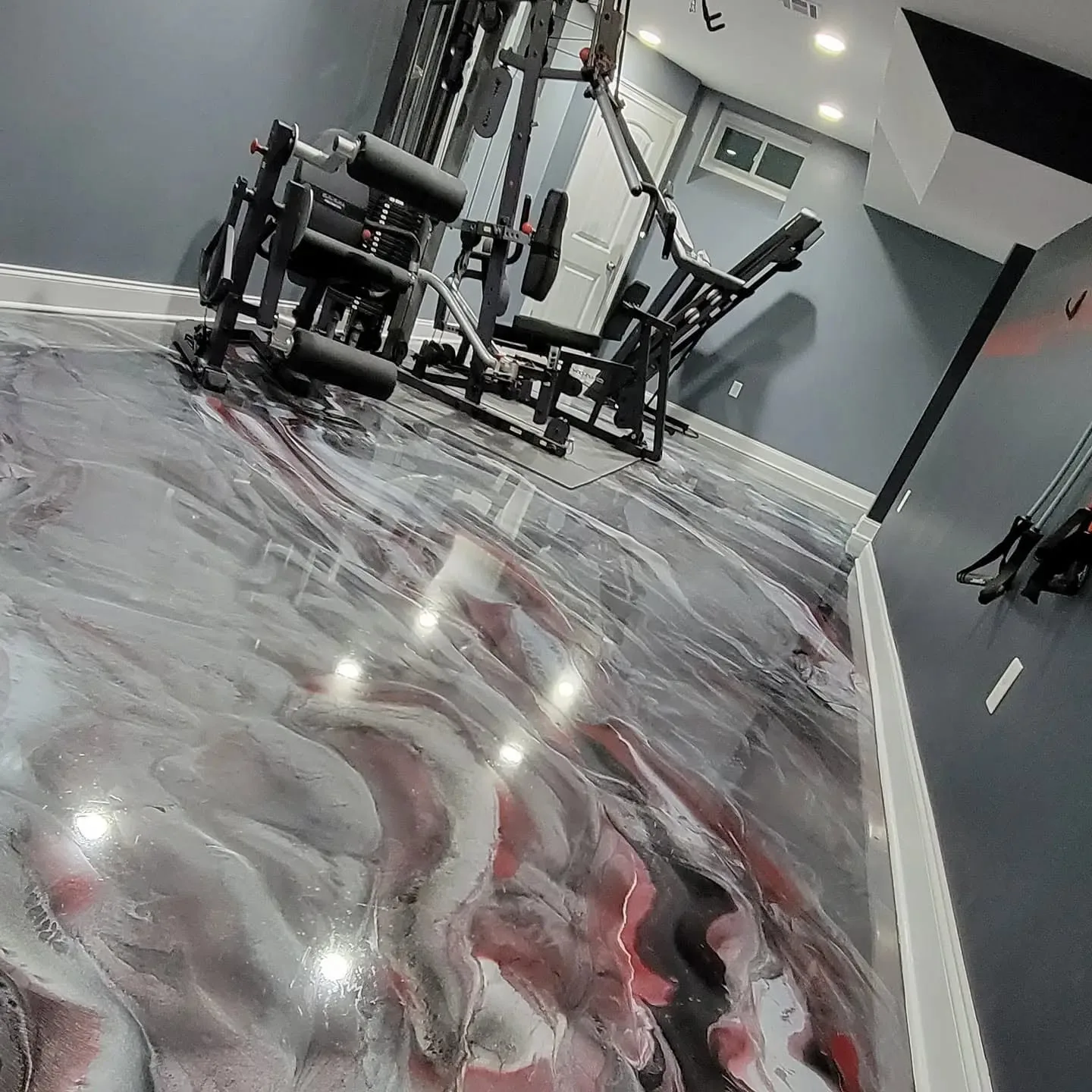
A commercial remodeling floor is a new coating system installed in a space that is already in use, usually after the old flooring or coating is taken out. Danny grinds the slab, repairs the damage from removed fixtures and years of traffic, and pours a system matched to the business. Offices and studios often go with solid colors. Showrooms and salons sometimes want a metallic floor that gets noticed. Service counters, back rooms and hallways may each get a different finish within one remodel.
In each area he diamond grinds the slab, repairs anchor holes and worn spots, and pours.
It fits remodels where the business can close off part of the floor or close for a short stretch. It fits poorly when the plan is to keep every room open throughout, since grinding and curing need the area empty. Remodels in occupied buildings also bring neighbors, shared walls and building rules about noise and hours. The owner or property manager sorts out those rules before the job is scheduled. Plumbing, electrical and fixture work stays with those trades, and Danny handles the floor.
Danny walks the business with the owner and the remodeling contractor while it is still running, so he can see how customers and staff move through it. That shows him which areas can be closed and when. He plans the job in phases if needed. In each area he diamond grinds the slab, repairs anchor holes and worn spots, and pours. Each phase stays closed through its cure before it reopens. At the final walk he goes through the space with the owner and explains cleaning routines that suit both the new floor and the way the business runs.
A remodel floor gets measured in how many days the doors stay closed.
From bare slab to finished floor
Remodeling a floor in a business that keeps serving customers takes planning around open hours. These stages run from watching a normal day to reopening each finished area.


Watching a business day
Danny visits during open hours to see how customers come in, where staff work and which areas could close without stopping sales. That visit tells him more about how to phase the job than the floor plan alone ever does.

Choosing nights, weekends or a closure
With the owner, he weighs after-hours work in phases against a short full closure. Grinding noise, odor during the pour and how long each area must stay empty all go into that call, along with any hours the building allows.

Sealing off the work from customers
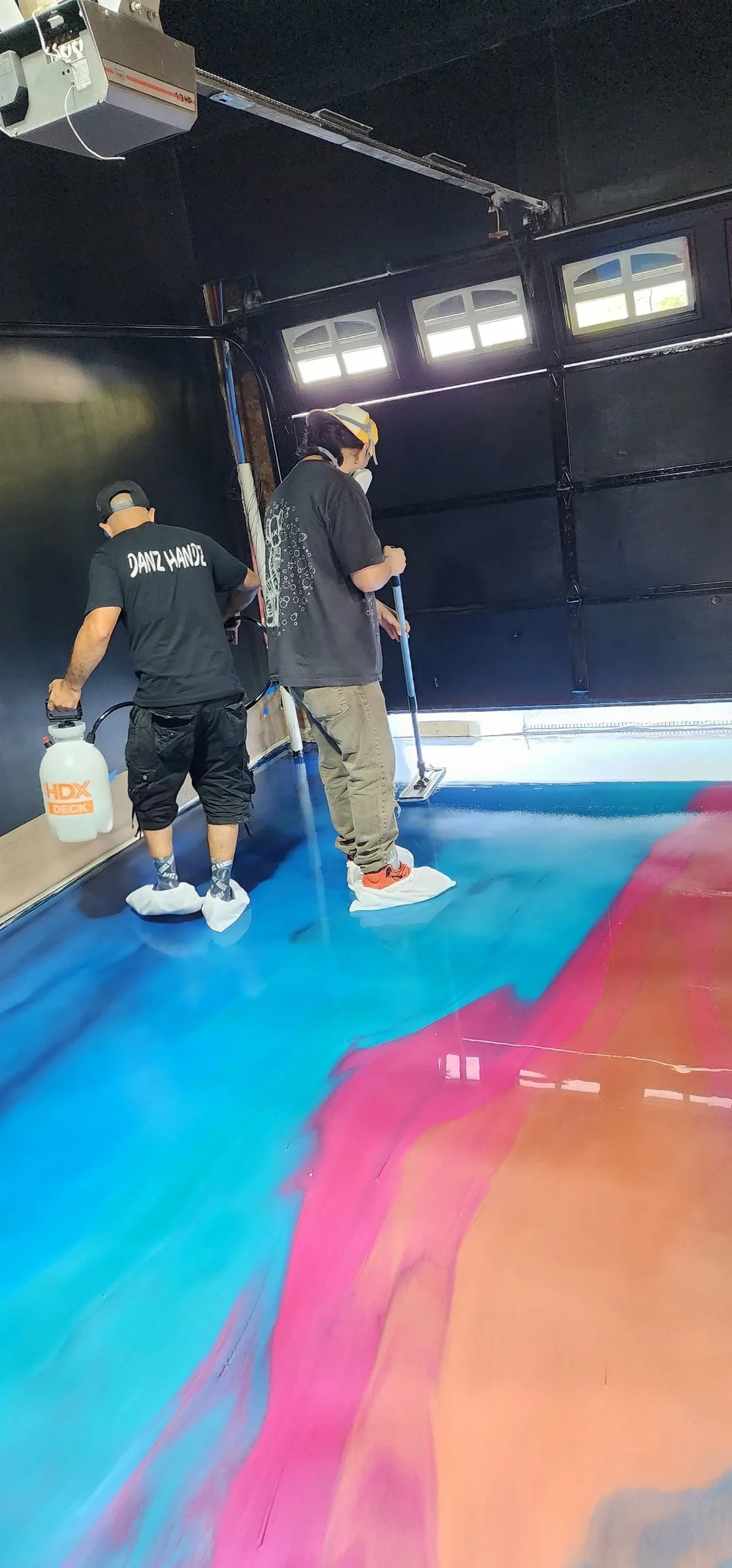
Each phase is walled off with plastic and signs, and the customer path is rerouted around it. Grinders run with vacuums, and air from the work area is pushed outside where possible so odor and dust stay away from the open part of the business.
Pulling the old floor in each phase
In each phase the remodeling crew clears displays and pulls the old vinyl, tile or carpet, then Danny grinds off what remains and repairs the anchor holes and worn paths underneath. The coating goes down only after that area is clean and closed.

Reopening each phase to staff
When a phase has cured, Danny walks it with the owner or manager before displays return. Staff are told which mops and cleaners suit the new floor, and the barrier then moves to the next area on the plan.
More of Danny’s floors
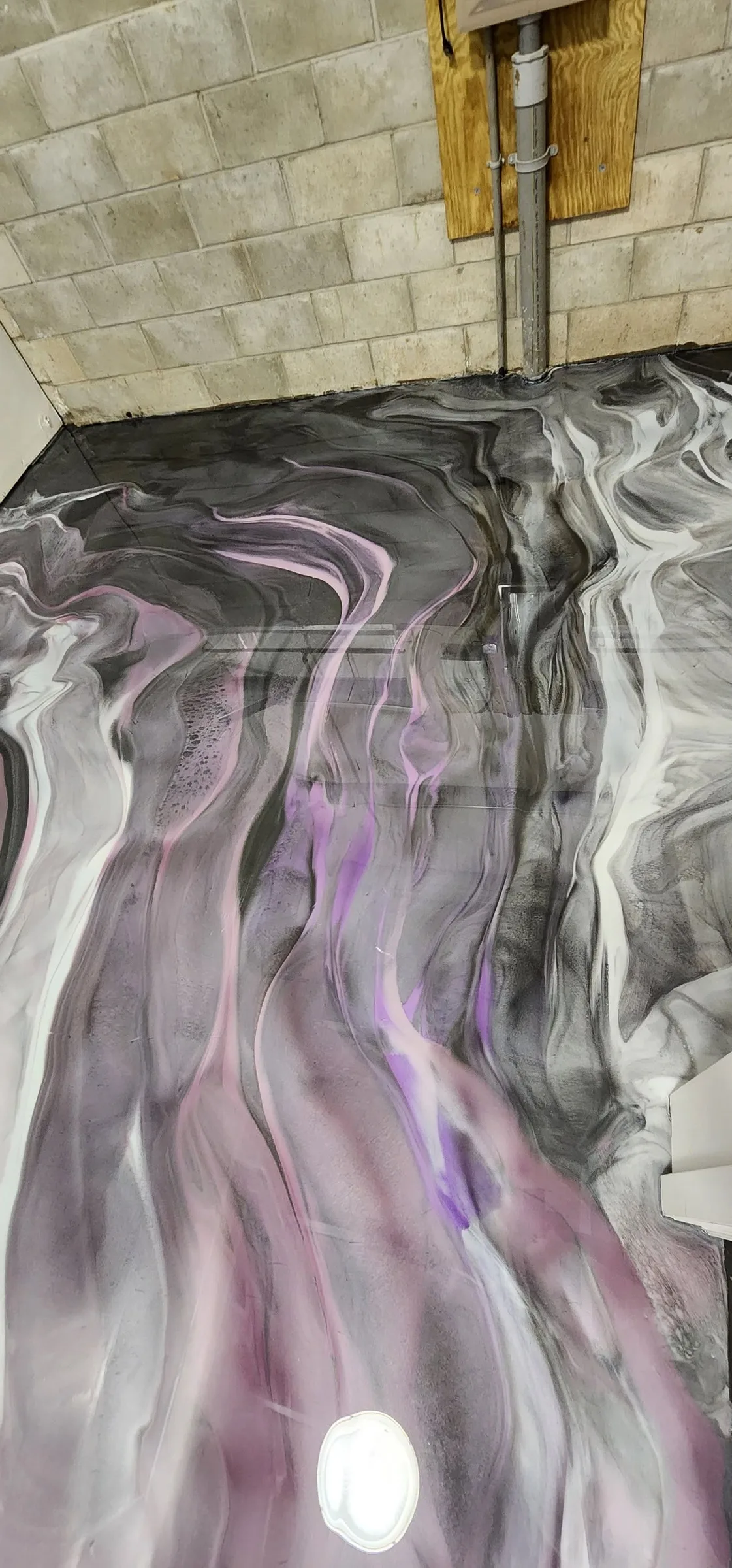
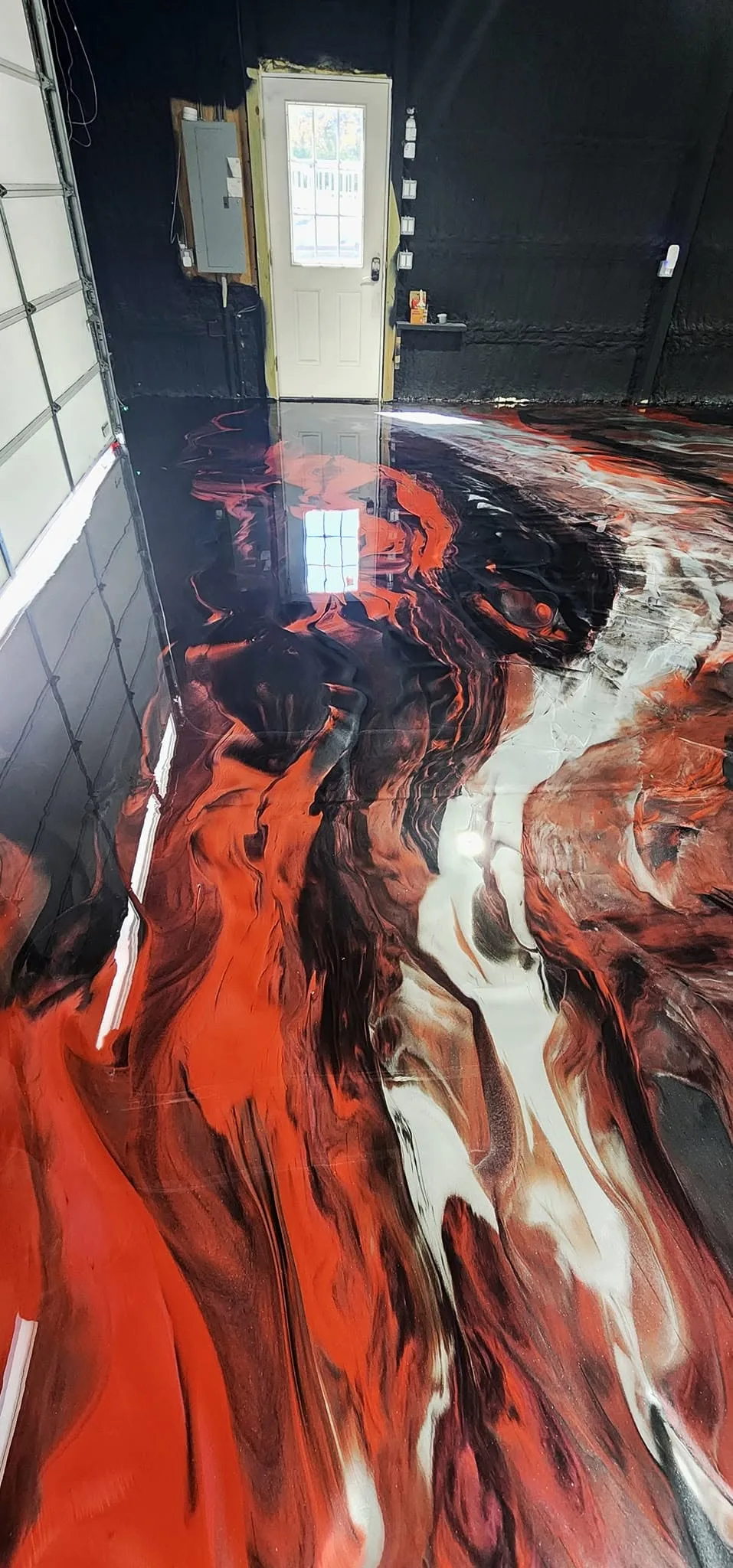
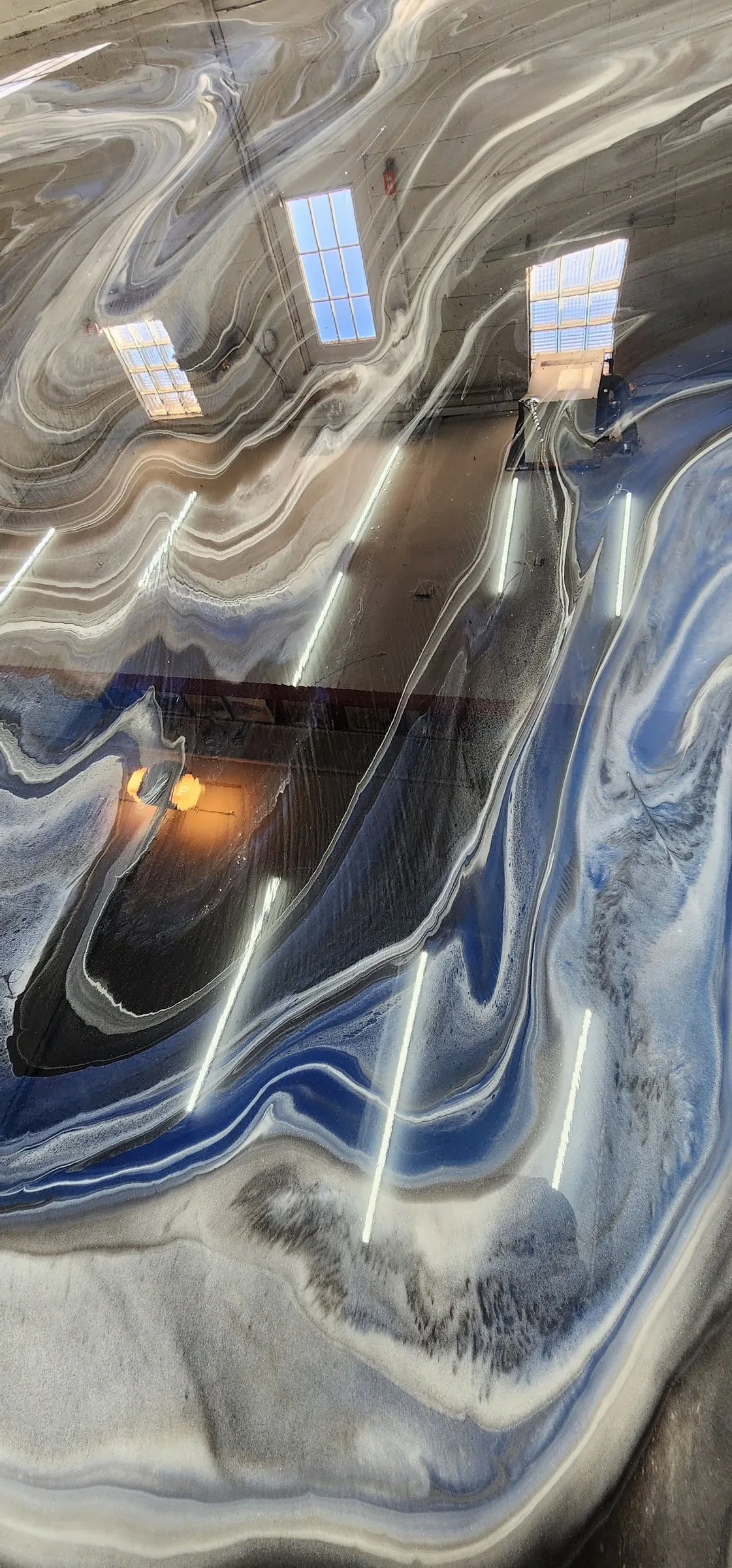
Other jobs from the file, not all of them this service. See the gallery




Questions about commercial remodeling floor coatings
Can you coat our floor without closing the business?
Sometimes. If the space can be split into areas, Danny coats one at a time while the business uses the rest. Each area has to stay empty through its cure. Small spaces with one main room usually need a short closure instead. Danny lays out both options on the walk so the owner can choose.
Can you replace our old vinyl or tile with a coated floor?
Yes. The old flooring gets pulled first, usually by the remodeling crew. Danny then grinds off the adhesive and mortar, repairs the slab and pours the new system. Taking the floor down to concrete is what lets the coating bond properly across the whole space, including the spots where old fixtures stood.
What kind of coating suits a customer-facing space?
That depends on the business and the look. Metallic floors draw attention in showrooms and salons. Solid colors look clean and calm in offices and studios. Flake hides foot traffic in shops with a lot of coming and going. Danny talks through the options with the owner after seeing the space and how customers use it.
Will the smell bother customers during the work?
Coatings give off some odor while they cure, and how much depends on the product. In a business that stays open, Danny plans the pour for after hours where possible, ventilates the work area to the outside and keeps it sealed from customers. Some owners choose a lower-odor system for that reason, which he can talk through.
Can you work after we close each day?
Often, yes. Grinding and pouring can run in the evening or overnight so the business opens on time the next morning, as long as the curing area stays closed. Building rules on noise and hours still apply. Danny works out with the owner and the property manager which nights suit each phase.
How do we let customers know about the work?
A sign at the entrance and a note on the website or social pages is usually enough for a short project. Inside, the closed areas are marked and the customer path is taped out. Danny gives the owner the dates for each phase early so staff can answer questions and regulars are not caught off guard.
More from the construction section
New builds, renovations and tenant fit-outs, scheduled once the slab has cured and the other trades are out.
- Garage Renovation Floor CoatingsCoatings for older garages being redone, with old paint, oil and salt damage ground out before a new floor is poured.
- Basement Renovation Epoxy FlooringEpoxy floors poured on a dry basement slab as the finished surface, from metallic rec rooms to bright solid color laundry and storage areas.
- Warehouse Floor RenovationWorn warehouse slabs ground down, joints and spalls repaired, and recoated in sections while stock and trucks keep moving.
- Manufacturing Facility Floor UpgradesResin floor upgrades for production areas, timed to a shutdown or retooling so the coating goes down while the machines are out.
- Retail Fit-Out FlooringMetallic, solid color or flake floors for stores and showrooms, chosen to suit the brand and the lighting before the fixtures go in.
From Union County out to the Lehigh Valley, Long Island and Fairfield County, the work is all within about 60 miles of Cranford. See every areaSee the gallery
Danz Handz
Danny Carrero, epoxy specialist
dhepoxy@gmail.com
Cranford, NJ. Mon to Sat, 8 to 6. Hablamos español.
Start with a visit
Send a few lines about the room and the look you want. Danny will call and set up a time to see it.