
Sealing bare concrete so it stops soaking up everything
Some owners like their slab as concrete and only want it easier to live with. A sealer keeps water, oil, coffee and dirt from soaking in and cuts down the fine dust an unsealed floor sheds, without putting a colored coating over it. Danny picks the sealer after seeing how the room gets used.


Concrete Sealing, start to finish
Concrete sealing is a clear treatment applied to a prepared slab. Depending on the product, it either soaks into the pores of the concrete or forms a thin clear film on top, and both slow down how fast liquids and stains get in. The slab keeps its own look, gray and textured, with any marks and character it already has. Some sealers darken the concrete slightly or give it a low sheen, so the look is part of choosing which one to use.
The slab keeps its own look, gray and textured, with any marks and character it already has.
It fits basements, utility rooms, storage areas and other slabs where the concrete look is fine and the goal is easier cleaning and less dust. It is a lighter layer than an epoxy coating, so it does not hide cracks, stains or patching, and it wears faster under heavy traffic. Sealers need reapplying over time. Outdoor slabs need a product made for weather and freeze cycles, and Danny will tell you if a sealer is the right call or if the space really wants a coating.
Danny walks the slab and looks at what is already on it: old sealer, paint spots, oil stains, cracks and how much dust comes off when he runs a hand across it. He asks what the space is used for and what you want it to look like after. The surface is then cleaned and prepared, ground lightly where needed so the sealer can get into the concrete, and cracks and chips are repaired. The sealer goes on evenly across the floor and is left to cure. On the final walk, he checks the finish with you, including how water beads or soaks on the sealed surface.
Sealed concrete still looks like concrete, and it cleans up a lot easier.
The order the work goes in
Sealing a bare slab comes down to choosing the right product for the room, so these stages lead up to that choice and then apply it evenly.
The water-drop test
Danny sprinkles water in a few spots across the slab and watches. Water that darkens the concrete quickly means an open, thirsty surface ready for a sealer. Water that beads up means something is already on it, an old sealer or a curing compound, which has to be dealt with first.
Choosing film or penetrating
With the owner, he weighs the two main types: a film sealer that adds a little sheen and sits on top, and a penetrating one that soaks in and leaves the slab looking raw. Room use, foot traffic and how the owner wants the floor to look decide it.
Scrubbing and opening the surface
The slab is scrubbed to remove dirt and old spills, and any areas with paint drips, adhesive or a previous sealer are ground lightly to open the surface. Cracks and chipped spots are filled so the sealed floor does not trap debris in them.
Thin, even application
The sealer goes on in thin coats with a sprayer, roller or applicator pad, worked in the direction that best hides lap marks on that slab. Puddles are spread out as they form, since thick spots of film sealer can turn cloudy or stay tacky.
Bead check after cure
After the sealer has cured, Danny sprinkles water on the same spots as the first test so the owner can see how it now beads or soaks in more slowly. He explains how to tell when the sealer is wearing and ready for another coat.
More of Danny’s floors
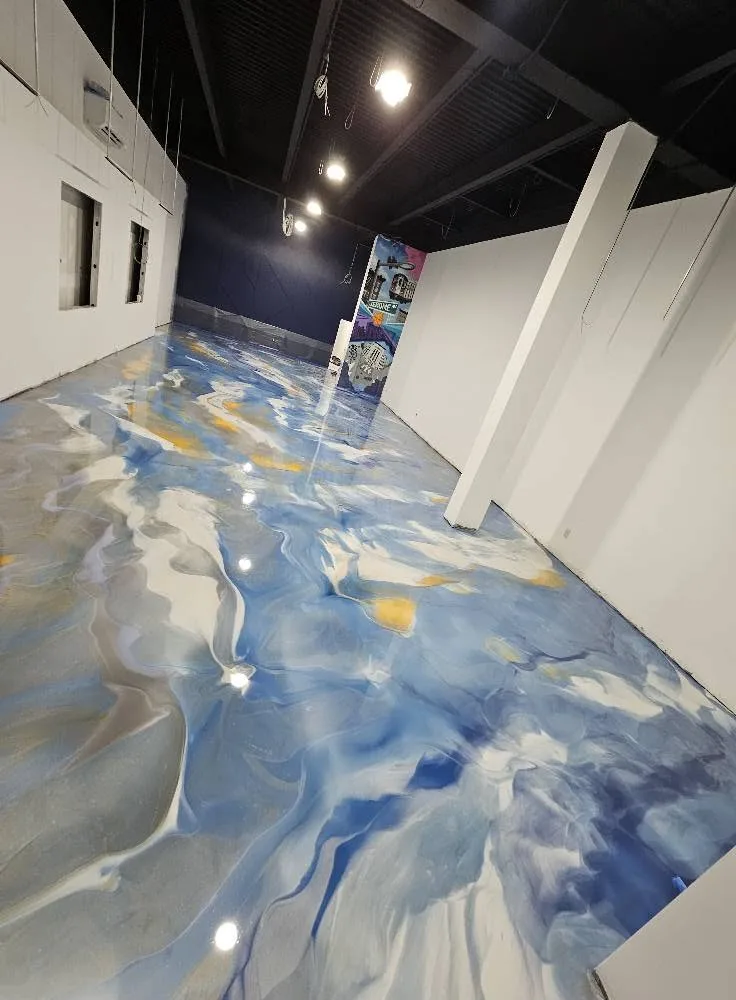
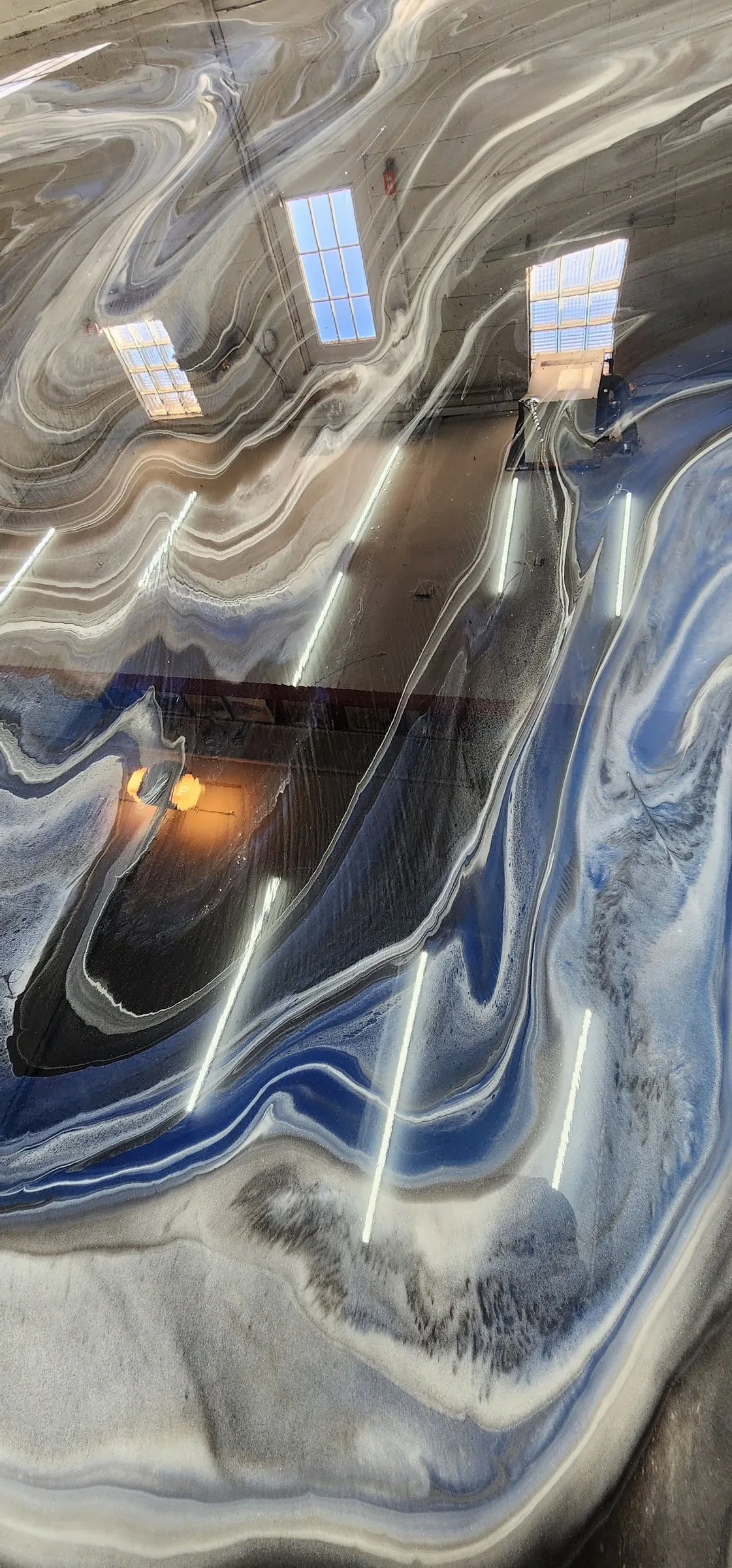
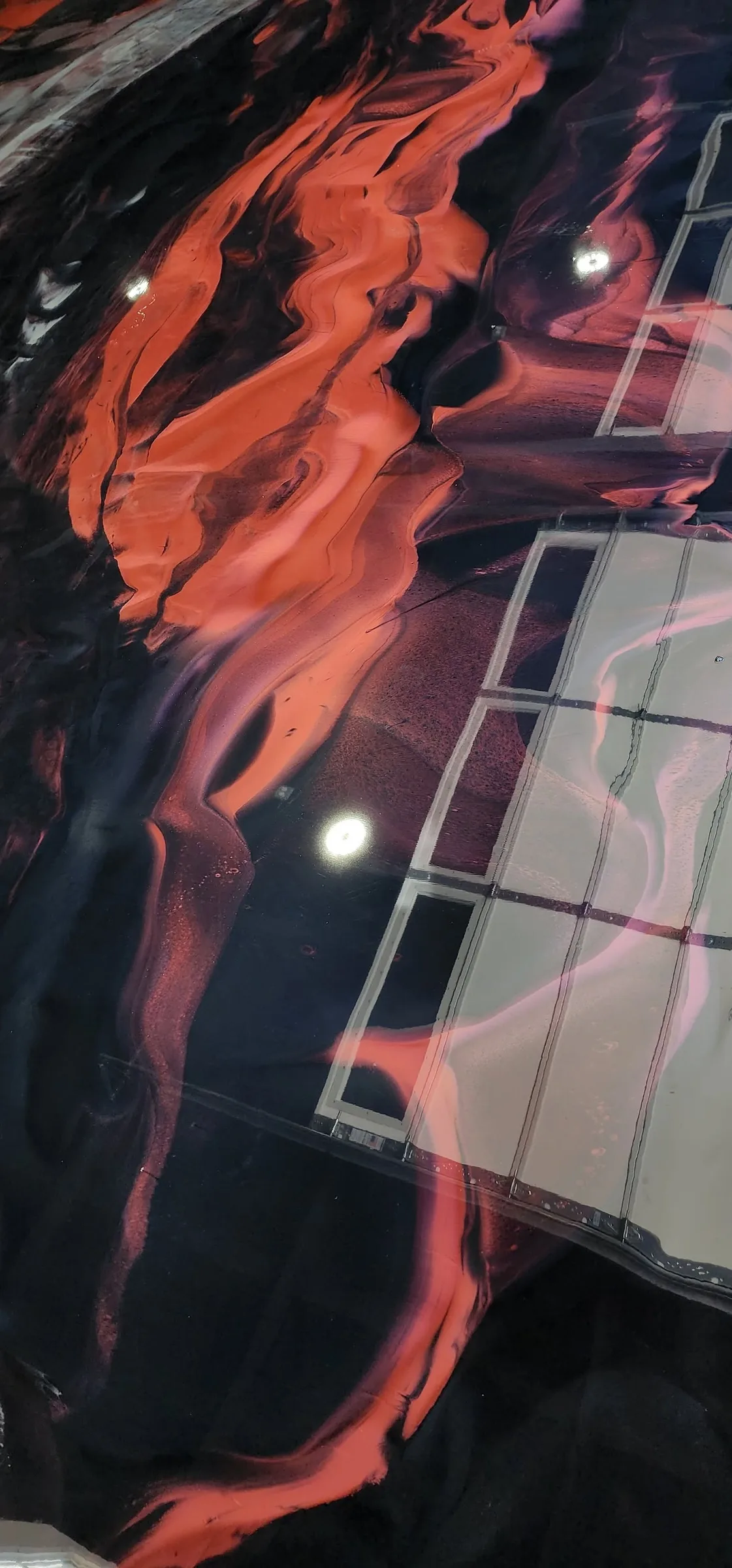
Other jobs from the file, not all of them this service. See the gallery





Questions about concrete sealing
What is the difference between sealing and an epoxy coating?
A sealer is a thin clear treatment that protects the concrete while leaving it looking like concrete. An epoxy coating is a thicker layer that covers the slab with color, flake or a metallic finish and hides most of what is underneath. Danny talks through both with you, based on how the space is used and the look you want.
Will sealing stop my basement floor from getting wet?
A sealer slows down how fast spills soak in, but it does not stop water coming in through foundation walls or up through the slab. Water problems like that need to be handled by a waterproofing or drainage contractor arranged by the owner. Danny will tell you if what he sees on the slab points to that.
Can old sealer be sealed over?
Sometimes, if the old sealer is clean, well bonded and compatible with the new product. Often it is better to remove it, especially if it is peeling, yellowed or patchy. Danny checks the existing sealer during the walk and tells you whether it can stay or needs to come off first.
Can sealed concrete be coated with epoxy later?
Yes, though the sealer has to come off first. Epoxy needs open concrete to bond, and most sealers block it. Grinding removes the sealer along with the top of the slab, so the coating can go on as it would on bare concrete. If a coating is likely before long, Danny may suggest skipping the sealer or picking one that grinds off easily.
Will a sealer make my basement floor easier to clean?
Yes. Unsealed concrete holds dust in its pores and soaks up spills, so it always looks a little dirty. A sealed slab lets a dust mop pick up more and gives you time to wipe a spill before it marks. The concrete still looks like concrete, only cleaner and more even.
Is sealing worth it on a slab that already has stains and patches?
It depends on what you want. A clear sealer locks in what is there, so old stains and patches will still show, sometimes a little darker. If the goal is mainly less dust and easier cleanup, sealing still helps. If the marks bother you, Danny will suggest stain removal or a coating before any sealer goes on.
Close to this one
Sealing, densifying, polishing and waterproofing for the slabs that do not need a full coating.
- Concrete WaterproofingSealers and coatings that keep surface water on top of a basement or garage slab, with an honest read on water coming from below.
- Concrete Moisture MitigationA moisture-mitigating base layer under the coating for slabs that push vapor up from below, chosen from a third-party moisture test.
- Concrete Floor RestorationOld, worn slabs ground clean, repaired and leveled, then sealed, polished or coated, with good concrete brought back under the finish.
- Concrete ResurfacingA new leveling layer over a sound slab with a scaled, pitted or rough surface, ready for a coating, sealer or metallic finish.
- Concrete Floor Grinding and PolishingUneven slabs ground flat and cleaned of old coatings and glue, then refined and polished to an even, reflective finish.
Cranford is home base. Danny covers 33 counties in New Jersey, New York, Pennsylvania and Connecticut. See every areaSee the gallery
Danz Handz
Danny Carrero, epoxy specialist
dhepoxy@gmail.com
Cranford, NJ. Mon to Sat, 8 to 6. Hablamos español.
Start with a visit
Describe the floor and what you have in mind. Danny calls back and comes out to look at it.