
Fixing epoxy floors that have started to fail
Epoxy floors come apart in a handful of ways: chips, peeling, bubbles, cracks, worn lanes, stains that will not lift. A contractor’s floor and a kit floor fail for many of the same reasons. Danny finds out why this one is failing first, then says whether a repair will hold or the coating has to come up.


Epoxy Floor Repair, from Danny’s side of the job
Epoxy floor repair starts with a diagnosis. The visible damage is usually a symptom, and the cause can be poor prep, moisture from below, oil in the concrete, the wrong product for the room or simple wear. Danny looks at the failure first and only then decides how to fix it. Small, well-defined damage on an otherwise sound floor can often be patched. Widespread lifting usually means the coating has to come up. Many floors land somewhere between the two.
Danny will say when a recoat or a full redo is the better use of the owner’s money.
Repairs have honest limits. Matching an old color exactly is hard, especially on faded, yellowed or flake floors, so a patch may show. Patching over a floor that is failing for a deeper reason buys time and little else. Danny will say when a recoat or a full redo is the better use of the owner’s money. A floor with one damaged area by the door rarely needs to come out completely, and a careful repair there can blend in well. That call gets made on the walk.
Danny walks the floor and checks the bond around the damage, tapping and scraping to see how far the problem runs. He asks how old the floor is, what product was used if anyone knows, and when the trouble started. Then he lays out the options: a spot repair, a recoat of the affected area, or a full grind and redo. For a repair, the damaged coating is ground out to sound edges, the concrete underneath is fixed, and the new material is poured and blended. The final walk compares the repair against the floor around it.
The damage you can see on a failing floor is usually the end of the story.
From bare slab to finished floor
A repair job begins by sorting the damage into kinds, because chips, peeling and wear each point to different causes and different fixes.
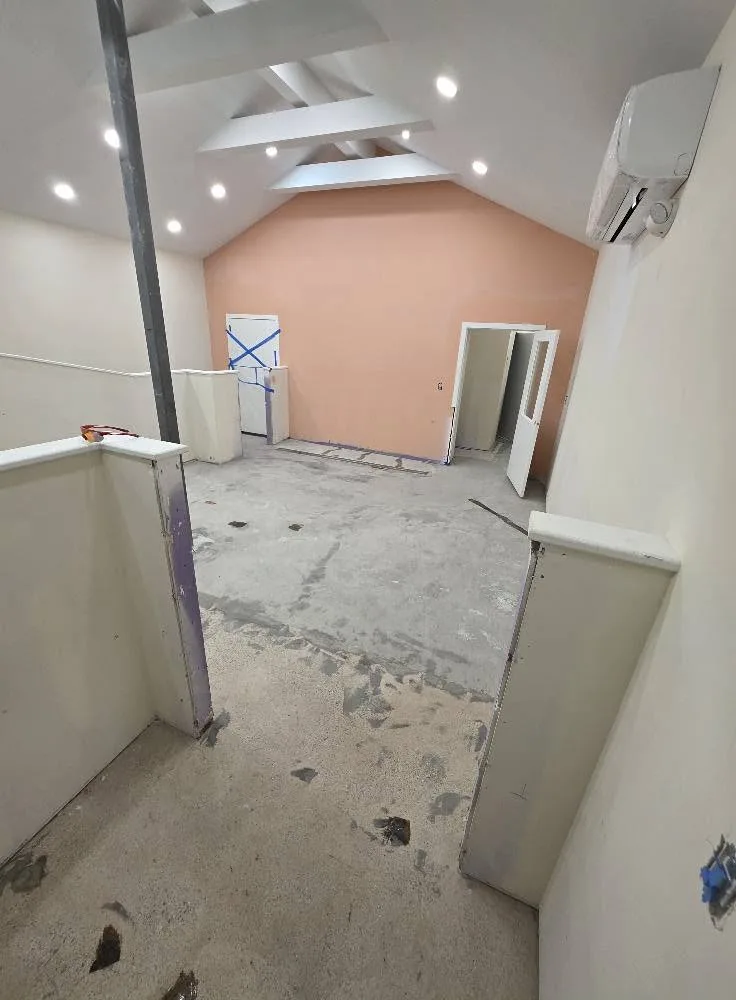

Listing every kind of damage
Danny walks the floor and notes each failure by type: chips, cracks, peeling, bubbles, stains and worn lanes. Photos of each spot and the questions he asks about the floor’s history help separate surface damage from problems underneath.

Choosing spot work or a recoat
With the causes sorted, Danny lays out the options for each area: a spot repair, a recoat of one zone or a full redo. The owner chooses with the tradeoffs in front of them, including how close the color match will be.

Cutting back to well-bonded coating
Each repair area is ground until the coating around it is firmly bonded and the edges are clean. Damaged concrete under the failure is repaired, and anything that caused the problem, like oil or a leak, is dealt with first.

Blending new material at the edges
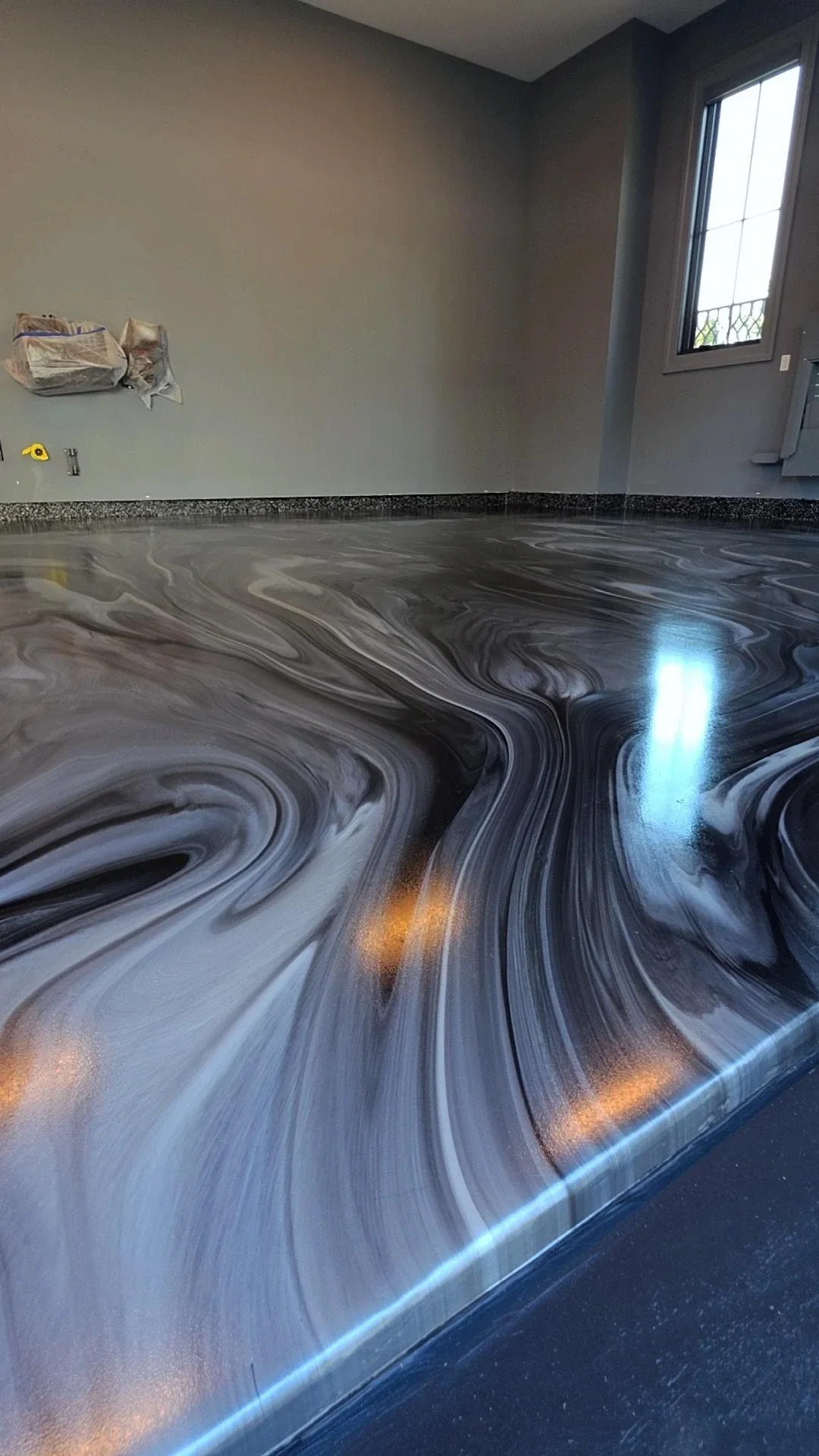
The repair goes down in the same type of system as the original where possible, with flake, color or topcoat matched as closely as the materials allow. The edges are feathered and the area is topcoated so the patch sits level.

Side by side in daylight
When the repair has cured, Danny and the owner look at it next to the original floor in daylight and under the room’s lights. Any spot that needs another pass is noted before the job is called done.
More of Danny’s floors
Other jobs from the file, not all of them this service. See the gallery






Questions about epoxy floor repair
Can you repair a floor someone else installed?
Yes. Danny looks at the failure first to figure out why it happened, then decides whether a spot repair, a recoat or a full redo makes sense. Knowing who installed it and what product was used helps, and he can work without that information too. The floor itself usually tells most of the story.
Will the repair match the rest of my floor?
Often it comes close. An exact match is hard, because old coatings fade and yellow and flake blends get discontinued. Solid colors are easiest to match. When the match matters a lot, such as in the middle of a showroom or a living space, a full recoat of the area may be the better option. Danny is honest about it before he starts.
Is it better to repair or replace?
It depends on why the floor is failing and how much of it is affected. A few damaged spots on a well-bonded floor are worth repairing. A coating that is lifting across large areas usually needs to come up, because the cause is under it. Danny walks the floor and gives his honest read on which way to go.
Can a store-bought kit floor be repaired?
Often, though kit floors usually need more work. They tend to be thin and are often rolled on without grinding, so failures spread quickly. A spot repair may hold if the rest is bonded well. If the kit coating is lifting in many places, removing it and starting over is the better path. Danny checks the bond first.
Should I keep using the floor while waiting for a repair?
Usually, yes, with some care. Keep heavy items and hot tires off the damaged spots, and clean up water or oil before it gets into exposed concrete. Peeling edges can catch and spread when something drags across them. Danny can suggest simple ways to protect the area until the repair is scheduled.
Is it worth keeping leftover material from the original install?
If anyone has leftover flake, a color chip or the product name, keep it. A sample of the original flake blend helps a repair match far better than a guess from photos. Old resin past its shelf life should not be used, though the label still helps identify the system. Danny asks for anything that survives.
More from the repair section
Peeling, bubbling, chipped or faded coatings, patched or recoated, plus upkeep plans for floors that work hard.
- Chipped Epoxy Floor RepairImpact chips from tools, weights and shovels ground back to sound coating, filled and rebuilt, with flake or color matched to the floor around them.
- Delaminating Coating RepairPeeling and lifting coatings removed back to sound bond, the cause tracked down, and the slab ground and recoated so the failure does not repeat.
- Discolored Epoxy Floor RepairYellowed, tire-marked or stained epoxy floors cleaned, sanded and recoated, with the topcoat chosen around how much sun the room actually gets.
- Worn Epoxy Floor RecoatingWorn epoxy floors sanded and recoated across the whole room, bringing tired traffic lanes back even with the rest of the floor.
- Damaged Garage Floor Coating RepairGarage coatings damaged by hot tires, salt, oil and dropped tools repaired and recoated as one finish, or removed when the old kit is failing.
He drives out from Cranford about 60 miles in every direction for floors like this one. See every areaSee the gallery
Danz Handz
Danny Carrero, epoxy specialist
dhepoxy@gmail.com
Cranford, NJ. Mon to Sat, 8 to 6. Hablamos español.
Schedule a look at your floor
Send a few lines about the room and the look you want. Danny will call and set up a time to see it.