
Coating the travel aisles between racks and work areas
The floor under a loaded rack barely changes, while the aisle in front of it ruts and dusts. So the aisles are where the coating goes, and the racks stay full. Danny phases the main travel lanes one at a time, with traffic sent down the next aisle over while each one cures.
What facility aisle coatings really involves
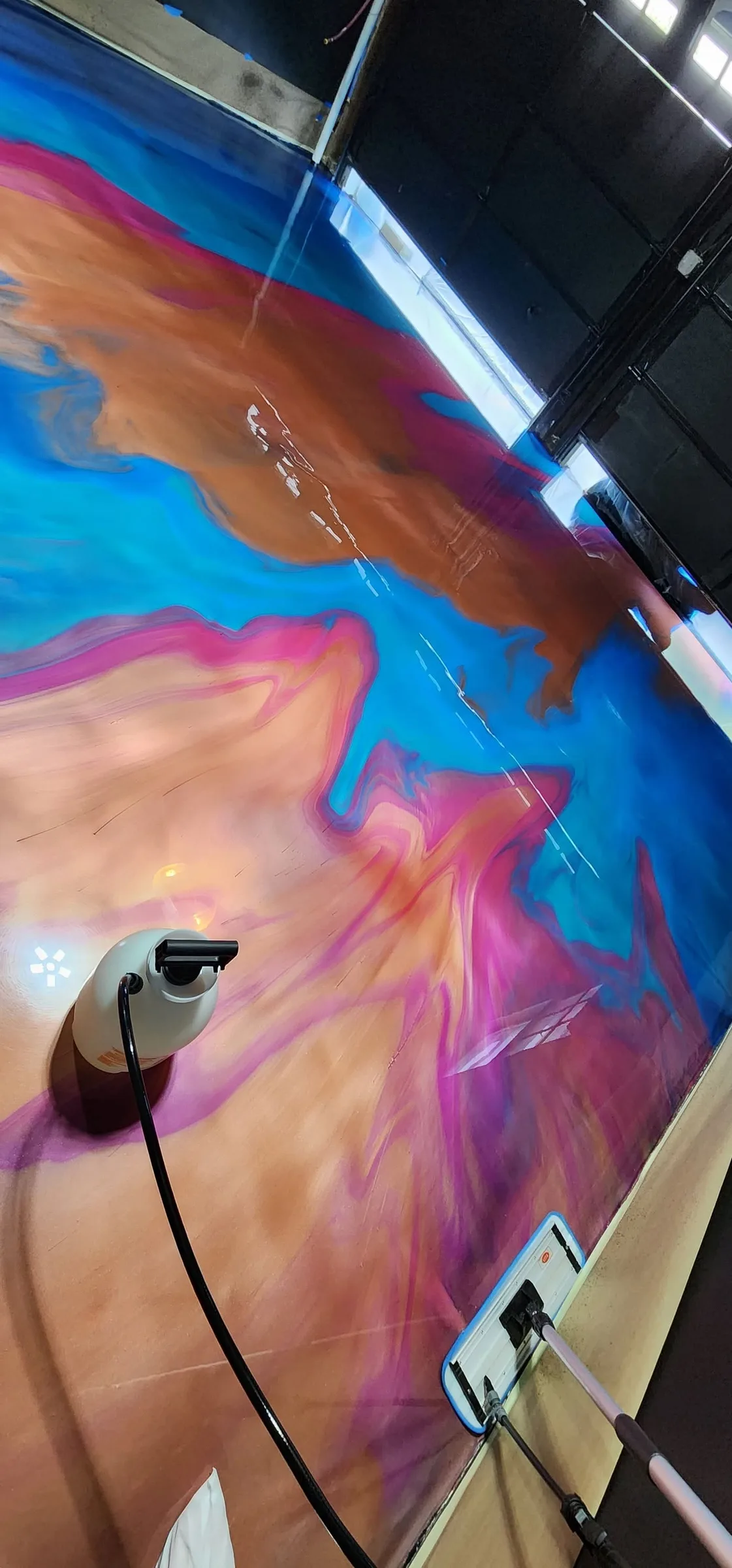
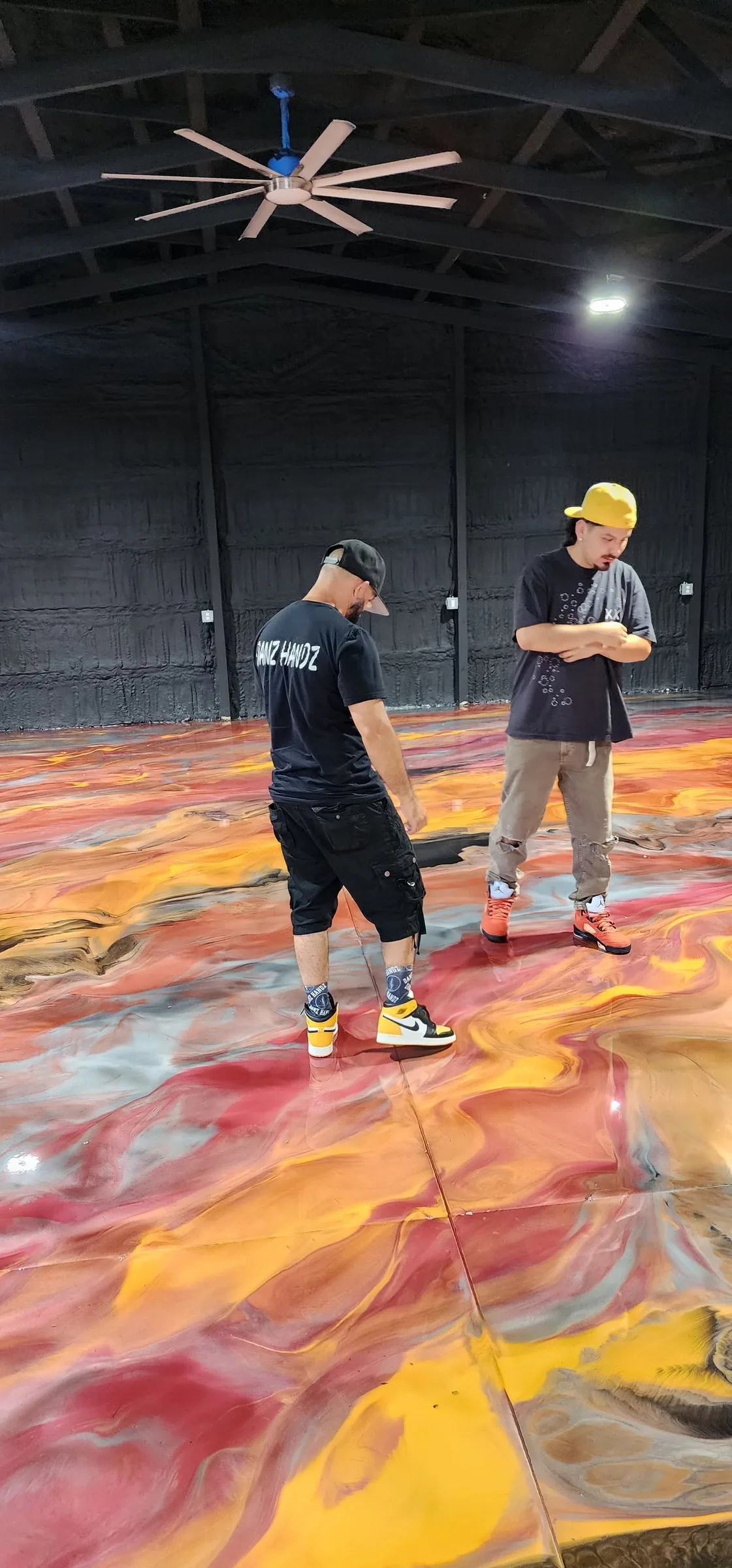
Aisle coating is a resin system applied just to the travel lanes and walkways, the parts of the floor that forklifts, pallet jacks and people actually use. The coating seals the concrete against dust and spills and gives the lanes a different color from the storage areas, so the paths read clearly. Where pedestrians and equipment share space, walkways can be poured in a contrasting color. Danny watches the traffic and checks what gets spilled in the aisles before he recommends a system, since a forklift lane and a hand-cart lane wear differently.
Racks stay loaded and the rest of the building keeps working.
It fits buildings where the rack layout is set and the aisles stay in the same place. The coating stops at the rack line, so racks do not need to come down. Joints and cracks in the aisle get repaired first, and where forklifts cross a joint often, the edges are a weak point that needs attention. If the layout is likely to change soon, coating the whole floor later may make more sense. Areas with heavy chemical exposure need a system chosen to that exposure and its product data.
Danny walks the building with the operations manager during a normal shift, to see where forklifts turn, where they wait and where people cross. He maps the aisles that matter, notes the damaged joints and the worn lanes, and works out a sequence that keeps product moving. Each aisle section is closed, diamond ground to the rack line, repaired at joints and cracks, and coated. Racks stay loaded and the rest of the building keeps working. Forklifts return to a lane only after it has cured and Danny has walked it with the manager.
Most of a warehouse floor’s wear happens in the aisles, so that is where the coating goes.
How the work runs
Aisle work is planned around forklifts that cannot stop. The stages below cover how a lane is chosen, closed, coated and handed back while the racks stay loaded.


Timing traffic by shift
Danny walks the building on a busy shift and a slow one, watching where forklifts turn, queue and cross paths with pickers. The slow shift usually decides when aisles can close, and the busy one shows which lanes need the toughest finish.

Snapping the rack line
A chalk line is snapped along each run of uprights so the coating edge is straight and sits just clear of the footplates. Product overhanging the line, and pallets that tend to stick out, are noted so they can be pushed back while the aisle is worked.

Cutting a clean termination edge
Where the coating stops at the rack line, the edge is cut or ground in so the coating ends in a shallow key. A locked edge stands up to forklift wheels far better than a coating that simply feathers out on bare concrete.

One aisle closed at a time
Each lane is roped off, ground, repaired at joints and cracks, and coated while forklifts use the next aisle over. Pickers get a route to the locations behind the closed lane, and the order is agreed with the shift supervisor each morning.

First forklift down the lane
After the cure, Danny walks the aisle with the operations manager, then a forklift runs the lane while they watch the joints and the rack-line edges. If both look right, the lane reopens and the next one is closed.
More of Danny’s floors
Other jobs from the file, not all of them this service. See the gallery








Questions about facility aisle coatings
Do the racks have to be emptied?
No. The coating stops at the rack line, so racks stay in place and loaded. Only the aisle being worked on has to be clear of equipment and people through grinding, the pour and the cure. Danny plans the order of aisles with the operations manager so the busiest lanes are out of service for the shortest stretch possible.
Can walkways be a different color than forklift lanes?
Yes. Walkways and work zones can be poured in a contrasting color so people and equipment each have a clear path. The colors are part of the coating, laid out from a floor plan agreed with the manager before the work starts. Danny looks at where people actually walk, which is not always where the old plan says they do.
What about the joints in our aisles?
Joints are where aisle floors usually break down first, because forklift wheels hit the edges over and over. Damaged joint edges get repaired during prep, and the coating is finished carefully at each joint. Joints that are actively moving may need a different treatment from a rigid fill. Danny looks at each joint line during his walk and explains what each one needs.
Can the main cross aisle and dock apron go first?
Often they should, since they carry the most traffic and usually show the worst wear. The catch is that they are the hardest to close. Danny works out a detour, sometimes through a rack aisle temporarily used as a through lane, and schedules those areas for the slowest shifts the building has.
Will pallet jack wheels mark the coating?
Polyurethane wheels roll cleanly on most coatings, though grit stuck in them can leave scratches and dirty wheels leave dark tracks. Worn or chunked wheels are harder on any floor. Sweeping the aisles and checking wheels during routine maintenance keeps marking down, and a mid-tone color hides tracks better than a very light one.
Should damaged rack uprights be fixed while the aisle is closed?
It is a good time for it. Rack repair is the rack company’s work, and an empty, roped-off aisle gives them room to replace a bent upright or a damaged footplate. Doing it before the coating means the new edge is finished against the repaired rack. Danny can point out uprights he sees damaged during the walk.
Next to this on the list
Auto, aviation, food, labs, schools, fitness, retail, parking and storage, matched to what actually hits the floor.
- Barn Floor CoatingsTextured resin floors for barn aisles, wash stalls, tack rooms and equipment bays, built for footing on mud, hay and wet concrete.
- Agricultural Facility FlooringSealed, textured floors for packing sheds, farm shops, feed rooms and equipment buildings, scheduled for the slow season.
- Cultivation Facility FlooringRoom-by-room resin floors for indoor cultivation buildings, from wet grow rooms to trim, drying and packaging areas.
- Grow Room Floor CoatingsLight, coved resin floors for individual grow rooms, recoated in the window between harvest and the next planting.
- ESD FlooringStatic-dissipative resin floors tied to building ground, installed to your facility’s static-control plan for electronics handling areas.
He drives out from Cranford about 60 miles in every direction for floors like this one. See every areaSee the gallery
Danz Handz
Danny Carrero, epoxy specialist
dhepoxy@gmail.com
Cranford, NJ. Mon to Sat, 8 to 6. Hablamos español.
Book a walkthrough
A short note about the space is enough. Danny calls back and books a walkthrough.