
Bright, sealed epoxy floors for factory work areas
Old floor paint in a factory peels first where people and carts cross most, and what shows underneath is gray, stained concrete. That matters more once customers start touring the plant. Danny grinds off the peeling paint and opens up the stained concrete, then pours a lighter sealed floor that brightens the work areas.
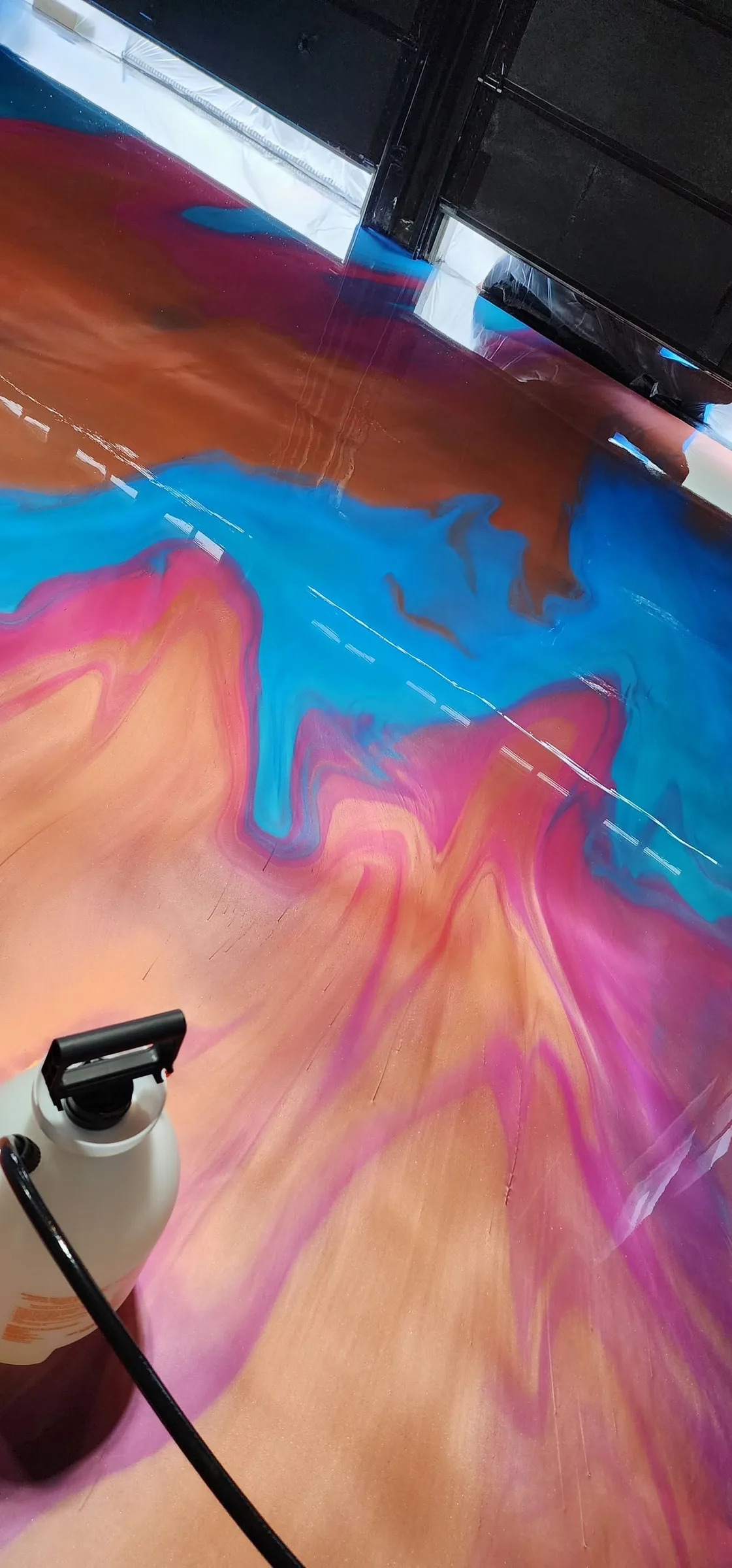
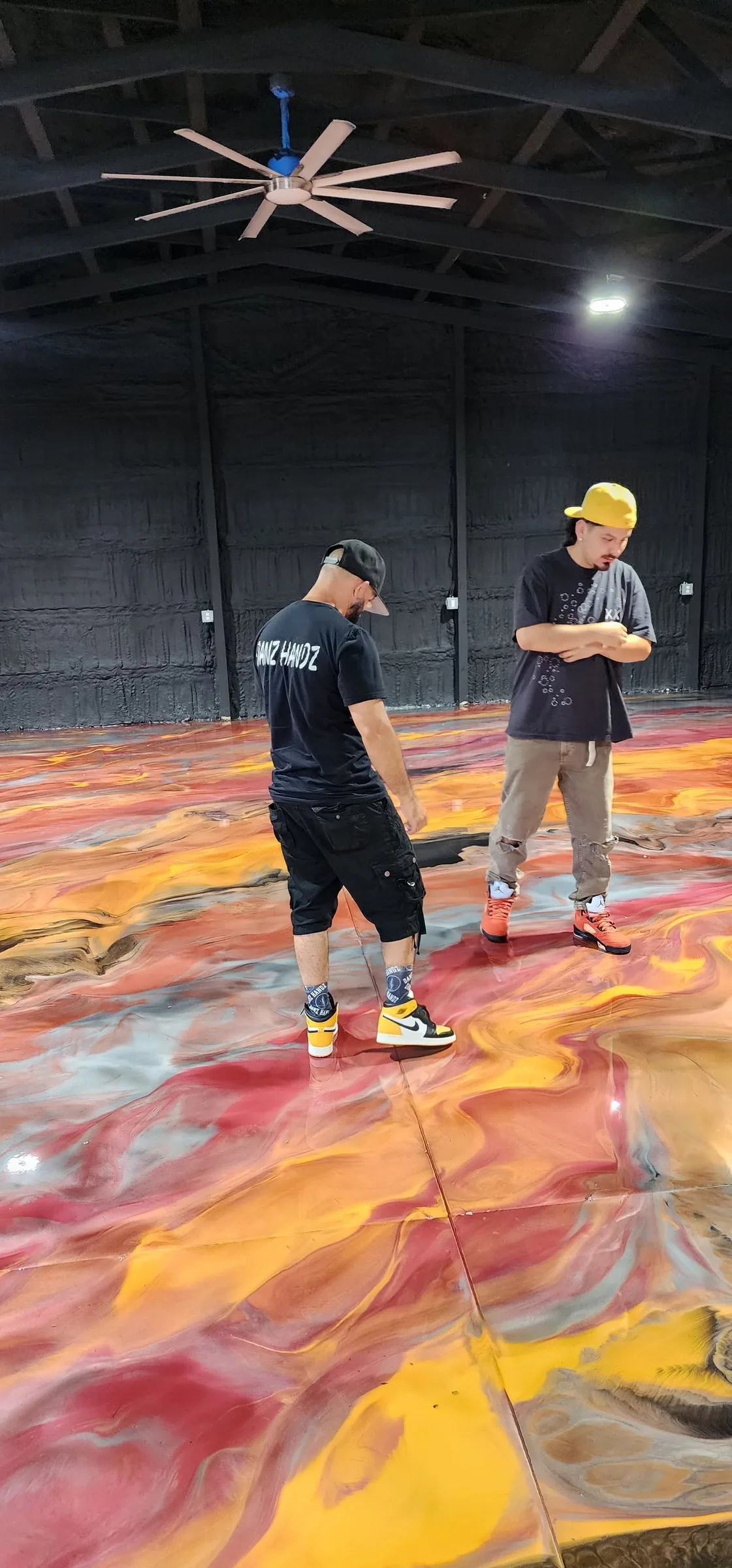
Factory Epoxy Flooring, start to finish
Factory epoxy is a resin coating bonded to ground concrete across the production floor. It seals the slab against dust and drips, cleans up quickly at the end of a shift, and in a light color it makes the whole factory brighter under the existing lights. Small and mid-size factories use it to make the floor look as orderly as the work. What goes down is decided after Danny has seen the floor, the equipment running on it and anything that leaks or spills, checked against the product data.
Epoxy is also a hard surface that can chip under heavy impact, so areas where steel parts are dropped or dragged may call for a heavier system.
Old factory floors bring old problems: paint that has to come off, patches made with the wrong material, wide cracks and joints that have broken down at the edges. All of that gets repaired first, and some areas may need more than a coating can provide. Epoxy is also a hard surface that can chip under heavy impact, so areas where steel parts are dropped or dragged may call for a heavier system. Danny will say which parts of the floor are good candidates.
A normal working day is the best time for the first visit, so Danny can see what the floor actually goes through. He notes the worst patches, old paint, wide cracks and the paths forklifts and carts take, and asks what is spilled or cleaned off the floor. The floor is diamond ground until the old paint and stains are gone, cracks and broken joints get repaired, and the coating is poured. The work can be phased around production. After the cure, Danny does a final walk with the owner before machines and stock move back.
Old factory paint has to come all the way off before a new floor will stay down.
The order the work goes in
Factory floors usually come with peeling paint, old patches and a dull gray slab. These stages strip that history off and finish with a light floor ready for customer tours.
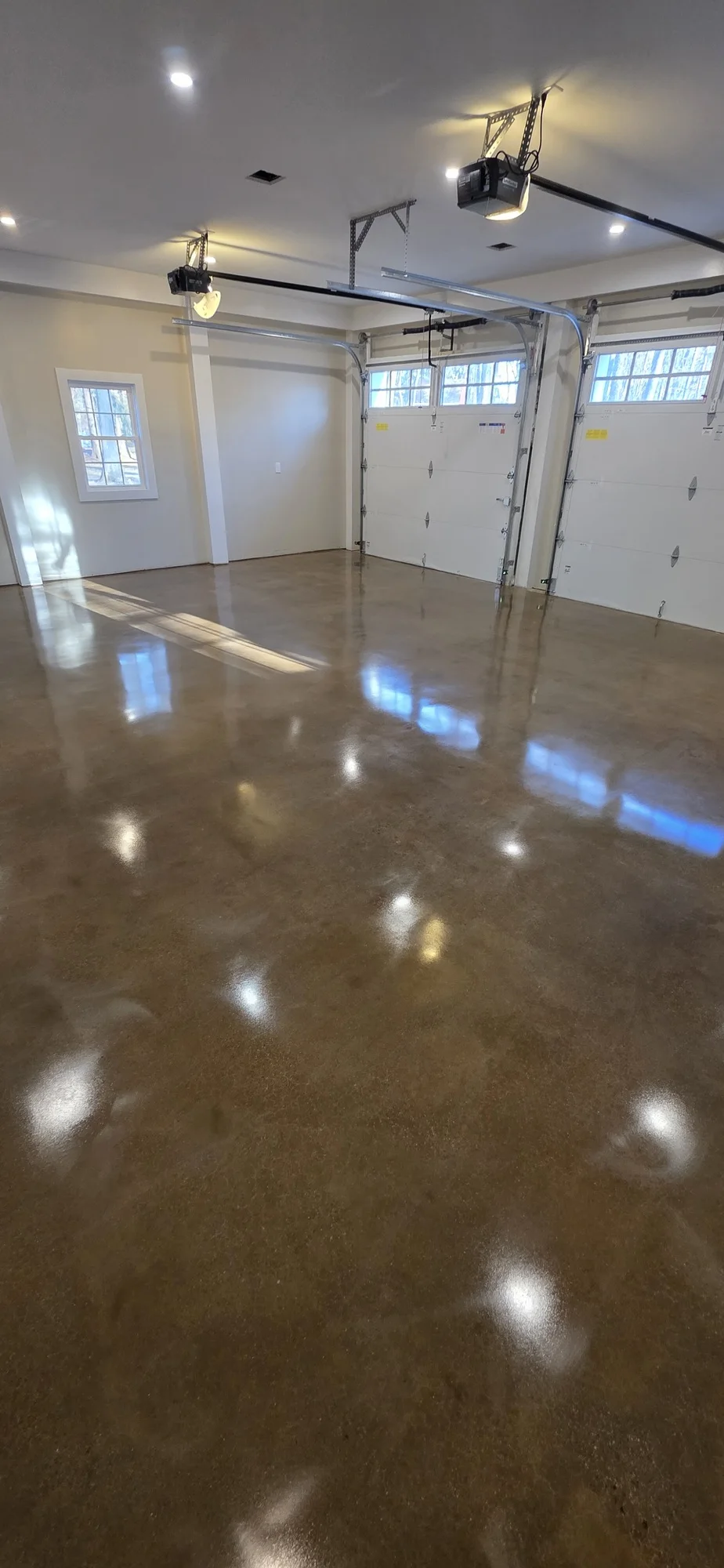

Testing the old paint’s grip
Danny scrapes and tapes a few spots of the existing floor paint to see how well it holds. Paint that lifts easily tells him the whole layer will come off, and he checks how many coats are stacked under it.

Grinding through every old coat
The diamond grinder takes the floor paint, stripe paint and stains down to clean concrete. Edges along walls and around machines are done with smaller tools so no old paint is left at the margins to lift later.

Replacing crumbling old patches
Patches made over the years with the wrong material are broken out until solid concrete shows, then rebuilt. Wide cracks and joints that have chipped at the edges are repaired so carts and forklifts cross them without a bump.

Pouring a light working floor
A light gray or tan coating goes down across the production area, with darker or contrasting walkways if the owner wants them. Bulletproof Resins products are chosen for what drips in each area, with texture where operators stand at machines.

Walking the tour route
After the cure, Danny walks the floor with the owner along the route customers and visitors take through the plant. Small parts, rags and stock go back, and the shift leads get notes on sweeping and squeegeeing at shift end.
More of Danny’s floors
Other jobs from the file, not all of them this service. See the gallery







Questions about factory epoxy flooring
Can you coat over the old paint on our factory floor?
Usually not. Old floor paint, especially when it is peeling, has to come off so the new coating bonds to bare concrete. Diamond grinding removes it along with surface stains. If the old paint is well bonded and compatible, Danny will say so, but most factory floor paint has to go.
Will epoxy brighten the factory?
Yes. A light gray or tan floor reflects more of the light already in the building, so aisles and work areas look brighter without adding fixtures. A light floor also makes it easier to spot dropped parts. It shows dirt sooner too, so plan on regular sweeping to keep it looking that way.
How long will the factory floor be down?
That depends on the size of each area, the condition of the slab and the system chosen, so Danny gives a schedule after his walk-through. Each section is out of service through grinding, repairs, the pour and the cure. Most factories phase the work so only part of the floor is down at a time.
Can the floor be done one department at a time?
Yes. Most factories are coated in sections, such as assembly one week and shipping the next, so the rest of the plant keeps working. Each section is ground, repaired, poured and left to cure before people and carts return. Danny lays out the order with the owner based on which areas can stop and when.
Will a coating help with customer tours?
A clean, light floor makes a factory look organized when customers walk through, and painted walkways show visitors where to stay. It also makes sweeping and spill cleanup quicker, which keeps the plant tour-ready from day to day. Danny can plan a clear walkway along the tour route in a contrasting color.
What happens to old stripe paint on the floor?
Old painted lines are ground off with the rest of the floor paint so they do not show through or lift under the new coating. If the layout is staying the same, Danny measures the lines first so they can be laid back out in the new floor. New lines can be coated in before the topcoat.
Close to this one
Warehouses, plants, loading docks and machine shops, with safety striping and aisle marking when the space needs it.
- Manufacturing Plant Floor CoatingsCoatings for manufacturing plant floors, planned around shutdowns and chosen line by line for the traffic and process fluids on each.
- Distribution Center Floor CoatingsPhased coatings for distribution centers, done section by section around freight, with joints repaired and builds matched to each zone.
- Logistics Facility FlooringCoated logistics floors with poured color zones for staging, cross-dock and returns, planned around the dock schedule and the freight flow.
- Loading Dock Floor CoatingsTextured coatings for loading docks that seal out water and salt, with door edges repaired and the work phased so trucks keep loading.
- Forklift Traffic Floor CoatingsForklift traffic coatings built heavier at turning spots and joints, chosen for the trucks, routes and fluids in your building.
Cranford is home base. Danny covers 33 counties in New Jersey, New York, Pennsylvania and Connecticut. See every areaSee the gallery
Danz Handz
Danny Carrero, epoxy specialist
dhepoxy@gmail.com
Cranford, NJ. Mon to Sat, 8 to 6. Hablamos español.
Tell Danny about the floor
Describe the floor and what you have in mind. Danny calls back and comes out to look at it.