
Jointless resin floors with coved edges
The cleaning crew can usually tell you where they lose time: the grout lines and the corners, the two places a mop never quite gets. Hygienic resin flooring takes both away, with one continuous pour across the room that curves up into the wall at the edge. Danny checks the walls first, since the cove needs something solid to bond to.

What goes into hygienic resin flooring
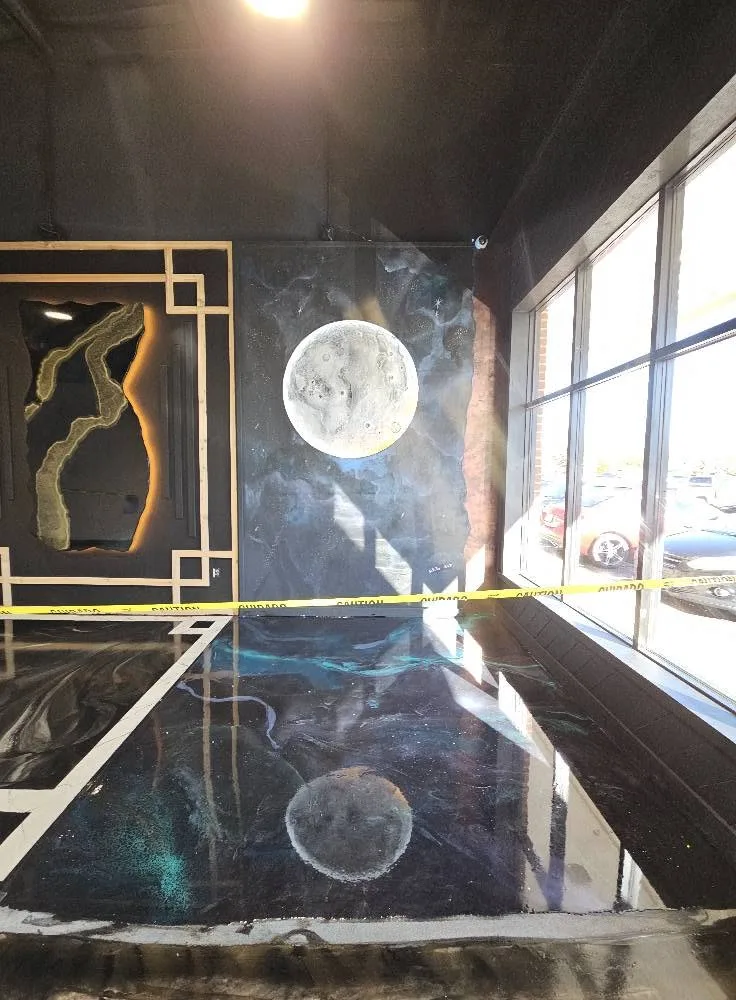
A hygienic resin floor is poured as one surface over prepared concrete, with no tile joints or grout to collect residue. At the walls, the resin is carried up in a smooth cove so the floor-to-wall corner becomes a curve a mop can reach. The same detail can wrap equipment pads, columns and drain edges. The finish can be smooth or textured depending on how wet the floor gets. Danny chooses the system to the job’s requirements and the product data for the cleaners used.
At the walls, the resin is carried up in a smooth cove so the floor-to-wall corner becomes a curve a mop can reach.
The word hygienic describes the shape of the floor: fewer joints, coved corners and a sealed surface that can be cleaned well. A floor alone does not make a room clean, and Danny does not label any floor sterile or rate it to a standard. How clean the room stays depends on the cleaning program. Rooms with active moisture coming up through the slab, or tile that has to be removed first, add steps that Danny lays out before any work is booked.
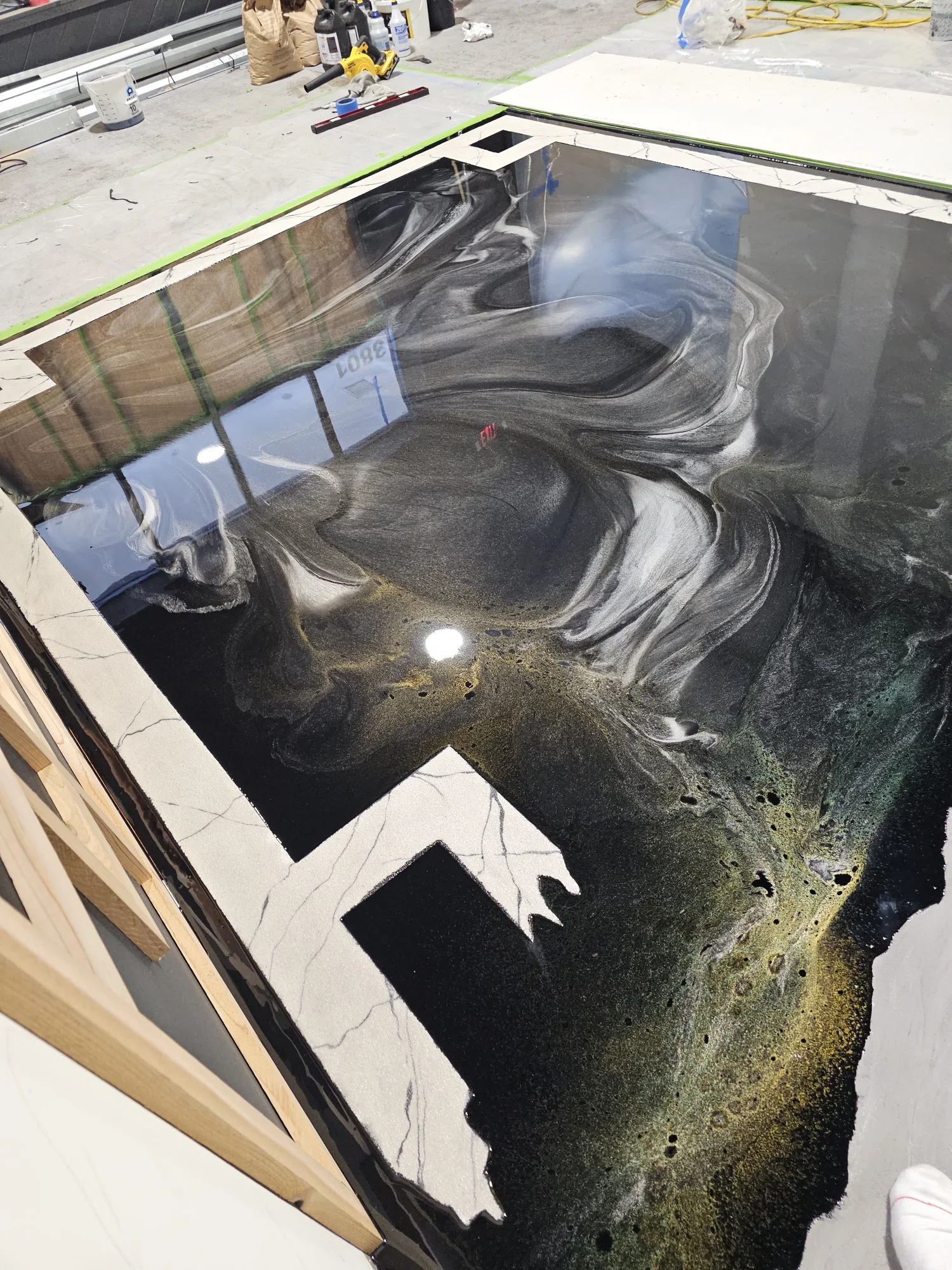
Danny walks the room with whoever is responsible for keeping it clean and asks where dirt builds up, which cleaners are used, and how often the floor gets wet. He looks at the space, the traffic and what gets spilled on it before recommending a system. Old tile and grout come out if present, the concrete is diamond ground, and cracks and low spots are repaired. The cove base is formed at the walls and around pads, then the floor is poured to meet it. The room stays closed through the cure, and the final walk includes running a hand along the cove with the client.
The corner where floor meets wall is where most cleaning time goes.
What happens on the job
Hygienic resin is about the places dirt hides. These steps follow those places through the room, from grout lines and corners to pad edges and pipe openings, closing each one in turn.

Shadowing the cleaning crew
Danny watches the crew clean the room on a normal shift and asks where they spend the longest scrubbing. Corners behind equipment, cracked grout and the base of each pipe usually come up, and those spots shape the plan for the cove and edges.

Testing walls behind the cove line
A cove carries resin up the wall, so the lower part of each wall is checked for loose paint, soft drywall or damp block. Weak spots are cut back or replaced by the right trade before floor work begins, giving the cove a firm surface to grip.

Closing gaps at pipes and pads
Every pipe, conduit and drain coming through the floor gets a sealed collar, and equipment pads have their edges rebuilt square. Small openings like these are where water and residue get under a floor, so each is closed before the main pour.

Running the floor into the cove
With the cove formed, the floor is poured to meet it so the two cure as one surface with no seam at the turn. Doorway edges are finished into a recessed stop, which keeps the transition to the next room flush.
Cleaning once before handback
Before the room goes back into service, the cleaning crew runs its normal routine on the new floor while Danny watches. That first clean shows whether the cove height and texture suit their tools, and any adjustment is noted for the remaining rooms.
More of Danny’s floors
Other jobs from the file, not all of them this service. See the gallery







Questions about hygienic resin flooring
What makes a floor hygienic?
Mostly its shape. A hygienic floor has no grout lines, a curved cove instead of a sharp corner at the walls, and a sealed surface that does not absorb spills. That makes the floor easier to clean thoroughly. How clean the room actually stays still depends on your cleaning program, and Danny does not rate any floor sterile.
Can you install over our old tile?
In most cases the tile comes out. Resin needs a sound, prepared surface, and old tile and grout can loosen under a new coating. Danny removes the tile, grinds the concrete, and repairs the slab before pouring. He checks what is under the tile during the walk so there are no surprises in the schedule.
How high does the cove go up the wall?
That depends on the room and how it is cleaned. A taller cove protects more of the wall from mop water and splashing. Some facilities have a written requirement for cove height, and Danny follows it. If there is none, he suggests a height based on how wet the floor gets and where carts hit the walls.
Can our existing floor drains stay where they are?
Usually, yes. The drain rim is prepared and the resin is finished tight to it, with the floor around it sloped so water heads in. If a drain sits in the wrong spot or too high, moving it is plumbing work that happens before the floor. Danny checks each drain on the walk and tells you which ones are fine.
Which cleaning tools work best on a coved resin floor?
Squeegees, soft deck brushes and auto scrubbers with pads suited to the texture all work well. The cove is easiest with a mop or brush that follows the curve. Metal scrapers and stiff wire brushes scratch the topcoat and should stay out of the room. Danny leaves a short list of tools and cleaners with the crew.
Can hygienic resin go into a cold or refrigerated room?
Often, but cold changes how resin goes down and cures. A cooler usually has to be emptied, turned off and warmed for the work, then brought back down slowly once the floor allows. Some systems handle cold rooms better than others, and Danny picks from the product data after checking the room’s temperature and door traffic.
Also in industries
Auto, aviation, food, labs, schools, fitness, retail, parking and storage, matched to what actually hits the floor.
- Aircraft Hangar Floor CoatingsLight-colored hangar floors that reflect light under the wings and make loose hardware easy to spot before it causes trouble.
- Aviation Maintenance FlooringSealed floors for aviation maintenance shops, parts rooms and tool cribs, chosen from the list of fluids your shop actually uses.
- Food Processing Floor CoatingsResin floors for food production rooms that get washed down every shift, with cove bases, textured footing and water running to the drains.
- Restaurant Kitchen Floor CoatingsTextured, coved resin floors for restaurant lines, dish areas and coolers, scheduled around the days the kitchen can close.
- Hotel Service-Area FlooringResin floors for hotel laundry, housekeeping, loading and staff corridors, done in phases while the hotel keeps running.
The shop is in Cranford. Most jobs are within an hour or so, across four states. See every areaSee the gallery
Danz Handz
Danny Carrero, epoxy specialist
dhepoxy@gmail.com
Cranford, NJ. Mon to Sat, 8 to 6. Hablamos español.
Tell Danny about the floor
Start with the room and the idea. Danny follows up by phone and comes to see the slab.