
Stopping slab moisture before it lifts your coating
A coating that blistered in random patches while the rest held is often a moisture problem, with water vapor pushing up through the slab from below. Danny looks for the signs before anything gets poured, and where the slab needs it, a moisture-mitigating layer goes down first so the same failure does not repeat.
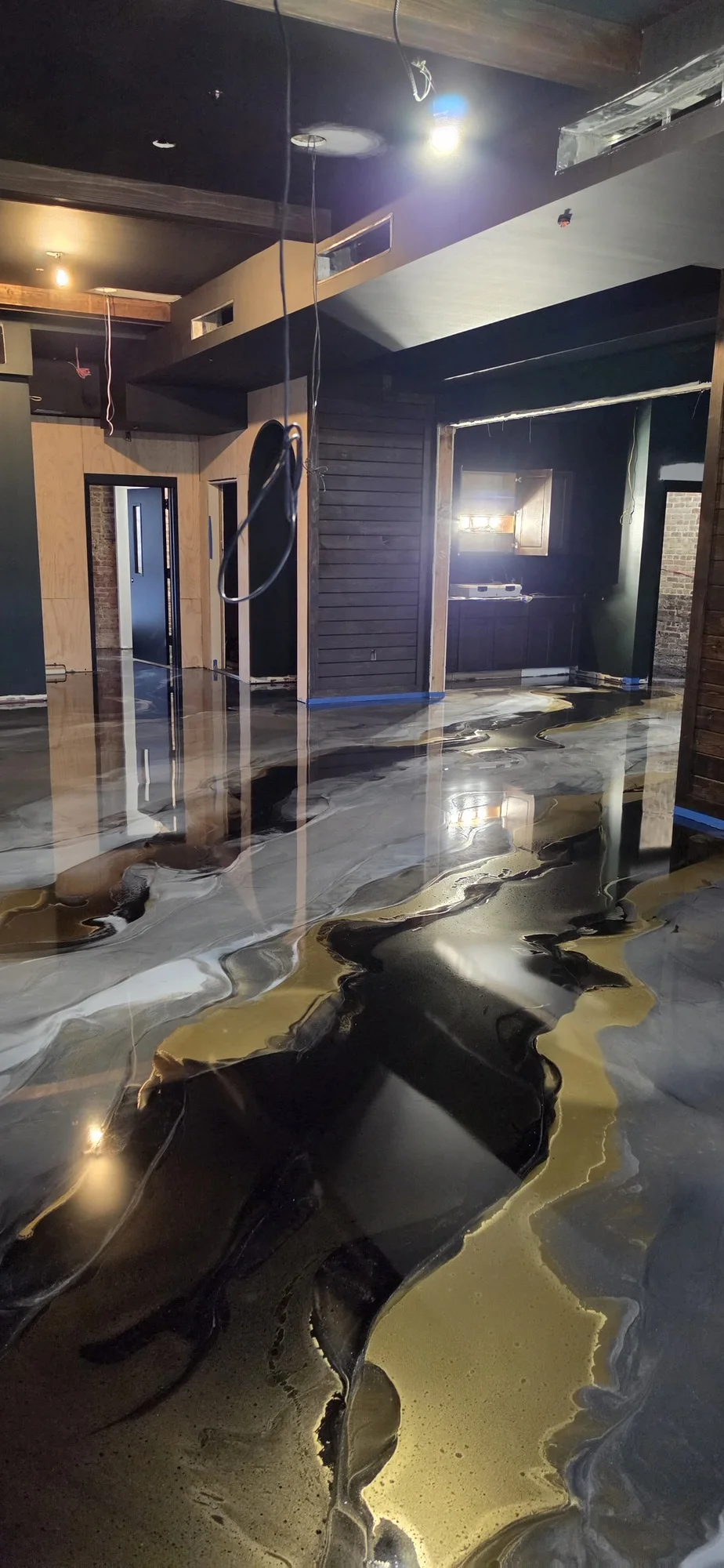

Industrial Floor Moisture Mitigation, start to finish
Concrete slabs on the ground can carry moisture from below, and that moisture moves up toward the surface as vapor. When a coating seals the top, the vapor can push against it from underneath and break the bond, which shows up as bubbles, soft spots or peeling. Moisture mitigation means testing the slab and, when the readings call for it, putting down a moisture-tolerant primer or a vapor-control coat before the main floor system. Danny chooses that system to the job’s requirements and the product data.
The slab is tested in several spots so the results reflect the whole floor.
Mitigation handles vapor rising through a sound slab. It does not fix standing water, roof leaks, broken drains or a slab that floods from the outside, and those need to be solved first. It also adds a step and material to the job, so it is worth doing when the slab actually needs it. That is why testing comes before any recommendation. Some slabs test fine and need no mitigation at all, and Danny will say so when that is the case.
Danny walks the floor looking for the signs that point to moisture: dark patches, white powder at joints, blistered or lifted spots in an old coating, and areas near exterior walls or low spots. He looks at the space, the traffic and what gets spilled on it before recommending a system. The slab is tested in several spots so the results reflect the whole floor. If mitigation is needed, the floor is diamond ground, repaired, and the moisture-control coat goes down first, followed by the floor system. Everything cures with the area closed, and the final walk checks the floor with the client.
A coating that peels for no clear reason is often moisture coming up from below.
The order the work goes in
On an industrial slab, moisture work should be proven necessary before it goes in. These steps run from reading old failures to placing a vapor-control layer only where the tests call for one.

Sketching the old blister pattern
Danny sketches where a past coating blistered, peeled or stayed soft, and where bare concrete darkens after rain. The pattern often lines up with an exterior wall, a low spot or an addition built onto the original building at a later date.

Spreading tests across the slab
Tests are placed across the whole floor instead of one convenient corner, with more of them in the areas the sketch flagged. Each location is recorded on the plan so readings can be compared against each other and against the system’s product data.

Ruling out water from outside
Before any mitigation is chosen, gutters, grading, roof drains and pipes near the problem areas are checked. Water arriving from outside has to be stopped at its source, because a vapor-control coat is meant for vapor rising through sound concrete.

Placing the vapor-control coat
Where the readings call for it, the slab is ground open and the moisture-control primer or coat goes down first across the affected area. The main floor system is then built on top, following the product data for both layers.
Recording readings for the owner
The owner keeps a copy of the test locations, the results and the system installed in each area. If an addition or a new slab joins the building later, that record shows exactly how the original floor was handled.
More of Danny’s floors
Other jobs from the file, not all of them this service. See the gallery








Questions about industrial floor moisture mitigation
How do I know if my slab has a moisture problem?
Signs include coatings that bubble or peel in patches, dark damp spots on bare concrete, and a white powdery residue at joints and cracks. Slabs below grade or poured without a vapor barrier are more likely to have it. The only way to know is testing, which Danny does during the walk before recommending anything for the floor.
Can moisture mitigation fix a floor that is already peeling?
The peeling coating has to come off first, since it has already lost its bond. Once the floor is ground back and tested, a moisture-control coat can go down under the new system so the same failure does not repeat. Danny checks whether the peeling came from moisture or from a different cause before planning the repair.
Does every concrete floor need moisture mitigation?
No. Many slabs test fine and can take a coating directly after normal prep. Mitigation is for slabs where testing shows moisture moving up through the concrete. Danny tests before recommending it, so you only pay for that step when the floor needs it.
Can only part of the floor get mitigation?
Yes, when testing shows moisture concentrated in certain areas, such as along an exterior wall or over a newer addition. The boundary between mitigated and standard areas is placed where the readings change and, ideally, along a joint. Danny shows you the test map so you can see why each area got the treatment it did.
Why does a newer slab often test wetter than an old one?
Fresh concrete holds a lot of water from when it was poured, and it leaves slowly, especially in a building where the heat and air are not running yet. A slab poured without a vapor barrier underneath can stay damp much longer. Danny tests with the building at its normal operating conditions so the readings reflect real use.
Will mitigation change the job’s schedule?
It adds a layer, and each layer has to be ready before the next goes on according to the product data. Testing also has to happen before materials are ordered. Both are easy to plan for when they are known up front, which is why Danny tests during the walk instead of after the floor is booked.
Close to this one
Warehouses, plants, loading docks and machine shops, with safety striping and aisle marking when the space needs it.
- Forklift Traffic Floor CoatingsForklift traffic coatings built heavier at turning spots and joints, chosen for the trucks, routes and fluids in your building.
- Heavy-Traffic Concrete CoatingsHeavy-traffic concrete coatings with extra build in the lanes, doorways and turning spots where the traffic in your building actually concentrates.
- Industrial Floor ResurfacingIndustrial floor resurfacing that rebuilds scaled, pitted and worn concrete into a smooth, usable surface, ready to coat or put back to work.
- Industrial Floor RepairIndustrial concrete repair for spalled joints, potholes, failed patches and cracks, done on its own or ahead of a new coating.
- Chemical-Resistant Industrial FlooringIndustrial flooring systems selected against your actual chemical list and the product data, with honest answers about what each system handles.
Danny works out of Cranford, NJ and covers about 60 miles: North and Central Jersey, the city and Long Island, the Hudson Valley counties, Fairfield County and eastern Pennsylvania. See every areaSee the galleryRead: Basement Epoxy Floors and the Moisture Under the Slab
Danz Handz
Danny Carrero, epoxy specialist
dhepoxy@gmail.com
Cranford, NJ. Mon to Sat, 8 to 6. Hablamos español.
Book a walkthrough
Describe the floor and what you have in mind. Danny calls back and comes out to look at it.