
Repairing one damaged area of a larger resin floor
On a big floor the damage often sits in one place: under a leaking machine, along the strip where carts turn, at a doorway that took on water. Danny closes off just that area, repairs and recoats it, and the rest of the room stays in use while the patch cures.

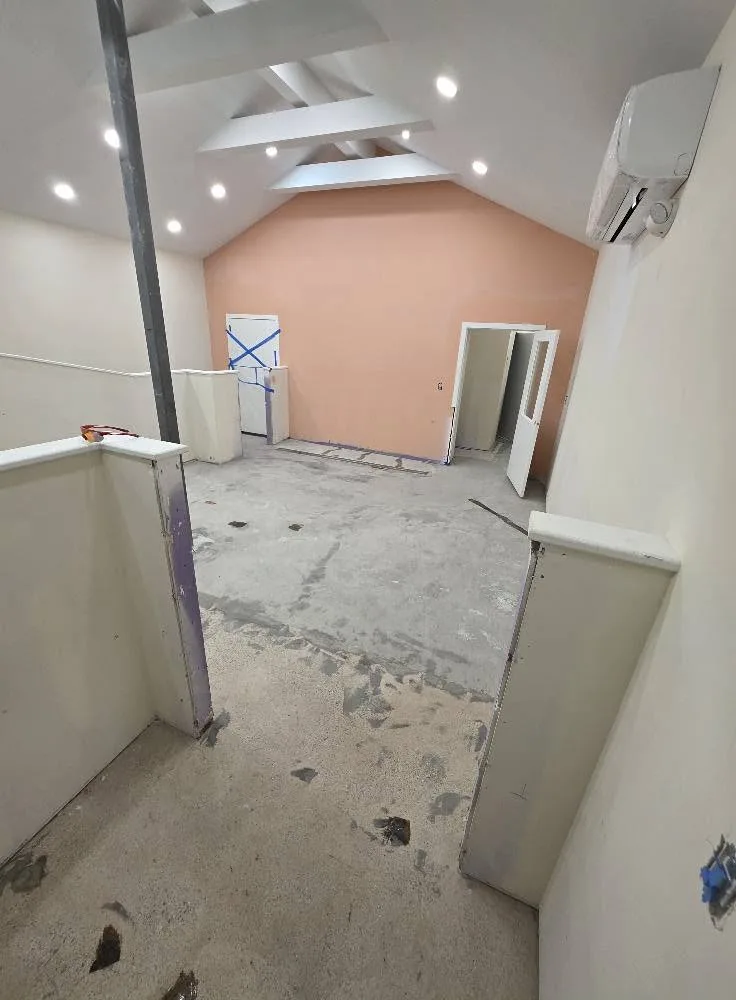
Localized Resin Floor Repairs, start to finish
A localized repair treats a defined section of a resin floor and leaves everything outside it alone. The damaged area is marked off along a clean line, often a joint or a wall, so the edge of the repair has a natural place to sit. Inside that line, the old coating is ground off to sound material, the concrete is repaired, and a new coating is poured that matches the floor around it as closely as the system allows. The rest of the room can usually keep working.
On the final walk he checks the edge of the repair with you from both sides.
It fits floors where the damage has a clear boundary and a clear cause, like a spill zone, a leak or one heavy-use path. If the floor is failing in scattered spots across the room, a single zone repair will not solve it. The edge of a localized repair is the honest limit: on a flake floor it blends well, on a solid color it comes close, and on an older floor that has faded, the new section may read slightly brighter until it ages in.
Danny walks the whole floor first, even when only one area is damaged, so he knows the zone really is the only problem. He looks for the cause, such as a leak, a chemical, a cart path or a water line at a door, since a repair that ignores the cause comes back. Then he marks the boundary along a joint or a straight line, closes that area, grinds the old coating out, repairs the concrete and pours the new coating. Traffic stays out of the zone through the cure. On the final walk he checks the edge of the repair with you from both sides.
Fix the cause of the damage before fixing the floor it damaged.
How Danny does the job
A zone repair has two jobs, fixing the damaged section and protecting the floor around it, so these stages plan the boundary as carefully as the repair itself.


Confirming the damage stays put
Before planning any zone, Danny walks the floor outside it to make sure the problem really is contained, sounding the coating in a wide ring around the visible damage. A failure that runs past the obvious area changes the size of the repair before any line is drawn.

Drawing the cut line
He snaps a chalk line along the nearest joint, wall or straight run of the room and shows it to the manager. The boundary is then cut with a saw or a grinder, so the old coating ends in a clean, square edge instead of a ragged one.

Sealing the zone off
Plastic sheeting, barricades and a clear walkway around the zone keep the rest of the business moving while the work goes on. Dust collection runs on every tool, and the edge of the old coating is taped so the grinder does not chew past the line.

Grind, repair, pour to the line
Inside the boundary, the damaged coating comes off, the concrete is repaired and leveled, and the new system is poured up to the cut edge. Bulletproof Resins products are matched to what the zone will face, such as the drip from the machine that caused the trouble.

Opening the zone back up
Barriers stay until the repair has cured to the point the product allows traffic. Danny then walks the boundary with the manager, checking the join from both sides by eye and underfoot, and the plastic comes down with the floor ready for the next shift.
More of Danny’s floors
Other jobs from the file, not all of them this service. See the gallery








Questions about localized resin floor repairs
Can the rest of my floor stay open during the repair?
Usually, yes. Only the marked section is closed for grinding, pouring and cure, and the work area is kept separate from the rest of the room. Dust and access are planned at the walk so the parts of the floor still in use are not disrupted more than they need to be.
Will the repaired section match the old floor?
It comes close on most flake and solid color floors. On a floor that has dulled or faded with age, the new section can look a little brighter at first. If an exact match matters, a fresh topcoat over the whole room after the repair evens the sheen, and Danny will raise that option.
How do you decide where the repair stops?
Danny looks for a natural line near the damage, usually a joint, a wall, a doorway or the edge of a work area, and runs the repair to it. A straight boundary in a sensible place hides much better than a ragged patch. He marks the line during the walk so you can see it before work starts.
What if the equipment that caused the damage cannot be moved?
Then the repair works around it. The zone stops at the machine’s base, which gets a sealed edge so liquid cannot work under the new coating. Drip pans or a small curb around the leak point help keep the new section from taking the same beating. Danny plans those details with the manager during the walk.
Can several separate zones be repaired on the same visit?
Yes, if the floor can spare them at once. Several small zones are often done together, each with its own boundary and barriers, which saves repeated setup. If closing them together would block too much of the floor, Danny sequences them so traffic can always get around the work.
Does a localized repair need the same coating system as the original floor?
Ideally it uses the same type of system, so the new section wears and cleans like its neighbors. If the original failed because it was the wrong system for that spot, such as a light coating under a leaking machine, the zone may get something heavier while matching the color as closely as that system allows.
Other repair work
Peeling, bubbling, chipped or faded coatings, patched or recoated, plus upkeep plans for floors that work hard.
- Floor Coating Maintenance ProgramsReturn visits on a schedule you choose, catching chips, dull lanes and worn topcoats early so a coated floor stays ahead of its wear.
- Epoxy Floor Deep CleaningCleaner haze, tire marks and ground-in grime stripped off a dull epoxy floor, so you see what it really looks like before deciding on repairs.
- Floor Coating Inspection ServicesA hands-on walk of an existing coated floor, with a plain read on what is sound, what is failing and what each part needs.
- Protective Topcoat RenewalA fresh clear wear layer poured over a sound coated floor before traffic reaches the color, with the option to change the sheen.
- Scheduled Commercial Floor MaintenanceFloor maintenance visits set on the business calendar, with small fixes handled on the spot and bigger work booked for planned closures.
Every county Danny covers, and every town in them, has its own page. See every areaSee the gallery
Danz Handz
Danny Carrero, epoxy specialist
dhepoxy@gmail.com
Cranford, NJ. Mon to Sat, 8 to 6. Hablamos español.
Start with a visit
Tell Danny about the space. He calls you back, comes out, looks at the concrete and talks it through before anything gets decided.