
Logistics floors that help crews read the building
On a logistics floor, color does real work. An inbound lane in one tone and staging in another lets a new hire find their way on day one without asking, and the walkways stand out from both. Danny lays those colors out with the floor plan in hand, then picks a coating that can take the forklift traffic.

What goes into logistics facility flooring
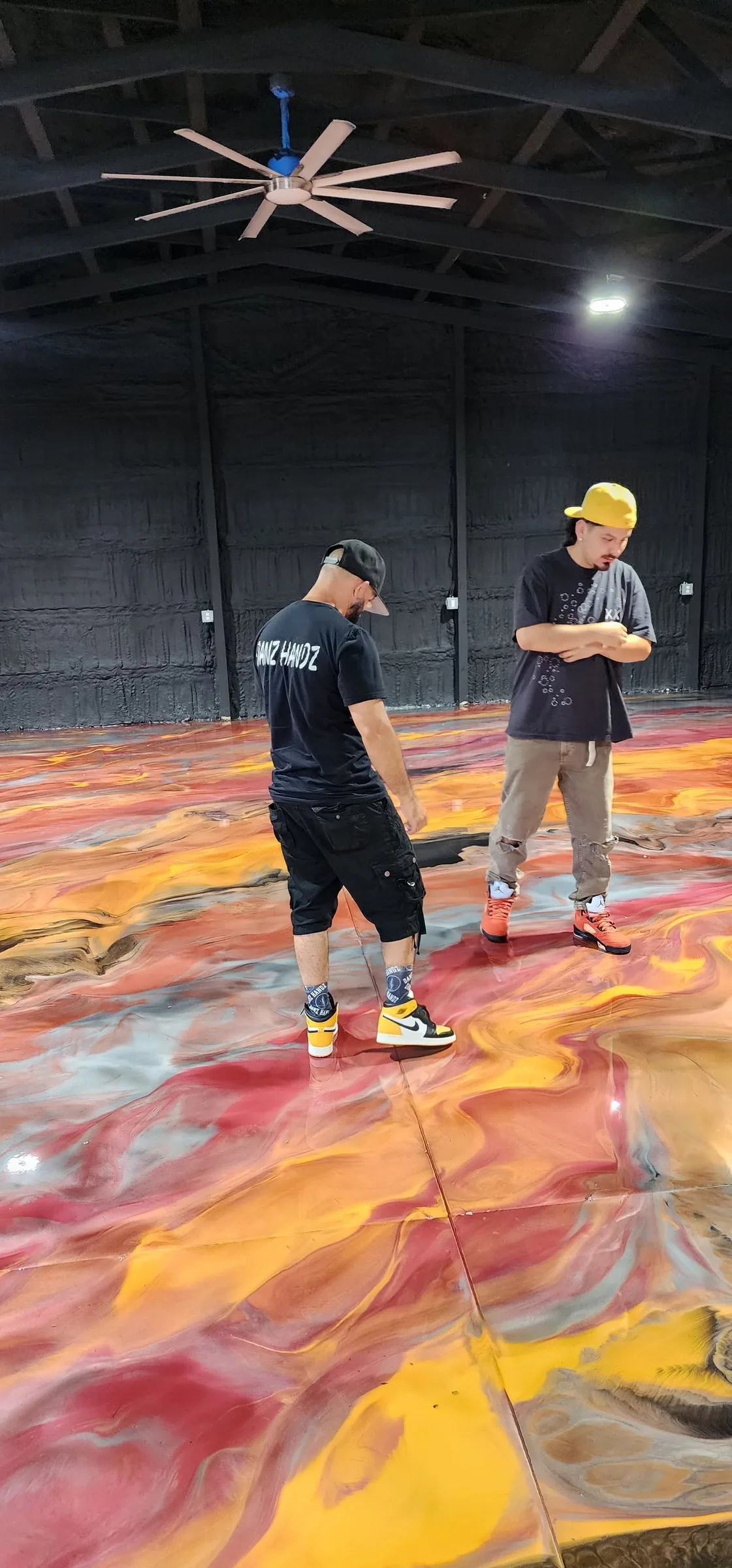
A logistics floor coating is a resin system bonded to the slab, usually in a durable base color with defined zones poured in contrasting colors. Staging lanes, cross-dock areas, returns and quarantine spots can each carry their own color, so freight ends up in the right place without anyone reading a sign. The base system is picked once Danny has looked at the facility, the traffic it takes and what gets spilled on it, and it is matched to those requirements and the product data.
Damaged joints and dock edges need repair before any of it holds up.
Color zones work best when the layout is settled. A 3PL that changes clients and floor plans often may outgrow a fixed color layout quickly, and painted lines or tape may be easier to change than poured zones. Coating is also a hard surface that wears in the busiest lanes, so the topcoat in cross-dock traffic will need refreshing sooner than in storage. Damaged joints and dock edges need repair before any of it holds up. Danny will say when the layout is too fluid for poured color.
Freight gets followed from the dock to storage and back out again on the first visit. Danny asks the operations lead how the layout works today, what changes from client to client, and what spills. Then he sketches the zones that make sense to pour in color and the ones that should stay flexible. The floor is diamond ground, joints and cracks are repaired, and the base coat and zone colors are poured in phases while the building keeps working. Each phase gets a final walk with operations before freight comes back onto it.
Poured color only helps if the layout under it is going to stay put.
How Danny does the job
Logistics floors are planned around how freight moves and which parts of the layout will stay put. These stages run from that layout to poured color zones.

Tracing freight dock to dock
Danny follows a few loads with the operations lead, from the inbound doors through staging and storage to the outbound lanes. The path shows which areas carry freight every day and which change with each client.

Separating fixed and flexible areas
Areas that will keep their purpose for years, like dock aprons, main travel lanes and returns, are marked for poured color. Areas that change with each contract are left for tape or striping that can be moved.

Base coat over the whole floor
After grinding and joint repair, a durable base color goes down across the building in phases. Its system is matched to the forklift traffic and spills in each area and checked against the product data before ordering.

Masking and pouring zone colors
Zone outlines are chalked from the agreed layout, masked with tape, and poured in their contrasting colors on top of the base. Edges are kept sharp so a staging box or returns area reads clearly from a forklift seat.

Walking zones with the shift leads
After the cure, Danny walks the zones with the operations team and shift leads so everyone sees the color for each area. Any change to the layout is noted before tape or signage is added to finish the job.
More of Danny’s floors
Other jobs from the file, not all of them this service. See the gallery






Questions about logistics facility flooring
Can different zones be poured in different colors?
Yes. The base coat goes down across the facility, and zones like staging lanes or returns can be poured in a contrasting color with clean edges. It works best for areas that will keep the same job. Danny sketches the zones with your operations lead before the pour so the layout matches how freight moves.
What if our layout changes with every new client?
Then keep poured color to the parts that never change, like the dock aprons and main travel lanes, and use striping or tape for the rest. Danny will point out which areas are stable enough to pour and which should stay flexible, so the floor does not lock you into an old layout.
Can you work around our dock schedule?
Yes. Docks and staging stay usable because only part of the floor is out of service at a time. Danny builds the schedule with the operations team after watching a normal day in the building, and the busiest weeks of the year are best left alone for floor work.
How many zone colors should we use?
Fewer than most people expect. A base color plus a handful of zone colors stays easy to read from a forklift seat, while a floor with many colors starts to look busy and confuses new hires. Danny helps pick colors that contrast with the base and with each other under your lighting.
Will poured zone colors wear faster than the base?
Zone colors are part of the same coating system and wear at about the same rate in the same traffic. Zones in the busiest lanes will show wear before quiet ones, as the base does. When a zone thins, it can be recoated in its color without redoing the floor around it.
Can signage or numbers be added inside the zones?
Yes. Zone names, door numbers or location codes can be added as stenciled graphics inside the poured colors, sealed under the topcoat where they will get traffic. Simple, bold lettering holds up and reads best. Danny lays out the text with operations before it goes down.
Other industrial work
Warehouses, plants, loading docks and machine shops, with safety striping and aisle marking when the space needs it.
- Maintenance Bay FlooringResin floors for in-house maintenance shops where a facility repairs its own forklifts and equipment, built light so drips and parts show.
- Industrial Workshop Floor CoatingsResin floors for shared workshops where assembly, fabrication and woodworking happen in one room, sealed against dust and easy to sweep.
- Industrial Concrete Joint RepairRebuilt joint edges and fresh filler for slabs where forklift wheels have broken down the joints, so traffic rolls across without a jolt.
- Manufacturing Floor RestorationOld plant floors ground back to sound concrete, repaired and recoated in phases, so production keeps running while the floor is restored.
- Industrial Floor Moisture MitigationSlab moisture testing and vapor-control coats laid under the floor system, so rising moisture does not push a new coating off the concrete.
Based in Cranford, NJ. Danny takes work across New Jersey, the five boroughs, Long Island, Westchester and Rockland, Fairfield County and Bucks County. See every areaSee the gallery
Danz Handz
Danny Carrero, epoxy specialist
dhepoxy@gmail.com
Cranford, NJ. Mon to Sat, 8 to 6. Hablamos español.
Schedule a look at your floor
Tell Danny about the space. He calls you back, comes out, looks at the concrete and talks it through before anything gets decided.