
Coated floors for medical offices and exam rooms
Before he talks about color, Danny asks to see the supply closet. A medical floor gets mopped with whatever disinfectant the practice already buys, and that list decides the topcoat. The rest follows the rooms, with light solids where the exam tables sit and a warmer tone or soft metallic out in the waiting room.

Medical Office Flooring, start to finish
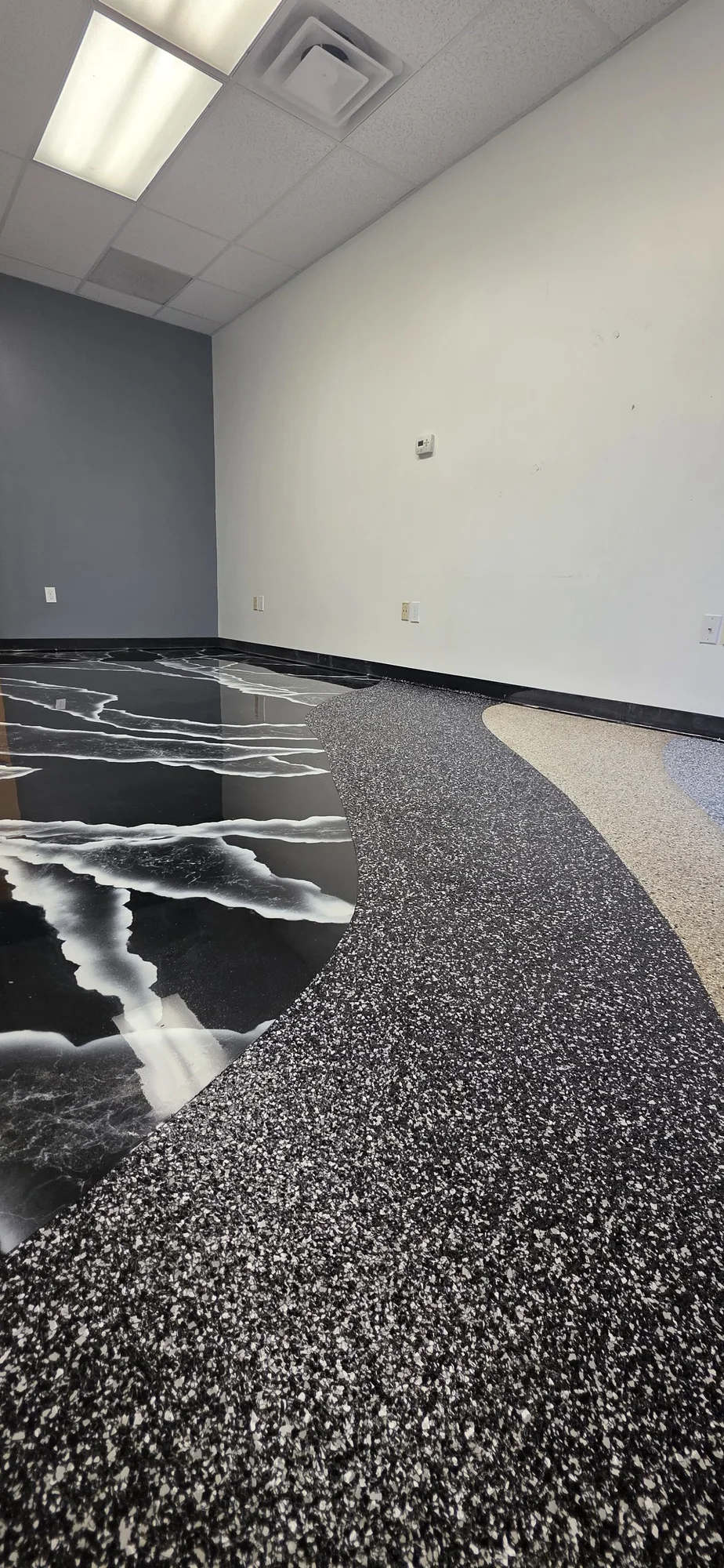
The floor is a resin coating poured over the ground concrete slab, with no grout lines or vinyl seams where grime collects at the edges. Solid colors are the common choice in clinical rooms, often in light, quiet tones, and a fine flake or soft metallic can go in the waiting room to make it feel less institutional. The surface is hard, so carts and wheelchairs roll easily. Wall base can be carried up a few inches where the practice wants the joint between floor and wall to wipe clean.
Some disinfectants are hard on certain topcoats over time, so he asks what the cleaning staff uses before recommending anything.
Danny does not set medical requirements, and he will not claim a floor meets one. If the practice or the building has a flooring requirement, that comes first, and the system gets chosen to it using the manufacturer’s product data. Cleaning products matter too. Some disinfectants are hard on certain topcoats over time, so he asks what the cleaning staff uses before recommending anything. Practices above the ground floor on wood framing, or in suites where the slab carries moisture, may need a different approach.
Room by room is how a medical suite gets planned. Danny goes through it with the practice manager, noting where exam tables sit and where the old flooring is loose or curling. He asks about the cleaning routine and the products in the supply closet. The old floor and adhesive come up, the slab is diamond ground, and cracks get repaired so the surface is even for wheels. Medical offices usually cannot close for long, so the work is often split into phases, a few rooms at a time. Each section gets a final walk with the manager before patients come back in.
The cleaning routine already in place decides which topcoat belongs on a medical floor.
From bare slab to finished floor
A medical suite is usually done after hours and a few rooms at a time. The stages run from the cleaning list to handing each finished room back to the clinical staff.

Collecting the cleaning products
Before planning rooms, Danny asks for the names of the disinfectants and floor cleaners the staff and the janitorial service use. That list, checked against the product data, narrows which topcoats belong in the clinical rooms and which can go in the front office.

Leveling thresholds for wheels
Wheelchairs, walkers and rolling stools catch on any lip, so every doorway between rooms and the hall gets measured. The plan sets how the new floor meets each threshold, keeping transitions low and flat where patients cross in and out.

Scraping sheet vinyl and its glue
Medical suites often have sheet vinyl glued edge to edge. It comes up with the adhesive, the slab is diamond ground, and old anchor holes from exam tables and wall cabinets are filled flush so equipment can be placed anywhere later.

Pouring a room at a time
Rooms are poured in the order the practice agreed to, with the doors to finished and unfinished rooms kept closed. Exam rooms usually get a light solid, and the coating is carried up under sinks and into the corners where mop water sits.
Handing rooms back to clinical staff
When a room has cured, Danny and the practice manager roll a chair or stool across each threshold and check the edges at the sink and cabinets. The room goes back into use, and the next group of rooms closes on the schedule set at the start.
More of Danny’s floors
Other jobs from the file, not all of them this service. See the gallery








Questions about medical office flooring
Does this floor meet healthcare requirements?
Danny does not make compliance claims. If your practice or building has a flooring standard, share it, and the system gets chosen to that requirement using the manufacturer’s product data. What he can tell you is how the floor is built, how it cleans and where it wears, so you can check it against your own requirements.
Can the floor handle daily disinfecting?
Coated floors are cleaned daily in many medical settings, and that is a big reason practices choose them. Some strong cleaners are rougher on topcoats than others, which is why Danny asks for your product list before choosing the system. Following the dilution on the label and mopping with clean water keeps the finish from dulling early.
Can you work while we are seeing patients?
Not in the room being coated. Grinding throws noise and dust, so the area around it usually closes off too. Most practices split the work into sections or schedule it around closed days. Danny lays out a phased plan after the walk-through so you know which rooms are out of service and for how long.
Can the floor go under our exam tables and cabinets?
Exam tables that sit on the floor or bolt down are moved so the coating runs under them, then set back. Built-in base cabinets usually stay, and the coating stops at the toe kick with a sealed edge. Danny lists which pieces need to move on his first visit so the practice can arrange help for the heavier equipment.
Is a coated floor hard on staff who stand all day?
It is a hard surface, like the vinyl over concrete most suites already have. Staff who stand for long stretches at a counter or a procedure area often use anti-fatigue mats there. A coated floor works with those mats, and Danny can suggest where they will be needed based on how each room is used.
Can colored paths help patients find their way?
They can. A contrasting band or color field poured into the hallway can lead patients from reception toward the exam rooms or a lab. Simple shapes and a small number of colors read best. Danny sketches the layout with the practice manager so the lines match the room numbers and doors.
More from the commercial section
Salons, barbershops, showrooms, restaurants, offices, gyms and clinics, worked around your hours.
- Commercial Storage Room FlooringSealed storage room and stockroom floors that stop concrete dust, brighten the room and roll easily under carts and hand trucks.
- Apartment Common-Area Floor CoatingsCoated floors for apartment laundry rooms, mail rooms, storage and trash rooms, scheduled room by room so residents keep access.
- Property Management Floor Coating ServicesFloor coating for property managers, with one contact walking every building and consistent colors across laundry rooms, storage and lobbies.
- Tenant Improvement FlooringCoated concrete floors for tenant build-outs, timed into the construction schedule between the messy trades and move-in day.
- Commercial Renovation Floor CoatingsCoated floors for commercial renovations, starting with removing the old flooring and adhesive and repairing whatever the slab reveals.
The shop is in Cranford. Most jobs are within an hour or so, across four states. See every areaSee the gallery
Danz Handz
Danny Carrero, epoxy specialist
dhepoxy@gmail.com
Cranford, NJ. Mon to Sat, 8 to 6. Hablamos español.
Start with a visit
Send a few lines about the room and the look you want. Danny will call and set up a time to see it.