
Floors for quick lube lanes and oil change pits
In a quick lube lane the customer sits in the car watching the floor, and oil lands on the same few spots around the pit all day. Those spots go black first. A floor that wipes clean between cars keeps up with that pace, and Danny times the work around the shop’s slowest days.

How Danny approaches oil change shop floor coatings
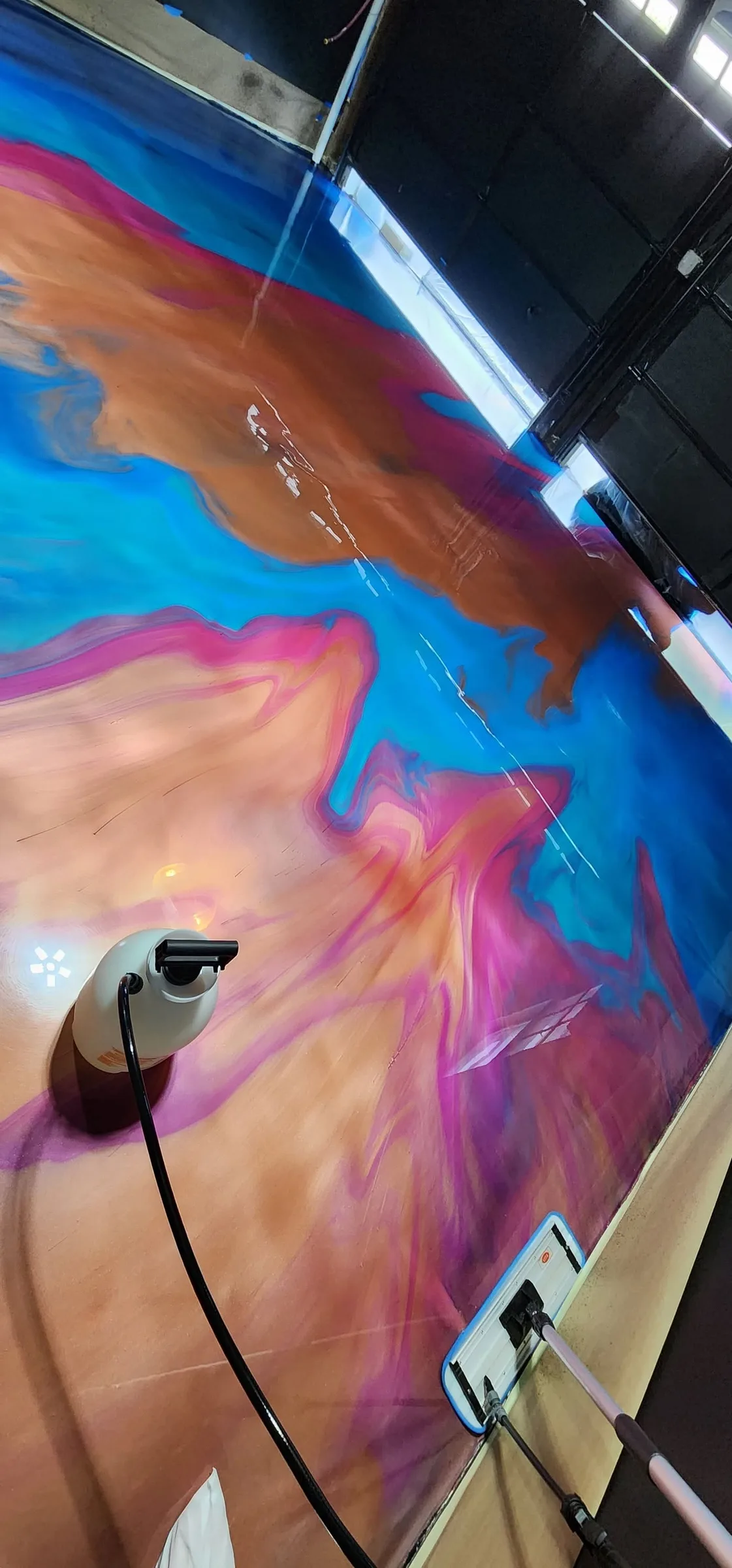
An oil change shop coating covers the drive-through lanes on the upper level and, where there is one, the lower bay or pit area. The coating seals the concrete so oil and dropped filters wipe up and do not soak in. A light texture keeps techs and customers steady on an oily surface, and a darker color or flake in the lanes hides drips between wipe-downs. The pit edges get special attention, since that is where the floor takes the most abuse. Danny looks at the shop and the traffic before recommending a system.
He looks at the lane surfaces, the pit edges and the lower bay, and he notes where techs stand and walk the most.
It fits shops on a slab with drive-through lanes that can be closed one at a time. Lower bays get oil dripped from above constantly, and their floors and walls may need more prep than the upper lanes. Pit edges with broken concrete or loose steel trim need repair first. A shop with a single lane is harder to keep running during the work and may need a short closure. Glossy finishes show oil drips fast, so a flake or darker color is the practical pick.
Danny visits during a normal day to watch cars come through and see where oil lands. He looks at the lane surfaces, the pit edges and the lower bay, and he notes where techs stand and walk the most. The work is planned lane by lane so the shop stays open on the others. Each lane is cleared, ground until the oil-stained top layer is gone, repaired at the pit edge and cracks, and coated with texture. A lane returns to service once it has cured and the owner has walked it with Danny.
In an oil change shop, the pit edge takes more abuse than any other foot of floor.
From bare slab to finished floor
Quick lube work runs one lane at a time. The stages below go from watching oil land during service to reopening each lane and starting on the next.

Watching oil land during service
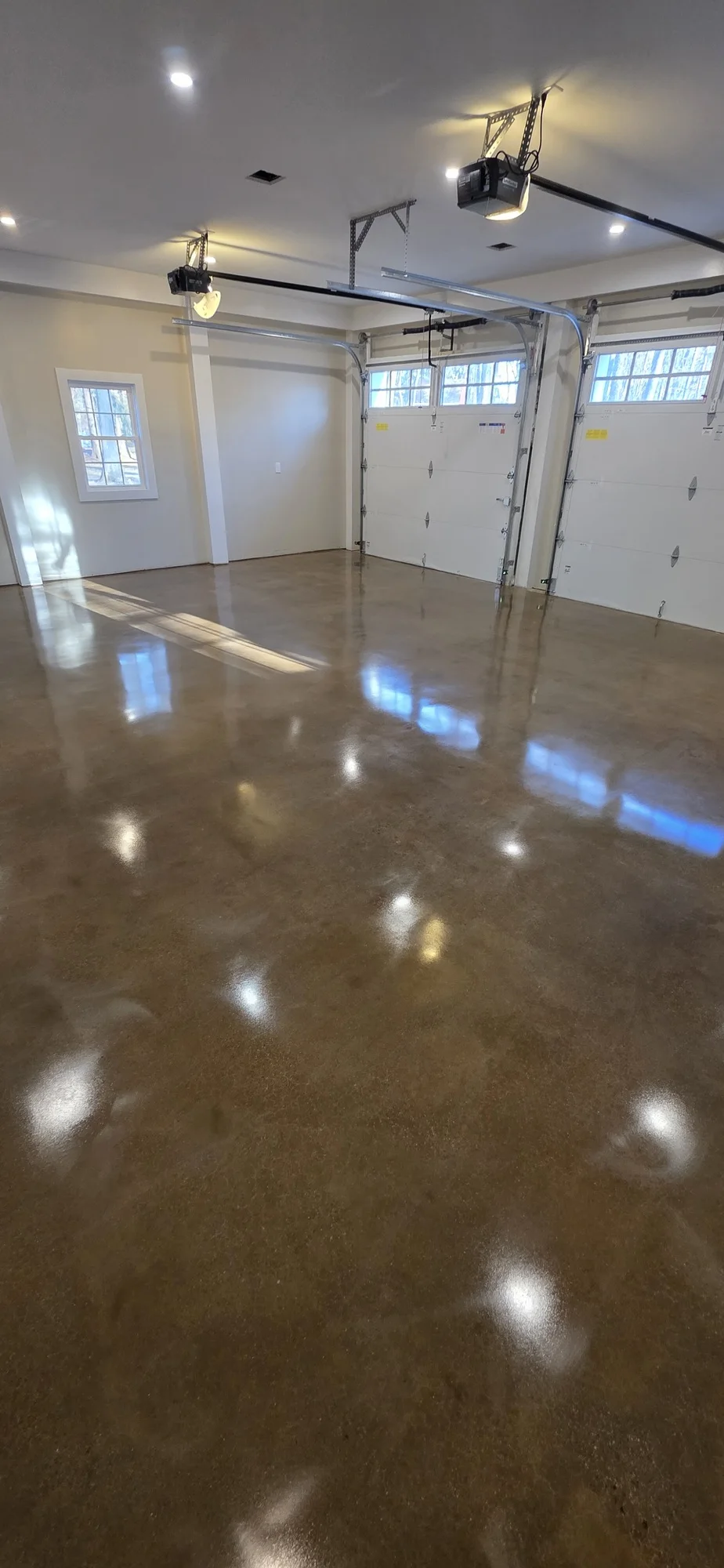
Danny watches several cars go through, from both the upper lane and the lower bay. He notes where oil drips, where filters and drain plugs get dropped, and where techs walk the most between the pit and the counter.

Inspecting pit edges and trim
The pit edges take boots, tools and dropped parts all day, and the steel trim along them can come loose. Danny checks each edge and the stairs into the lower bay, marking broken concrete and loose trim for repair before any coating goes down.

Degreasing the lower bay
The lower bay floor and the lower part of its walls usually carry the heaviest oil. They are degreased, then ground until clean concrete shows, and soaked spots get extra cleaning so the coating can bond there.
Darker texture in the lanes
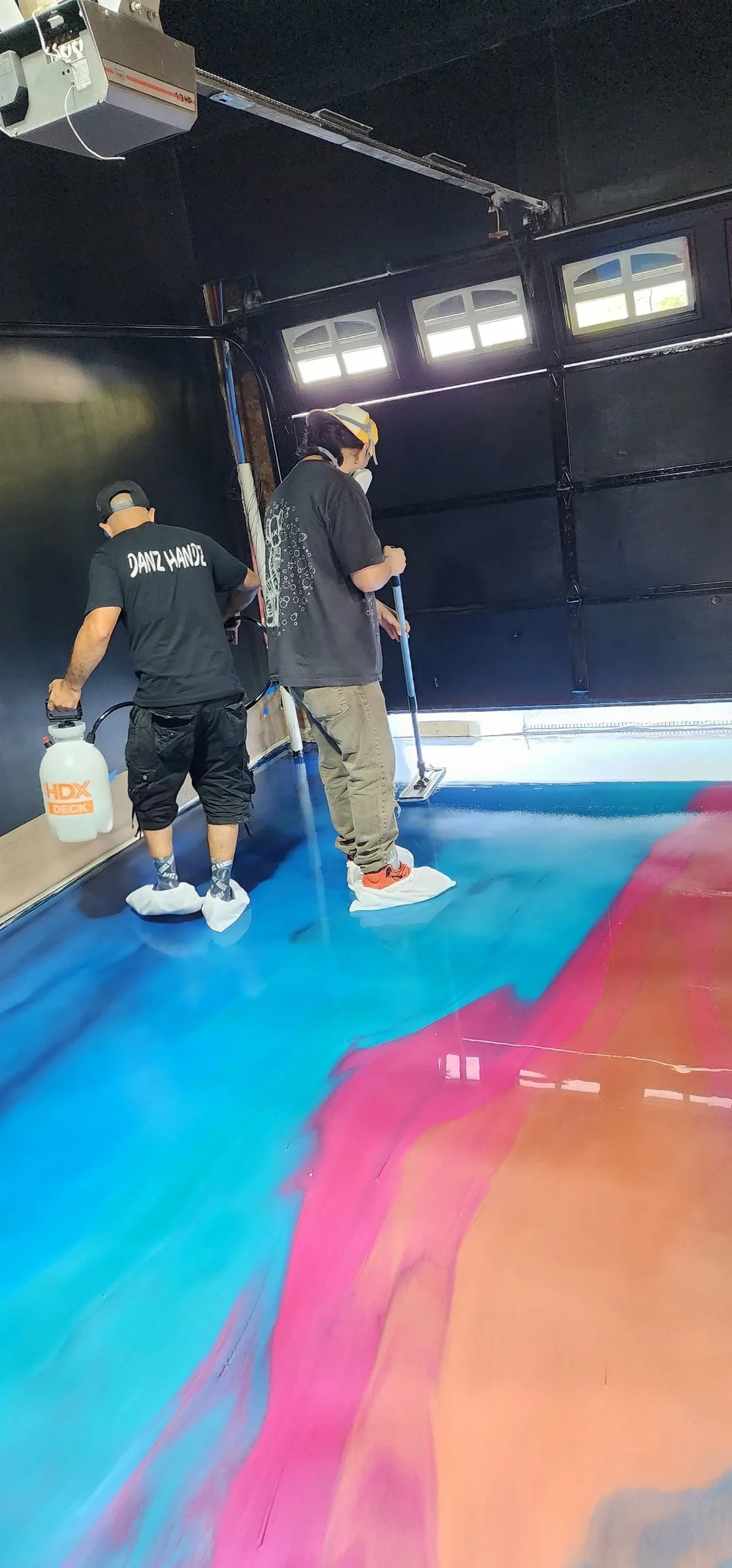
The upper lanes get a darker color or a flake that hides drips, with grit in the topcoat for oily boots. The pit edges are finished carefully, and the lower bay gets a textured system that handles oil from above.
Lane reopened, next one closed
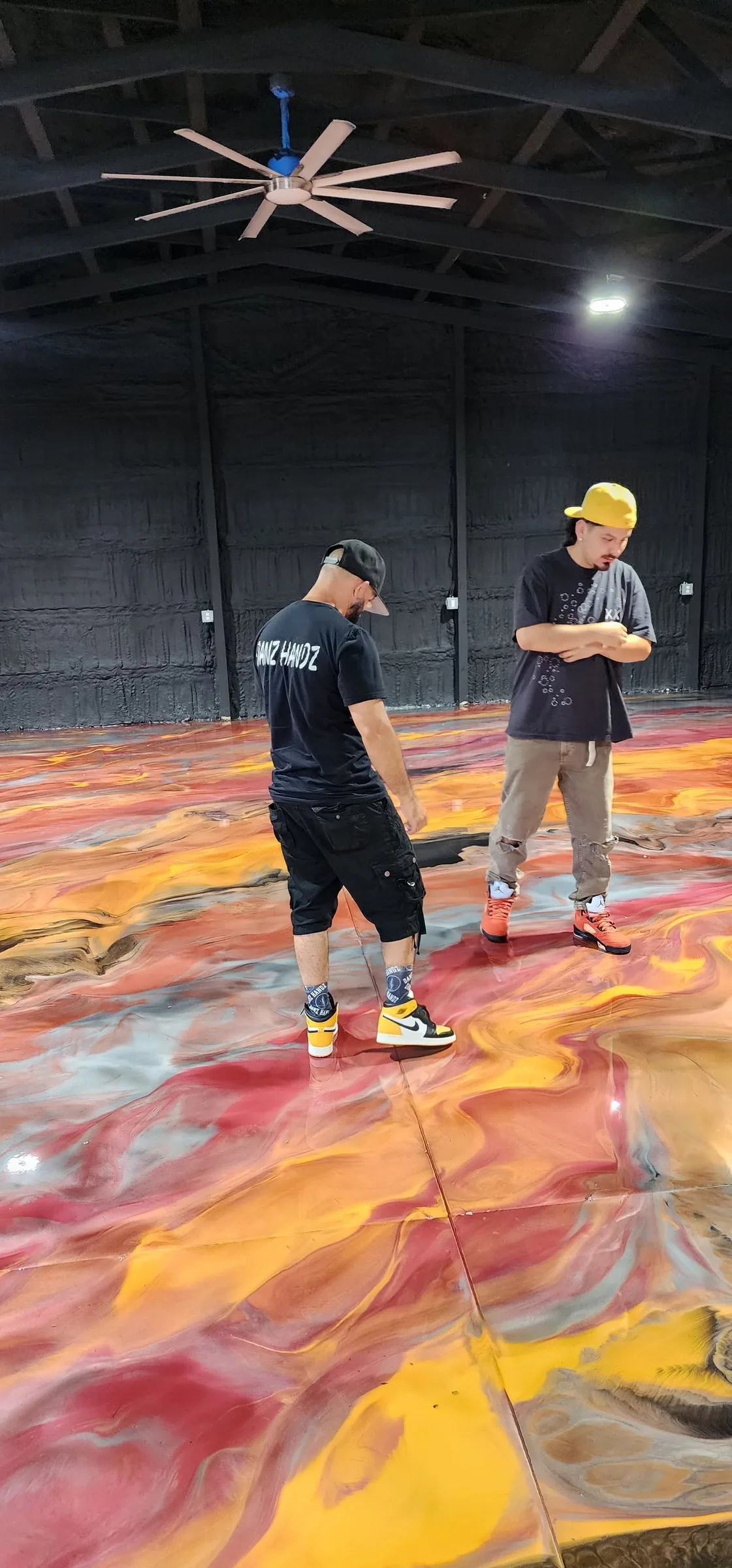
After the cure, Danny walks the lane with the owner, checking the pit edges and the stairs below. The lane goes back into service with absorbent and a squeegee at hand, the next lane is closed, and the work starts over there.
More of Danny’s floors
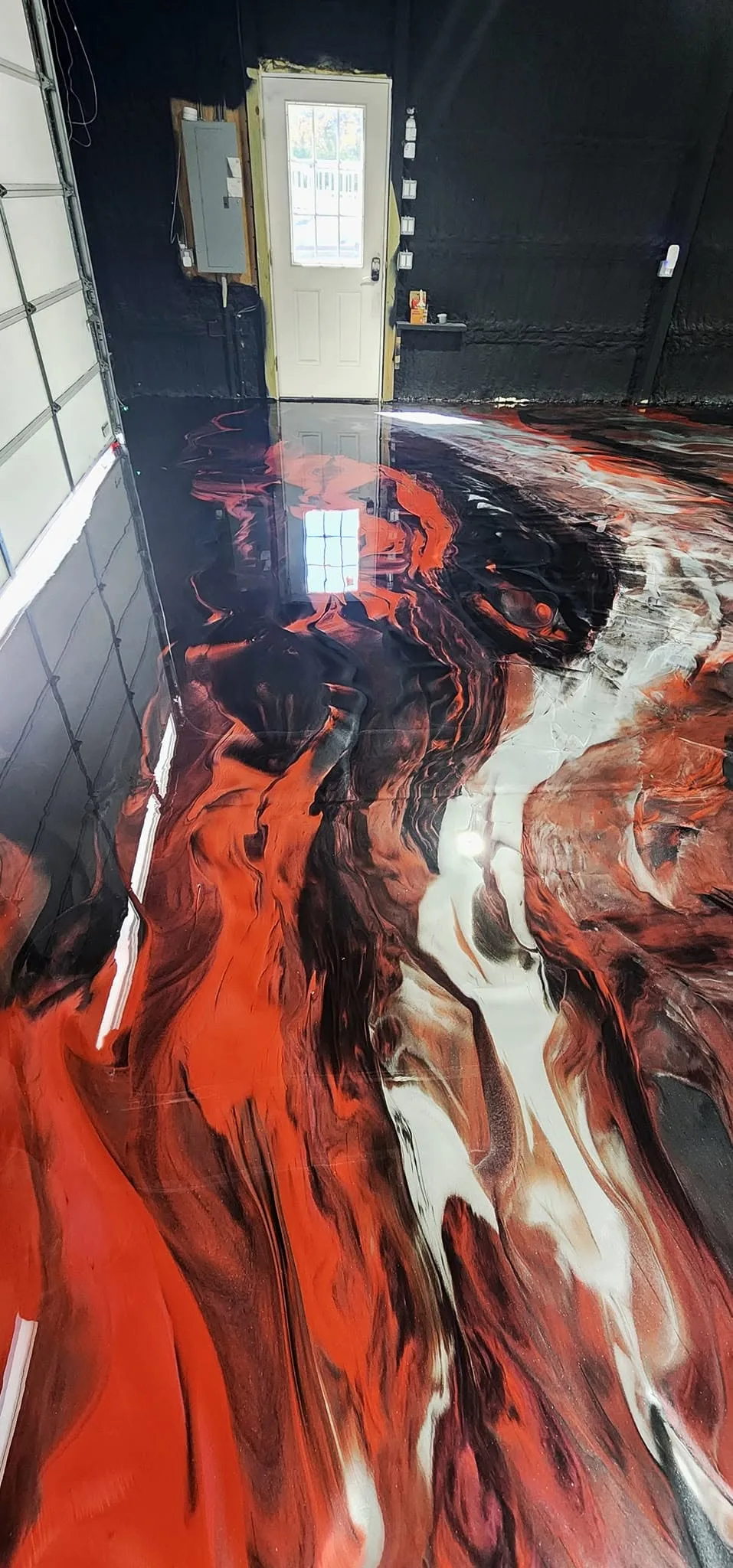
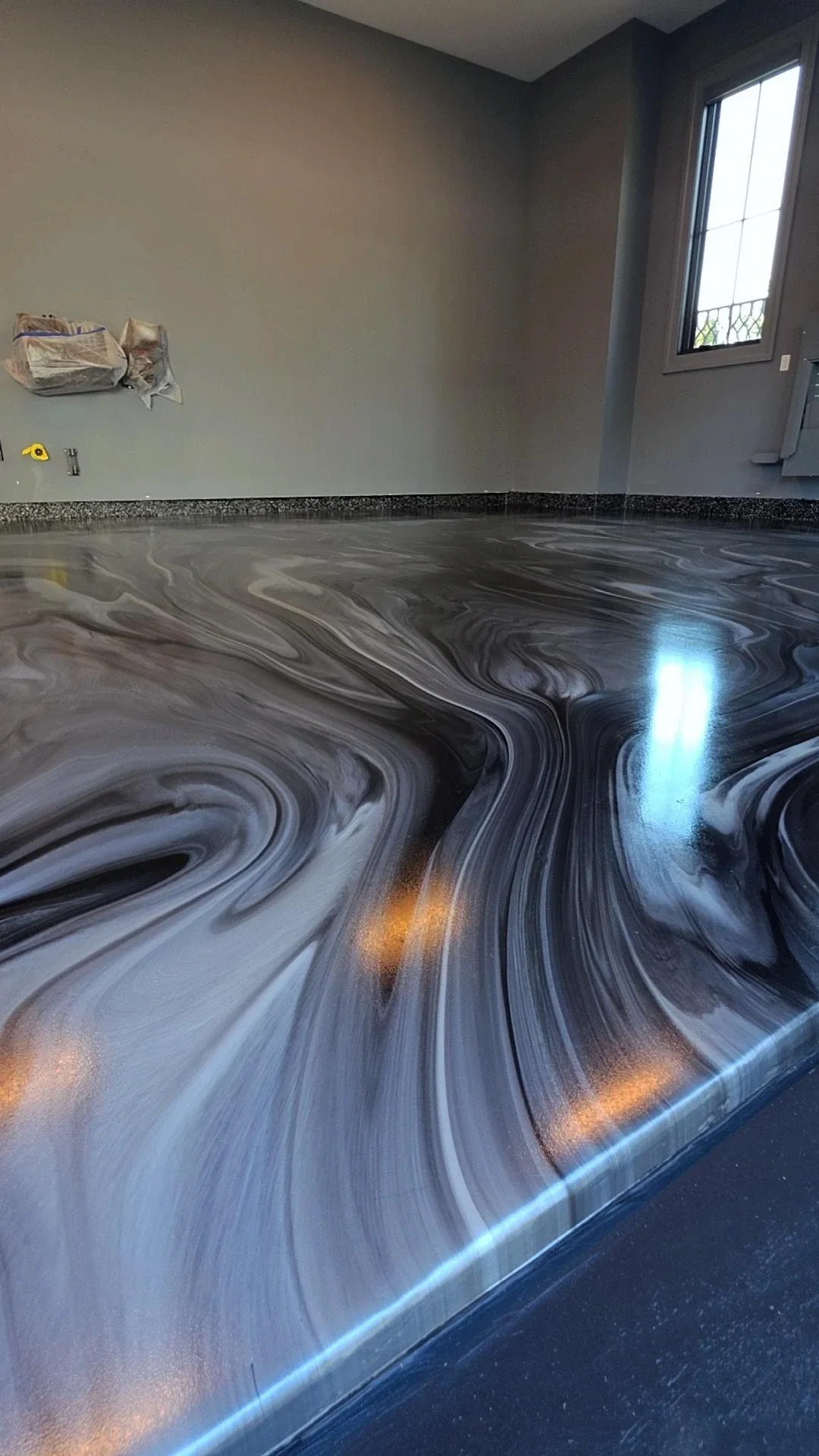
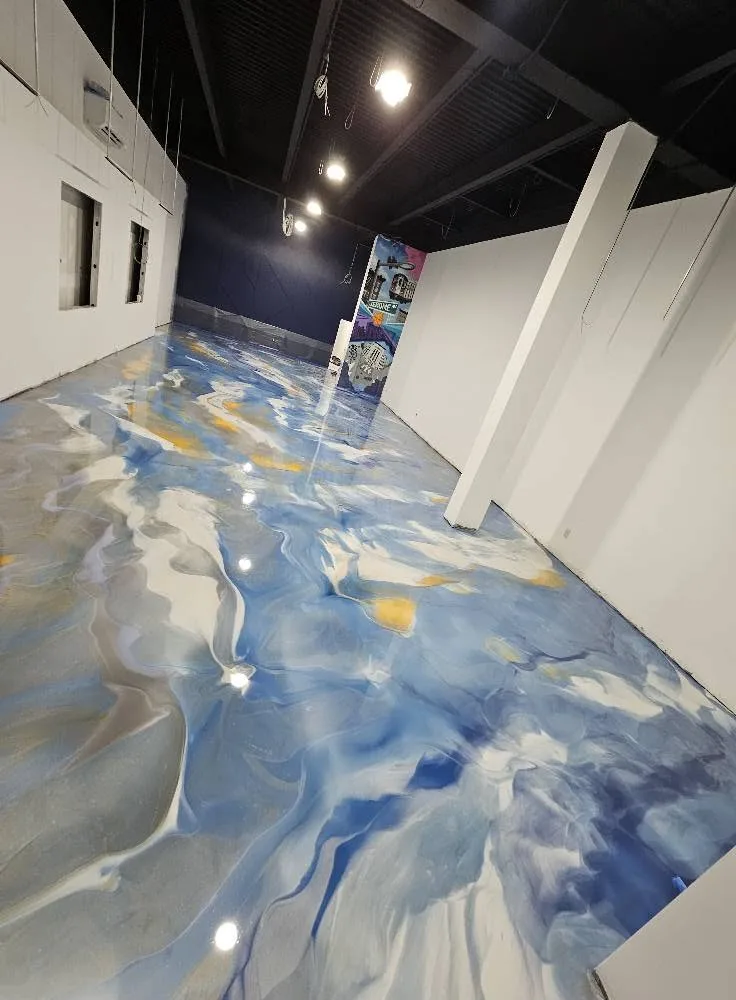
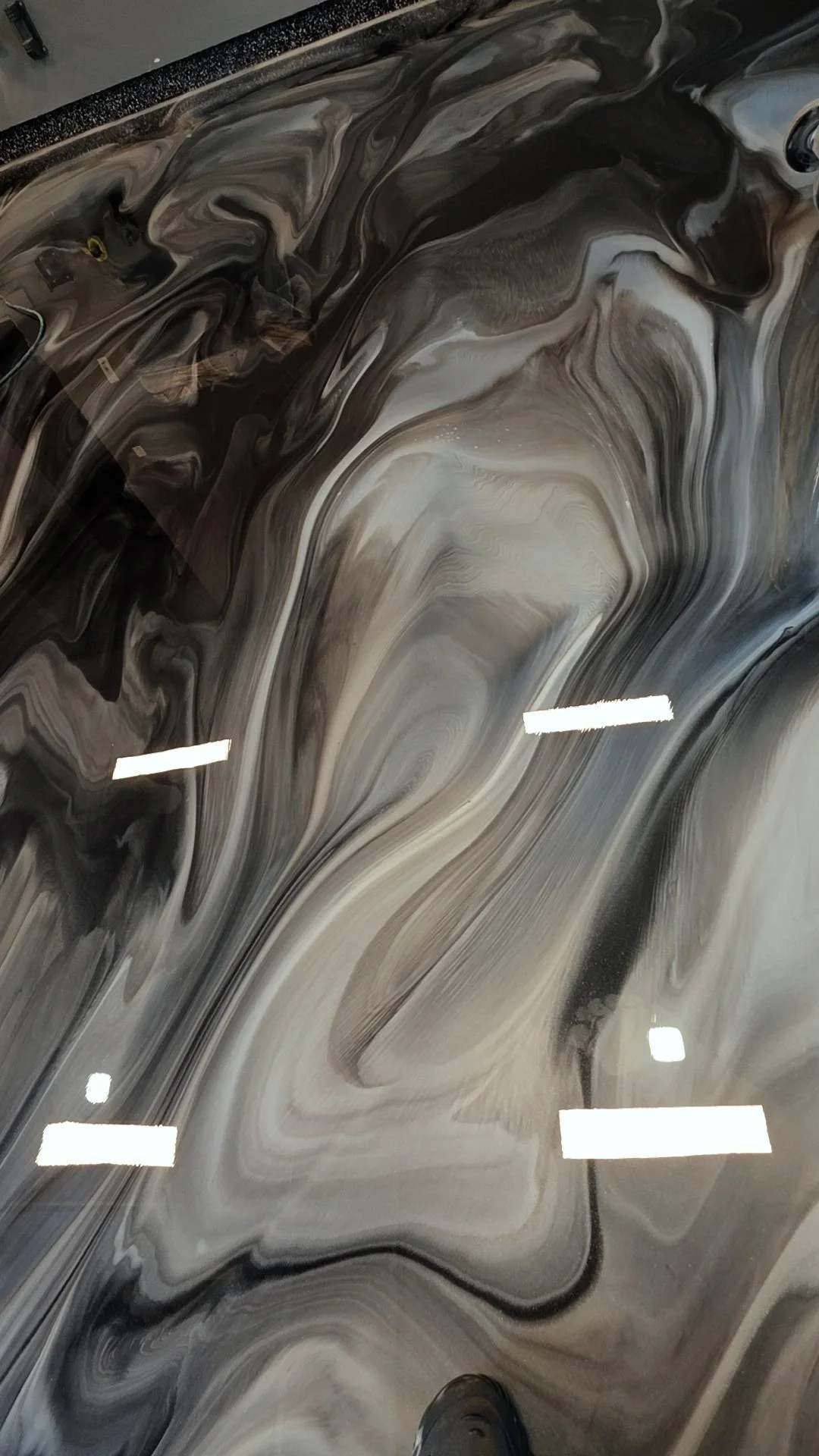
Other jobs from the file, not all of them this service. See the gallery




Questions about oil change shop floor coatings
Can you coat the lower bay or pit?
Often, yes. The lower bay sees oil dripping from above all day, so the floor and sometimes the walls need heavy prep to remove old oil before a coating will bond. Pit edges and stairs need careful detailing. Danny looks at the lower level during his walk and explains what it would take to include it in the job.
Will a coated floor be slippery with oil on it?
Any floor gets slick with oil on it, which is why the lanes get a light texture in the topcoat for grip. Texture plus quick cleanup with absorbent and a squeegee keeps the floor workable through a busy day. Danny can show textured samples so you can see and feel the difference before choosing a finish.
Can the shop stay open while you work?
With two or more lanes, usually yes. One lane closes for grinding, the coating and the cure while the others keep serving cars, then the next lane follows. A single-lane shop needs a short closure. Danny plans the order around your busiest days of the week so the work lands when traffic is lightest.
Can the pit stairs be coated?
Yes. Stairs into the lower bay get a textured coating on the treads, and the nosing at each step gets careful edge work, since that is where boots catch. If the stairs are steel, that is a different material and may need a different coating or treatment. Danny looks at the stairs during his walk.
Does the used oil tank area need anything special?
The area around a used oil tank or drum storage sees drips when tanks are filled and emptied. It can get a heavier build and, where wanted, a small curb so spills stay in that area. The tank itself is moved or worked around. Danny looks at how oil is handled there before planning it.
What about the drive-on apron outside the bay doors?
The concrete apron where cars wait to pull in faces weather, salt and oil drips. It can be coated with a system made for outdoor use and a textured surface, though it usually wears faster than the indoor lanes. Danny looks at its condition and drainage before suggesting whether it belongs in the job.
More from the automotive section
Repair shops, detailing studios, dealership bays and showrooms, where oil, tires and lifts meet the floor every day.
- Motorcycle Workshop FlooringCoated floors for motorcycle shops and home bike garages, chosen for kickstand loads and oil drips, with flake or metallic looks.
- Fleet Maintenance Facility FlooringFleet maintenance floors coated in phases, bay by bay, so service keeps running while the shop gets a cleaner, brighter surface.
- Truck Maintenance Bay FlooringHeavy-duty coatings for truck maintenance bays, built for jack stands and dropped parts and for the salt and slush that come through the doors.
- Bus Depot Floor CoatingsZone-by-zone floor coatings for bus depots, from service bays to the wash line, planned around the hours buses are out on route.
- Automotive Dealership Service Bay FlooringDealership service drive and bay floors that look right to the customer at the write-up lane and hold up for the techs.
From Union County out to the Lehigh Valley, Long Island and Fairfield County, the work is all within about 60 miles of Cranford. See every areaSee the gallery
Danz Handz
Danny Carrero, epoxy specialist
dhepoxy@gmail.com
Cranford, NJ. Mon to Sat, 8 to 6. Hablamos español.
Tell Danny about the floor
Send a few lines about the room and the look you want. Danny will call and set up a time to see it.