
Brand details set into the floor where shoppers stand
Shoppers stop in a few spots in every store: the entrance, the checkout, the front of a feature display. A brand detail inlaid right there puts the brand underfoot where people pause and look around, and Danny places it after watching how customers move through the space.


Retail Branding Floor Inlays, start to finish
A retail floor inlay is a brand element set into one specific spot of a coated floor: a mark at the entry, a band in front of the register, a shape under a feature table, a tagline by the fitting rooms. Where floor graphics run across the whole room, an inlay is targeted and usually small. Danny lays it out in place, pours it in the brand’s colors or sets a printed graphic from the store’s print shop, and seals everything under a clear coat. Material comes from Bulletproof Resins.
It is a weaker choice for spots that get heavy cart traffic or constant scuffing, unless the store accepts some wear over time.
It fits stores with a concrete floor that is being coated or recoated, since the inlay goes in as part of the coating instead of being stuck on top later. It is a weaker choice for spots that get heavy cart traffic or constant scuffing, unless the store accepts some wear over time. Seasonal promotions and short campaigns are better on removable floor decals. An inlay is for brand elements the store expects to keep, and Danny will say which details belong in the floor and which belong on a sign.
Danny walks the store with the owner or the visual merchandising lead and asks where customers pause, where carts roll and where fixtures will stand. He marks out the inlay spots on the floor so everyone sees the size and placement. On install, the floor is diamond ground, repaired and leveled, and the base coat goes down. Each inlay is laid out and poured or set, then the clear coat goes over the whole floor. After the cure, he walks the store with the owner before the fixtures go back in.
Shoppers look down when they stop, so put the brand where they stop.
What happens on the job
An inlay only works where shoppers pause. Those spots are found in the real store, tested on paper and then set into the floor in the brand’s colors.

Watching where shoppers stop
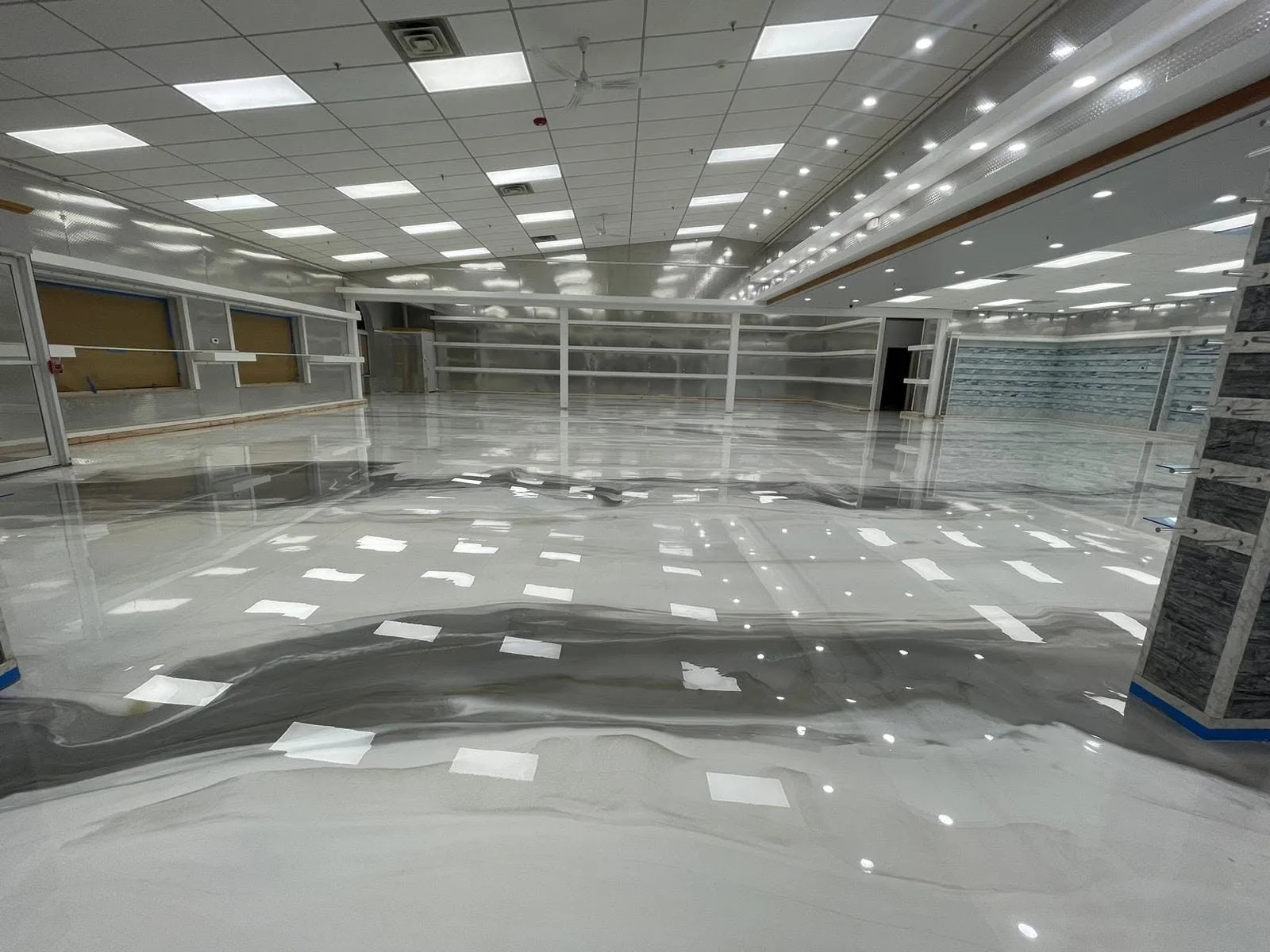
Danny spends time in the store during open hours, watching where people pause, look around or wait in line. Those pause points, more than the floor plan on paper, decide where an inlay will actually be seen and where it would go unnoticed.

Paper mock-ups in place
Full-size paper cutouts of each inlay are taped where they would go, so the owner and the merchandising lead can see them in the store’s light and among the fixtures for a few days. Placement and size get adjusted at this stage, while changes are simple.

Checking cart and stroller routes
Each spot is checked against the paths shopping carts, strollers and stock carts take. An inlay that sits in a turning lane is moved or reshaped, so wheels pass beside it instead of grinding across it all day.
Setting inlays into the base coat
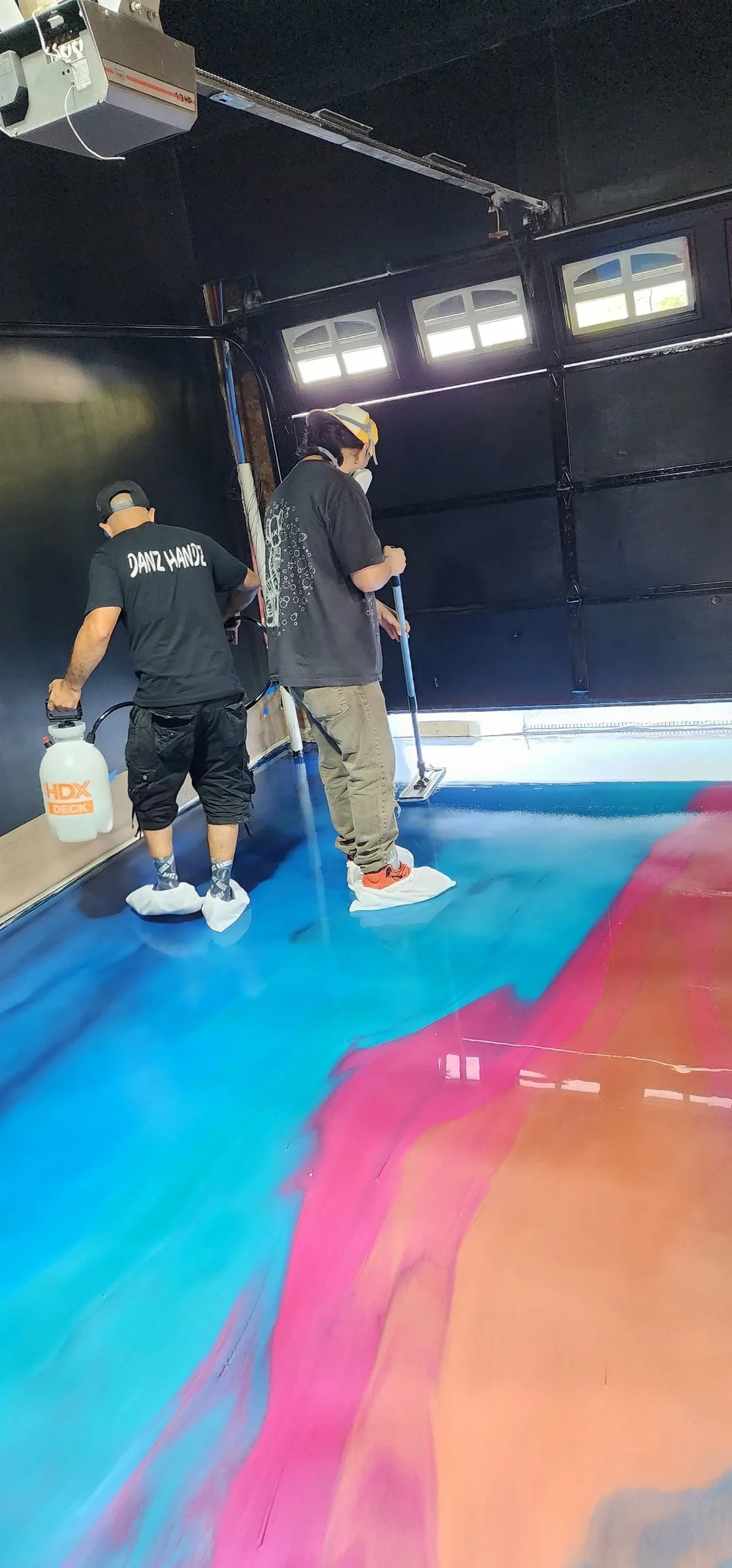
After grinding and repairs, the base coat goes down, and each inlay is laid out at its marked spot, poured in the brand colors or set as a printed graphic. Edges are kept tight, so the clear coat can bury every inlay level with the floor.

Clear coat, fixtures, doors open
The clear topcoat covers the whole floor in one pass. After the cure, fixtures return with pads on their feet, and Danny walks the store with the owner from the entrance to the register before customers come back in.
More of Danny’s floors
Other jobs from the file, not all of them this service. See the gallery







Questions about retail branding floor inlays
How is an inlay different from floor graphics?
Floor graphics cover large parts of the floor with bands, zones and patterns. An inlay is a single brand detail placed in one chosen spot, usually where customers stop. A store can have both. Danny plans them together so the inlays sit in the right places and the rest of the floor supports them.
Can we change the inlay when the brand changes?
The area can be ground and recoated with a new design, but that means closing that part of the store again. That is why Danny suggests inlays for brand elements you plan to keep, and removable decals for campaigns that change. He can talk through how a future change would work before you decide.
Can the store stay open during the work?
Usually only partly, if at all. The areas being ground, poured and cured have to be closed, and in a small store that can be most of the floor. Many stores schedule the work during a refit or a planned closure. Danny gives the timing after the walk so the owner can plan around it.
How many inlays should one store have?
Usually only a few. One at the entry and one near the register often carry the brand well, with perhaps one more under a feature display. Too many and none of them stands out. Danny suggests a number based on the store’s size and how many real pause points it has.
What if our fixtures move around seasonally?
Inlays are fixed, so they belong in spots that stay open whatever the layout: the entrance, the register, the fitting room approach. Areas that hold seasonal displays are better left plain or given removable decals. Danny looks at past layouts with the merchandising lead to find the spots that never get covered.
Can an inlay include a short slogan?
It can if the letters are large and bold. Short phrases read well at floor scale, while small type and long lines blur from standing height. A printed graphic set under the clear coat handles finer lettering better than a poured design. Danny tests the wording at full size with a paper mock-up first.
Also in custom
Color matching, sample boards, branded floors and epoxy countertops. Bring the idea and Danny builds the sample.
- Decorative Logo FlooringA single logo, monogram or emblem poured into a coated floor or set under the clear coat, placed where people stop and look down.
- Epoxy Floor Color MatchingEpoxy tinted to match a paint chip, swatch, cabinet or existing floor, sampled against the real reference in the room before the full pour.
- Custom Showroom Floor DesignDecorative showroom floors, often metallic, designed to make cars, boats and displays look better under the lights while customers walk the room.
- Luxury Garage FlooringHigh-end garage floors, mostly metallic epoxy, poured for collector cars and finished garages where the floor should match the rest of the house.
- Designer Basement Floor CoatingsDecorative basement floors in soft metallics, solid colors and flake, poured over a dry slab so the lower level looks like part of the house.
The shop is in Cranford. Most jobs are within an hour or so, across four states. See every areaSee the gallery
Danz Handz
Danny Carrero, epoxy specialist
dhepoxy@gmail.com
Cranford, NJ. Mon to Sat, 8 to 6. Hablamos español.
Book a walkthrough
Start with the room and the idea. Danny follows up by phone and comes to see the slab.