
Epoxy floors for boutiques and retail shops
In a store, the floor is part of the display. A boutique, a gallery shop or a sneaker store can carry its brand in a metallic or flake floor that handles daily customers, and the install gets planned around your sales calendar so the doors stay shut as briefly as possible.
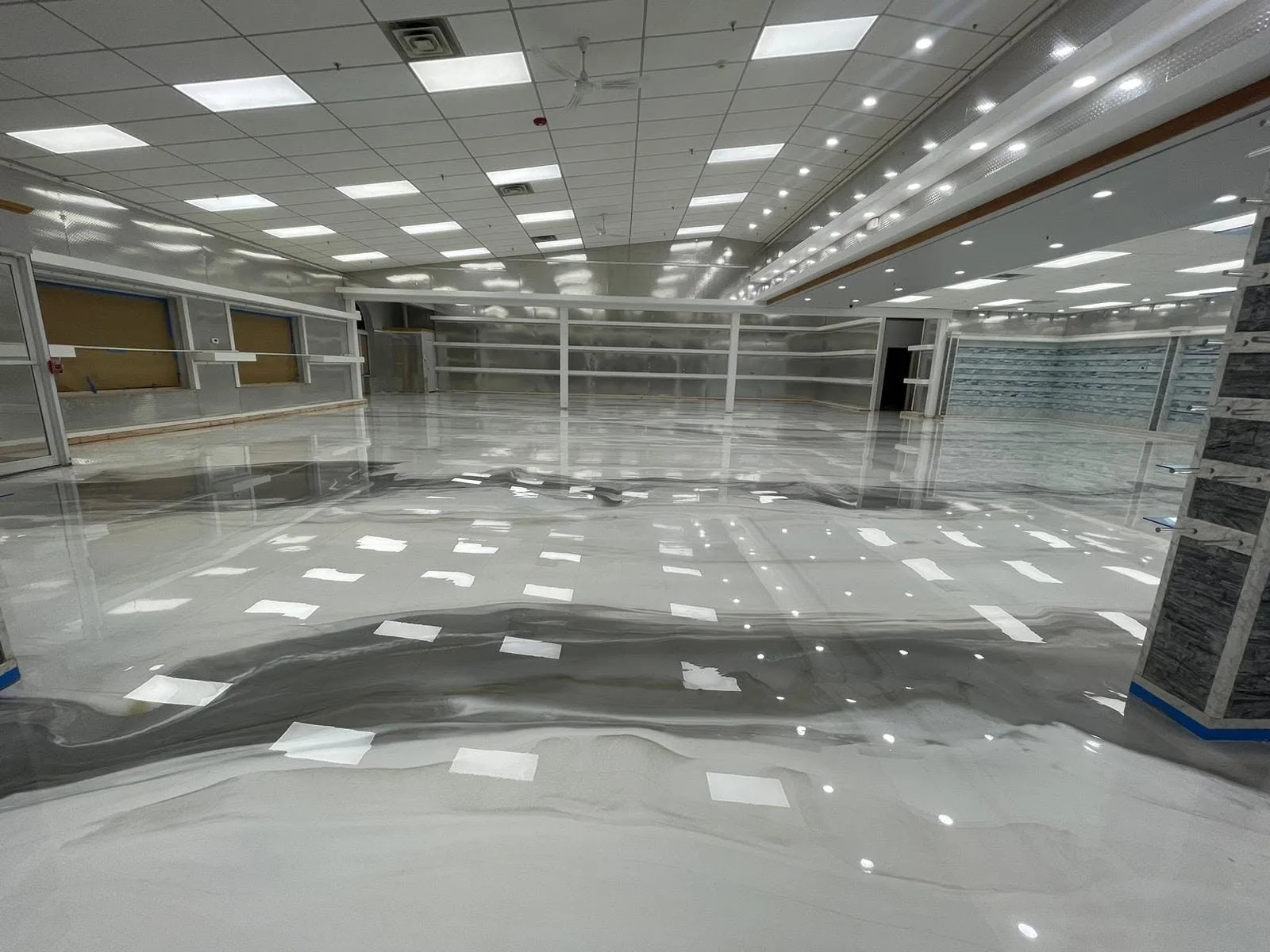

How Danny approaches retail store epoxy flooring
A retail floor is the same epoxy system Danny pours elsewhere: ground slab, repairs, primer, a base or decorative pour, and a topcoat. What changes is the brief. The floor has to match the store’s look, so color and finish get picked with the fixtures, lighting and brand in mind. It has to take carts, strollers, shoe grit and fixtures being moved for a new season. And it has to be scheduled around opening hours, since every closed day is lost business. A metallic floor can make a small shop memorable, and a solid color keeps the product in front.
The floor has to match the store’s look, so color and finish get picked with the fixtures, lighting and brand in mind.
Boutiques, salons with retail areas, galleries, sneaker and streetwear shops, furniture stores and showrooms are good fits. The limits are practical. Glossy floors show scuffs at the register and the entrance first, so a satin top or a busier pattern can be smarter in those zones. Very large stores with shopping carts and pallet jacks may need a tougher commercial system than a decorative pour. Floors in leased spaces also need the landlord’s approval, and the store has to close for the pour and cure, even if the closing is short.
Danny visits the store during or after hours and looks at it the way a customer would, from the door. He asks about the brand, the fixtures and how often the layout changes, then walks the slab under the old flooring if he can see it. Once the plan is set, the schedule is built around closed days: fixtures out, grinding, repairs, primer and the pour, then the cure with the doors locked. Danny keeps the strongest movement of a metallic pour in open floor where people see it. The final walk is from the entrance, with the store lights on.
Customers see the floor before they see the product on the shelf.
From bare slab to finished floor
A store floor is planned from the sales floor out, so the steps track the merchandising plan, the closed days and the moment the doors reopen.


Studying the fixture plan
Danny looks at the current layout and the plan for fixtures, racks and the register, asking which pieces move often. Zones that stay open for customers and zones hidden under fixtures get different attention in color and finish.

Brand colors in store lighting
Sample boards are set on the floor under the store’s own lights at the time of day it is busiest. Danny and the owner compare them with signage and packaging until one floor reads as part of the brand.

Clearing stock and fixtures
On the first closed day, merchandise and fixtures are moved out with the owner’s help, and anything bolted down is marked to come up or be worked around. The bare floor is then ready for grinding.

Prep and pour while closed
Grinding, repairs, primer and the decorative pour happen in sequence over the closed days. Bold metallic movement and the main color work go where shoppers walk and stand, and quieter tones go under the racks.

Pads under fixtures, then restock
Before stock returns, felt or nylon pads go under fixtures and display bases that will be shifted for new seasons. Danny walks the aisles with the owner, then the store is restocked once the floor is ready for traffic.
More of Danny’s floors
Other jobs from the file, not all of them this service. See the gallery


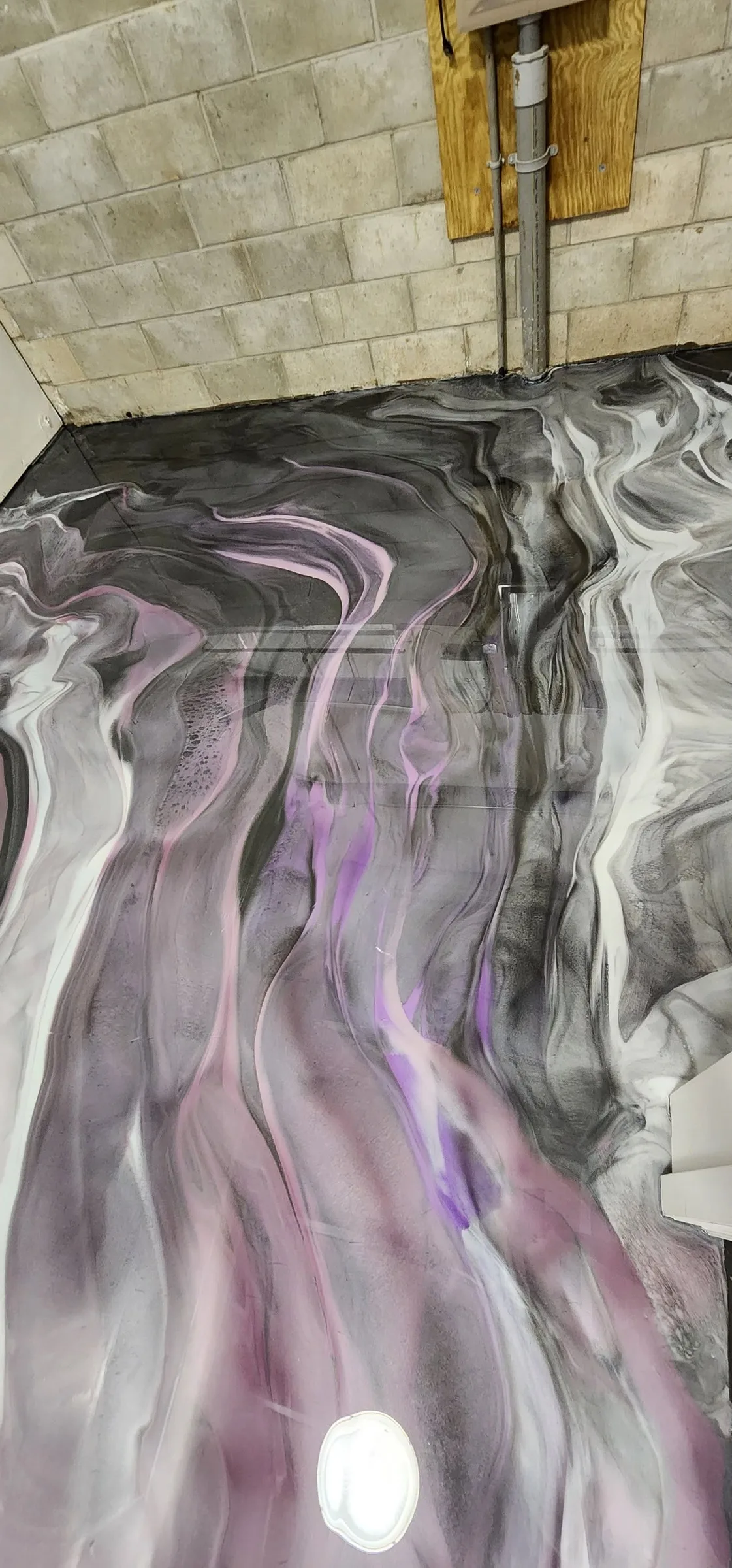


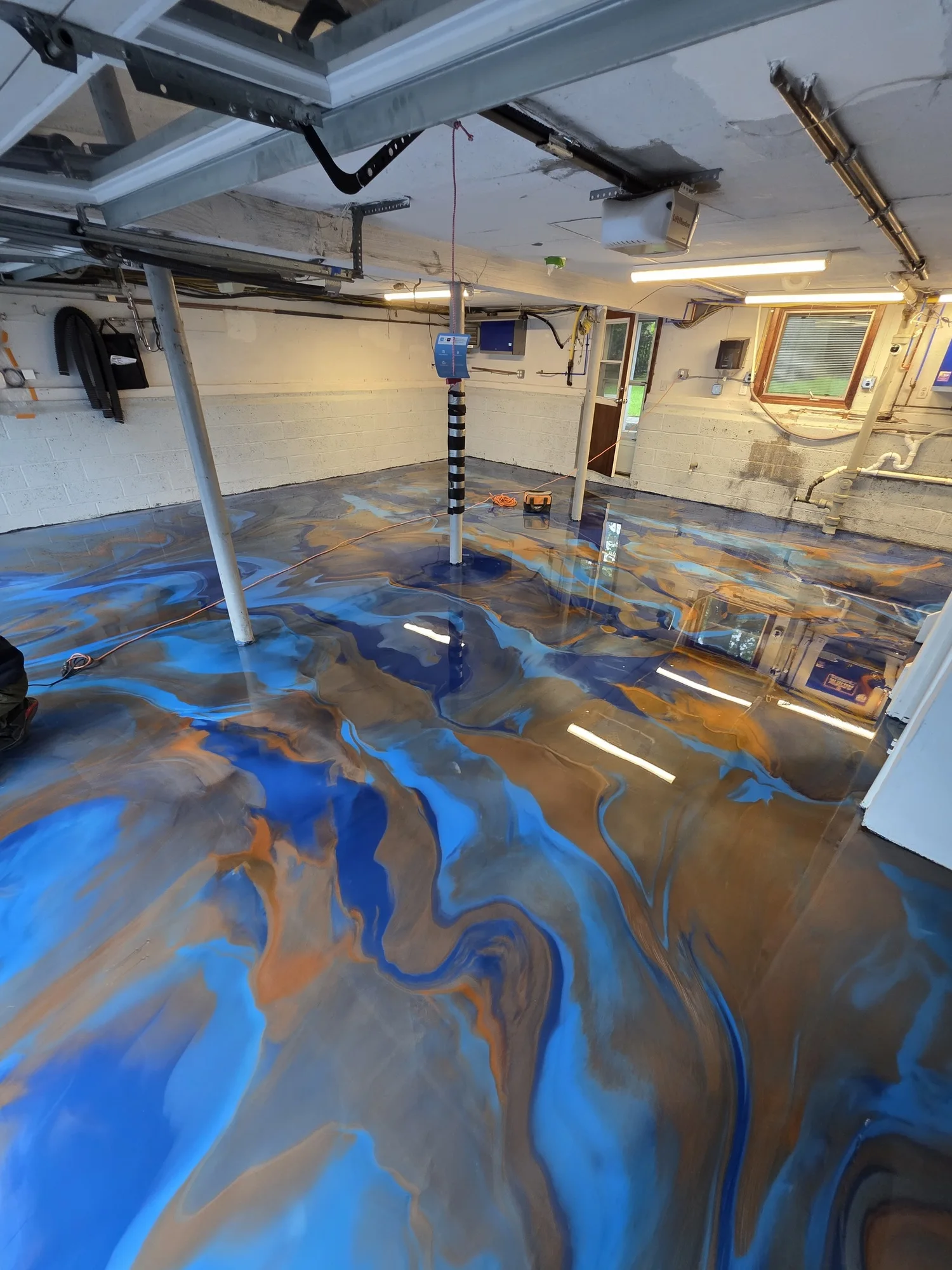


Questions about retail store epoxy flooring
Can my store stay open during the work?
Not on the area being coated. Grinding is loud and dusty, and the floor has to stay closed while the coating cures. Some stores split the work into sections or schedule it over closed days and nights. Danny plans the sequence with you so the store is shut for as short a time as the floor allows.
Will a metallic floor distract from my products?
It can, in the wrong store. In a gallery or a minimal boutique, a quiet metallic or a solid color sets off the product. In a busy store full of color, a calmer floor usually works better. Danny looks at your fixtures and merchandise and will say plainly if a floor would compete with what you sell.
How do I clean a retail epoxy floor?
Dust mop daily to pick up grit, and damp mop with a neutral cleaner as needed. Skip wax and harsh cleaners, which leave film or dull the topcoat. Walk-off mats at the door catch most of the grit before it reaches the floor. When the high-traffic areas dull, the topcoat can be renewed.
Can the floor carry our logo at the entrance?
Often, yes. A logo or brand mark can be set into the floor near the door or the register as part of the pour, sized and placed so it reads from the entrance. Simple, bold artwork translates best. Danny looks at the artwork and the floor area before suggesting how it can be done in the chosen system.
What happens to the floor if we rebrand later?
A sound epoxy floor can be sanded and recoated in a new color or topped with a new design, as long as it is still bonded. Holes left by removed fixtures get patched first. That makes a coated floor easier to refresh than tile. Danny checks the bond and the damage before planning a new look.
Is a coated floor a good choice in a short-lease space?
It can be, though the lease matters. Some landlords want the floor returned to bare concrete, which would mean grinding the coating off at the end. Others welcome a finished floor. Asking the landlord first avoids a surprise. Danny can recommend a simpler system for short leases, so the look is there without a full decorative pour.
More from the commercial section
Salons, barbershops, showrooms, restaurants, offices, gyms and clinics, worked around your hours.
- Restaurant Epoxy FlooringMetallic, solid and flake epoxy floors for dining rooms, bars and cafes, with tough tops for chairs and texture where drinks spill.
- Commercial Kitchen FlooringKitchen floors planned zone by zone, with cement-based urethane on the line, slope to drains, cove at the walls and texture where it is wet.
- Commercial Bathroom Floor CoatingsRestroom floors poured as one continuous surface, with no grout lines and an optional wall base, for offices, shops and restaurants.
- Office Epoxy FlooringHard, continuous floors for offices and workspaces that stand up to rolling chairs and daily traffic, in quiet grays, neutrals or soft metallics.
- Office Lobby Resin FlooringMetallic and solid resin lobby floors poured in one piece, planned around the building’s colors and the view from the front door.
Jobs run about 60 miles out from the Cranford shop, from the Jersey shore and the Poconos to Long Island and Fairfield County. See every areaSee the galleryRead: Epoxy Floors for Salons and Barbershops
Danz Handz
Danny Carrero, epoxy specialist
dhepoxy@gmail.com
Cranford, NJ. Mon to Sat, 8 to 6. Hablamos español.
Tell Danny about the floor
Send a few lines about the room and the look you want. Danny will call and set up a time to see it.