
See the floor on a board before it goes on the slab
Picking a floor from a small chip or a phone photo is a gamble, and sample boards take most of the guessing out of it. A color, a metallic pattern or a flake blend gets made up on a board so homeowners, designers and business owners can see it in person before anyone signs off.
The short version of sample-board preparation
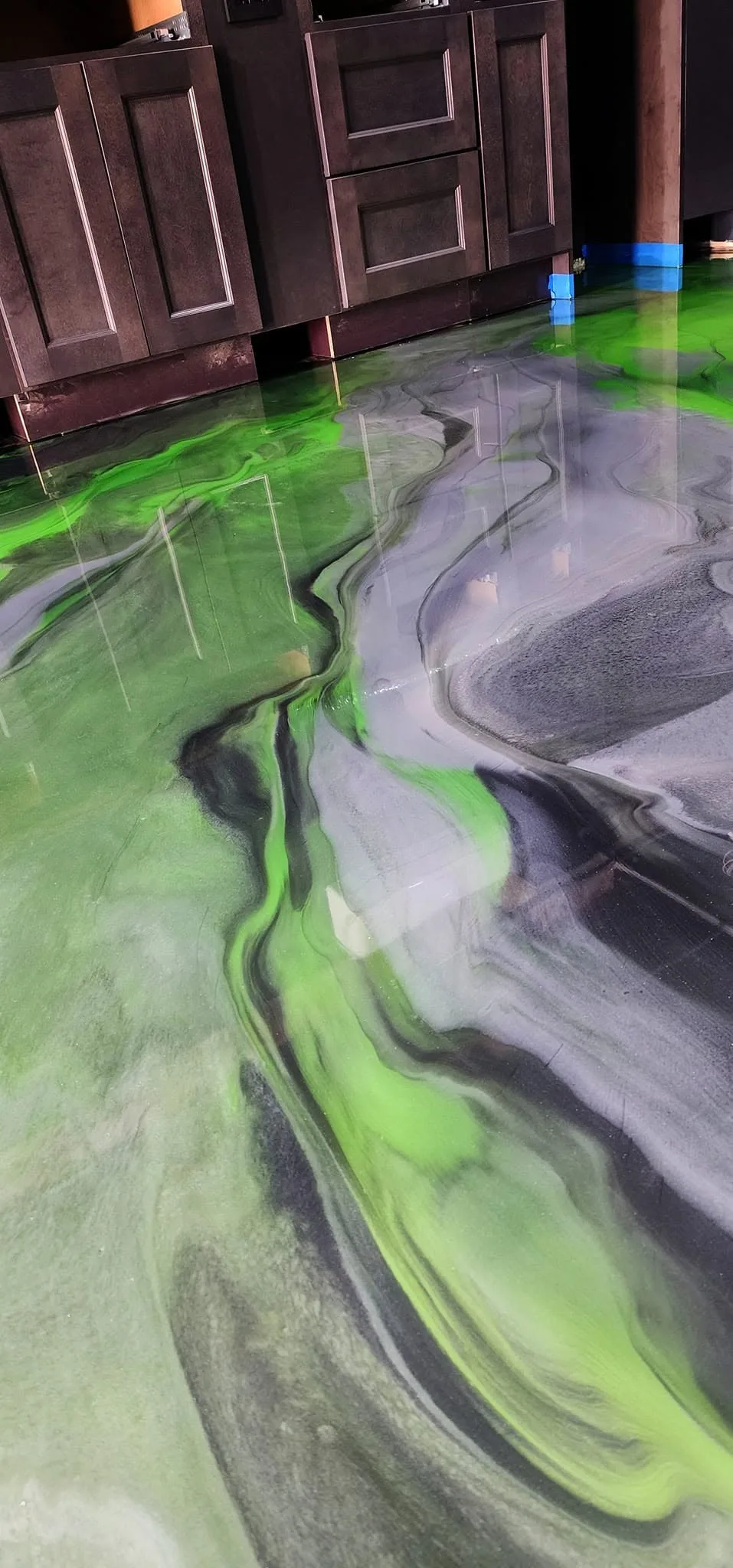
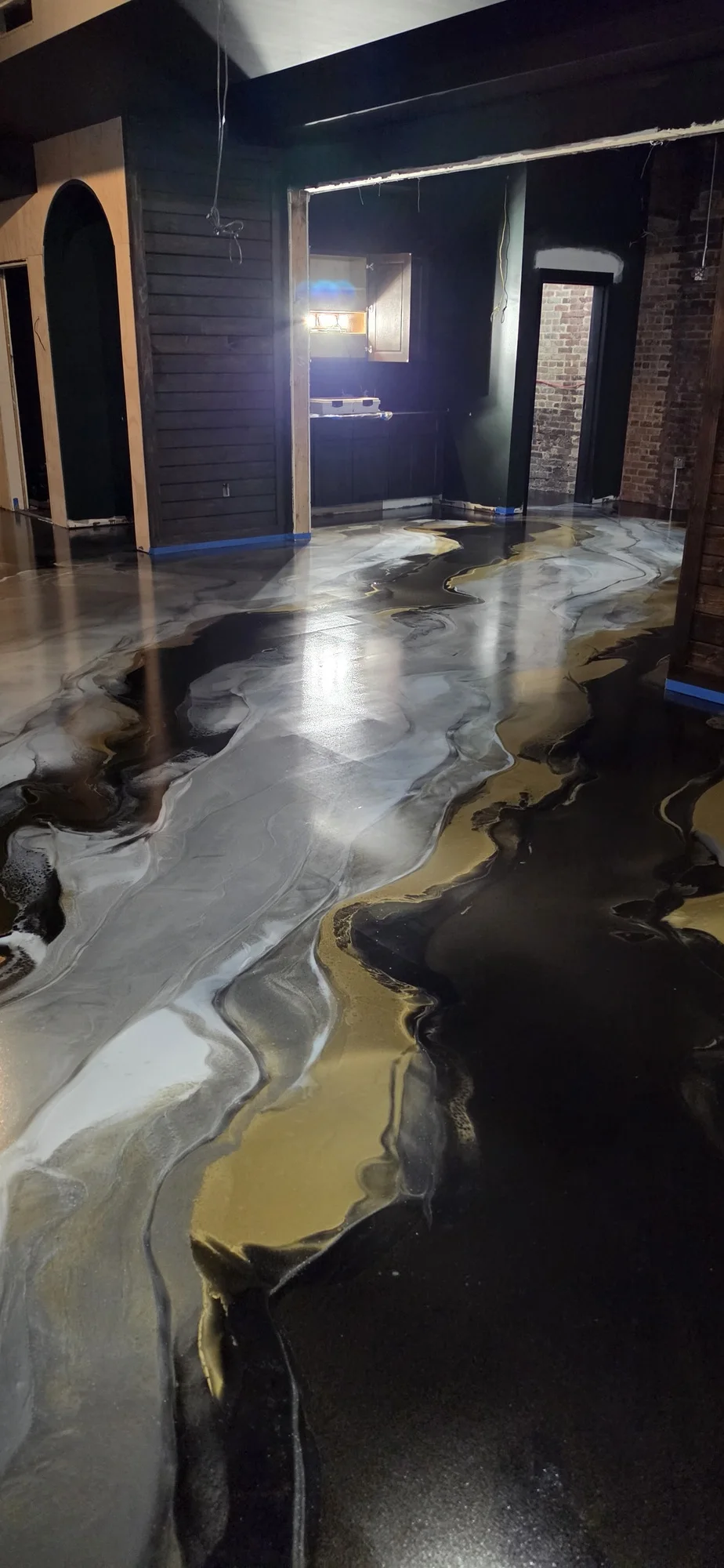
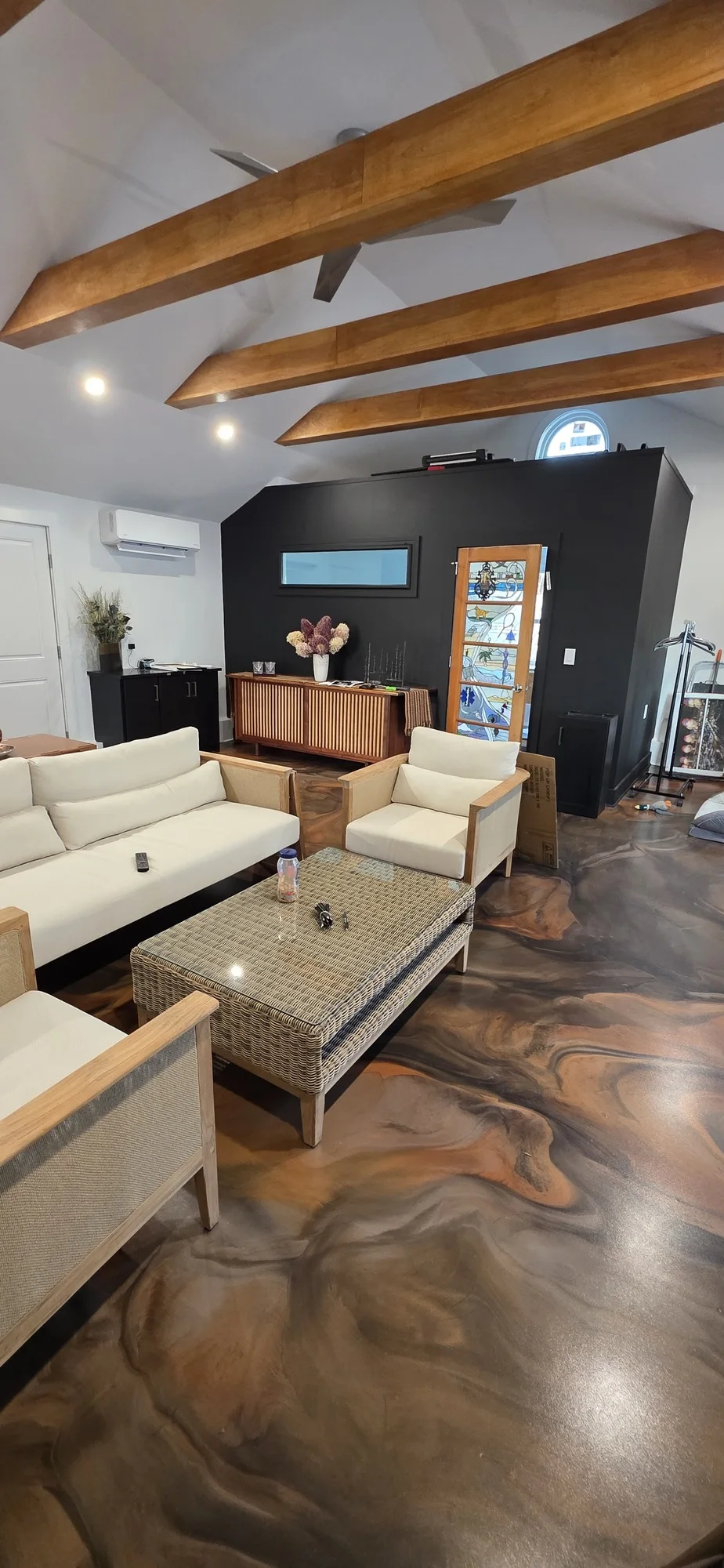
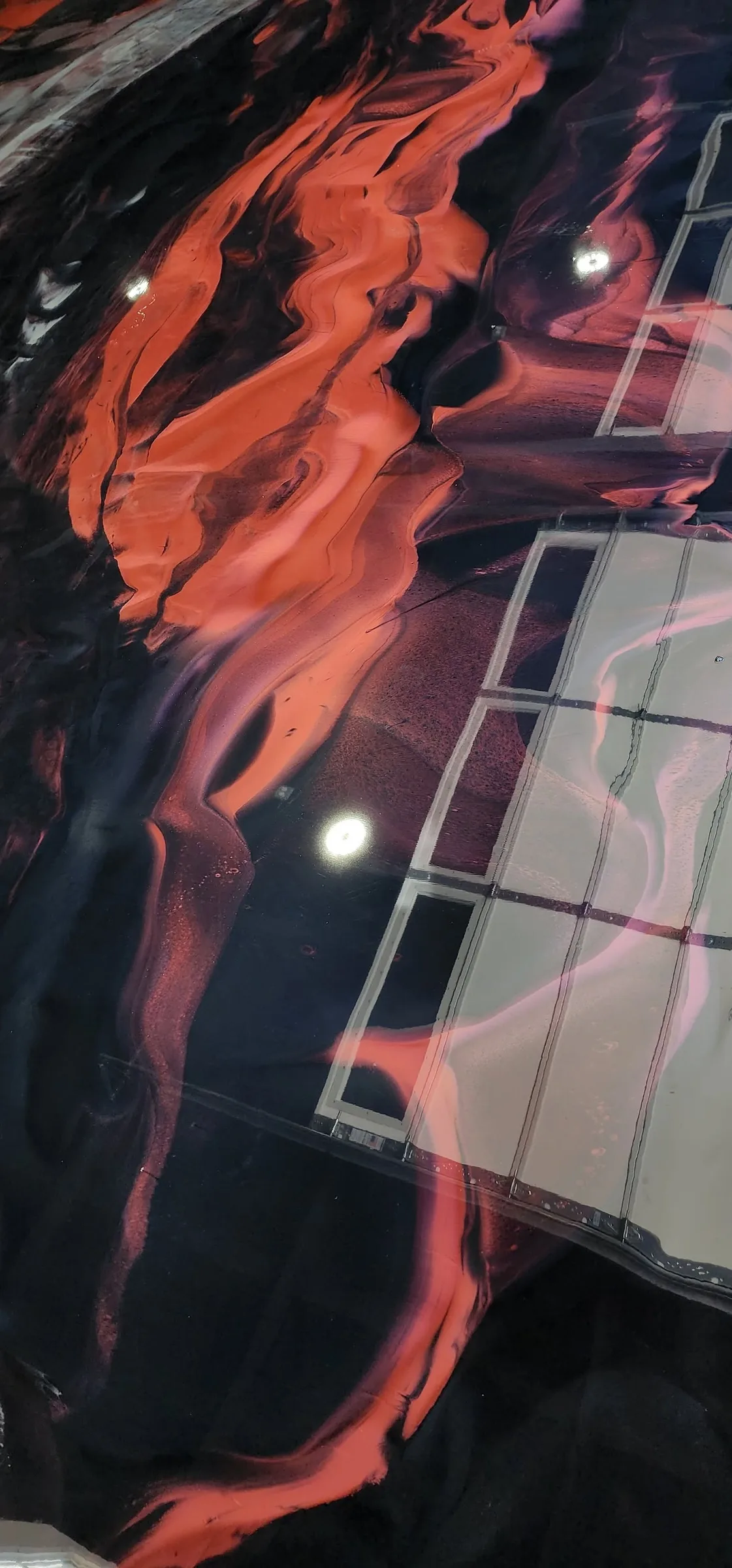
Sample-board preparation means pouring real samples of the proposed floor on boards: the actual base color, the metallic pigments, the flake blend or the glitter, finished with the topcoat that will go on the floor. Danny makes them with the same materials he would use on the job, from Bulletproof Resins, and Glitter ELEMENTZ where glitter is part of the design. A board can be carried room to room, set beside cabinets and held under different lights, which a color chart cannot do.
It fits any floor where the look is a real decision: metallic pours, custom colors, color matches, branded designs, flake blends.
It fits any floor where the look is a real decision: metallic pours, custom colors, color matches, branded designs, flake blends. It is also useful when a decision goes to a committee, a board or a designer who was not on the walk. Sample boards have limits. A metallic sample shows the colors and the kind of movement, but the full floor will never copy the board exactly, and a small board cannot show how a pattern reads across a large room.
Danny starts with the options from the walk: the colors, the system and any references the client brought. He pours a small set of boards, often two or three versions of the idea so the client can compare. The boards cure and come back to the space, where the client looks at them on the floor, in daylight and under the room’s own fixtures. Danny adjusts and pours more if needed. Once a board is approved, it becomes the reference for the floor itself, through the grind, the pour and the final walk.
A sample you can hold under your own lights settles most arguments.
From bare slab to finished floor
A sample board earns its place by answering a clear question. Each one is planned, built like the real floor and kept as the reference through the job.
Deciding what each board tests
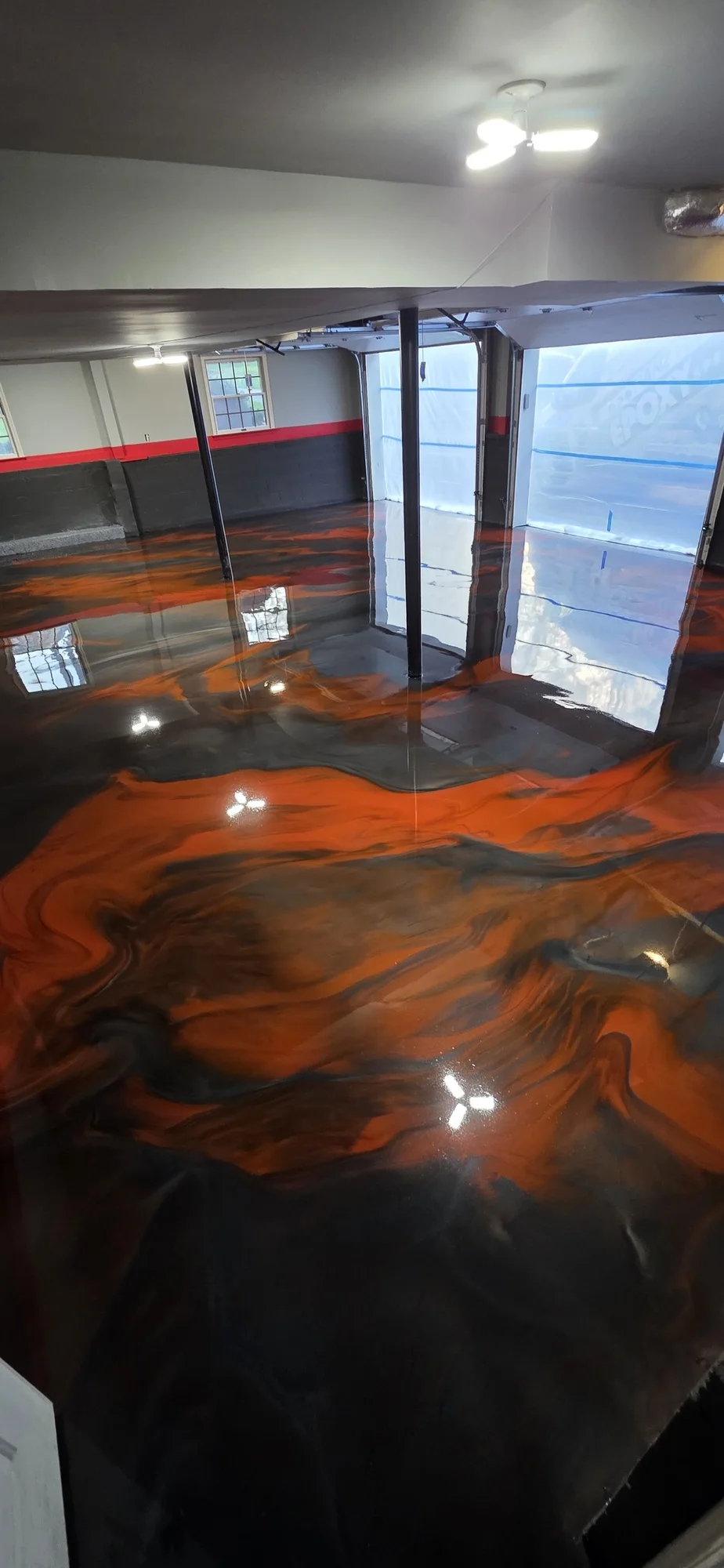
Before pouring, Danny and the client agree on what the boards need to answer: color, pattern, flake density, sheen or texture. A board that tries to answer everything at once is hard to judge, so each one focuses on the question that matters most.
Building boards in the floor’s layers
Each board gets the same layers the floor will receive, from base and color or pigment through any flake or glitter to the topcoat. Leaving off the topcoat would show a color that changes once the clear goes on, which defeats the purpose.
Labeling every version on the back
Each board is marked on the back with what went into it, including the tint, the blend or the pigment mix. That way the board the client picks can be repeated exactly on the floor, even if several versions looked alike at a glance.
Living with the boards in the room
Cured boards are laid flat where the coating will go, near windows and under the room’s fixtures, and left there so the client sees them through a full day. Morning light and evening lamps both get their turn before a choice is made.
Signing the chosen board
The board the client approves is signed and dated on the back and stays on site through the whole job. It is the agreed reference during the pour and again at the final walk, when it is set down beside the finished floor.
More of Danny’s floors
Other jobs from the file, not all of them this service. See the gallery





Questions about sample-board preparation
Will my floor look exactly like the sample?
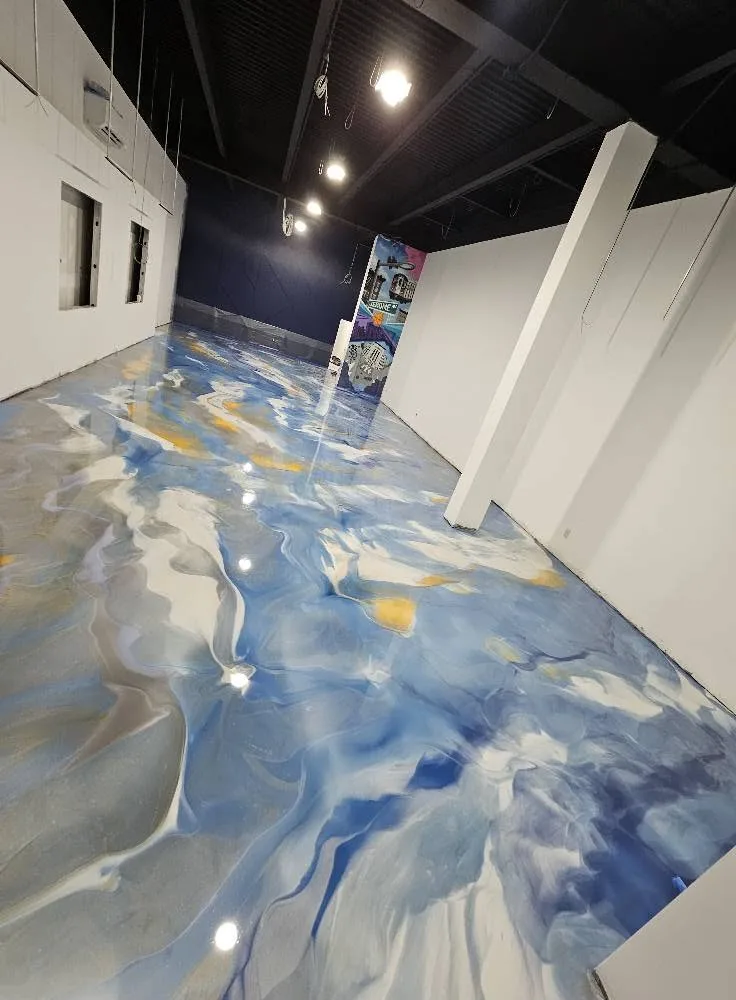
Solid colors and flake blends come very close. Metallic floors match the colors and the general feel, but the pattern itself depends on how the pigment moves across a large area, so no two pours are identical. Danny explains what will carry over from the board and what will be unique to your floor.
How many samples can I get?
Danny usually pours a small set of options and adjusts from there. If the first round does not land, he can make another based on what the client liked and did not like. The goal is a board everyone feels sure about, since changing a floor after the pour is far harder than pouring another sample.
Can our board or designer keep the samples?
Usually, yes. Boards can be passed around at a meeting, left with a designer or kept in an office while the decision is made. Once a sample is approved, it is worth keeping it on site through the job so everyone can compare the finished floor to what was signed off.
How big are the sample boards?
Big enough to stand over and see the look as it would appear underfoot, and small enough to carry from room to room. Metallic boards tend to be larger, since a pattern needs more space to show how it moves. Danny sizes them to what each board needs to answer.
Can a board show how the floor will look with my furniture?
Partly. Set a board beside a sofa leg, a cabinet base or a rug edge and it shows how the colors sit together. It cannot show the full room, so for big decisions Danny may suggest two boards placed in different spots to give a better sense of the whole floor.
How is a sample board different from a color chip from a store?
A store chip is a printed or thin painted swatch. A sample board carries the real layers, so it shows the depth of a clear coat, the texture of flake, the movement of a metallic and the actual sheen. That is much closer to what will be underfoot than any printed card.
More from the custom section
Color matching, sample boards, branded floors and epoxy countertops. Bring the idea and Danny builds the sample.
- Residential and Commercial Coating DesignOne plan for a multi-room home or business project, tying systems, colors, finishes and the order of work together before the first floor is ground.
- Epoxy CountertopsHand-poured CRYZTAL epoxy countertops for kitchens, bathrooms and bars, built up in layers into marble, metallic or one of one looks.
- Custom Epoxy Floor DesignOne of one epoxy floors planned around the client’s idea, most often metallic pours, with color, pigment and layout worked out before grinding starts.
- Branded Commercial Floor GraphicsBrand colors, bands, zones and patterns poured into a business floor and sealed under a clear coat, so the room carries the brand underfoot.
- Custom Color Floor CoatingsSolid and tinted epoxy floors mixed to a color the client picks and sampled in the room first, for spaces where the shade itself matters.
He drives out from Cranford about 60 miles in every direction for floors like this one. See every areaSee the gallery
Danz Handz
Danny Carrero, epoxy specialist
dhepoxy@gmail.com
Cranford, NJ. Mon to Sat, 8 to 6. Hablamos español.
Book a walkthrough
Send a few lines about the room and the look you want. Danny will call and set up a time to see it.