
Resurfacing a failing floor in a washdown room
Once an old coating starts lifting in sheets, patching it just moves the problem a few feet over. In a washdown room the failure follows the water, so the peeling shows up where the hose hits hardest. Danny takes the failed coating down to sound concrete and works out why it let go before anything new goes on.
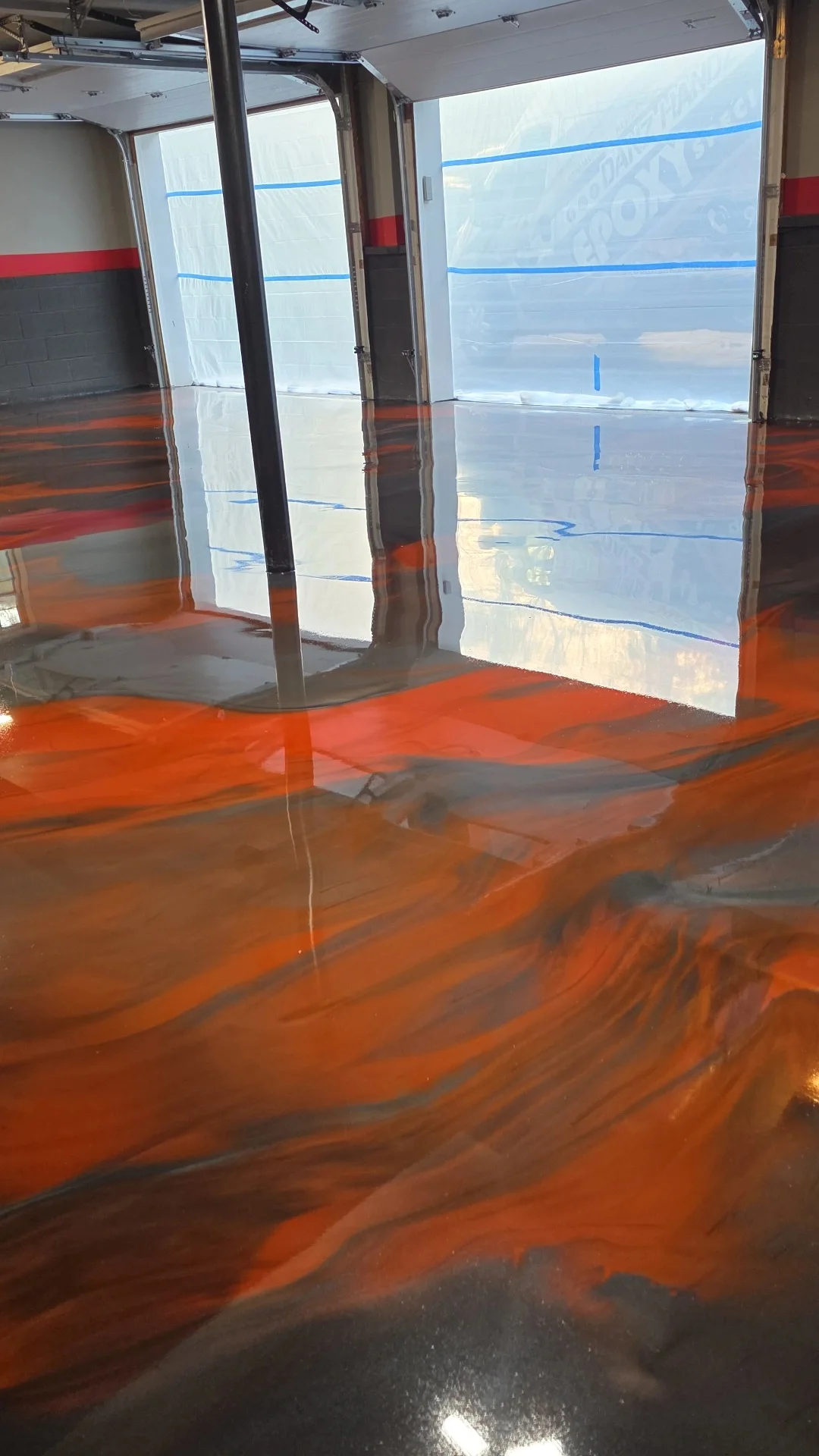

The short version of sanitary facility floor resurfacing
Floor resurfacing for a sanitary facility means taking a worn or failing floor back to sound concrete and putting down a new system. The old coating is diamond ground off, with any loose concrete under it, and the slab is repaired before the new floor is poured with its cove. The reasons an old floor failed, such as water coming up through the slab, the wrong system for the chemicals or poor prep the first time, shape what goes back. Danny weighs the room’s traffic and spills, along with the old failure, before he recommends a system.
Patching a few spots can work when the rest of the floor is still bonded, and Danny will say when patching makes more sense than a full resurface.
It fits food rooms, wash rooms and sanitation areas on a slab where the old floor has failed but the concrete underneath can be saved. If the slab is badly damaged or moisture is pushing up through it, more repair work or a moisture-tolerant system comes first, chosen from the product data. Patching a few spots can work when the rest of the floor is still bonded, and Danny will say when patching makes more sense than a full resurface.
Danny starts by finding out why the old floor failed. He walks the room, taps and pries at the loose areas, looks at where peeling starts, checks the drains and the walls, and asks what chemicals and water temperatures the room sees. Then the room is closed, the old coating is ground off down to sound concrete, damaged areas are repaired and leveled, and the slope to the drains is corrected. The new system goes down with its cove. After the cure, he walks the room with the manager and points out the areas that took the most repair.
A floor that failed once will fail again unless the reason gets fixed first.
The order the work goes in
Resurfacing starts with a diagnosis. These stages go from working out why the old floor failed to a new system that answers that cause, ending with a walk of the repaired room.


Diagnosing the old failure
Danny looks at where the old coating is lifting, blistering or wearing through, and pries at the loose edges to see what is underneath. Peeling over damp concrete, wear at hose points and softening near chemicals each point to a different cause.

Checking the slab for rising damp
If the pattern suggests moisture coming up through the slab, the concrete is tested for it. A slab pushing moisture up will lift any new coating too, so the result decides whether a moisture-tolerant system from the product data is needed.

Stripping the failed coating
The old coating is ground off across the whole room, along with any loose concrete under it. This is often the longest stage, since a well-stuck old layer in one area can sit next to a peeling one in another.

Rebuilding pitted and soft areas
Concrete damaged by water, chemicals or the old failure is cut out and rebuilt. Pits are filled, the slope to the drains is corrected, and the slab is cleaned of residue so the new system bonds to fresh concrete.
New system, cove and walk-through
The new system goes down with a cove at the walls, chosen to avoid the old cause. After the cure, Danny walks the room with the manager, and they look closely at the drains and the hose points where the old floor failed first.
More of Danny’s floors
Other jobs from the file, not all of them this service. See the gallery




Questions about sanitary facility floor resurfacing
Why did our old floor coating peel?
The common reasons are moisture coming up through the slab, a system that did not match the chemicals and hot water in the room, or prep that left the surface too smooth or dirty for the coating to bond. Danny looks at where and how the old floor failed during his walk, since that tells him what to change this time.
Can you coat over the old floor?
Usually not when it is failing. A new coating over a peeling one will only hold as well as the old layer underneath it. The old coating gets ground off to sound concrete, so the new system bonds to the slab itself. If the old floor is still tightly bonded in most areas, Danny will say whether spot repair is worth considering.
How long will the room be out of service?
That depends on the size of the room, how stubborn the old coating is and how much repair the concrete needs once it is exposed. Grinding off a failed floor can take longer than coating a bare one. Danny sets the schedule after his walk and lets you know if the concrete under the old floor changes it.
What if the slab under the old floor is worse than expected?
It happens, since a failed coating often hides wet or damaged concrete. When the old floor comes off, Danny looks at the slab and tells the owner what he finds before going on. Extra repair may add time to the job, and he explains the options so the owner can decide.
How do we keep the same failure from happening again?
The cause is addressed first: moisture is dealt with, the system is matched to the chemicals and water temperature, and prep is done to bare, sound concrete. After that, daily habits matter, such as diluting cleaners correctly and squeegeeing standing water. Danny explains which of those applied to the old floor.
Does the new floor need a different cleaning program?
Usually the same program works, as long as the products are on the list checked against the product data. If the old floor failed partly because of a cleaner used too strong or left to sit, that habit is worth changing. Danny goes over the routine with the sanitation staff when the room is handed back.
Close to this one
Commercial kitchens, bakeries, breweries and cold rooms, with coved bases and slip-resistant finishes.
- Commercial Dishwashing Area FlooringTextured, coved floors for dish pits that stay wet all night, often done on their own ahead of the rest of the kitchen.
- Cold Storage Facility FlooringCoated floors for walk-in coolers and freezer rooms, planned around the shutdown, the warming for the cure and the threshold.
- Refrigerated Warehouse Floor CoatingsCoatings for refrigerated warehouse docks, staging lanes and cold rooms, phased door by door so trucks keep loading.
- Chemical-Resistant Kitchen FlooringKitchen floors picked against your actual cleaner and sanitizer list, with the system matched to its product data before anything is poured.
- Seamless Hygienic FlooringJointless poured floors with cove bases for food rooms, so mops and squeegees reach every corner and nothing settles in grout.
Every county Danny covers, and every town in them, has its own page. See every areaSee the gallery
Danz Handz
Danny Carrero, epoxy specialist
dhepoxy@gmail.com
Cranford, NJ. Mon to Sat, 8 to 6. Hablamos español.
Book a walkthrough
Describe the floor and what you have in mind. Danny calls back and comes out to look at it.