
Bringing a worn warehouse floor back into shape
Dock doors, main aisles and the turns at the end of each rack row are where a warehouse floor gives out first. Old coatings peel there, joints chip apart and bare concrete dusts onto the stock. The renovation gets planned around those paths so the busiest parts of the building get the most attention.

The short version of warehouse floor renovation
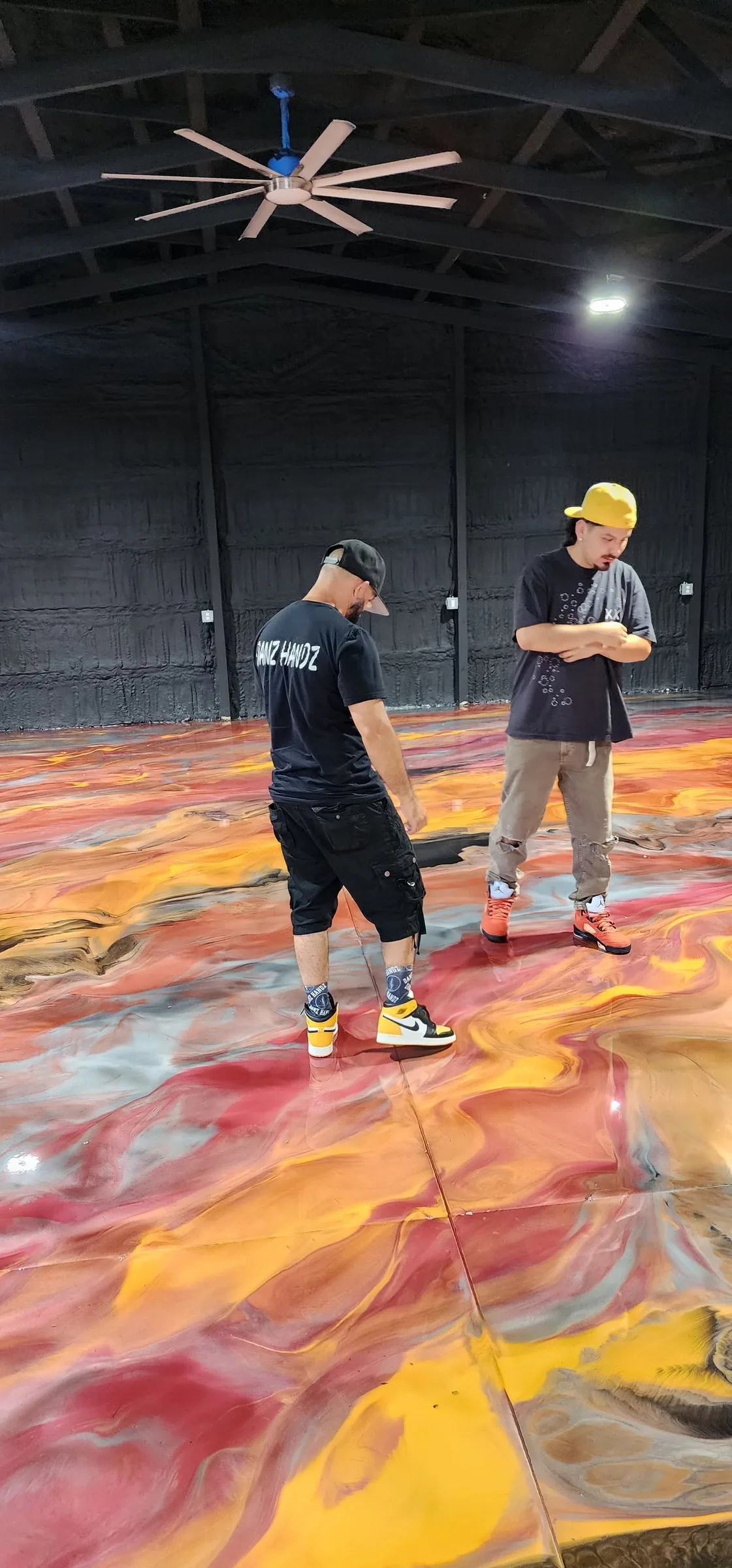
Warehouse floor renovation takes a slab that has already seen years of pallet jacks and forklifts and gives it a new working surface. Danny grinds away failed coatings and the worn top layer, digs out and repairs broken joint edges and spalled patches, and levels low spots that catch water from the dock doors. Then he pours a coating suited to the traffic, usually a solid color epoxy with a topcoat chosen from the product data. The result is a sealed floor that stops dusting and sweeps clean.
The section stays closed through its cure before the racks and traffic return.
It fits warehouses where sections can be cleared and closed in turn. Racking is the big variable. Rows that stay in place mean the coating stops at the uprights, and rows that move mean the facility or its racking contractor takes them down and puts them back. A coating also has limits on a slab that is cracking from settling or heaving at the joints. Those areas may need concrete repair by others first, and Danny shows them to the manager during the walk.
Danny walks the warehouse with the manager and looks at where the floor is failing and why. Peeling at the dock usually means water and traffic together. Chipped joints in the aisles point to wheels hitting open edges. He plans the work in sections so stock and trucks can keep moving. In each section he diamond grinds, repairs joints and spalls, levels low spots and pours. The section stays closed through its cure before the racks and traffic return. At the final walk he points out the joints that will need the most attention over time.
Warehouse floors fail at the joints and the dock doors long before the middle of the slab.
What happens on the job
Renovating a warehouse floor starts with figuring out why the last one failed. These stages remove that failure and rebuild the slab before any new coating goes down.


Reading why the old floor failed
Peeling in sheets, flaking at the joints, a worn-through lane or a powdery slab each point to a different cause. Danny looks at the pattern of failure across the whole building before choosing anything new, because the same system over the same mistake gets the same result.

Stripping failed coating to the slab
Loose and half-bonded coating is ground off everywhere it has let go, and the rest is taken down too so one surface remains. Old stripe paint and patching compounds that crumble come out with it, leaving concrete that can be judged honestly.

Bringing ponding areas back level
Low spots near the doors and around old repairs collect meltwater and scrubber runoff. Those are filled and ground back into plane with the rest of the slab, so water no longer stands in the places where forklifts brake and turn.

Rebuilding worn traffic lanes
Where years of wheels have worn a trough into the main aisle, the surface is repaired and leveled before coating. Broken joint edges along that lane are rebuilt at the same time, since a lane and its joints tend to fail together.
Recoating to the right build
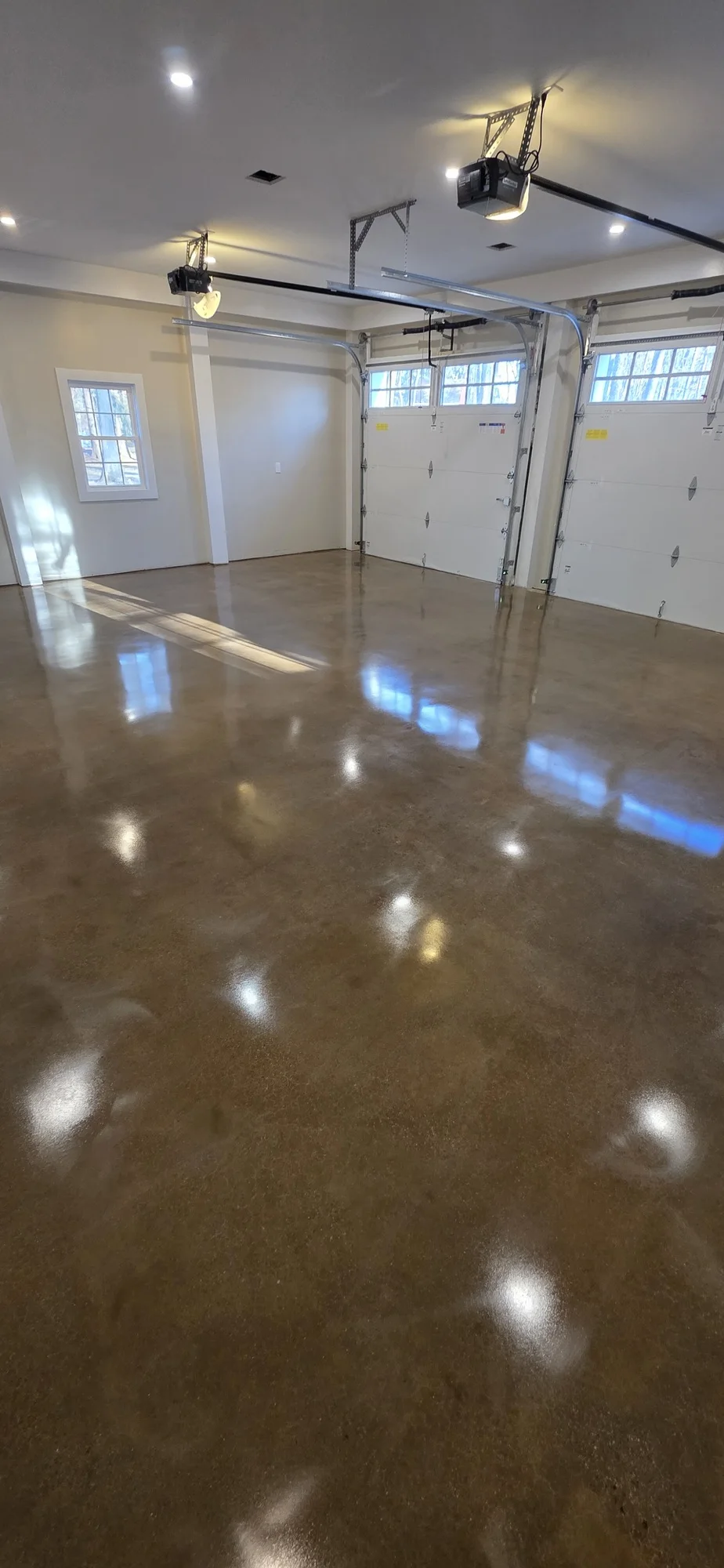
Each section gets a system chosen from the product data for the traffic it carries, heavier along the main lanes and lighter in quiet storage rows. Once it cures, Danny walks it with the manager and notes the spots to check on a later visit.
More of Danny’s floors
Other jobs from the file, not all of them this service. See the gallery







Questions about warehouse floor renovation
Can you fix the chipped joints in our warehouse floor?
Yes. Broken joint edges get cut back, cleaned out and repaired before the coating goes down, and joints can be filled so wheels roll over them more smoothly. Joints still move with the slab, so a filled joint can open a fine line over time. Danny explains what to watch for at the final walk.
Do you remove the old coating that is peeling off?
Yes. Failed coating comes off in the grind, along with the worn top layer of concrete under it. Sections that are still bonded tightly get ground as well, so the new system goes onto the same clean surface everywhere. Leaving patches of old coating behind gives the new floor weak spots.
Can the warehouse keep running during the work?
Usually, by working in sections. Each section is cleared, ground, repaired, coated and closed through its cure while the rest of the building operates. Danny plans the order with the manager around receiving, shipping and any shutdown days, so trucks and stock keep moving through the parts of the building still open.
Why did our last floor coating fail?
Common causes are a coating too thin for the traffic, a slab that was never ground before coating, moisture coming up through the concrete, or open joints that let wheels chip the edges. Often it is a mix. Danny looks at where and how it failed before suggesting a new system, so the same problem is not built in again.
Should we renovate all at once or patch the worst areas?
It depends on how much of the floor has failed. If the damage is limited to the dock and a few lanes, those can be renovated first and the rest later. If failure is spread across the building, one planned renovation in sections usually makes more sense than repeated patching. Danny gives an honest read after the walk.
What about damage left by old rack anchors?
When racks are moved or taken out, their anchor bolts leave broken holes and sometimes cracked concrete around the base plates. Bolts are cut flush, holes are filled and ground level, and cracked areas are repaired before the coating. If racks go back in the same spots, they are re-anchored through the cured floor.
Also in construction
New builds, renovations and tenant fit-outs, scheduled once the slab has cured and the other trades are out.
- New Construction Commercial Floor CoatingsCoated floors for new shops, offices and showrooms, scheduled in with the general contractor and finished before handover.
- Industrial Facility Flooring InstallationResin floors for production areas, docks and maintenance shops, installed in sections so the facility can keep working.
- Concrete Slab Coating for New BuildsMetallic or solid color coatings poured over new slabs inside a house, so the concrete itself becomes the finished floor.
- Renovation Epoxy FlooringNew epoxy floors poured on a slab after the old flooring is pulled, with glue, mortar and patches ground and leveled first.
- Floor Coating for Tenant ImprovementsCoated floors installed during a commercial build-out, ground clean of the last tenant’s leftovers and ready for the new business to open.
Jobs run about 60 miles out from the Cranford shop, from the Jersey shore and the Poconos to Long Island and Fairfield County. See every areaSee the gallery
Danz Handz
Danny Carrero, epoxy specialist
dhepoxy@gmail.com
Cranford, NJ. Mon to Sat, 8 to 6. Hablamos español.
Schedule a look at your floor
Start with the room and the idea. Danny follows up by phone and comes to see the slab.