
Coatings that seal the top of a concrete floor
Laundry rooms, mechanical rooms and garages put water on bare concrete, and the slab soaks it up. This coating seals the top surface so spills and mop water stay where they can be cleaned off. Damp coming up from below is a separate problem, and Danny checks for it on the walk.
Waterproof Concrete Coating Systems, from Danny’s side of the job
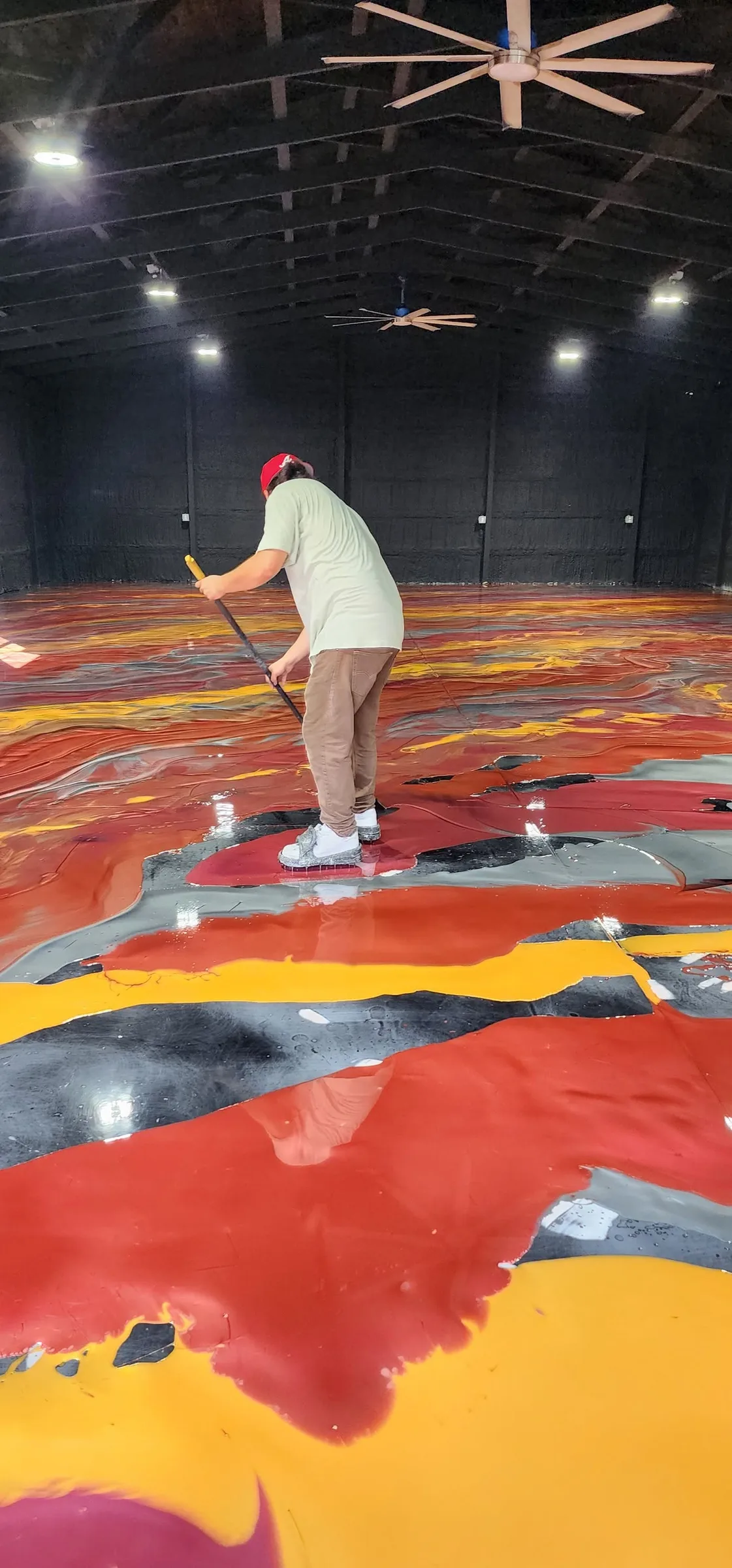
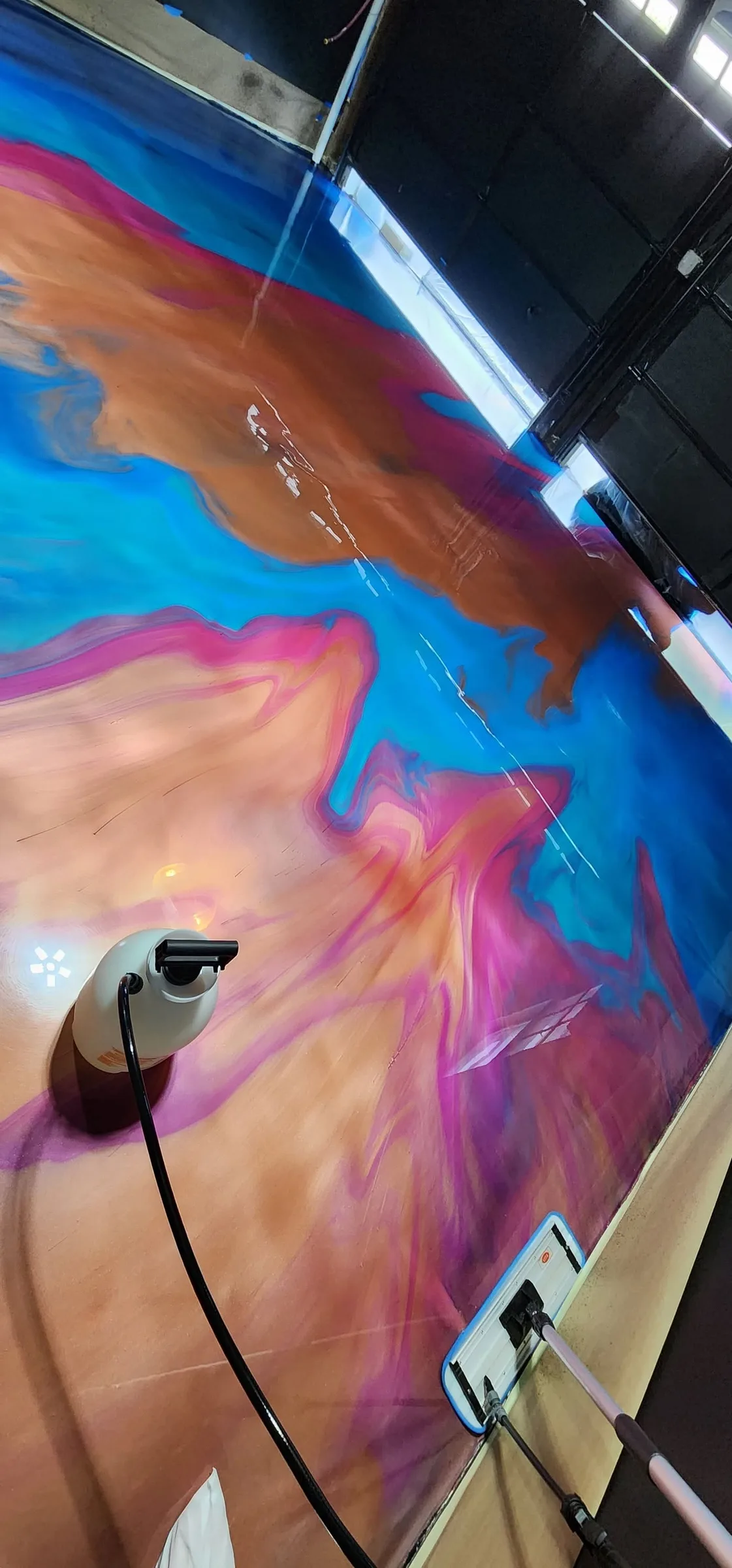
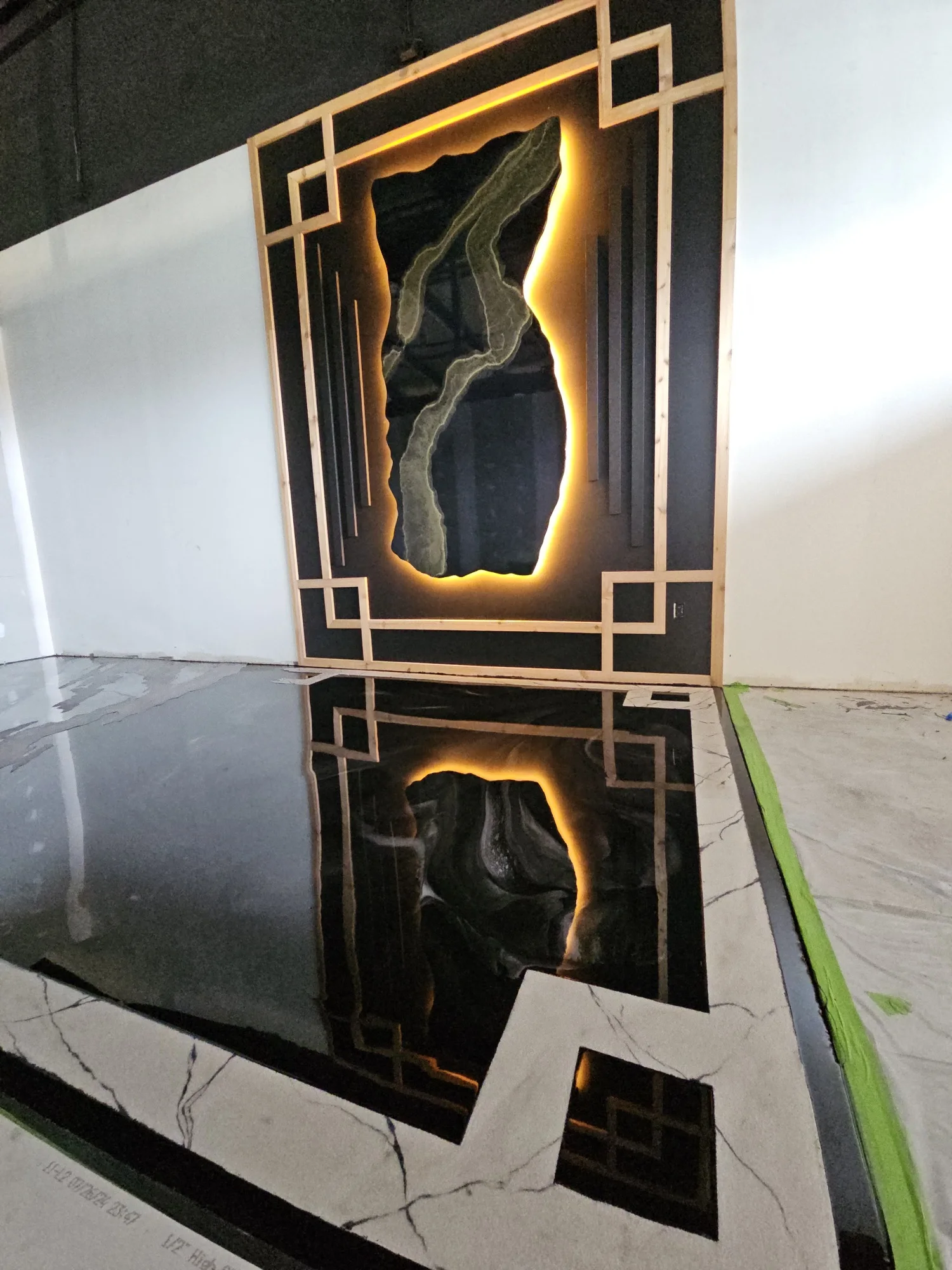
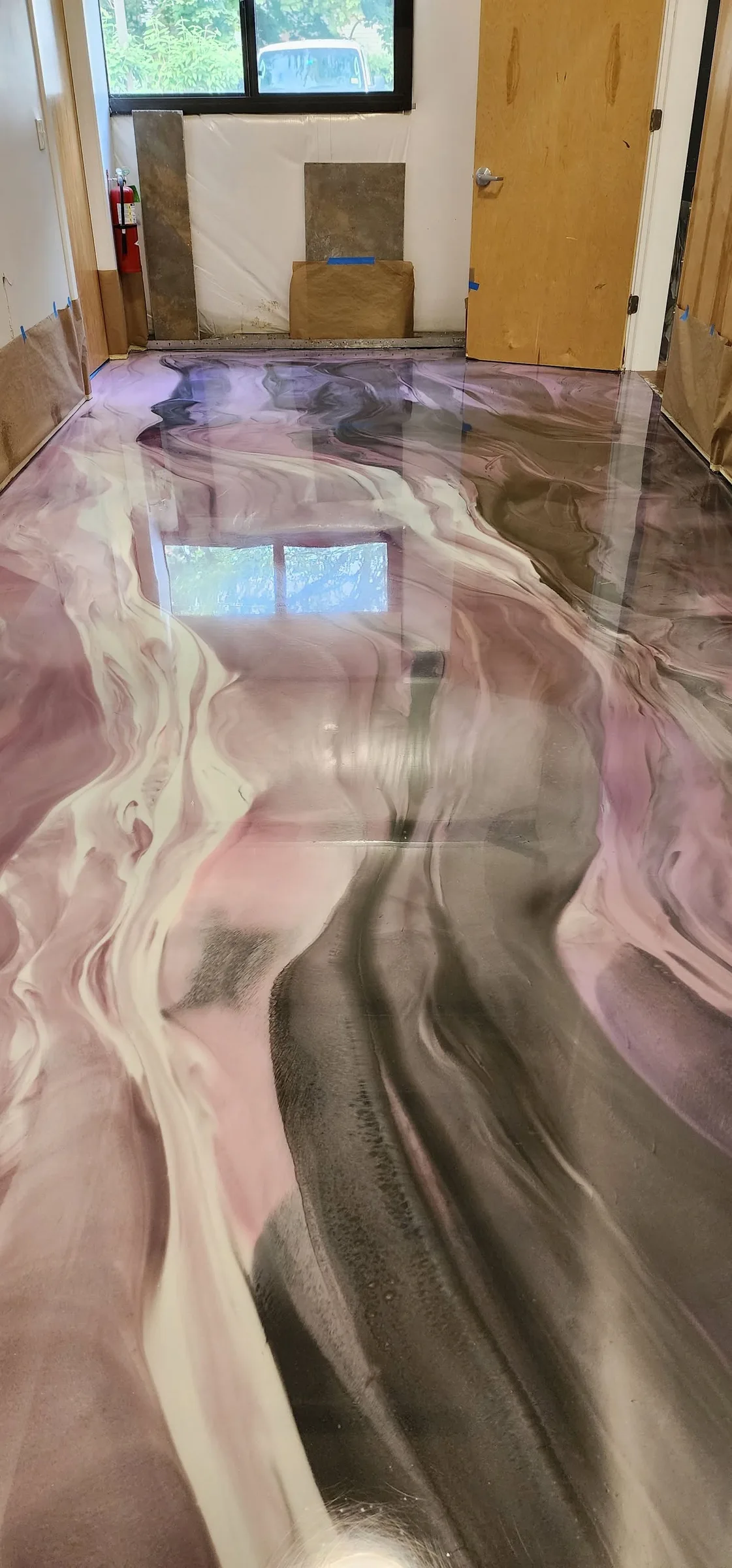
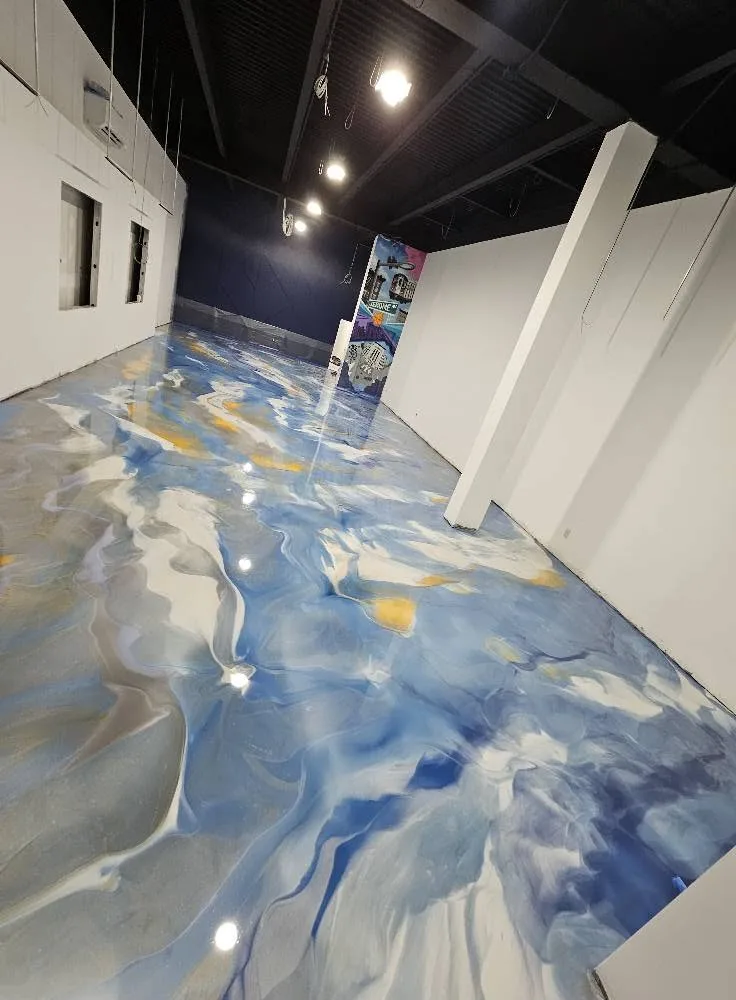
This system is a resin coating built to close the surface of the concrete against water from above. Small cracks get filled during prep and the coating covers the pores, so water sits on the coating and runs toward drains where the floor is pitched. The finish can be a solid color, flake or a decorative floor with a textured topcoat for footing in wet areas. Danny chooses the system from the product data for how wet the room gets and what else lands on the floor.
This system is a resin coating built to close the surface of the concrete against water from above.
The word waterproof has limits worth being honest about. A floor coating seals the top. It does not stop water pushing up from below, leaks through walls or flooding from outside, and it does not replace waterproofing on a foundation or a roof deck. Moisture coming up from the slab is covered by a different system. Danny looks at the room, the traffic and what lands on the floor, and above all where the water comes from, before recommending anything.
Danny walks the room and asks where the water comes from: spills, washing, equipment drips or tracked-in rain. He looks at the drains and the pitch, and at signs of moisture coming up from below, which would point to a different system. The slab is diamond ground, cracks and holes are repaired and low spots are leveled where water sits. The coating goes down in coats with texture where floors stay wet. The room stays closed through the cure, then the final walk covers cleaning.
A floor coating seals water out from above, and that is the job it does.
How the work runs
This coating handles water landing on the floor from above. Danny looks at the room, its traffic and what gets spilled, then traces every source of water before recommending a system.

Tracing drips to their source
Danny looks at the washer, the water heater, the utility sink and the garage door, and asks where puddles show up after a storm or a load of laundry. Stains on the slab show where water has sat for years.

Clearing appliances with the plumber
Washers, dryers and utility carts come out of the room, and anything plumbed in is disconnected by the owner’s plumber if it has to move. Leaks found along the way get fixed before the floor is scheduled.

Leveling the puddle spots
After grinding, low areas where water collects are filled and feathered, and cracks and holes are repaired. Edges along the walls get the same attention, since water likes to sit in the corner where floor meets wall.

Closing the surface coat by coat
The coating goes down in coats that close the pores of the concrete, with a textured topcoat where floors stay wet. It can be turned up the wall base so mop water and spills stay off the drywall.
Resetting appliances on drip pans
Once cured, the floor takes the appliances back, often on drip pans with a line to a drain if the plumber adds one. Danny walks the room with the owner and checks the edges around each appliance and at the door.
More of Danny’s floors
Other jobs from the file, not all of them this service. See the gallery






Questions about waterproof concrete coating systems
Will this waterproof my basement?
Only the top of the floor. It keeps spills and surface water from soaking into the slab. Water pushing up through the concrete or coming in through the walls is a different problem. Moisture from below needs a moisture-tolerant system, and leaks through walls need a waterproofing contractor. Danny looks at where your water comes from first.
Does the coating fill cracks?
Small cracks get filled during prep before the coating goes down, so the surface is closed. Cracks that keep moving can come back through any coating, and bigger structural cracks need a concrete contractor first. Danny looks at the cracks on the walk and says which ones he repairs and which need more.
What rooms is this good for?
Garages, laundry rooms, mechanical rooms, wash areas, mudrooms and any space where water lands on the floor and bare concrete soaks it up. It is also useful under equipment that drips, like water heaters and washers. Plumbing problems behind those drips are a plumber’s to fix, and the coating goes on after.
Can water still get under the coating at the edges?
If an edge is left open or a crack along the wall keeps moving, water can find its way under. That is why edges are finished carefully and the coating often runs up the wall a little. Keeping water from standing against the walls helps too. Danny checks the edges during the final walk.
Is this the same as a sealer from the hardware store?
No. A penetrating sealer soaks into the concrete and leaves the surface looking much the same, and it wears off over time. This coating forms a solid layer on top that water sits on. Each has its place, and Danny explains which one suits the room after the walk.
Is it worth coating under a water heater?
Water heaters drip, sweat and eventually leak, and the floor under them is often the most stained spot in the room. Coating that area keeps water on top where it shows sooner. The heater has to be moved by a plumber for the floor under it to be done. Danny plans it with the owner.
Next to this on the list
Slip, chemical, impact, heat and static control. Danny looks at the space first and says what fits before anyone orders material.
- Impact-Resistant Industrial FlooringHeavier resin floor builds for shops where tools, castings and steel get dropped, with repairs to the concrete underneath first.
- Static-Control Epoxy FlooringStatic-control epoxy floors for rooms with shocks, dust or equipment trouble, chosen to the room’s needs and grounded by the facility’s electrician.
- Electrostatic Dissipative (ESD) FlooringElectrostatic dissipative floors installed to a facility’s written spec, with grounding by its electrician and testing by its own third party.
- Conductive Resin Floor InstallationConductive resin floors for rooms with strict static rules, installed to the facility’s written requirement and tested by its own third party.
- Hygienic Seamless FlooringContinuous resin floors for kitchens, wash rooms and processing areas, with fewer grout lines and joints where dirt and water can sit.
The shop is in Cranford. Most jobs are within an hour or so, across four states. See every areaSee the gallery
Danz Handz
Danny Carrero, epoxy specialist
dhepoxy@gmail.com
Cranford, NJ. Mon to Sat, 8 to 6. Hablamos español.
Schedule a look at your floor
A short note about the space is enough. Danny calls back and books a walkthrough.